Moral understanding Reading Comprehension Worksheets for 7-Year-Olds
4 filtered results
-
From - To
Our "Moral Understanding Reading Comprehension Worksheets for 7-Year-Olds" are designed to build both reading skills and moral awareness. Through engaging stories and thought-provoking questions, these worksheets help young readers grasp essential moral values such as honesty, kindness, and responsibility. Perfect for home or classroom use, each activity promotes critical thinking and ethical discussions, allowing children to connect narratives with real-life scenarios. By improving comprehension and fostering moral development, these worksheets provide a comprehensive approach to learning that nurtures both the mind and heart. Explore our collection today for a rewarding educational experience.
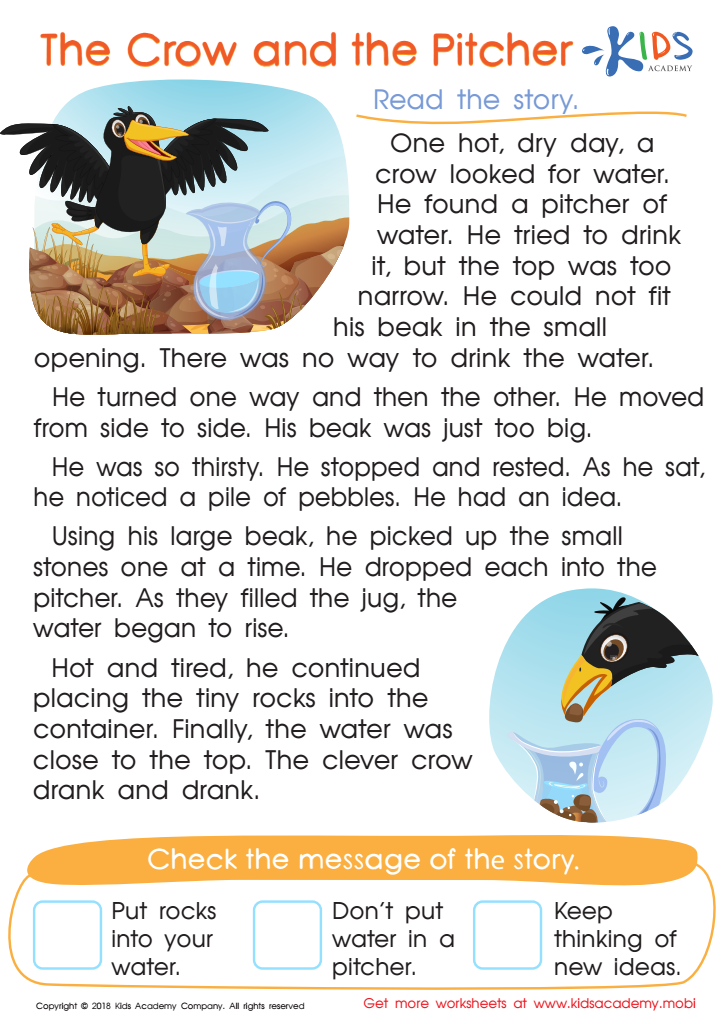
The Crow and the Pitcher Worksheet
 Assign to My Students
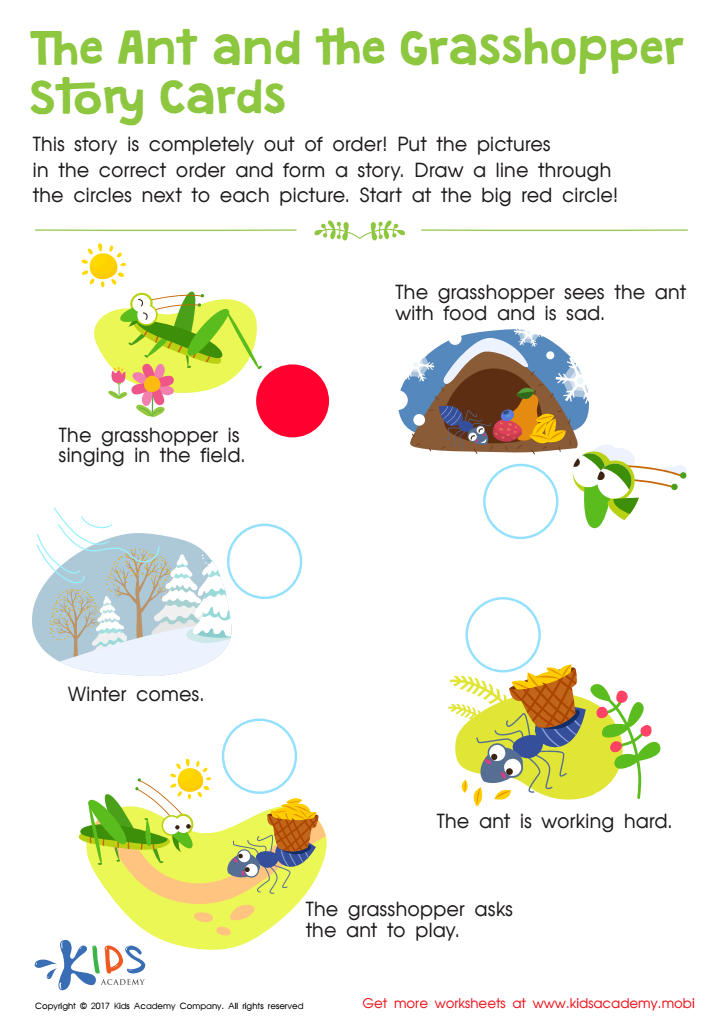
The Ant and The Grasshopper Worksheet
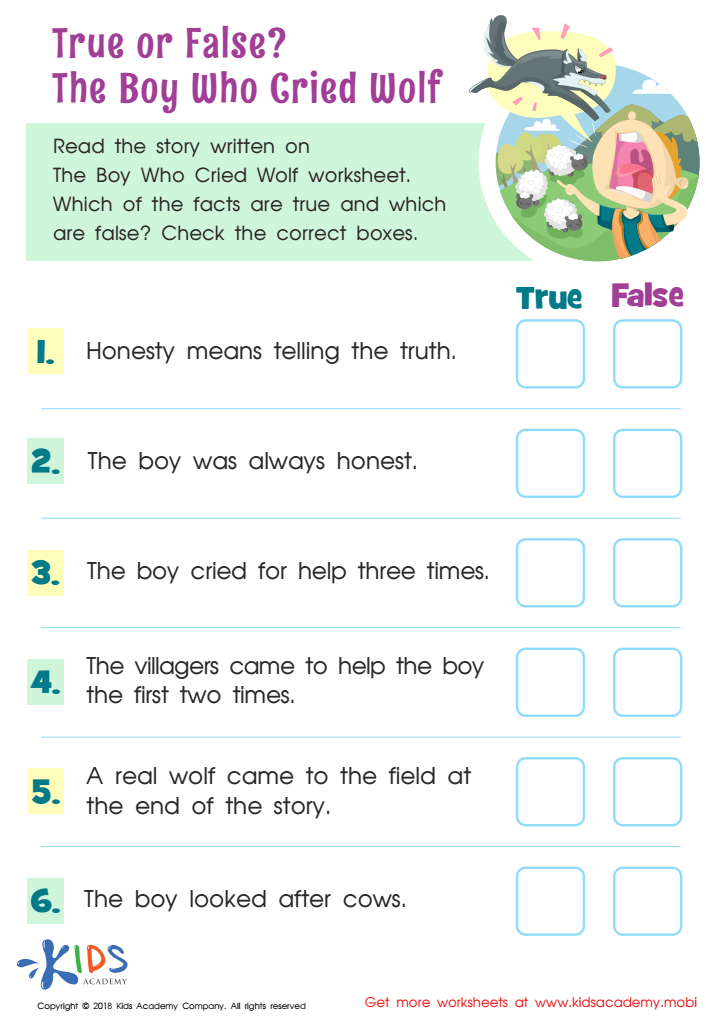
True or False? The Boy Who Cried Wolf Worksheet
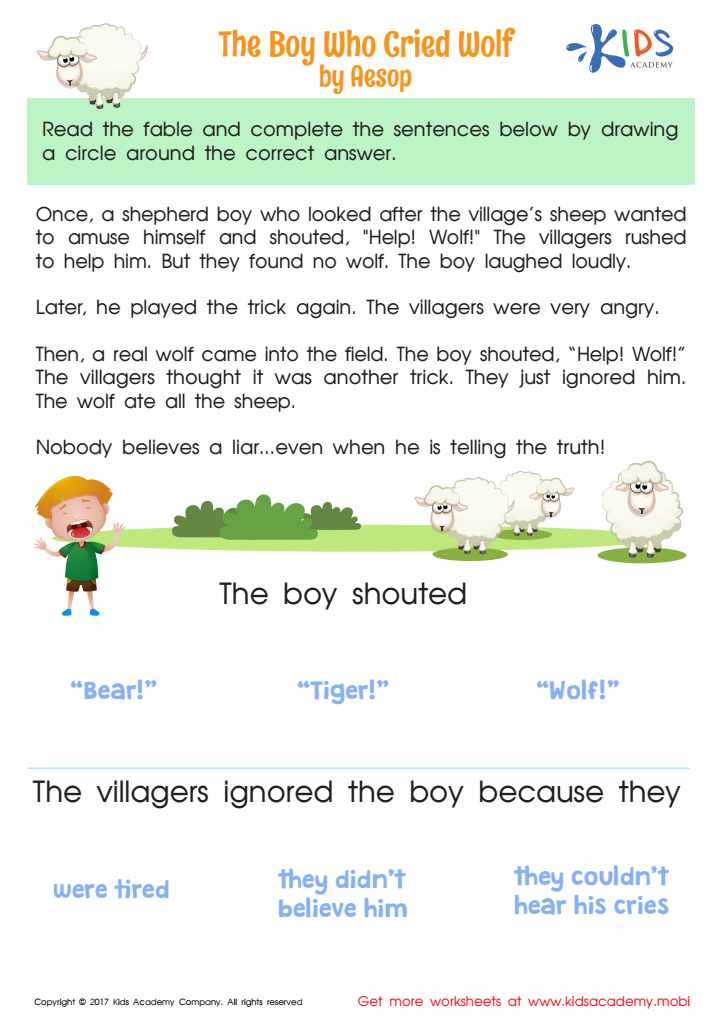
The Boy Who Cried Wolf Worksheet








Parents and teachers should prioritize moral understanding and reading comprehension for 7-year-olds as these are foundational skills integral to holistic child development. In terms of moral understanding, young children are at a crucial stage of forming their values and principles. Teaching them about empathy, fairness, honesty, and respect helps mold their character, guiding them in making ethical decisions both in and out of the classroom. Fostering these values can lead to more harmonious interactions with peers and adults, thus promoting a positive learning environment.
Reading comprehension, on the other hand, is essential for academic success beyond the basics of literacy. It enables children to grasp the meaning behind texts, fostering critical thinking and lifelong learning. Strong reading comprehension skills broaden a child's knowledge base, enhance cognitive abilities, and stimulate imagination. When these skills are taught together, stories incorporating moral lessons not only make reading more engaging but also provide concrete examples of ethical behavior. This dual focus equips children with the tools to become more reflective and compassionate individuals who think deeply about their actions and their impacts on others. Ultimately, a well-rounded approach to education emphasizes the importance of both cognitive (reading comprehension) and moral development, laying the groundwork for well-adjusted, thoughtful, and capable future citizens.








