Animal recognition Science Worksheets for 7-Year-Olds
3 filtered results
-
From - To
Unlock the wonders of the animal kingdom with our engaging Animal Recognition Science Worksheets for 7-Year-Olds! Tailored to foster curiosity and deepen understanding, these worksheets provide interactive activities that help young learners identify various animals, their habitats, dietary habits, and physical features. Ideal for both classroom and at-home learning, each worksheet combines visual aids with exercises that enhance critical thinking and observational skills. Empower your child to explore the fascinating world of biology while building a solid foundation in science. Download now to make learning an exciting adventure in the realm of animals!
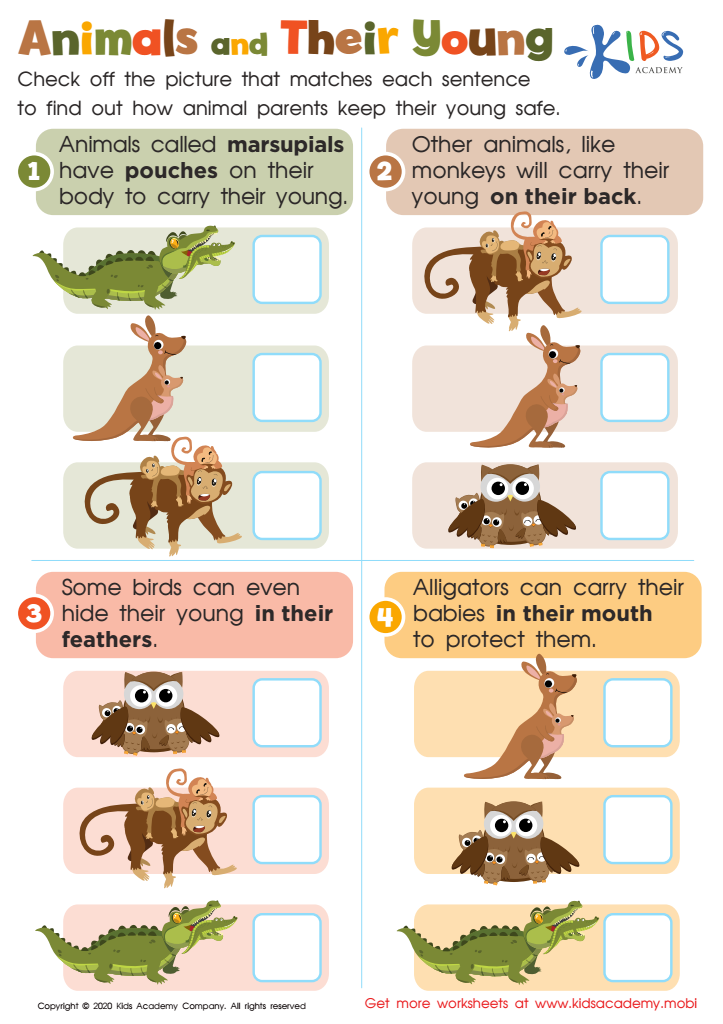
Animals and Their Young Worksheet
 Assign to My Students
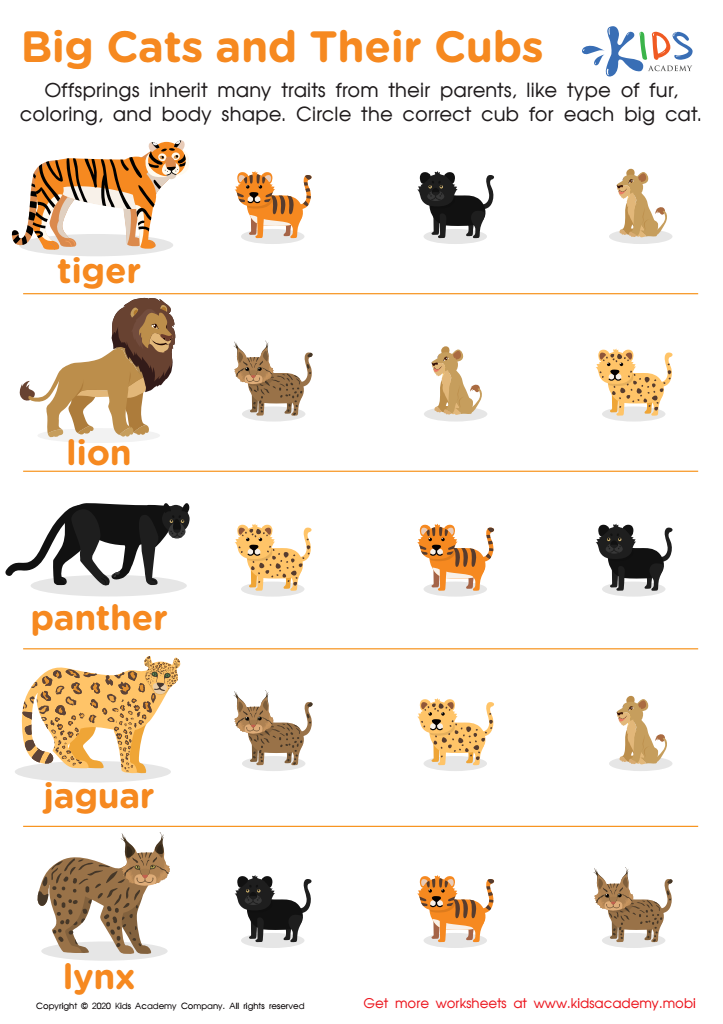
Big Cats and Their Cubs Worksheet
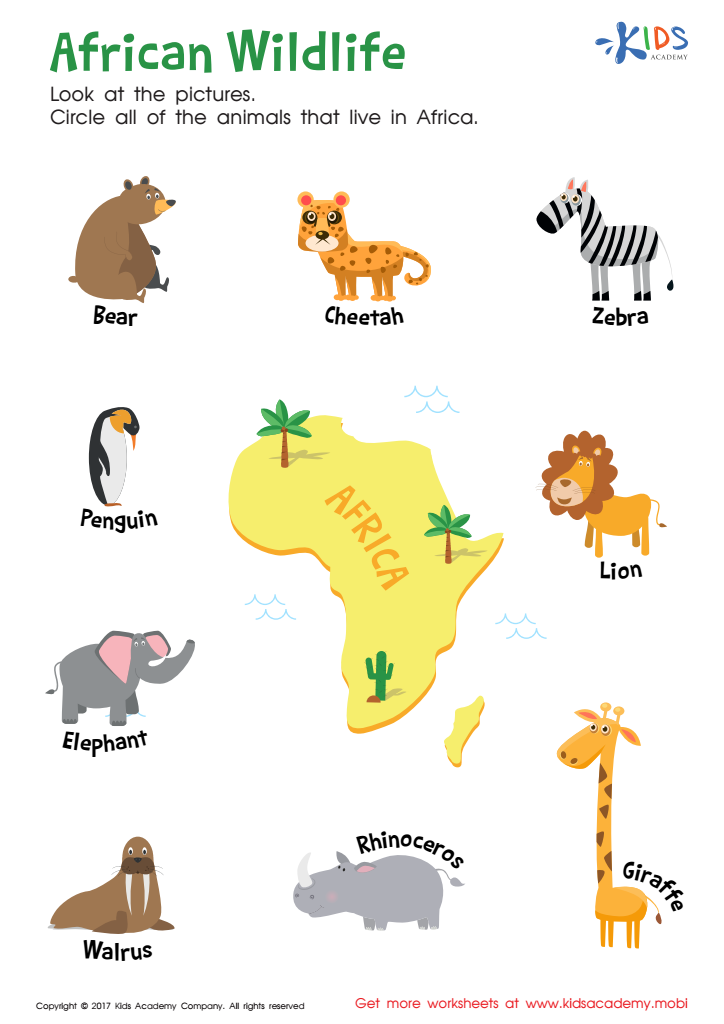







Animal recognition science for 7-year-olds is crucial because it lays the foundation for a comprehensive understanding of the natural world, fostering empathy, curiosity, and critical thinking from an early age. When kids learn to identify and recognize animals, they naturally develop an interest in wildlife and ecosystems. This early engagement promotes empathy and respect for living creatures, encouraging future generations to value and protect biodiversity.
From an educational standpoint, recognizing different animals enhances cognitive development and observational skills. It sharpens attention to detail, memory retention, and categorization skills—fundamental aspects of scientific learning and inquiry-based thinking. Educational activities surrounding animal recognition blend visual, auditory, and tactile learning modes, catering to diverse learning styles and making education more inclusive.
Moreover, integrating this knowledge into the curriculum bolsters multisensory learning, making lessons more engaging and enjoyable. This could involve interactive activities such as matching games, outdoor exploration, or arts and crafts centered around animals, giving students hands-on experiences that reinforce their learning.
Lastly, understanding animal science connects children to broader subjects such as geography, biology, and environmental science, providing them with a holistic educational experience. By prioritizing animal recognition science, parents and teachers cultivate well-rounded, environmentally conscious individuals ready to explore and engage with the world responsibly.







