Understanding constellations Science Worksheets for 7-Year-Olds
3 filtered results
-
From - To
Explore the wonders of the night sky with our "Understanding Constellations Science Worksheets" designed specifically for 7-year-olds! These engaging worksheets invite young learners to discover various constellations, learn their names, and understand their stories. Packed with fun activities, including coloring pages, drawing exercises, and simple questions, these worksheets make learning about stars and galaxies enjoyable and interactive. Encourage curiosity about the universe while developing essential skills in science and critical thinking. Ideal for classrooms or home study, our resources spark imagination and help students connect with the cosmic world above. Get ready for a stellar adventure in learning!
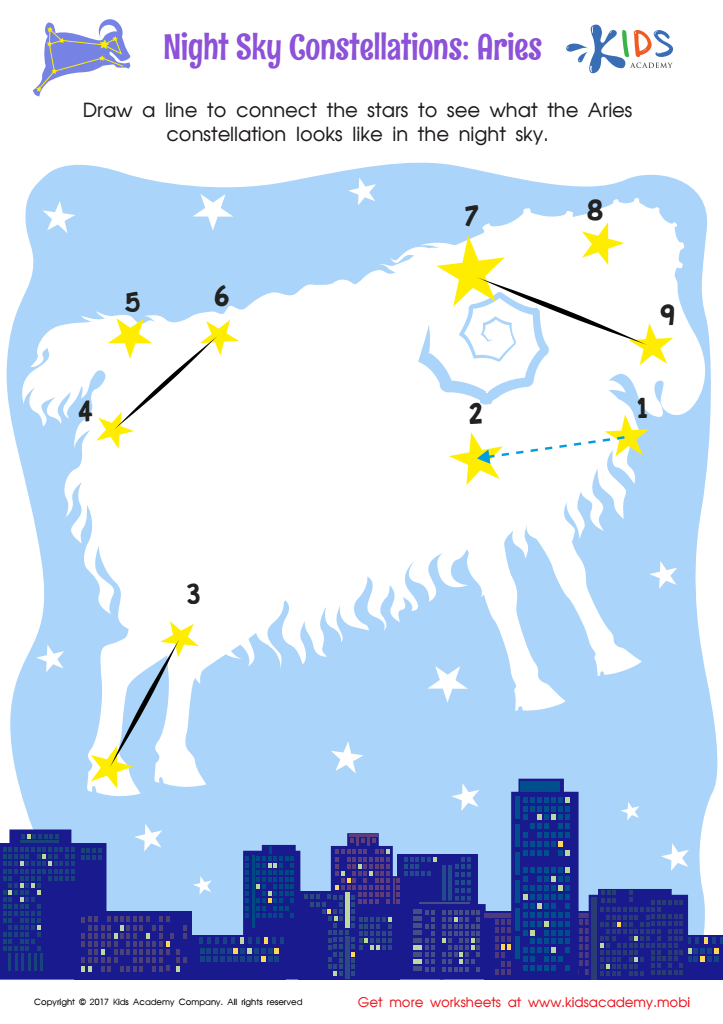
Night Sky Constellations: Aries Worksheet
 Assign to My Students
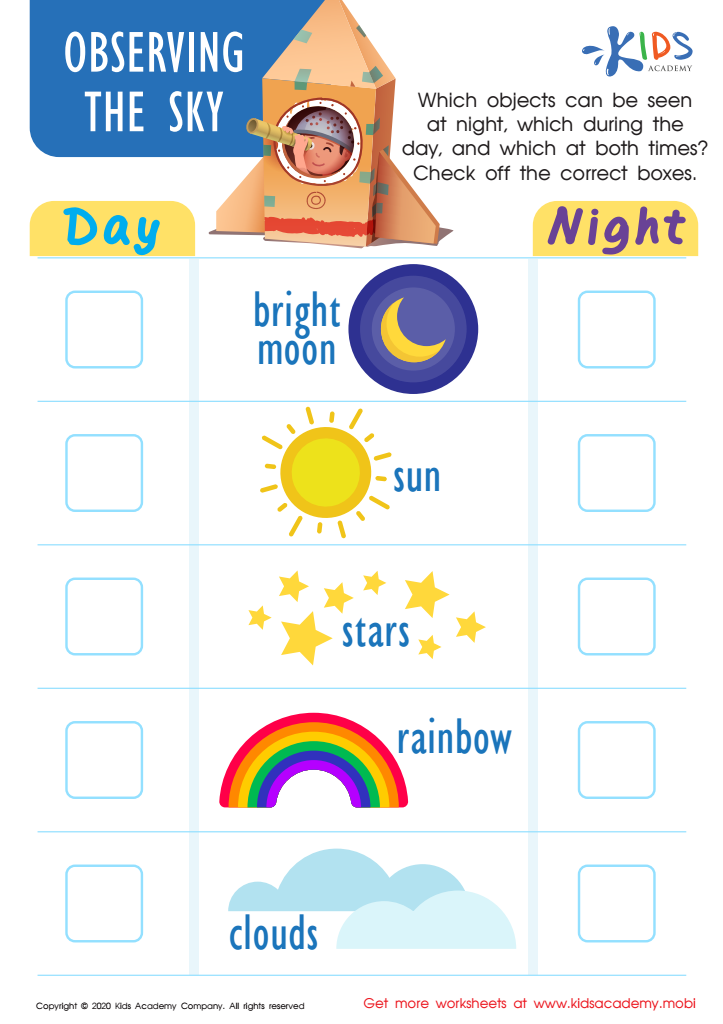
Observing the Sky Worksheet
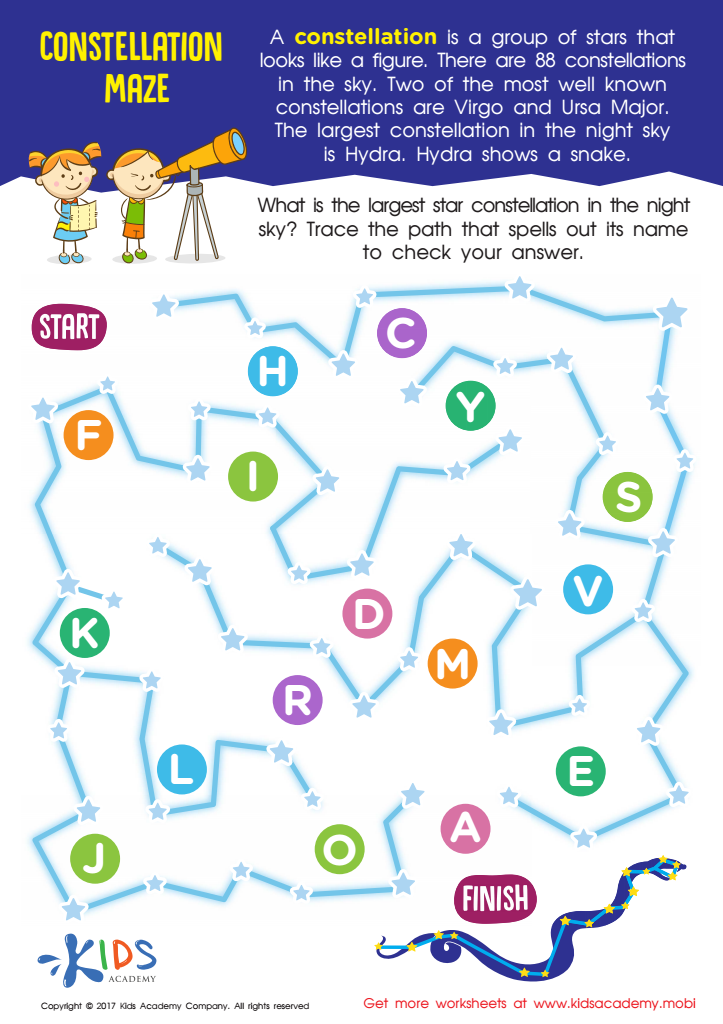
Constellations Worksheet








Understanding constellations is vital for the cognitive and emotional development of seven-year-olds. First, it nurtures curiosity about the natural world, encouraging children to ask questions and seek answers, igniting a lifelong love for science. Learning about constellations introduces children to basic astronomy, enhancing their understanding of the universe and fostering critical thinking skills.
Moreover, discussing constellations provides an opportunity for teachers and parents to create interactive and engaging learning experiences. Stargazing can become a family activity, promoting bonding and quality time. Additionally, constellations serve as a gateway to broader discussions about space, geography, and even mythology, integrating multiple subjects into one captivating topic.
Another benefit is that learning about constellations aids in developing observation skills. Children learn to differentiate shapes, recognize patterns, and improve their spatial awareness.
In today’s tech-focused world, exploring the night sky encourages screen-free time and helps children appreciate the wonders of nature. Overall, understanding constellations not only supports educational growth but also fosters imagination, cultural literacy, and emotional well-being. By engaging with this topic, parents and teachers contribute significantly to nurturing well-rounded, inquisitive young minds.







