Filters

7 filtered results

Clear all filters
Favorites
With answer key
Interactive

7 filtered results

Difficulty Level

Grade


Enhance your 7-year-old's vocabulary with our engaging Vocabulary Building Science Worksheets! Designed to captivate young minds, these worksheets combine essential scientific concepts with fun activities that promote language skills. Children will explore unique science terminology while engaging in tasks that improve reading comprehension and critical thinking. Each worksheet includes colorful visuals and interactive exercises to make learning enjoyable and effective. Perfect for home or classroom use, these resources help foster a love for science and words, setting a solid foundation for future learning. Download our printable worksheets today and watch your child's vocabulary flourish!

Check out this FREE Trial Lesson on Science for age 7!

The Sun and Seasons

Favorites
With answer key
Interactive
  • 7
  • Vocabulary Building
  • Science
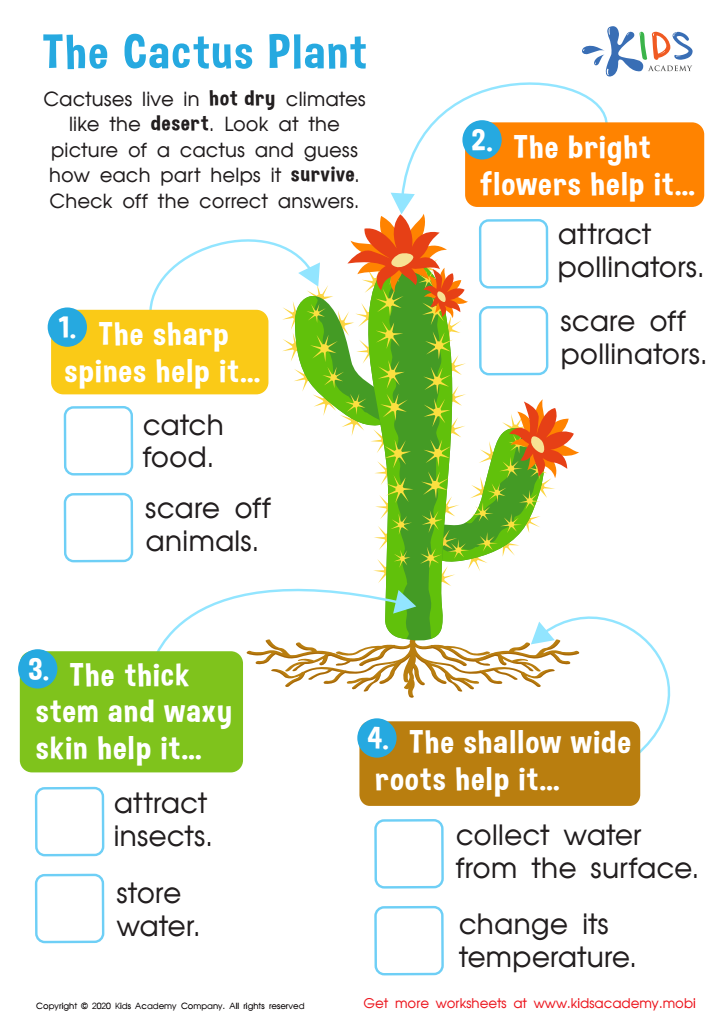
The Cactus Plant Worksheet

The Cactus Plant Worksheet

Encourage your little scientist to review cacti with this free biology worksheet. Check off the correct answer to show how the cactus survives its harsh desert environment! With sharp spikes and the ability to store water like a camel, the cactus is a remarkable plant that has adapted to its climate.
The Cactus Plant Worksheet
Worksheet
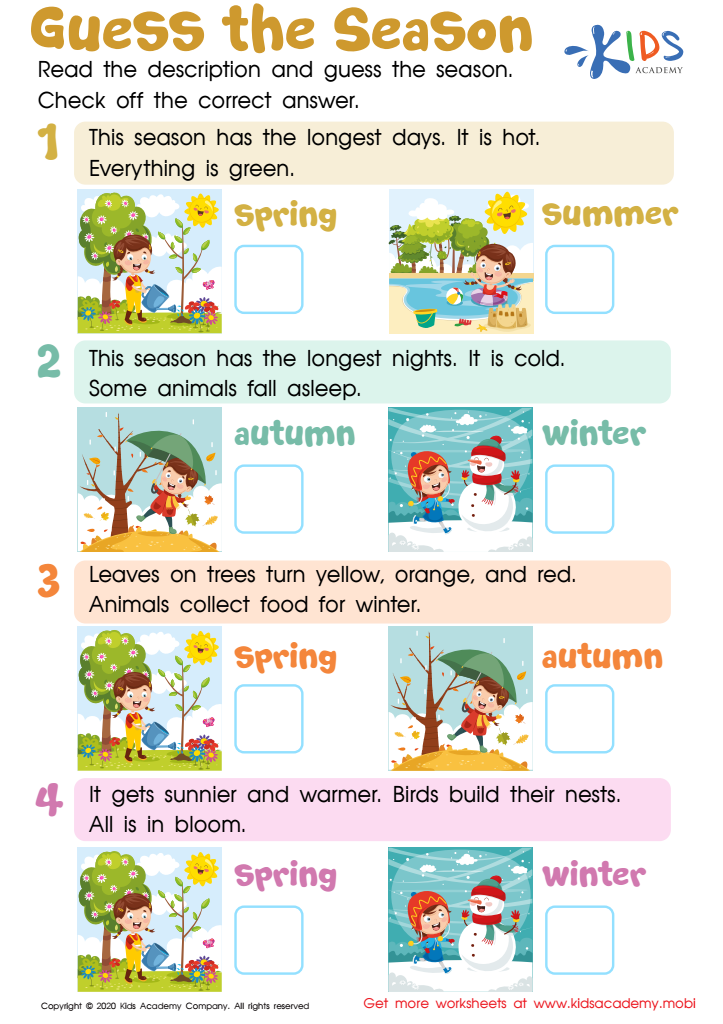
Guess the Season Worksheet

Guess the Season Worksheet

Winter and summer bring different weather! Help kids recognize the changes with this free Kids Academy PDF worksheet. Students read each description, look at the pictures, and check the box next to the season depicted. Make learning fun and easy with interactive activities.
Guess the Season Worksheet
Worksheet
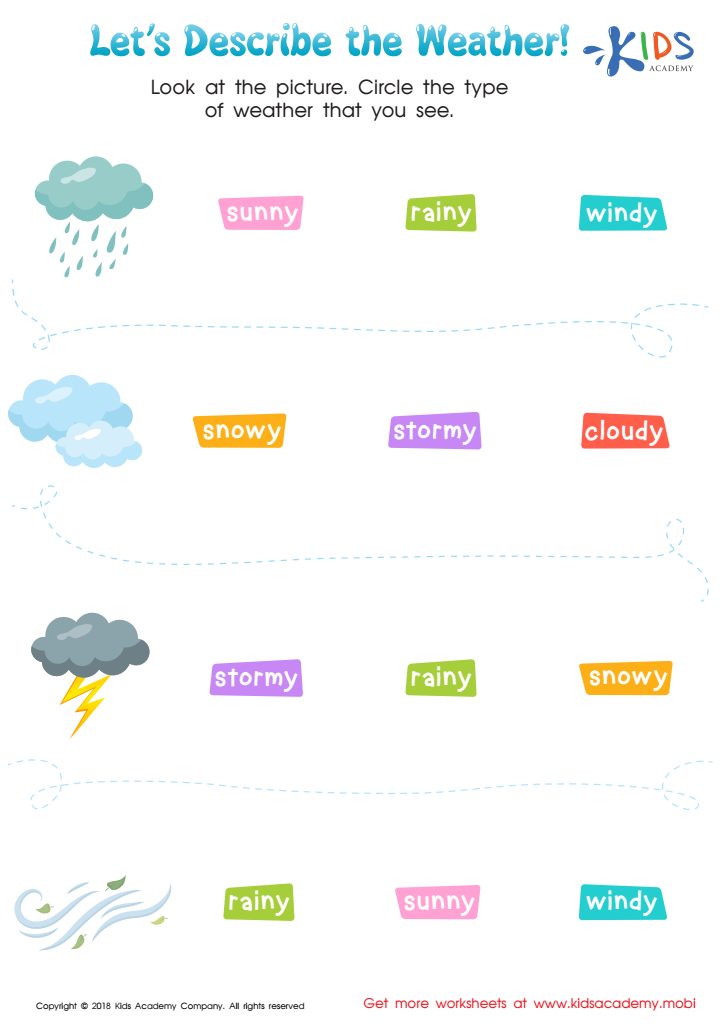
Let's Describe the Weather! Worksheet

Let's Describe the Weather! Worksheet

Test your child's knowledge of weather with this fun worksheet. Ask them to look at the pictures and identify the type of weather. Then, have them select the correct answer from the options on the right. See how well your kids have been paying attention to the weather forecast!
Let's Describe the Weather! Worksheet
Worksheet
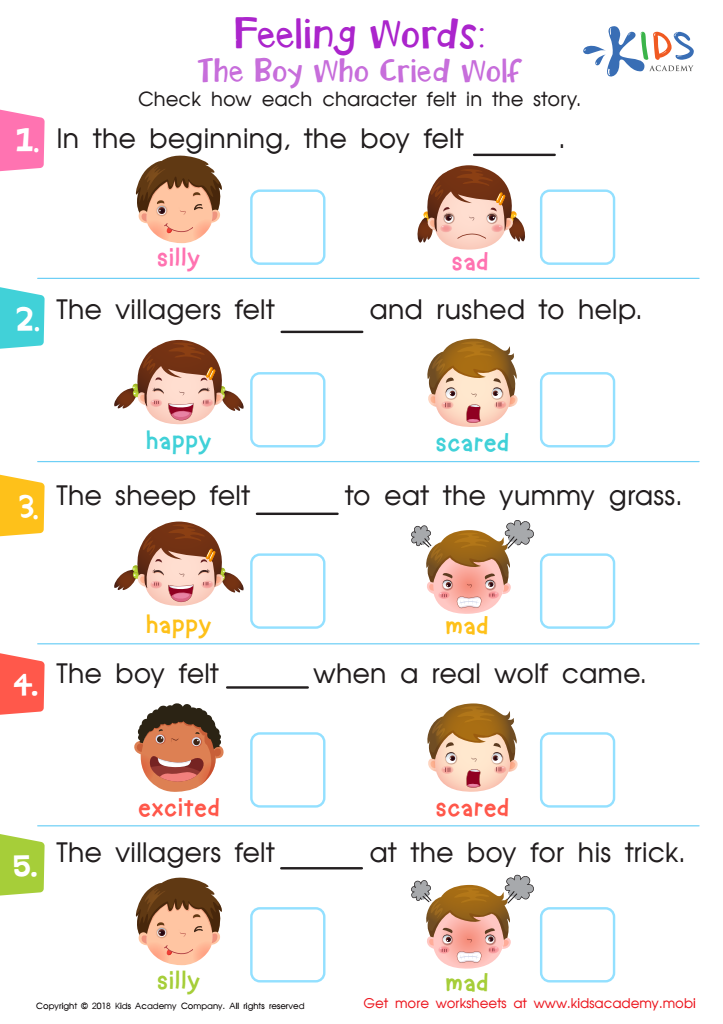
Feeling Words: The Boy Who Cried Wolf Worksheet

Feeling Words: The Boy Who Cried Wolf Worksheet

This worksheet helps students infer characters' traits and feelings by reading The Boy Who Cried Wolf. They choose the correct emotion for each character to improve their story comprehension. A great resource for the reading classroom, it teaches an essential comprehension skill.
Feeling Words: The Boy Who Cried Wolf Worksheet
Worksheet
Seeing and Hearing Worksheet

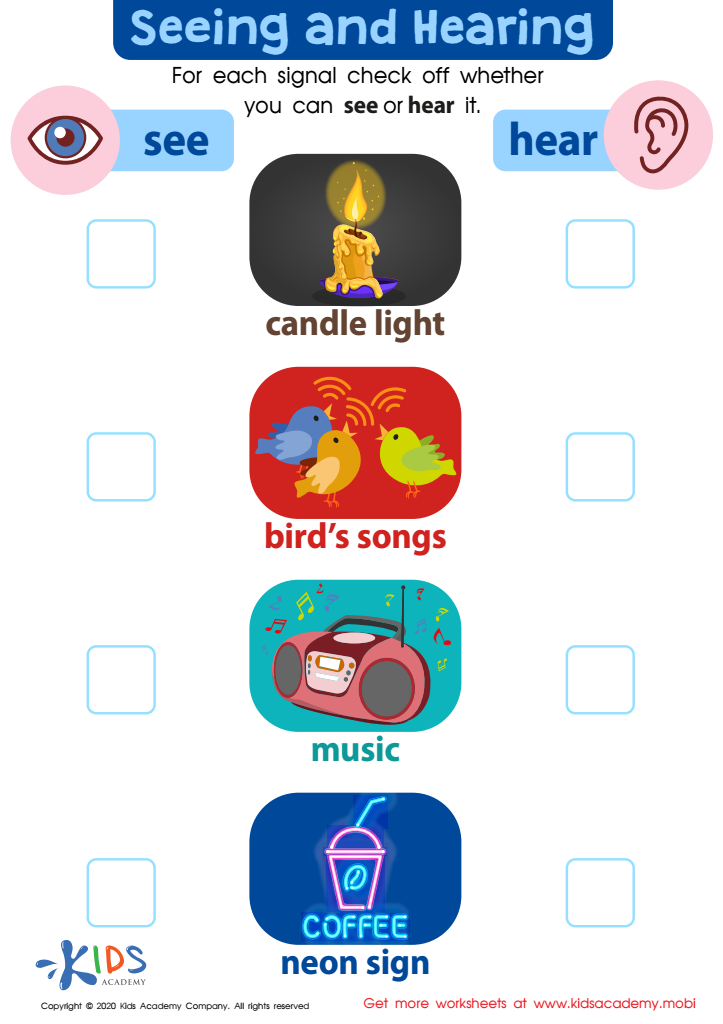
Seeing and Hearing Worksheet

Before beginning this worksheet, ensure your students know that we have five senses: eyes (seeing), tongue (tasting), skin (feeling), nose (smelling), and ears (hearing). This worksheet will explore seeing and hearing - ask your students what they can see/hear in the picture and get them to check it off.
Seeing and Hearing Worksheet
Worksheet
Arctic Animals Worksheet

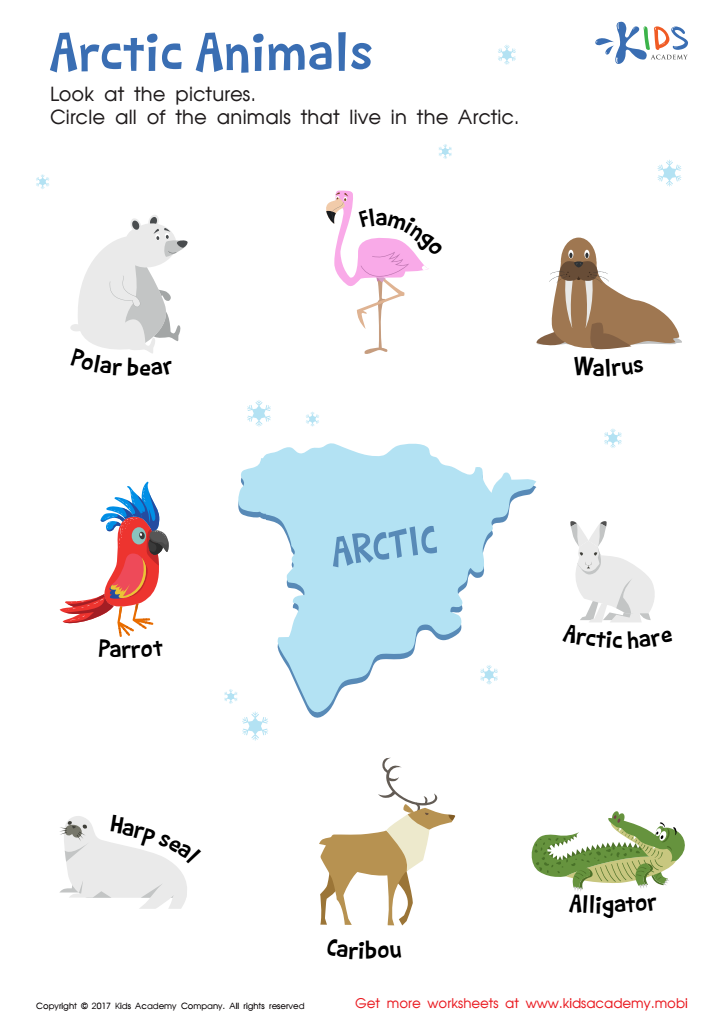
Arctic Animals Worksheet

Kids love animals and this worksheet is a great way to teach them where they live. It reinforces classification skills and introduces new animals, like the Arctic hare. Use it to discuss the Arctic climate and how these animals live, then ask your child where other animals live to keep the conversation going.
Arctic Animals Worksheet
Worksheet
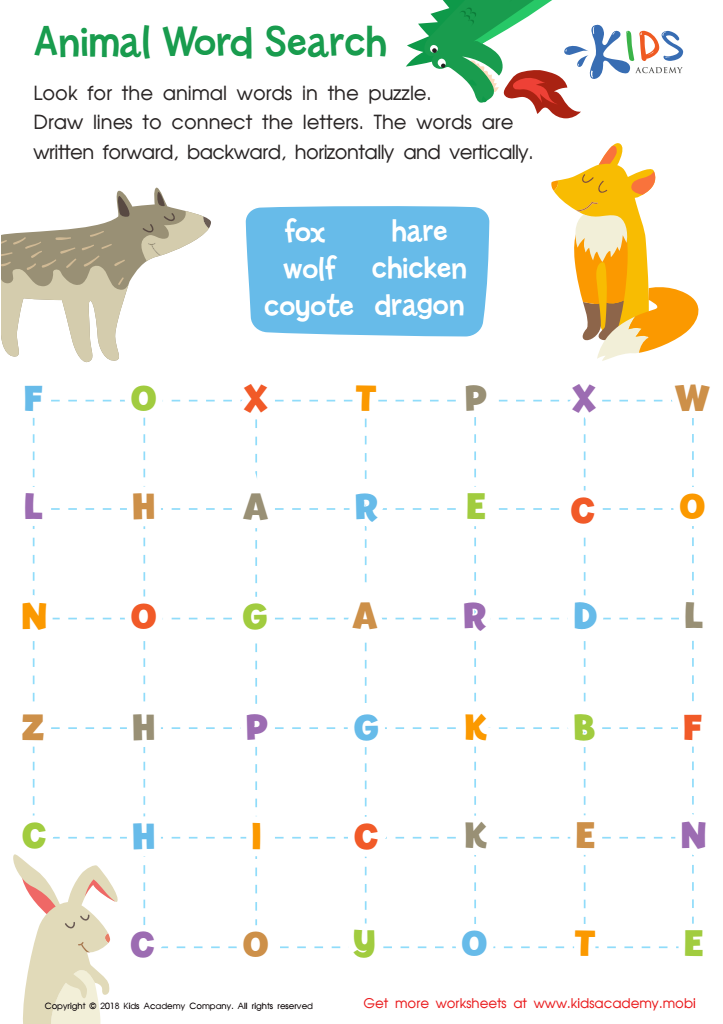
Animal Word Search Worksheet


Animal Word Search Worksheet

Students can have fun and strengthen spelling and vocabulary skills with this word search worksheet. Search for animal words and circle the letters in the puzzle. Words can be found forwards, backwards, horizontally or vertically, providing a great challenge to foster critical thinking skills. An enriching activity for all ages!
Animal Word Search Worksheet
Worksheet


Vocabulary building is essential for 7-year-olds as it lays the foundation for reading comprehension, effective communication, and academic success. At this age, children are transitioning from learning to read to reading to learn. A robust vocabulary enables them to understand concepts in various subjects, including science, thereby developing critical thinking skills.

In science, specific terminology can often be complex; children with rich vocabularies can better grasp scientific concepts and articulate their thoughts clearly. Parents and teachers play a crucial role in this process. Engaging students in conversations about scientific ideas, encouraging questions, and exploring new terms enriches their language and cognitive abilities.

Additionally, vocabulary building fosters curiosity and a love for learning. When children understand what they read, they are more likely to engage with the material, fueling their interest in science and the world around them. Research indicates that a strong vocabulary correlates with higher academic achievement and future success.

Moreover, a diverse vocabulary promotes confidence in social situations and enhances collaboration skills when working in groups. Therefore, both parents and teachers must prioritize vocabulary development, creating an enriching environment that supports children’s growth in education and personal development.