
Understanding history History Worksheets for 7-Year-Olds
3 filtered results
Difficulty Level
Grade
Age
-
From - To
Subject
Activity
Standards
Discover the captivating world of history with our "Understanding History" worksheets designed specifically for 7-year-olds. Our engaging activities ignite curiosity and enhance comprehension of significant historical events, cultures, and figures. Tailored to young learners, these worksheets foster critical thinking and a deeper appreciation of the past. Perfect for both classroom and home use, they provide a fun and educational experience that complements traditional social studies curricula. Empower your child with knowledge and a love for history through our meticulously crafted resources. Dive into history today and watch your child's understanding and interest grow with each worksheet!
Favorites
With answer key
Interactive
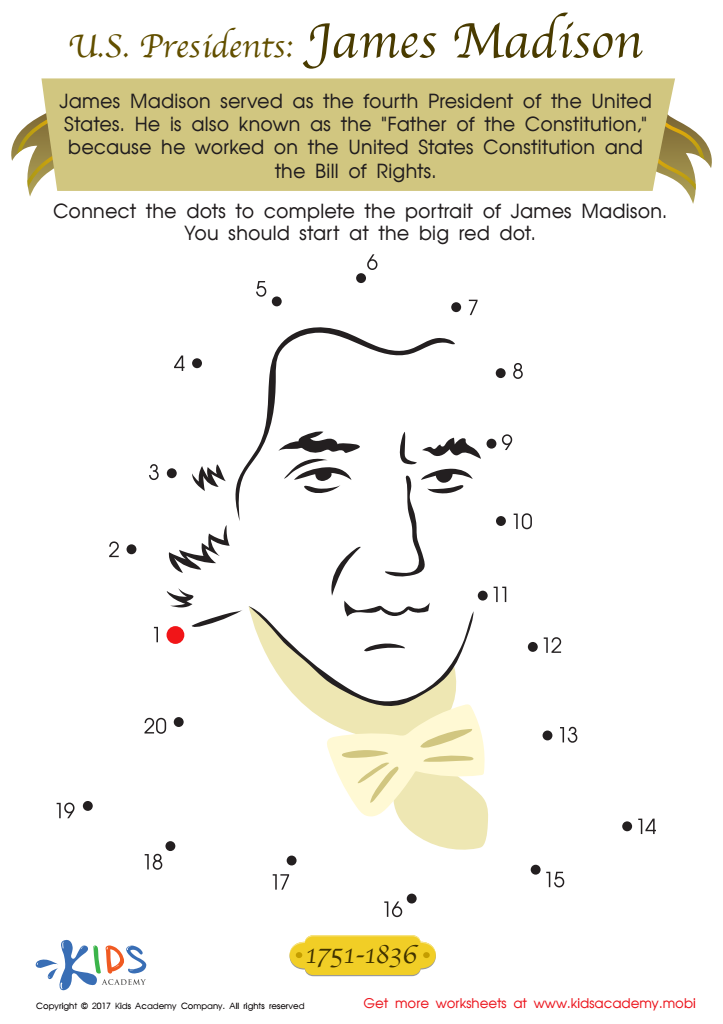
President Madison Printable
Introduce your child to the nation's fourth president, James Madison. This worksheet helps them learn about the "Father of the Constitution" and his contributions to American history. Discover Madison's legacy with your child today!
President Madison Printable
Worksheet
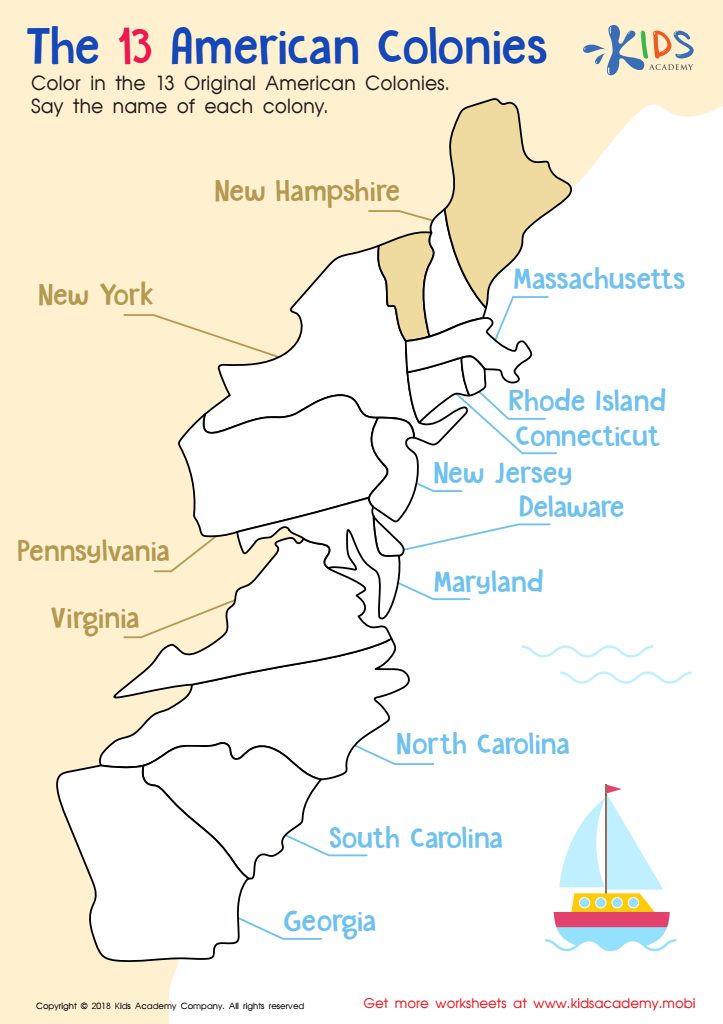
The 13 American Colonies Worksheet
Ensure kids are knowledgeable in maths, English, science, history, and geography. Test their American knowledge: Can they name the 13 Original American Colonies? Use the worksheet; have them color each colony and name it out loud.
Download (PDF)
 Assign to My Students
Assign to My Students
The 13 American Colonies Worksheet
Worksheet
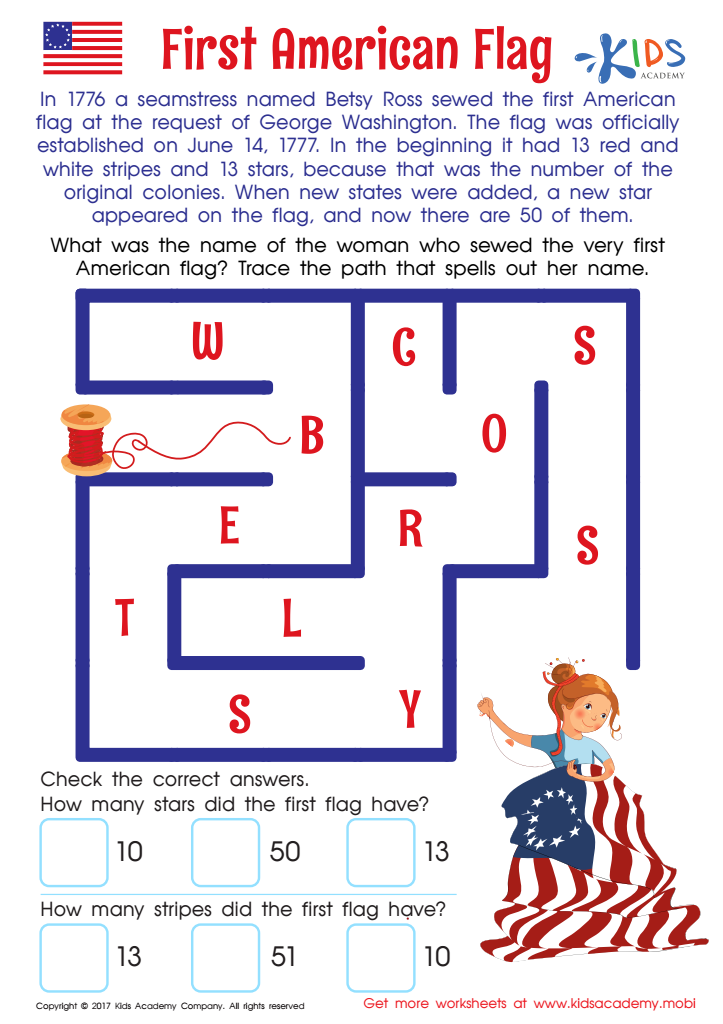
First American Flag Worksheet
Betsy Ross sewed the first American flag at the request of George Washington. This worksheet helps kids learn about this milestone in U.S. history, plus the design and origins of the flag.
First American Flag Worksheet
Worksheet
Join Kids Academy for Free
Who is primarily going to use this learning content?







Understanding history helps 7-year-olds build a strong foundation for grasping the world around them. First, it nurtures curiosity and a love for learning. By exploring stories from the past, young children become more inquisitive and eager to discover more about different cultures, events, and figures. Second, history teaches valuable lessons about good and bad decisions and their consequences. These lessons help children understand moral and ethical standards, facilitating the development of empathy and critical thinking.
Moreover, studying history at a young age instills a sense of identity and belonging. Knowing where they come from enables children to appreciate their own traditions and those of others, fostering respect and inclusivity. History also introduces children to the continuity of change, showing them how societies evolve and how individuals can impact them, thereby empowering even young minds to feel capable of contributing to positive changes in their communities.
In an ever-globalizing world, an early appreciation for history allows children to become more informed and responsible citizens. They learn not only dates and events but also how to draw connections, compare different perspectives, and appreciate the rich tapestry of human experience. All these elements combined make understanding history a crucial part of a child’s holistic education.








