Word association Writing Worksheets for 7-Year-Olds
3 filtered results
-
From - To
Discover fun and engaging Word Association Writing Worksheets designed specifically for 7-year-olds! These worksheets enhance vocabulary, critical thinking, and creative writing skills by encouraging young learners to connect related words. Perfect for both classroom use and at-home learning, each activity stimulates imagination and improves literacy through exciting, age-appropriate challenges. Foster your child's love for words and help them develop essential language skills with our uniquely crafted word association exercises. Explore our collection and watch as your 7-year-old's writing abilities and confidence flourish. Get started now and make learning an enjoyable adventure!
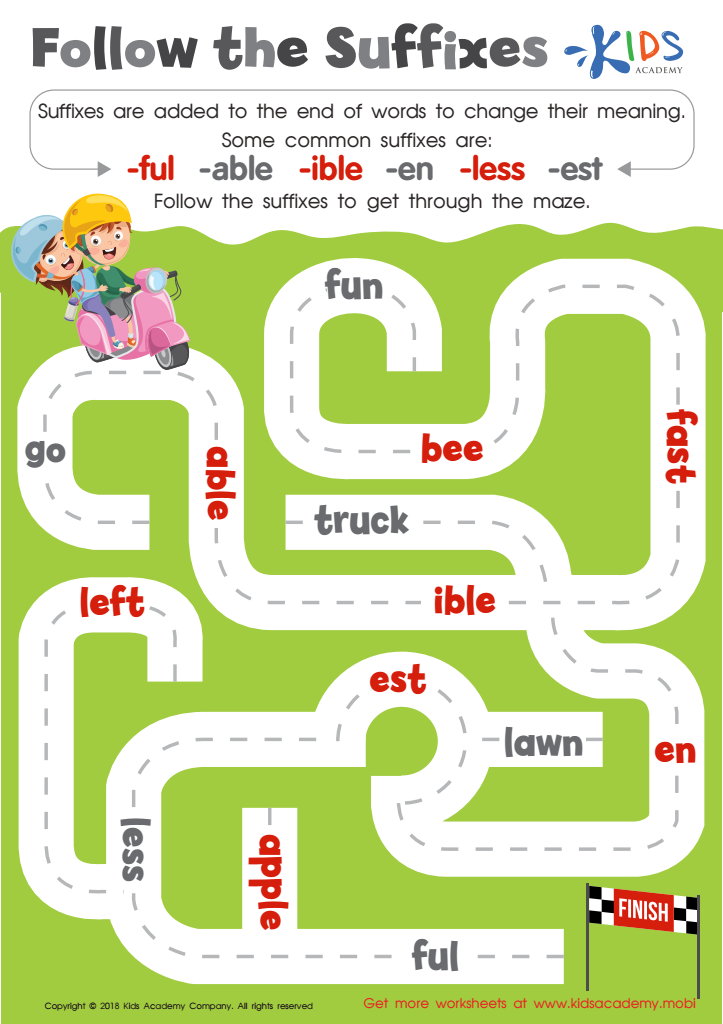
Reading: Follow the Suffixes Worksheet
 Assign to My Students
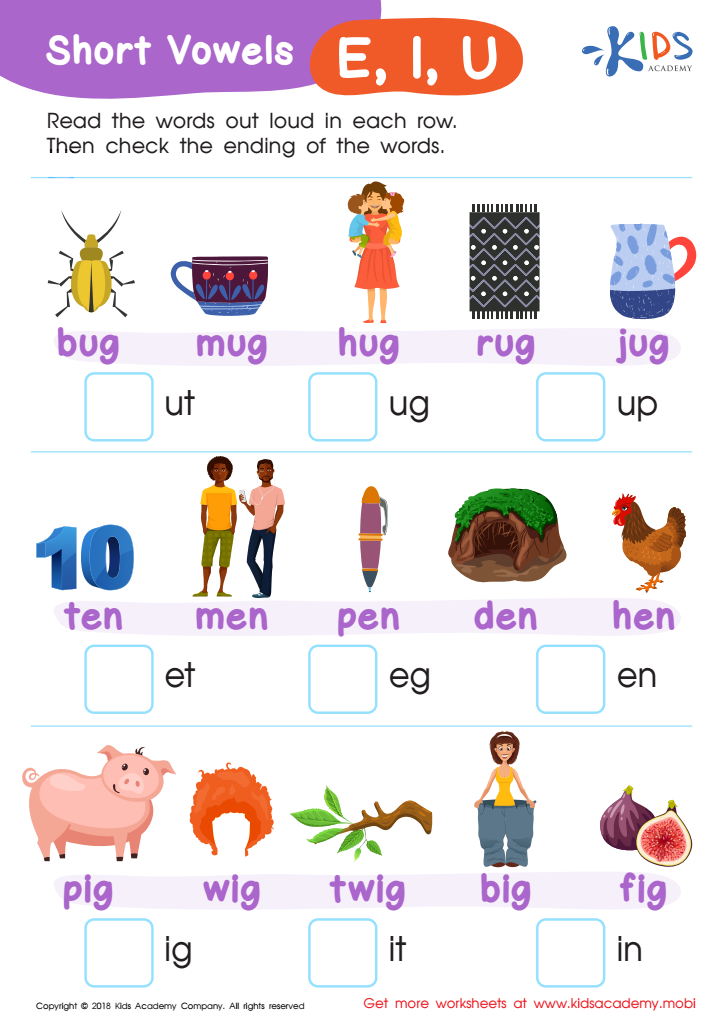
Short Vowels /e/, /i/, and /u/ Worksheet
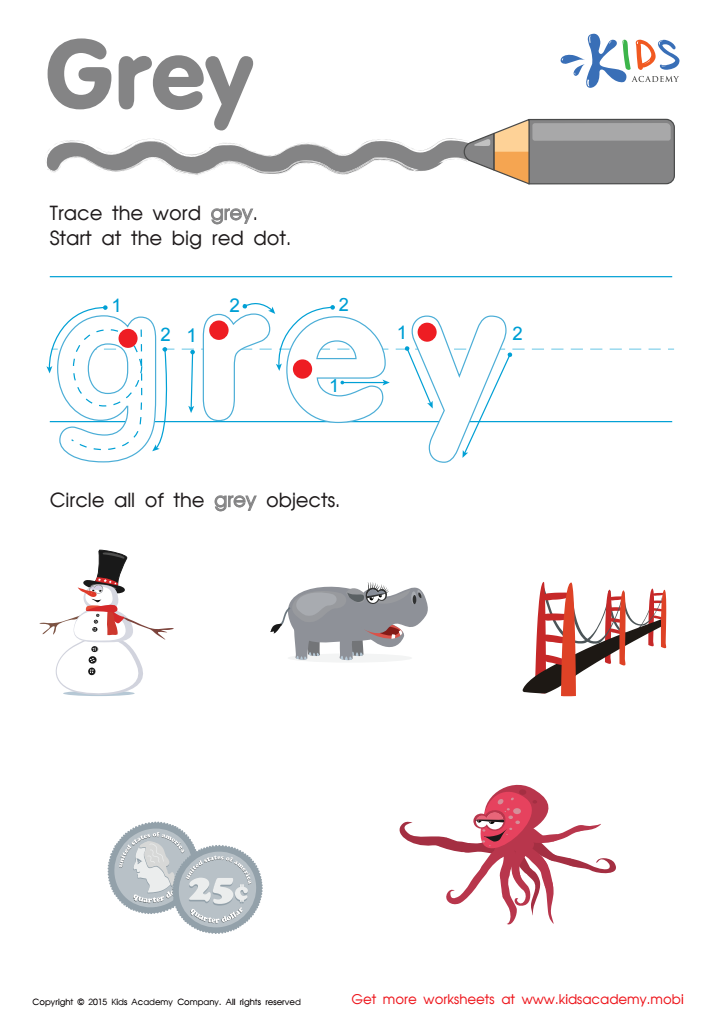
Grey Tracing Color Words Worksheet



.jpg)




Word association writing significantly benefits 7-year-olds, and parents and teachers should value its practice. Firstly, it fosters critical language skills. When children engage in word association writing, they connect new vocabulary with existing knowledge, enhancing their ability to understand and use words accurately in context. This process aids in developing a richer and more flexible vocabulary, setting a foundation for effective communication and reading comprehension in later years.
Secondly, it nurtures cognitive and associative thinking. Word association encourages children to think creatively and make connections between words and concepts. This kind of mental exercise promotes cognitive flexibility, crucial for problem-solving and analytical thinking skills, which are important for academic success in various subjects.
Furthermore, word association writing boosts confidence and enthusiasm for learning. As children see the connections they've made, they experience a sense of achievement, reinforcing a positive attitude toward learning and writing. This positive reinforcement can motivate them to engage more actively in their educational activities.
Finally, it supports personalized learning. Parents and teachers can gain insights into a child's thought processes and areas needing improvement by observing the associations children make. This understanding enables tailored support that caters to each child’s unique learning needs, fostering a more effective and enjoyable education experience.








