
Letter tracing skills Alphabet Worksheets for Ages 8-9
3 filtered results
Difficulty Level
Grade
Age
-
From - To
Subject
Activity
Standards
Enhance your child's handwriting with our "Letter Tracing Skills Alphabet Worksheets for Ages 8-9." Designed for developing fine motor skills and reinforcing alphabet knowledge, these engaging worksheets feature both uppercase and lowercase letters in a traceable format. Each activity encourages precision and neatness, fostering confidence in writing. Perfect for homework, classroom practice, or supplemental learning, our worksheets support educational growth and make learning fun. Boost your child's writing skills and watch them excel academically with carefully crafted tracing exercises tailored for young learners. Experience a smoother learning journey with our expertly designed alphabet tracing worksheets today!
Favorites
With answer key
Interactive
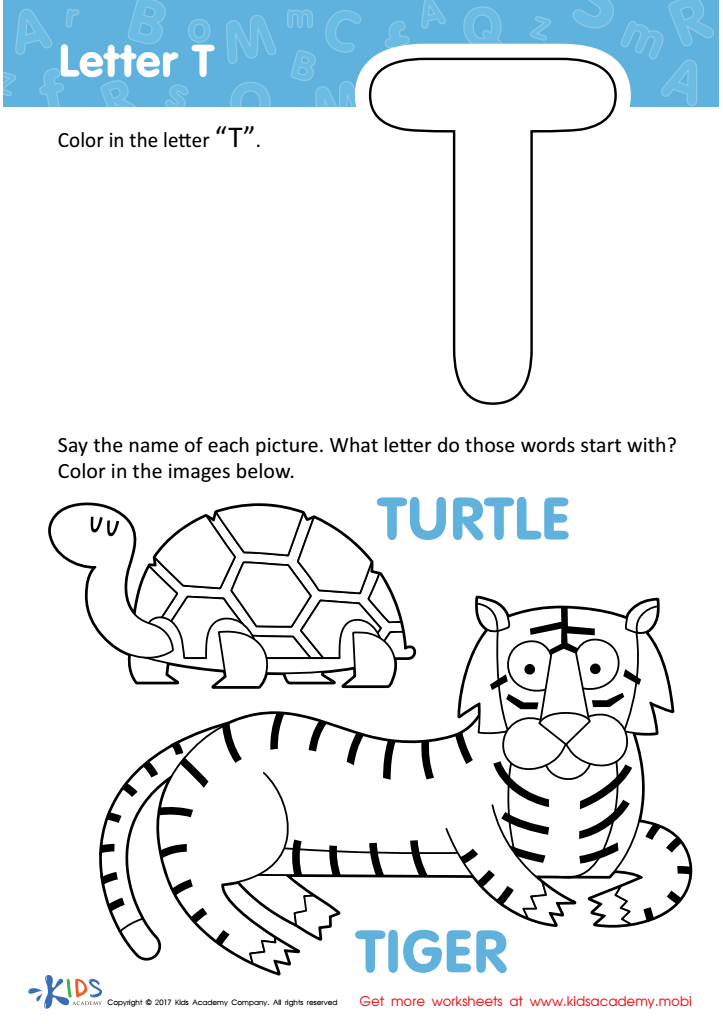
Letter T Coloring Sheet
Introduce your child to the letter "T" and its animals – turtles and tigers! With this coloring page, you can stimulate your child's imagination and creativity, while helping them recognize the letter "T". Have fun with your child and get coloring!
Download (PDF)
 Assign to My Students
Assign to My Students
Letter T Coloring Sheet
Worksheet
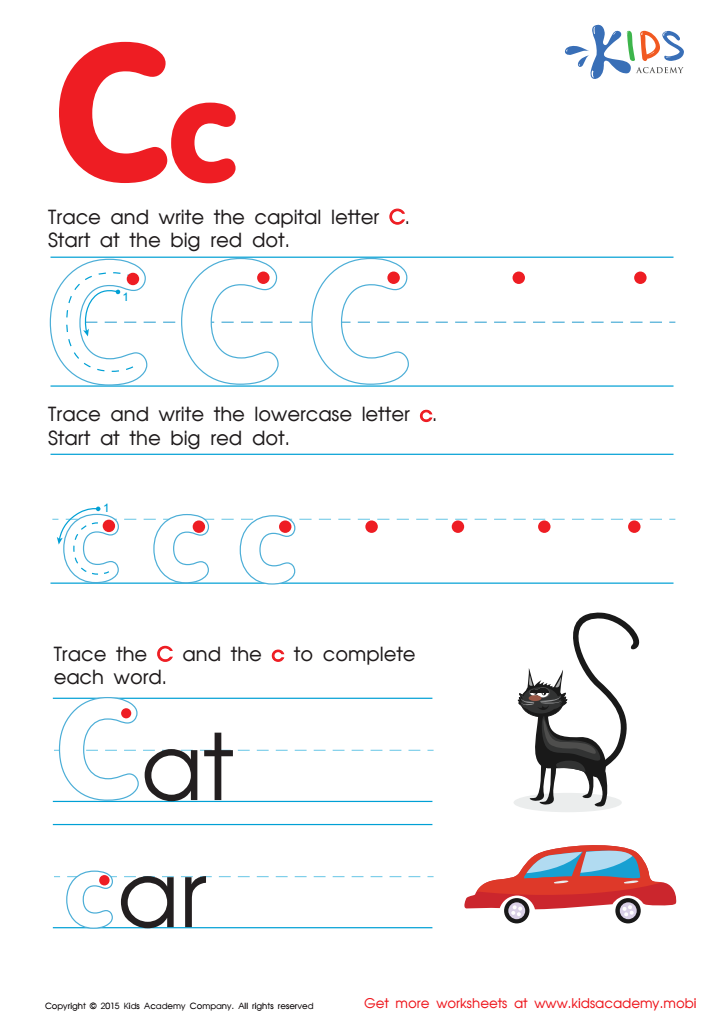
Letter C Tracing Page
Trace and write the letter 'C'! Put the pencil at the red dot then follow the lines – the capital letter first then the lowercase one. Cats love it and so will you! Get more free printables to practice tracing and writing.
Letter C Tracing Page
Worksheet
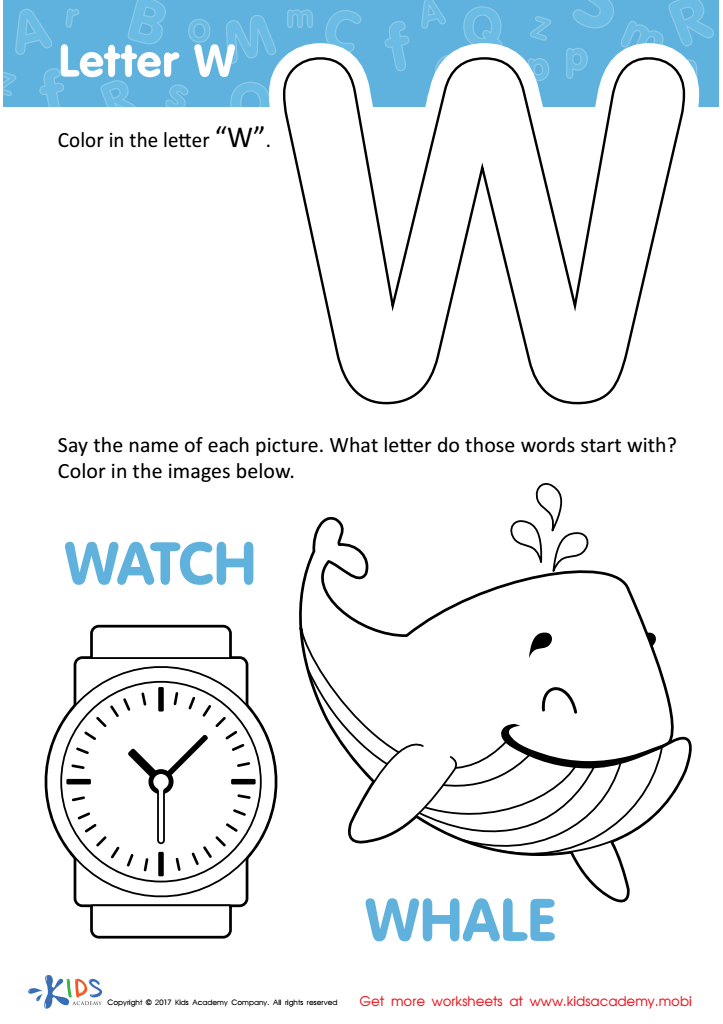
Letter W Coloring Sheet
Let your child have fun with this letter "W" coloring page! They can use their imagination to color the whale and discover the letter and its sound. Give them a helping hand to make it a whale of a time!
Download (PDF)
Assign to My Students
Assign to My Students
Letter W Coloring Sheet
Worksheet
Join Kids Academy for Free
Who is primarily going to use this learning content?







Parents and teachers should care about letter tracing skills for children ages 8-9 because they form a foundational step in developing strong handwriting and literacy skills. During these crucial developmental years, children transition from basic letter recognition to proficient reading and writing.
Firstly, letter tracing reinforces proper letter formation and improves fine motor skills required for writing. When children practice tracing, they learn the correct way to form letters, which leads to more legible handwriting. This becomes particularly important as academic demands increase and clear communication through writing becomes essential.
Secondly, letter tracing reinforces phonemic awareness and spelling. By meticulously tracing each letter and forming words, children link sounds to symbols, which strengthens their ability to read and understand written text. Research shows that students with strong handwriting skills are more likely to excel in spelling and reading fluency.
Lastly, letter tracing contributes to self-confidence and independence. Mastery of this skill can make schoolwork less frustrating and help children focus on higher-level skills, such as composing sentences and paragraphs.
In conclusion, investing time in letter tracing for ages 8-9 is critical for their academic success and builds a strong foundation for future learning and communication skills.







