
Letter formation Tracing Letters Worksheets for Ages 8-9
3 filtered results
Difficulty Level
Grade
Age
-
From - To
Subject
Activity
Standards
Enhance your child’s writing skills with our "Letter Formation Tracing Worksheets" designed specifically for ages 8-9! These engaging printable worksheets help young learners master proper letter formation through fun tracing activities. Each worksheet focuses on uppercase and lowercase letters, boosting handwriting dexterity and confidence. With a variety of exercises and themes, children can practice consistently while developing their fine motor skills. Our resources encourage creativity and provide an effective way to learn letter shapes and sounds. Perfect for classroom use or at-home learning, these worksheets make practicing letters enjoyable and educational. Download now and watch your child’s writing flourish!
Favorites
With answer key
Interactive
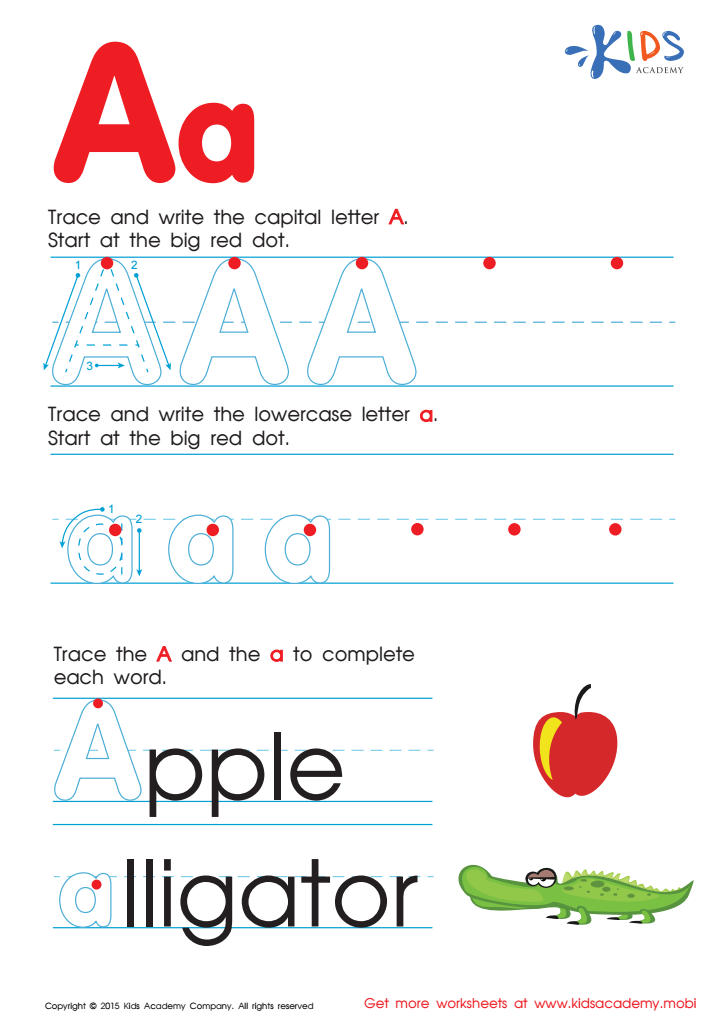
Letter A Tracing Page
Trace and write the letter "A"! Start with the big red dot, then do the capital and lowercase versions. Then write it again with two words - apple and alligator. Download more tracing worksheets at Kids Academy.
 Assign to My Students
Letter A Tracing Page
Worksheet
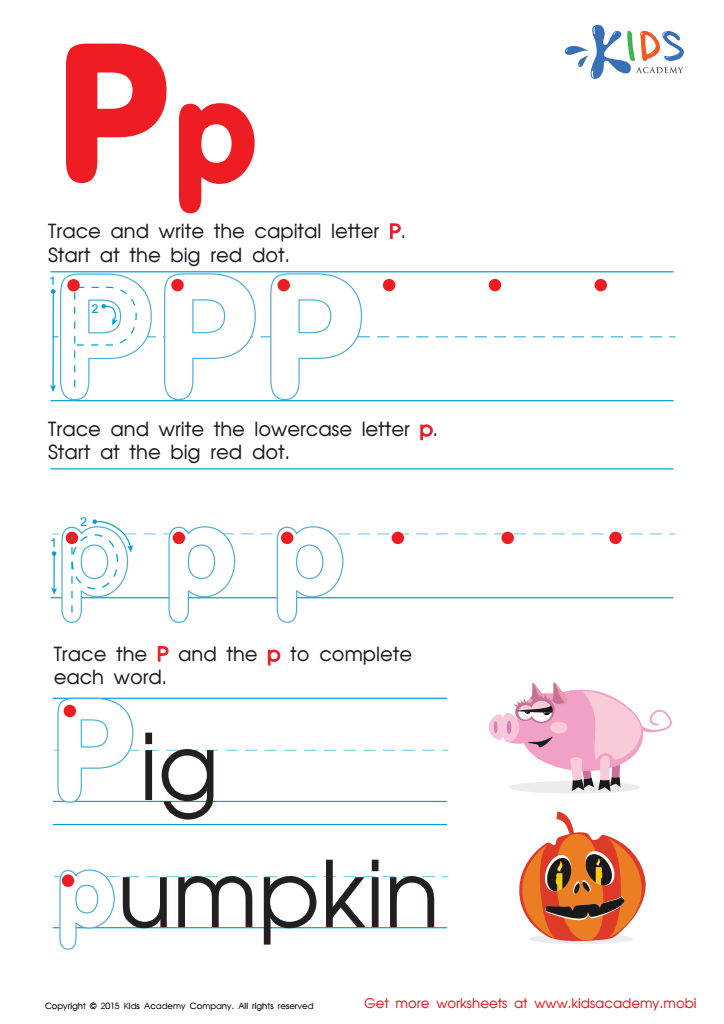
Letter P Tracing Page
Trace the lines from the red dot to learn to write "P"! Then practice this letter with the fun activities: complete the word "Pig" and "Pumpkin". Check out Kids Academy to get more free ABC worksheets.
Letter P Tracing Page
Worksheet

Letter G Tracing Page
Get ready to trace the letter "G" – with a big red spot as the starting point, trace the lines and watch the letter appear. Uppercase and lowercase letters are both easy and fun to write. Give it a go and finish the word "go". Play the guitar and say "hello" to a funny ghost!
Letter G Tracing Page
Worksheet
Join Kids Academy for Free
Who is primarily going to use this learning content?







Letter formation is a fundamental skill for children aged 8-9, and both parents and teachers should prioritize its development for several important reasons. First, proper letter formation lays the groundwork for legible handwriting. At this age, students are beginning to write more complex sentences and paragraphs, and neat handwriting enhances their ability to communicate ideas effectively. Illegible handwriting can lead to frustration, decreased motivation, and, ultimately, diminished academic performance.
Additionally, mastering letter formation contributes to fine motor skills, which are critical for many daily tasks beyond writing. Tools such as pencils, scissors, and even digital devices require coordinated hand movements that children will use throughout life.
With this age group, tracing letters serves as a supportive tool that helps reinforce muscle memory and spatial awareness. Engaging children in tracing activities allows them to practice consistently in a low-pressure setting, promoting confidence in their writing skills.
Furthermore, a strong foundation in letter formation can foster creativity and self-expression. Clear and beautiful handwriting allows children to present their work with pride, whether in school assignments or personal journaling.
Ultimately, both parents and teachers play a crucial role in encouraging good writing habits, positively influencing children’s academic journey and beyond.








