
Alphabet Recognition Worksheets for Ages 8-9
44 filtered results
Difficulty Level
Grade
Age
-
From - To
Subject
Activity
Standards
Explore our engaging Alphabet Recognition Worksheets designed specifically for children ages 8-9! These worksheets provide a fun and interactive way to reinforce essential literacy skills, helping young learners identify and recognize letters effectively. With a variety of exercises including matching, tracing, and creative activities, these resources cater to different learning styles and ensure that every child grasps the fundamentals of the alphabet. Perfect for classroom use or at-home practice, our worksheets foster both independent learning and guided instruction, making them an invaluable tool for teachers and parents alike. Start enhancing your child’s reading foundation today with our exciting alphabet resources!
Favorites
With answer key
Interactive
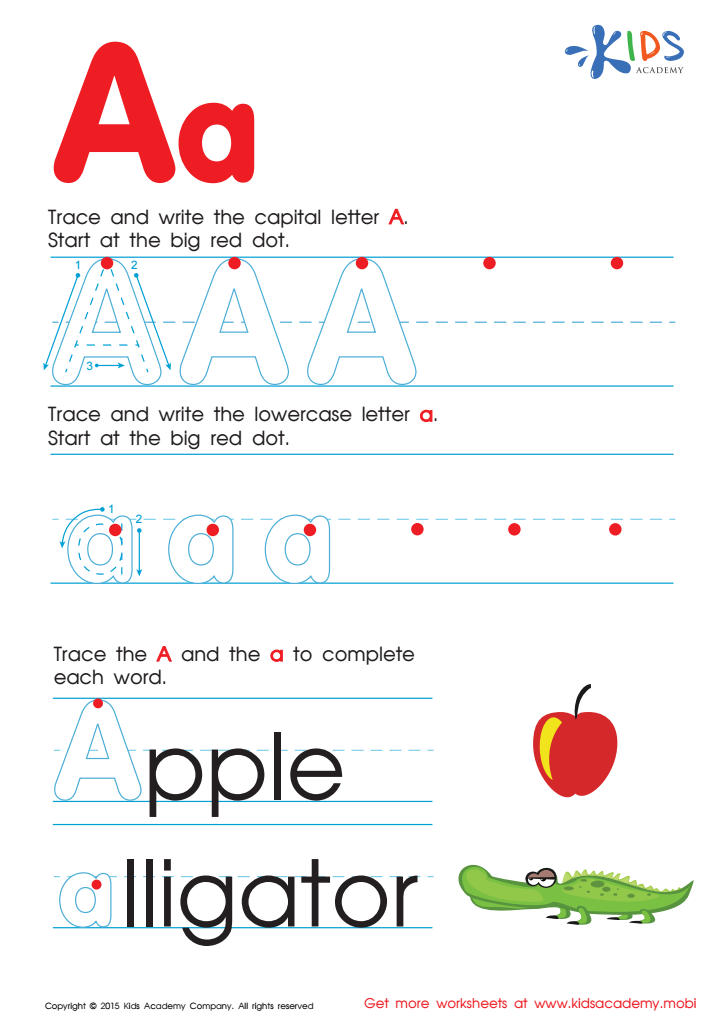
Letter A Tracing Page
Trace and write the letter "A"! Start with the big red dot, then do the capital and lowercase versions. Then write it again with two words - apple and alligator. Download more tracing worksheets at Kids Academy.
Letter A Tracing Page
Worksheet
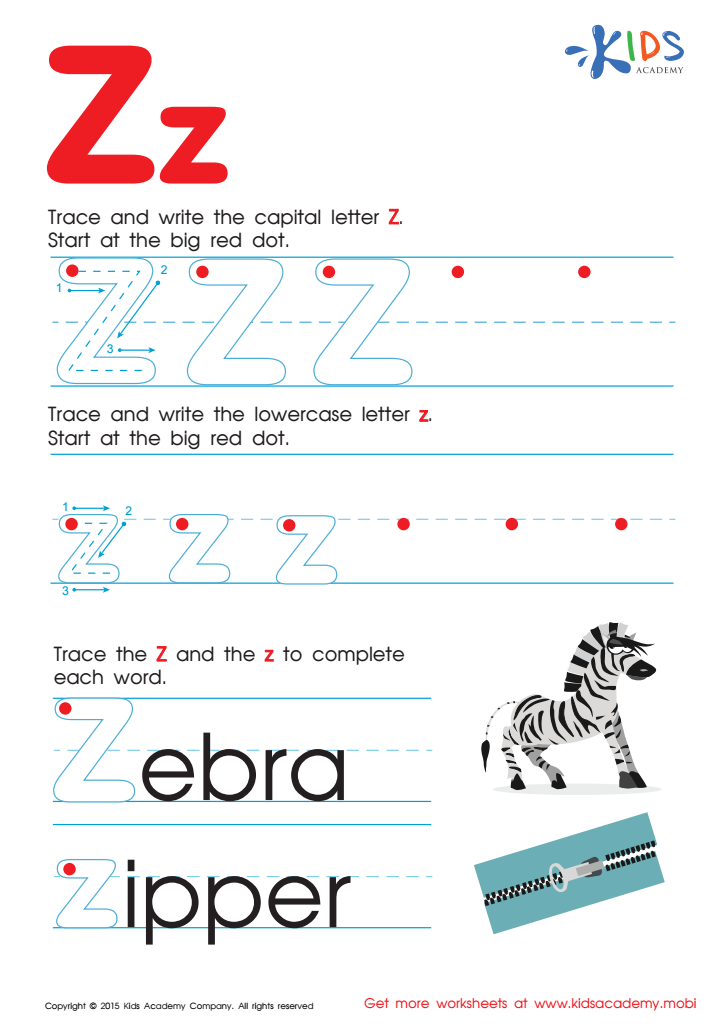
Letter Z Tracing Page
Trace and write capital "Z" and lowercase "z". Complete words "zebra" and "zipper". Be attentive and have fun! (80 words)
Letter Z Tracing Page
Worksheet
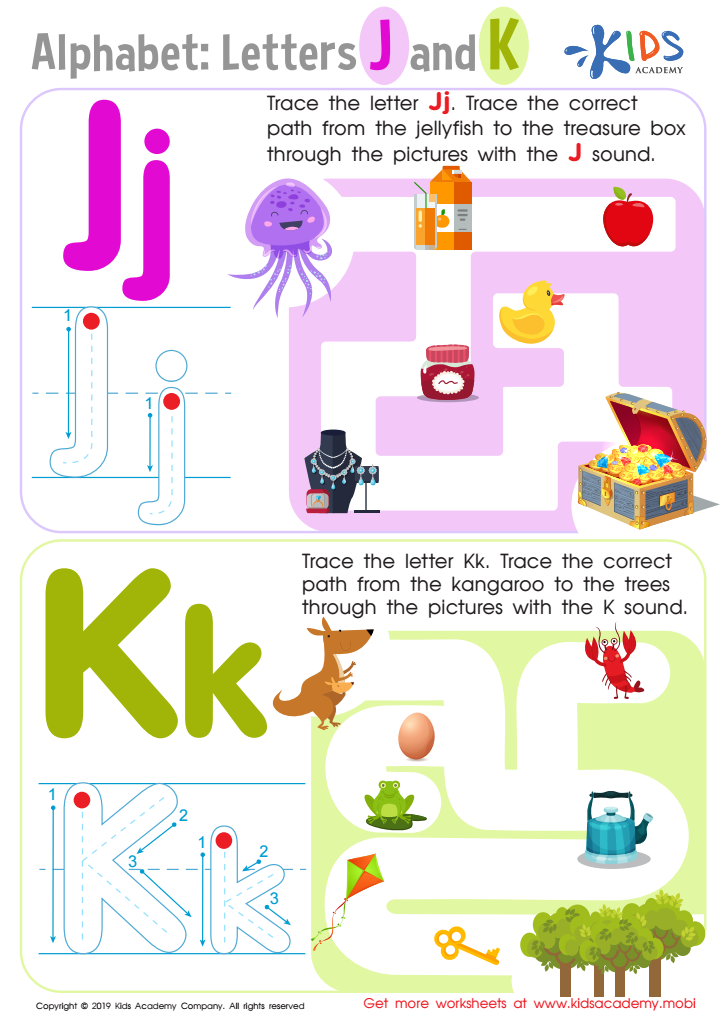
Letters J and K Tracing Worksheet
Tracing the letters «J» and «K» is the first step. Help the jellyfish find a path to the treasure chest with pictures of the «J» sound, and assist the kangaroo in finding a path to the trees with pics of «K». Fun, educational and enjoyable for children!
Letters J and K Tracing Worksheet
Worksheet
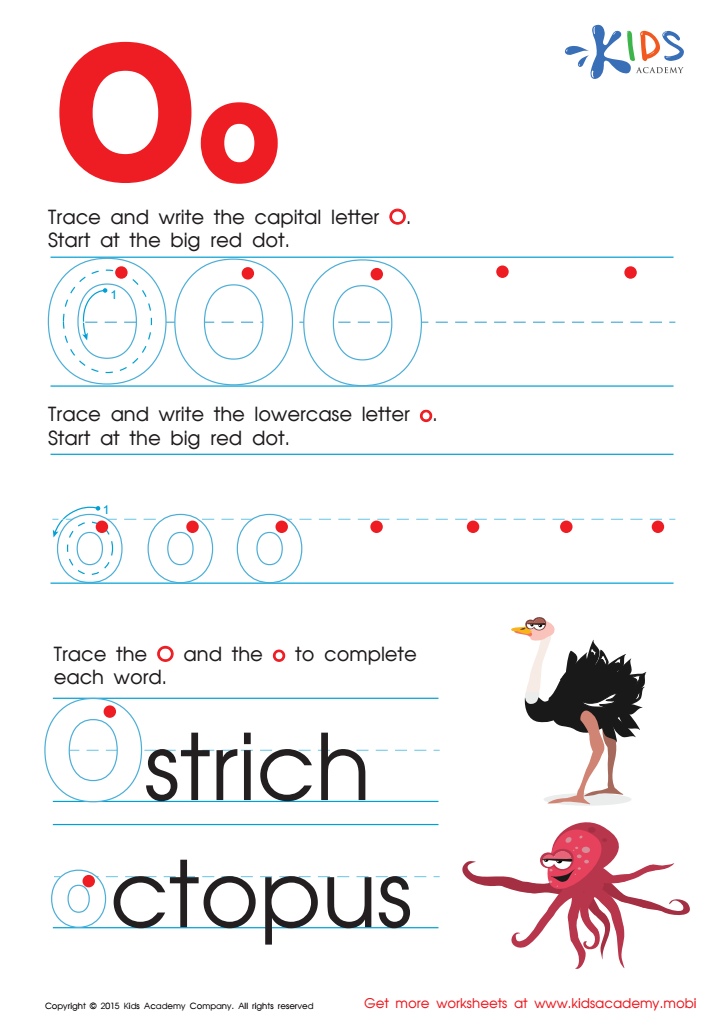
Letter O Tracing Page
Practice writing the letter "O" with our new worksheet. Trace and write the letter several times, starting at the red dot. First do the uppercase letter, then the lowercase. Use the pictures to complete the words "Ostrich" and "octopus". Kids Academy offers more fun alphabet worksheets.
Letter O Tracing Page
Worksheet
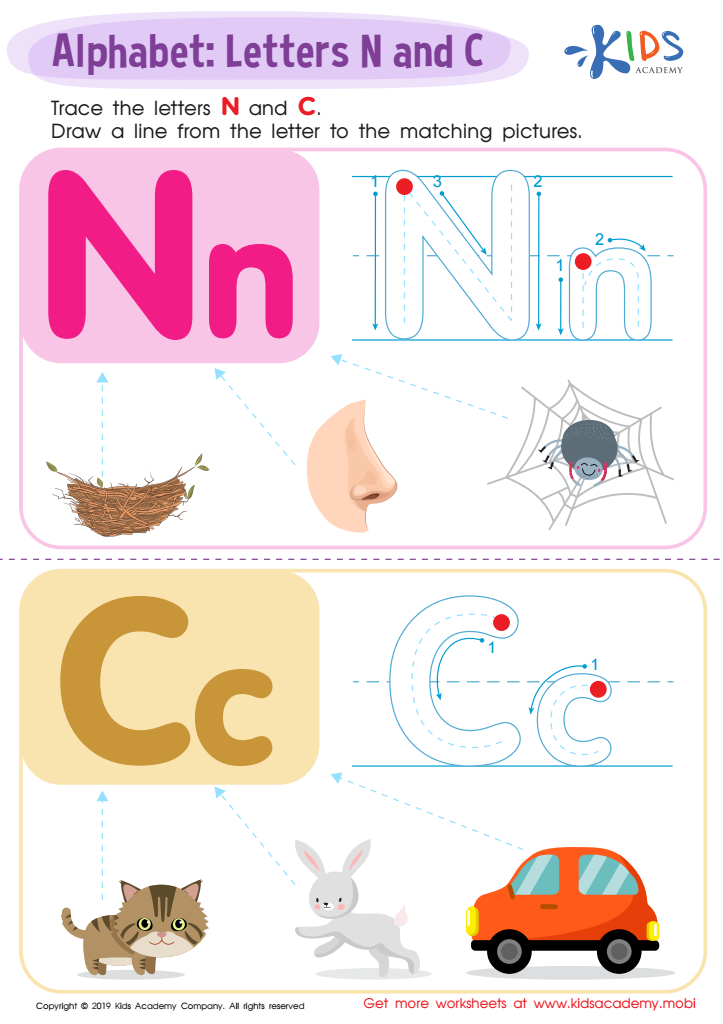
Letter N and C Tracing Worksheet
Kids can trace the letters N and C, then draw a line to the words starting with each letter. This worksheet helps them practice letter writing, distinguish capital and lowercase letters, and match pictures with the right letter. It also teaches essential skills for learning letters efficiently.
Letter N and C Tracing Worksheet
Worksheet
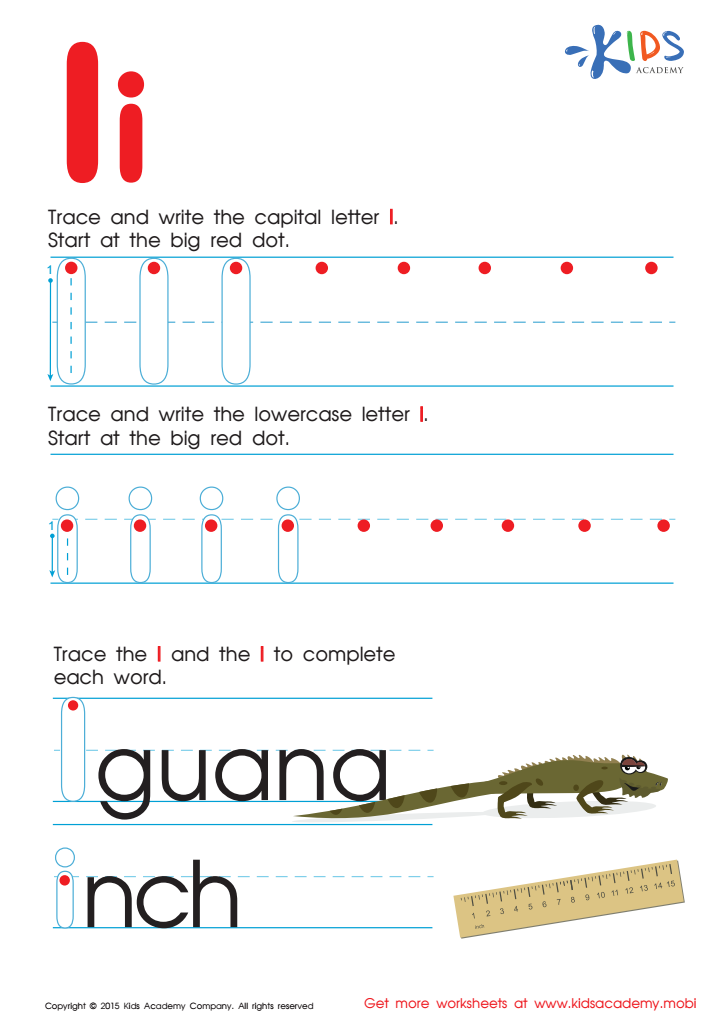
Letter I Tracing Page
Trace and write "I" uppercase and lowercase. An iguana's tail looks like the uppercase "I" and the lowercase "i" is as small as an inch. Make learning fun with Kids Academy worksheets.
Letter I Tracing Page
Worksheet
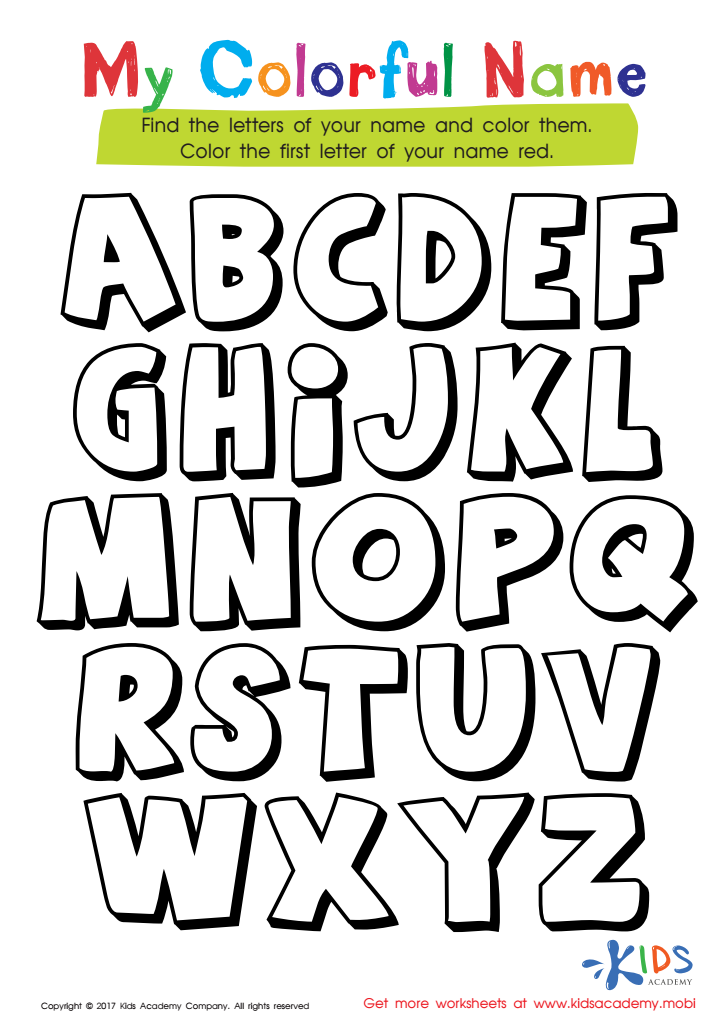
My Colorful Name Worksheet
Writing their names is a milestone for children. With this worksheet, they recall the letters in their name and color the letters one at a time. Spelling and alphabet order are reinforced as they find each letter. Use this fun printable to help kids learn to write their names!
Download (PDF)
 Assign to My Students
Assign to My Students
My Colorful Name Worksheet
Worksheet
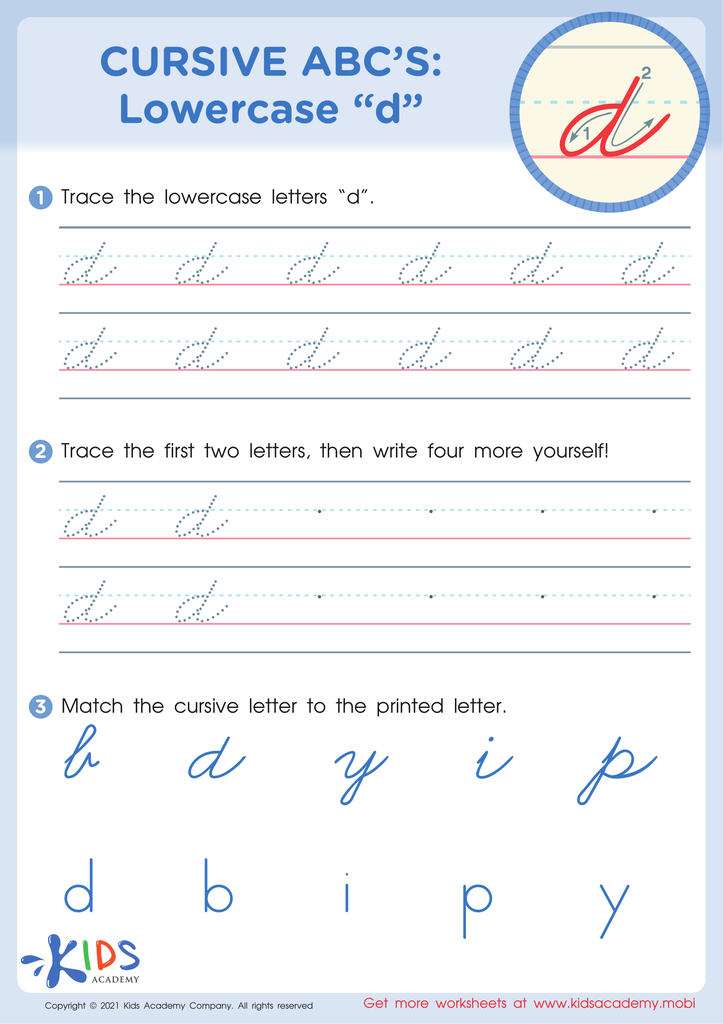
Cursive ABCs: Lowercase d
To make learning fun, introduce colorful worksheets! These help young learners perfect their cursive lowercase 'd'. By the end, they'll be better at writing and identifying the letter. It's an easy and enjoyable exercise for kids!
Cursive ABCs: Lowercase d
Worksheet
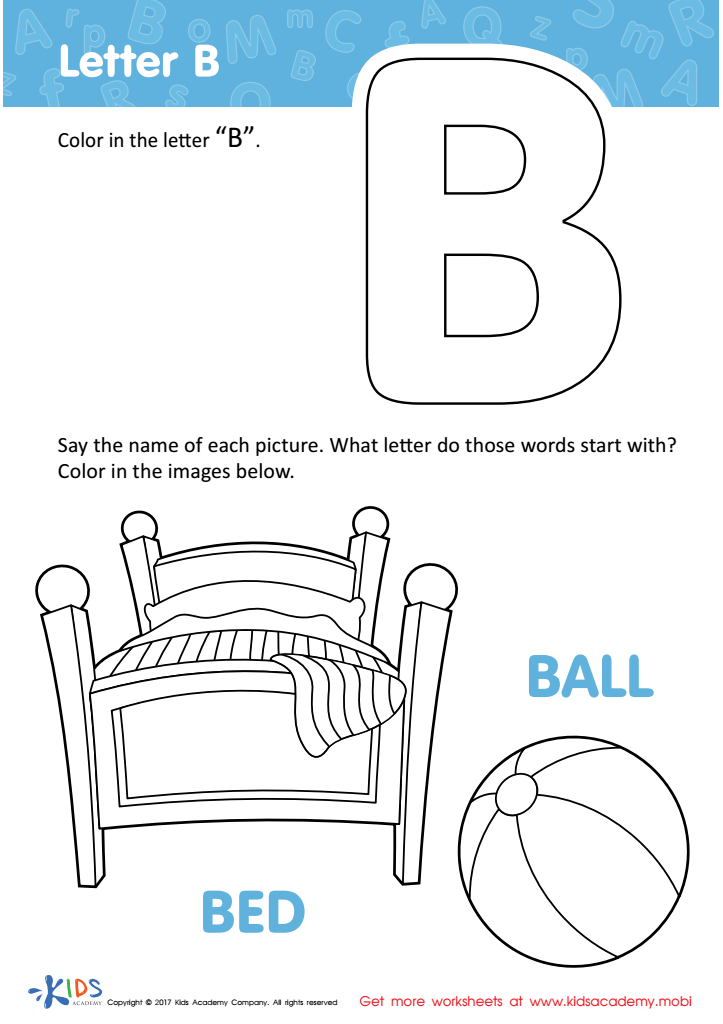
Letter B Coloring Sheet
Kids will love coloring this page that features things they like - balls, bubbles, bugs and bedtime - all words starting with "B"! It's a great way to introduce the alphabet and increase their exposure to letters and sounds. Let them have fun and learn at the same time!
Download (PDF)
Assign to My Students
Assign to My Students
Letter B Coloring Sheet
Worksheet
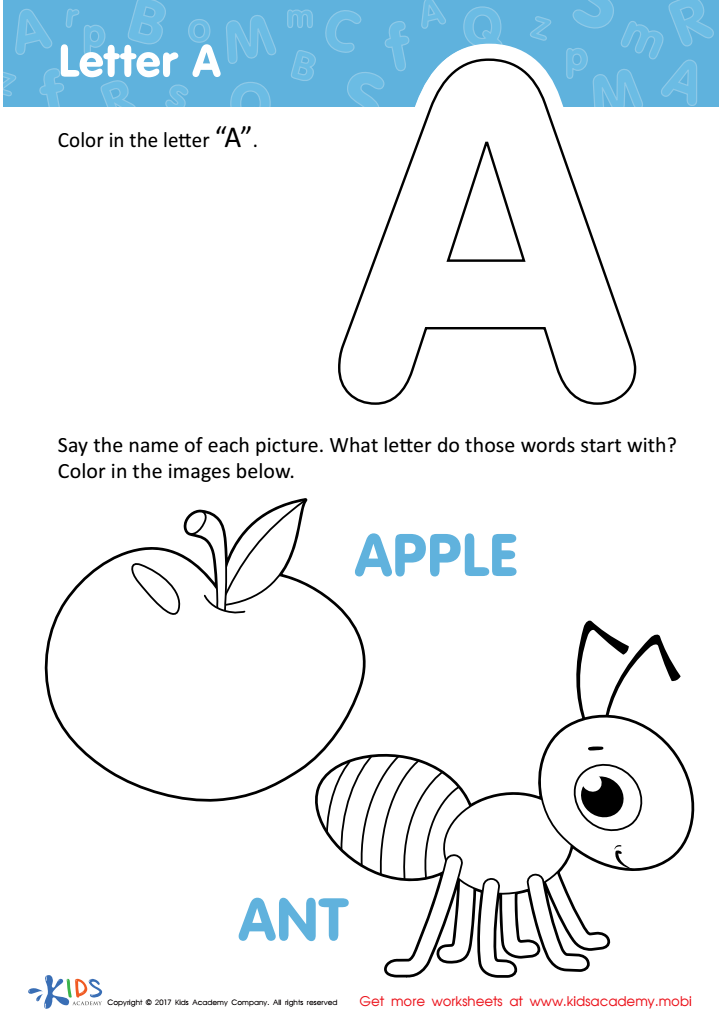
Letter A Coloring Sheet
This letter "A" coloring page is great for introducing kids to the alphabet! Let them exercise their creativity while they learn to recognize letters and sounds - it's a fun and easy way to help them get started.
Download (PDF)
Assign to My Students
Assign to My Students
Letter A Coloring Sheet
Worksheet
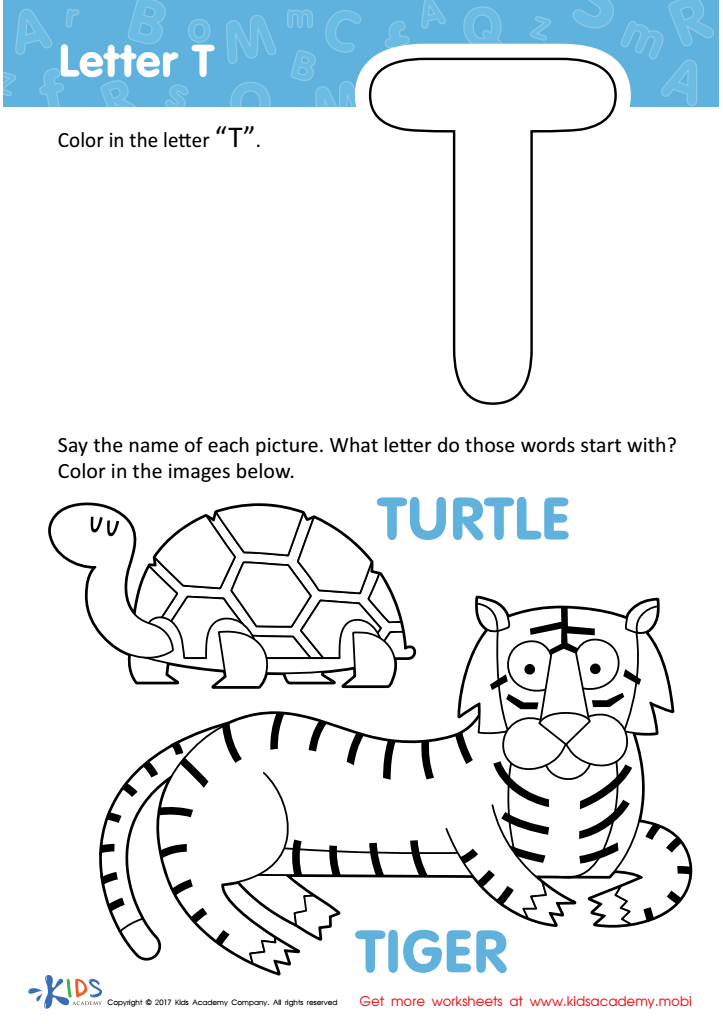
Letter T Coloring Sheet
Introduce your child to the letter "T" and its animals – turtles and tigers! With this coloring page, you can stimulate your child's imagination and creativity, while helping them recognize the letter "T". Have fun with your child and get coloring!
Download (PDF)
Assign to My Students
Assign to My Students
Letter T Coloring Sheet
Worksheet
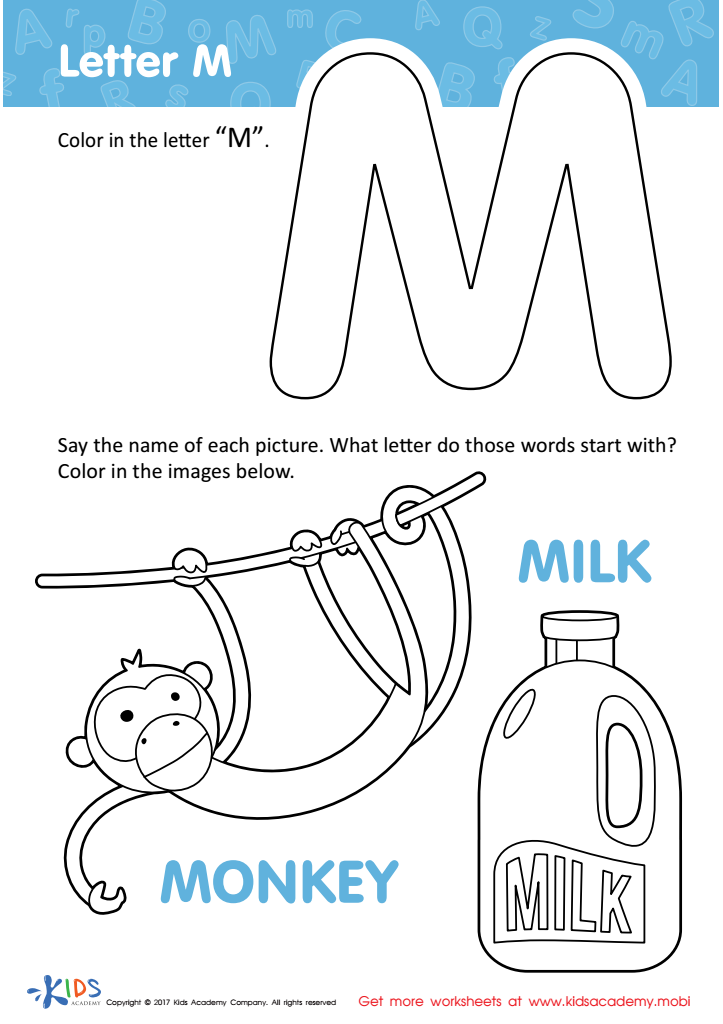
Letter M Coloring Sheet
Coloring this "M" page is fun and educational! Kids will enjoy the funny monkey and milk jug images, while learning to recognize the letter and all the words it makes.
Download (PDF)
Assign to My Students
Assign to My Students
Letter M Coloring Sheet
Worksheet
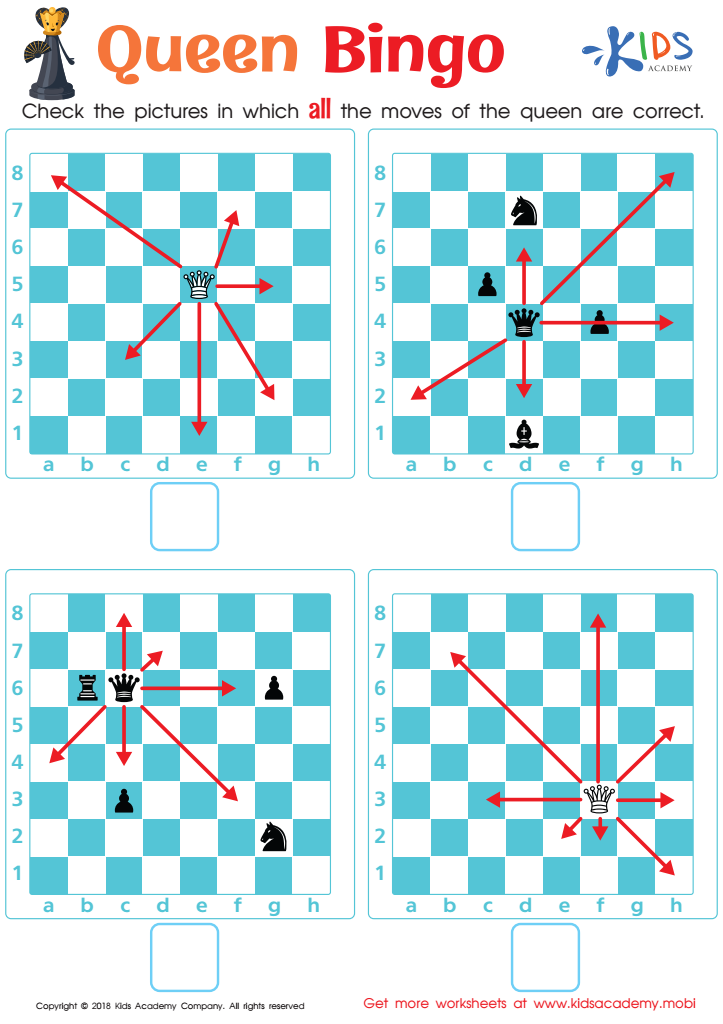
Queen Bingo Worksheet
Test your child's knowledge of chess rules and moves with this free worksheet! Kids look at four pictures and must decide if the queen moves are correct. This exercise helps hone your little one's chess skills!
Queen Bingo Worksheet
Worksheet
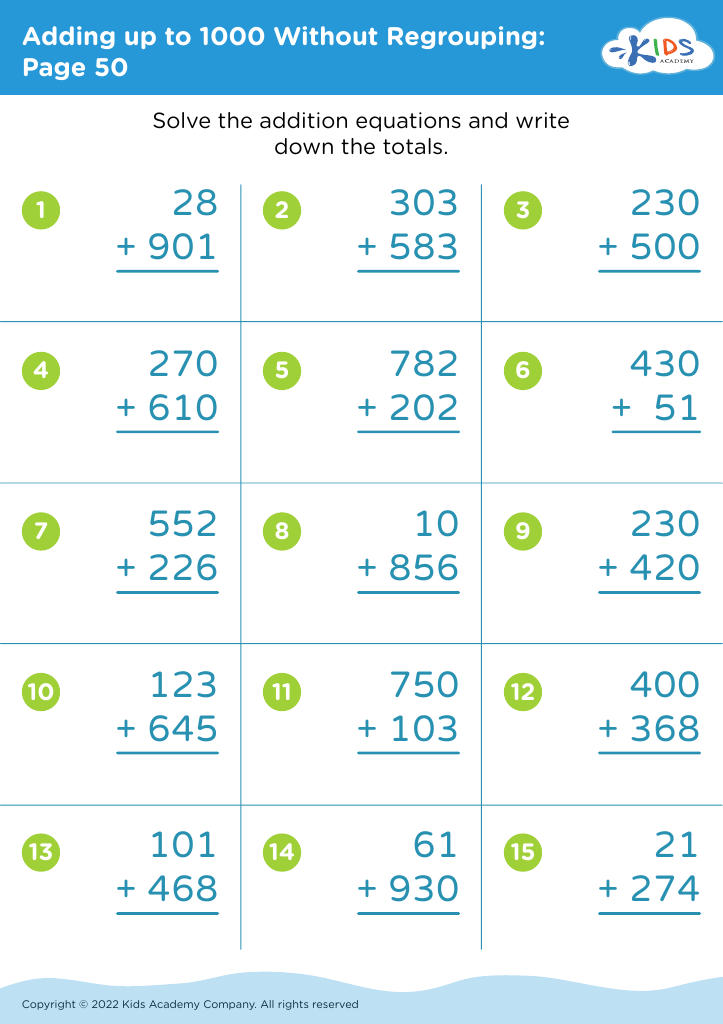
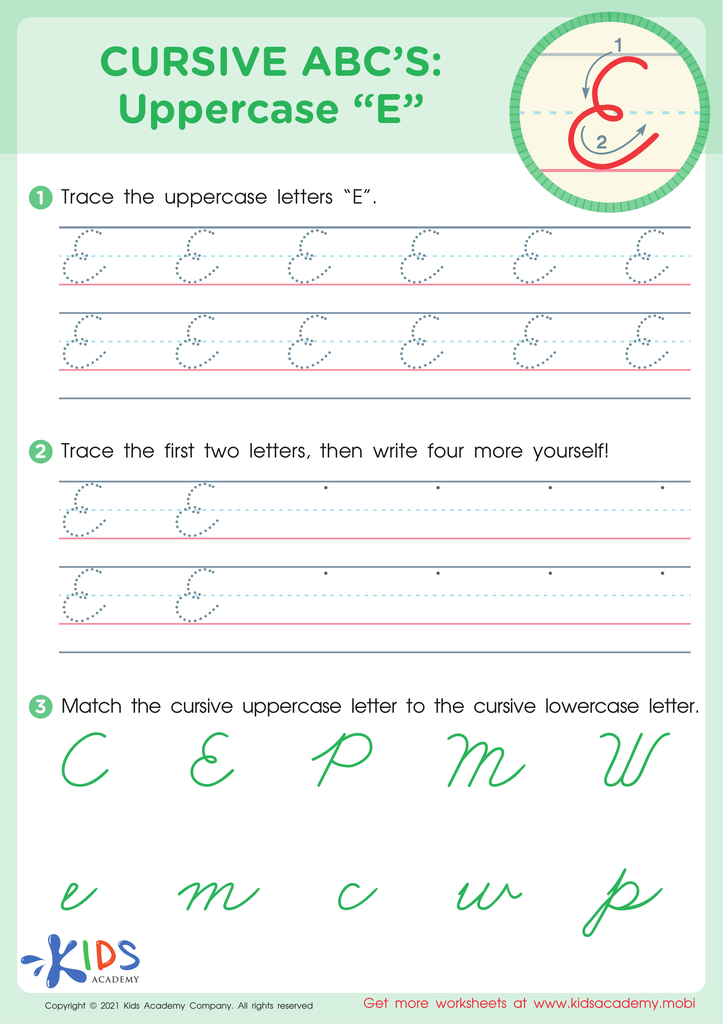
Cursive ABCs: Uppercase E
Ask your child if they can identify the letter 'E' and give examples. Each letter is unique, so provide coaching. Have them trace cursive 'E' to become familiar and boost confidence. Then, ask them to write it on their own.
Cursive ABCs: Uppercase E
Worksheet
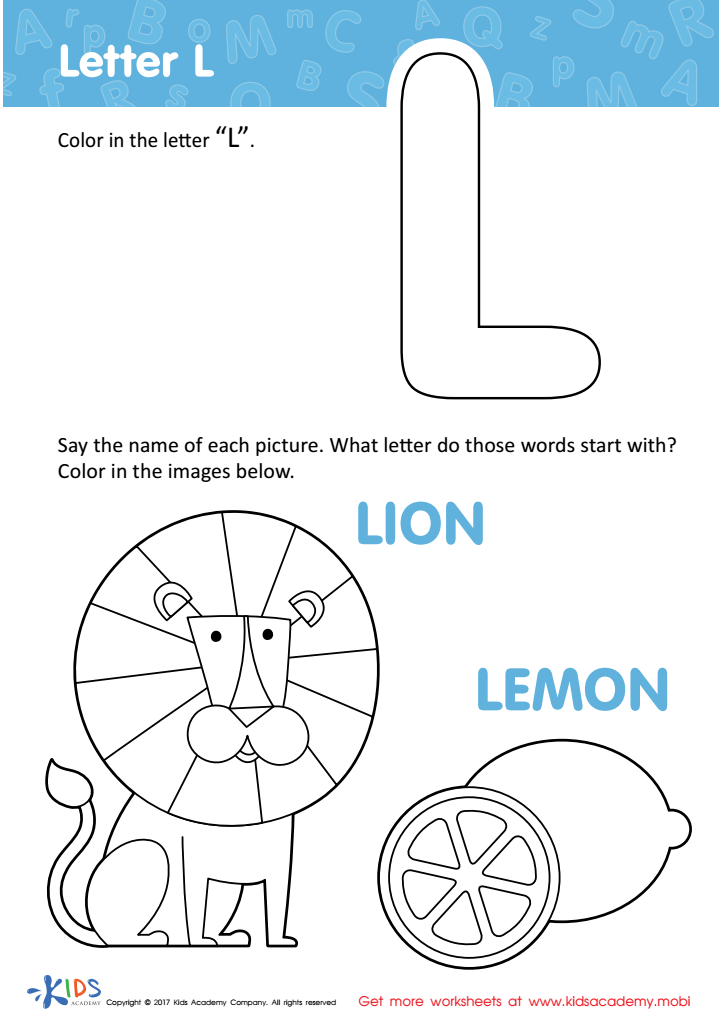
Letter L Coloring Sheet
Kids often struggle to say "L" and love it because so many things they love start with it! This coloring page combines the letter and fun images like a lemon and lion to teach and entertain!
Download (PDF)
Assign to My Students
Assign to My Students
Letter L Coloring Sheet
Worksheet
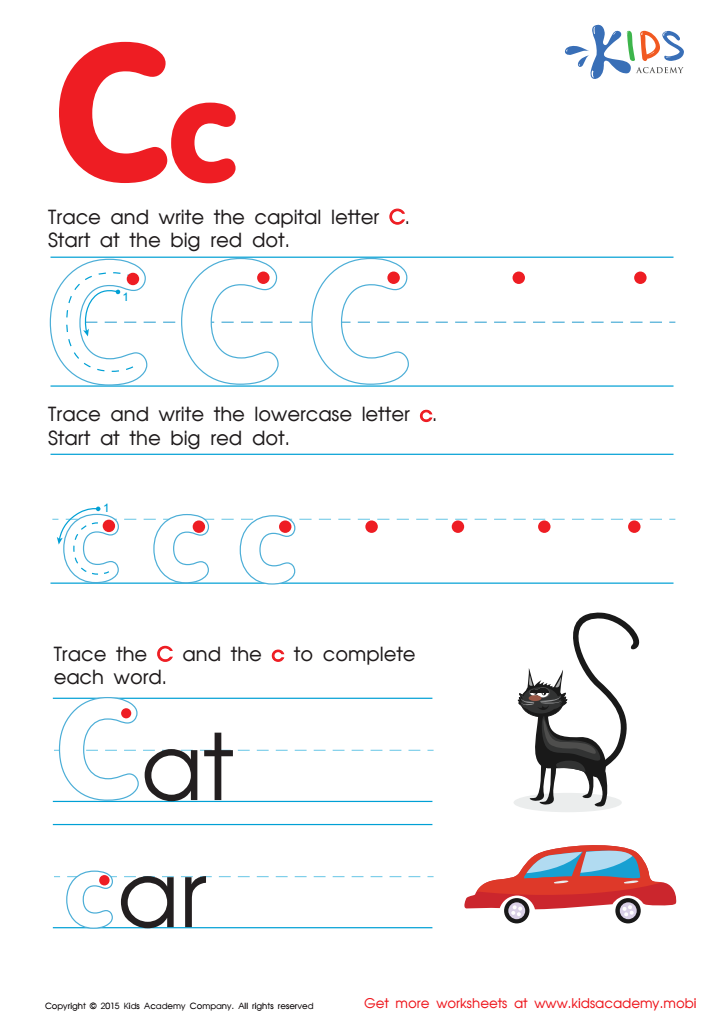
Letter C Tracing Page
Trace and write the letter 'C'! Put the pencil at the red dot then follow the lines – the capital letter first then the lowercase one. Cats love it and so will you! Get more free printables to practice tracing and writing.
Letter C Tracing Page
Worksheet
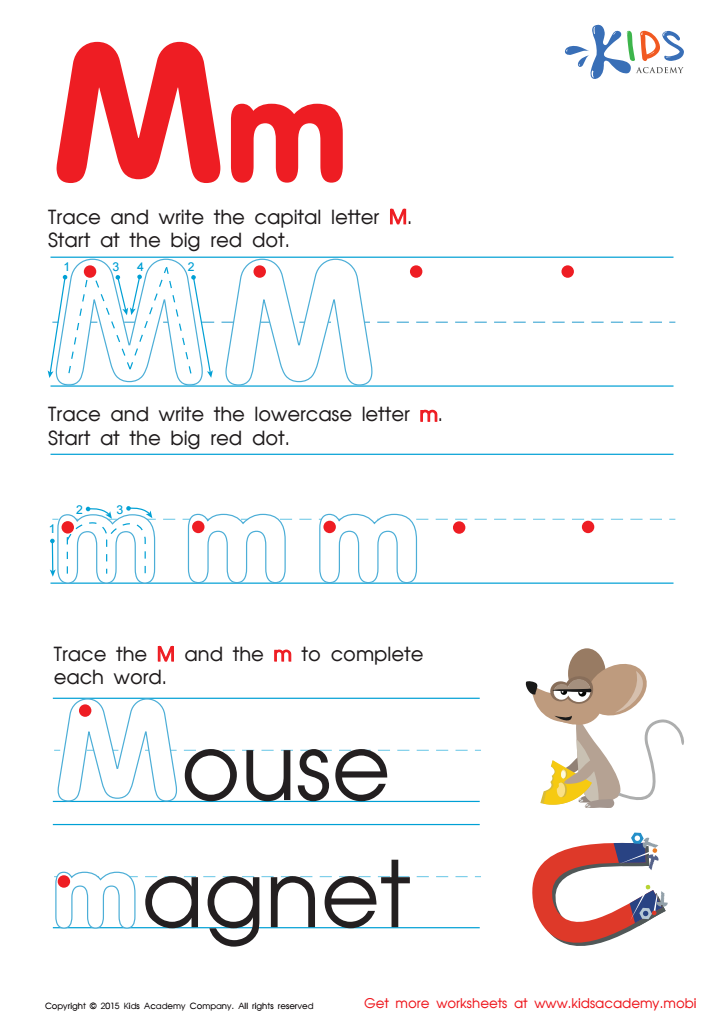
Letter M Tracing Page
Trace and write the letter "M" to help kids learn the alphabet. Start at the red dot and practice several times. Trace the capital letter first, then move on to the lowercase. Complete words like "mouse" and "magnet" in the further exercise. Get more free printables here.
Letter M Tracing Page
Worksheet
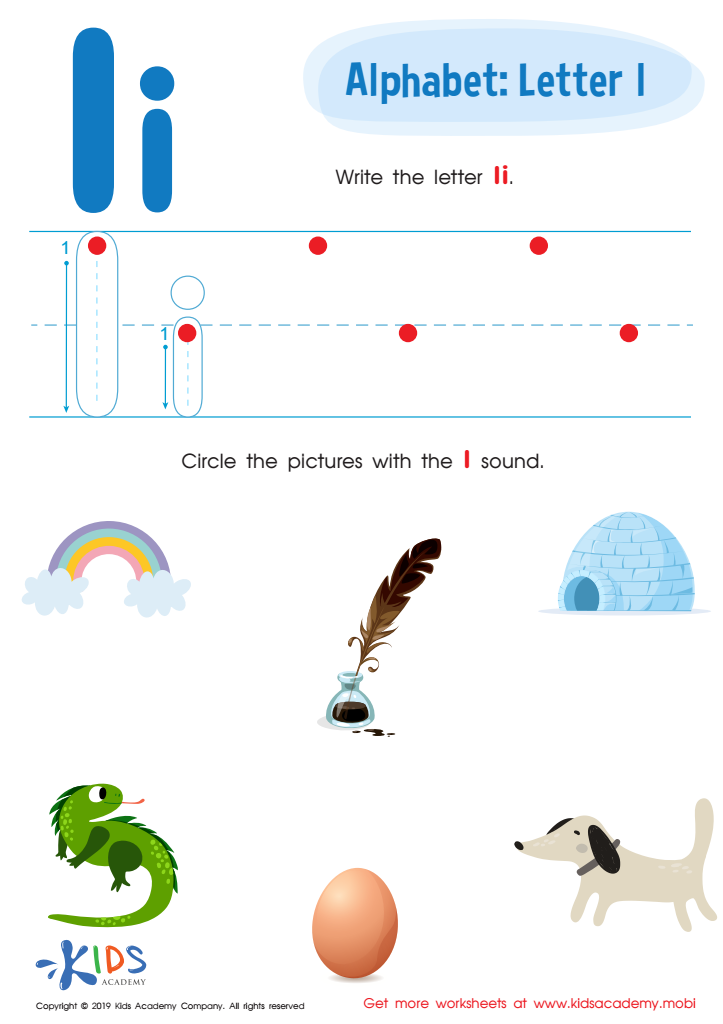
Letter I Tracing Worksheet
Kids can hone tracing, writing and identifying skills for the letter 'I' with this worksheet. Whether visual or reading/writing learners, every child can benefit from the tasks - tracing, writing and circling objects beginning with 'I'. This free sheet will soon get preschoolers confident with the 'I' letter!
Letter I Tracing Worksheet
Worksheet
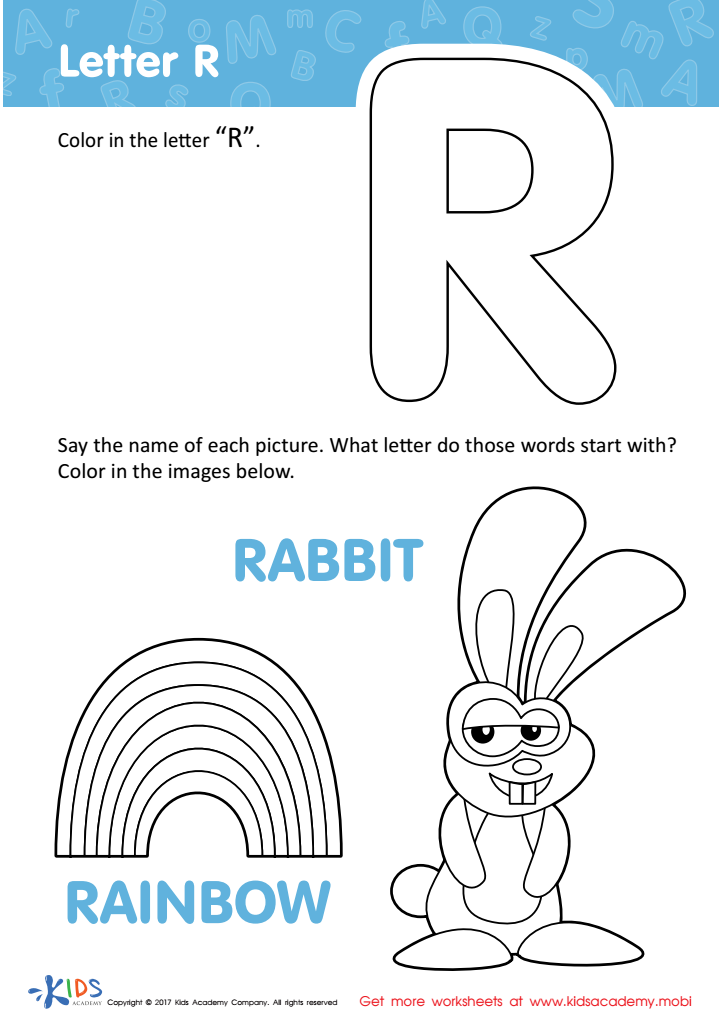
Letter R Coloring Sheet
Let your child explore the rainbow with this fun letter "R" coloring page! They can learn to recognize the letter and make connections to words, all while having fun! Make alphabet learning enjoyable with joyful coloring pages.
Download (PDF)
Assign to My Students
Assign to My Students
Letter R Coloring Sheet
Worksheet
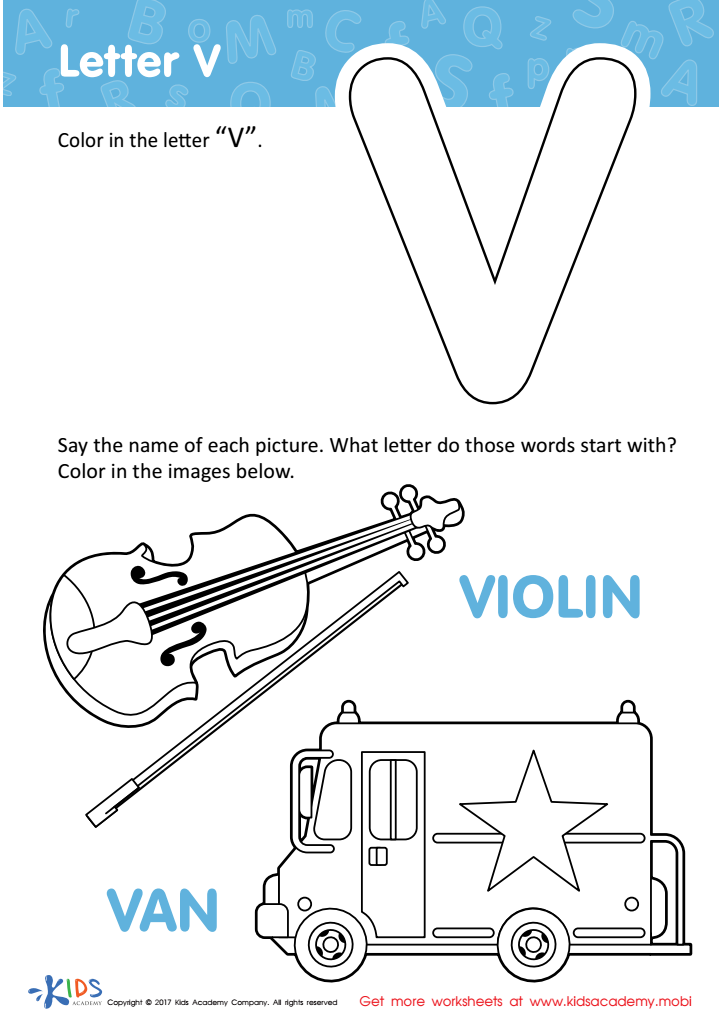
Letter V Coloring Sheet
This fun letter V coloring page can boost your child's knowledge of the letter "V" and its sound. Help them pronounce it correctly, too!
Download (PDF)
Assign to My Students
Assign to My Students
Letter V Coloring Sheet
Worksheet
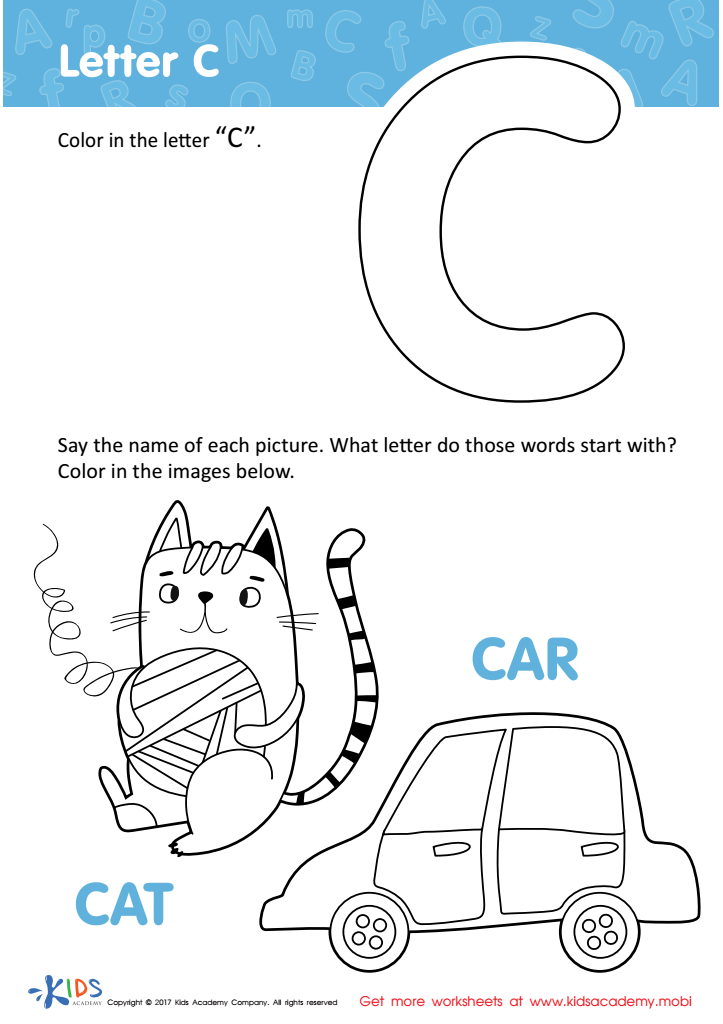
Letter C Coloring Sheet
Introduce kids to the letter 'C' with this fun coloring page! Exposing little ones to letters, words, and sounds helps them learn long before they can read. Start with simple words like 'cat' and 'car' - these are great first sight words for young children.
Download (PDF)
Assign to My Students
Assign to My Students
Letter C Coloring Sheet
Worksheet
Join Kids Academy for Free
Who is primarily going to use this learning content?








Alphabet recognition is a critical foundational skill for children aged 8-9, acting as a springboard for their literacy development. Despite being older, children's mastery of letters remains crucial as they encounter more complex texts and writing tasks. Understanding and recognizing the alphabet helps them decode words, spelling, and grammar, essential for reading fluency and comprehension. When children can quickly identify letters, they can focus on understanding the meaning of words instead of struggling with pronunciation.
Moreover, alphabet recognition fosters confidence and engagement in literacy activities. As children excel in letter identification, they are more likely to participate in reading and writing tasks, enhancing their overall educational experience. Teachers and parents who emphasize this skill play an indispensable role in creating an environment that supports literacy development.
Encouraging activities that promote letter recognition, such as games, books, and creative writing, can transform the learning process, making it enjoyable for the child. This lays the groundwork for academic success. Ultimately, an investment in cementing alphabet recognition can yield lifelong benefits, equipping children with critical skills needed for effective communication and learning in their future educational endeavors. Therefore, prioritizing this ability at ages 8-9 is crucial for holistic child development.








