Compare fractions Worksheets for Ages 8-9
6 filtered results
-
From - To
Discover our engaging "Compare Fractions Worksheets" designed specifically for children ages 8-9! These worksheets provide a fun and interactive way to help young learners grasp the essential concept of comparing fractions. Through a variety of exercises, including visual aids and practical examples, students will enhance their skills in determining which fractions are larger, smaller, or equal. Our user-friendly format encourages independent practice while reinforcing foundational math skills. Perfect for both classroom activities and at-home learning, these worksheets aim to build confidence and mastery in fractions, setting your child on the path to mathematical success. Download and start learning today!
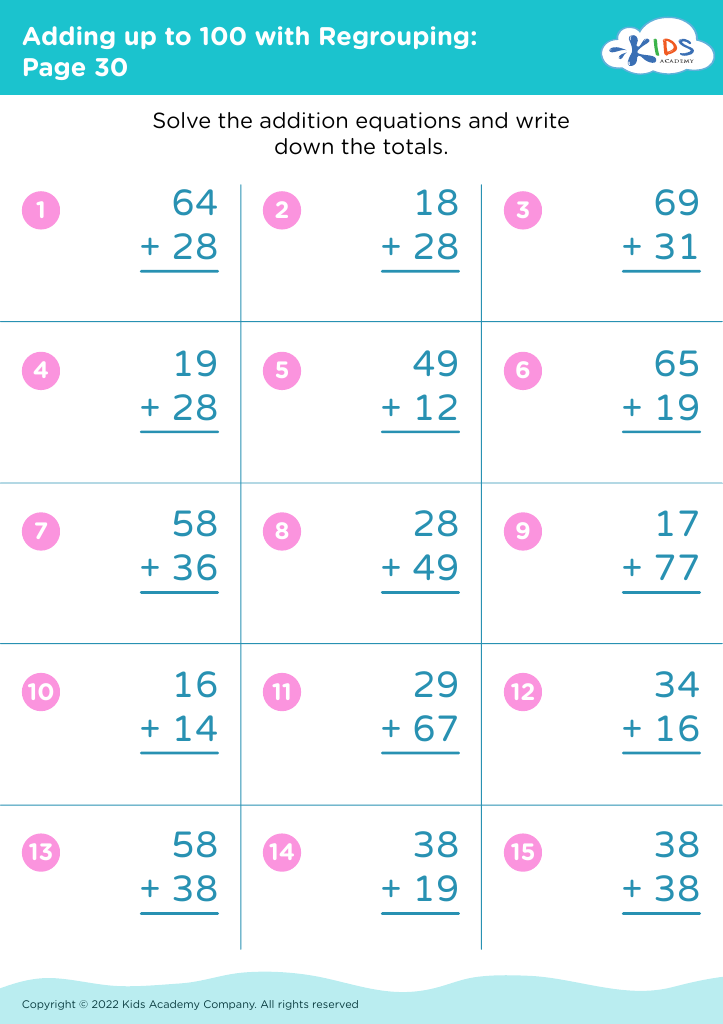
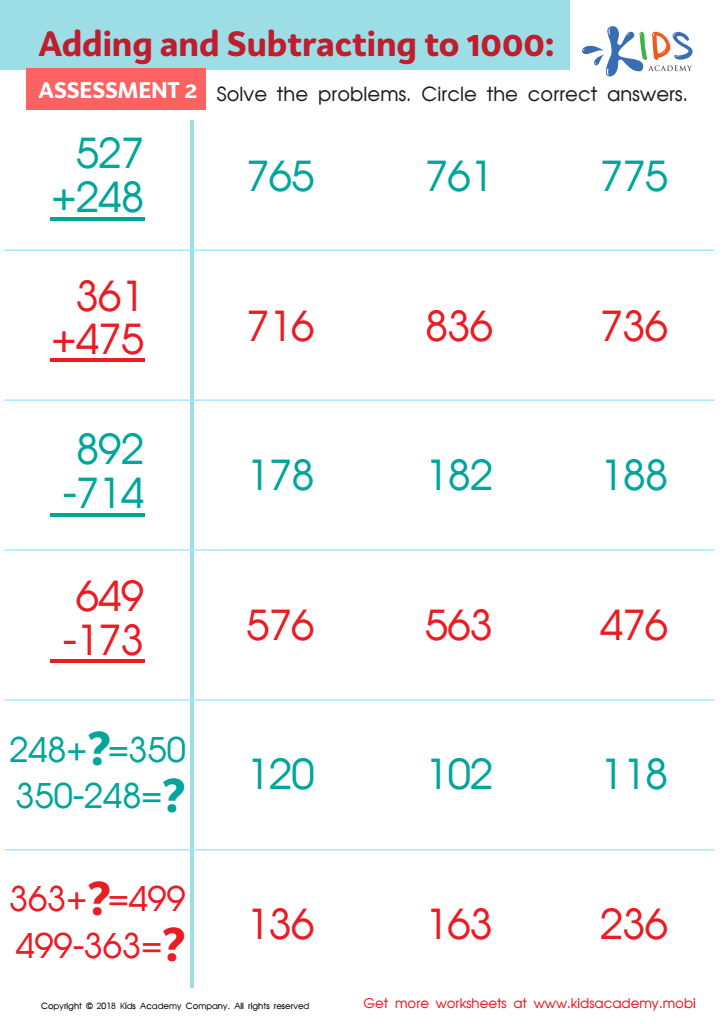
Adding and Subtracting to 1 Worksheet: Assessment 2
 Assign to My Students







Understanding how to compare fractions is a crucial skill for children aged 8-9. At this developmental stage, children are building foundational math abilities that they will rely on for more advanced concepts later. By mastering fraction comparison, children sharpen critical thinking and problem-solving skills as they learn to analyze and interpret numerical values.
Teachers and parents should care because it provides a practical application of math in everyday life. For instance, comparing fractions can help children understand portions when sharing food, measuring ingredients in cooking, or interpreting data in charts. Moreover, it enhances their ability to recognize patterns and relations among numbers, which forms the basis for lessons in addition, subtraction, multiplication, and even division of fractions in future learning.
Additionally, knowing how to compare fractions promotes confidence in mathematics. This self-assurance can generate a positive attitude towards math, making children more likely to engage with the subject, ask questions, and pursue further learning. By nurturing such skills through comparison activities, parents and teachers contribute to developing not only mathematical literacy but also critical life skills such as decision-making and logical reasoning that will benefit children throughout their educational journey and beyond.








