Discover our fantastic collection of Phonics Recognition Worksheets for ages 8-9! Designed to enhance reading skills, these worksheets focus on strengthening phonemic awareness and decoding abilities. Each activity engages children through fun exercises that align with school curriculums, ensuring they build confidence in recognizing sounds, blends, and word patterns. Perfect for classroom use or at-home practice, our worksheets help young learners master essential phonics skills, paving the way for reading fluency and academic success. Start your child's journey to reading proficiency today with our expertly crafted materials at Kids Academy!

Check out this FREE "Phonics recognition" Trial Lesson for age 8-9!

Identify Irregular Past Tense Verbs Standard

Favorites
With answer key
Interactive
  • 8-9
  • Phonics recognition
Phonics and Word Recognition: Assessment 1 Worksheet
Phonics and Word Recognition: Assessment 1 Worksheet

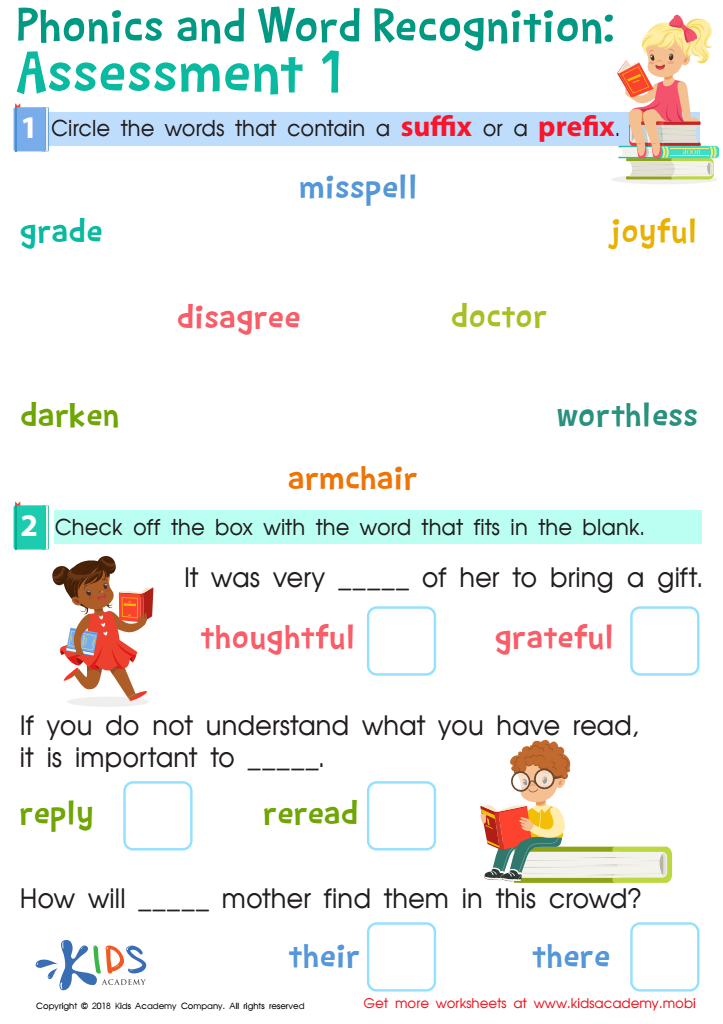
Explain prefixes (words added to start of another word to give it a new meaning) and suffixes (added to end of word to change its meaning) to your kids with examples like 'unhappy' (prefix) and 'forgetful' (suffix). Now, help your child complete this worksheet, including circling words and checking boxes.
Phonics and Word Recognition: Assessment 1 Worksheet
Worksheet
Phonics and Word Recognition: Assessment 1 Worksheet

Phonics and Word Recognition: Assessment 1 Worksheet

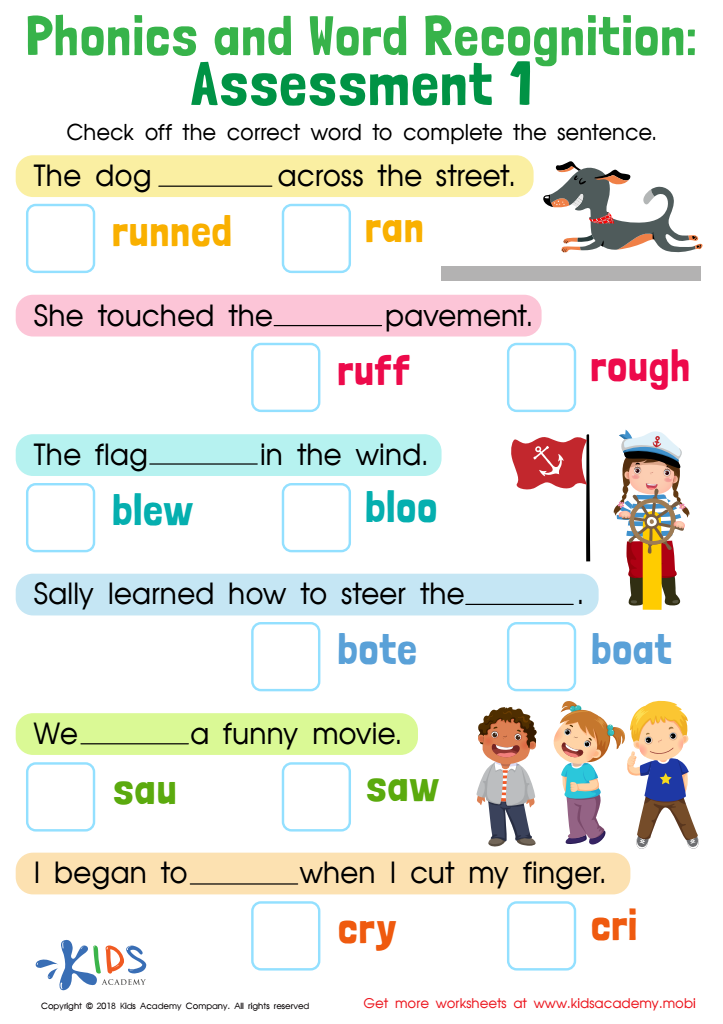
This worksheet tests phonetics and word recognition. Students should be familiar with past tense verbs. Read incomplete sentences, then read multiple options and help students select the correct one.
Phonics and Word Recognition: Assessment 1 Worksheet
Worksheet
Reading: Long I and Short I Sound Maze Worksheet

Reading: Long I and Short I Sound Maze Worksheet

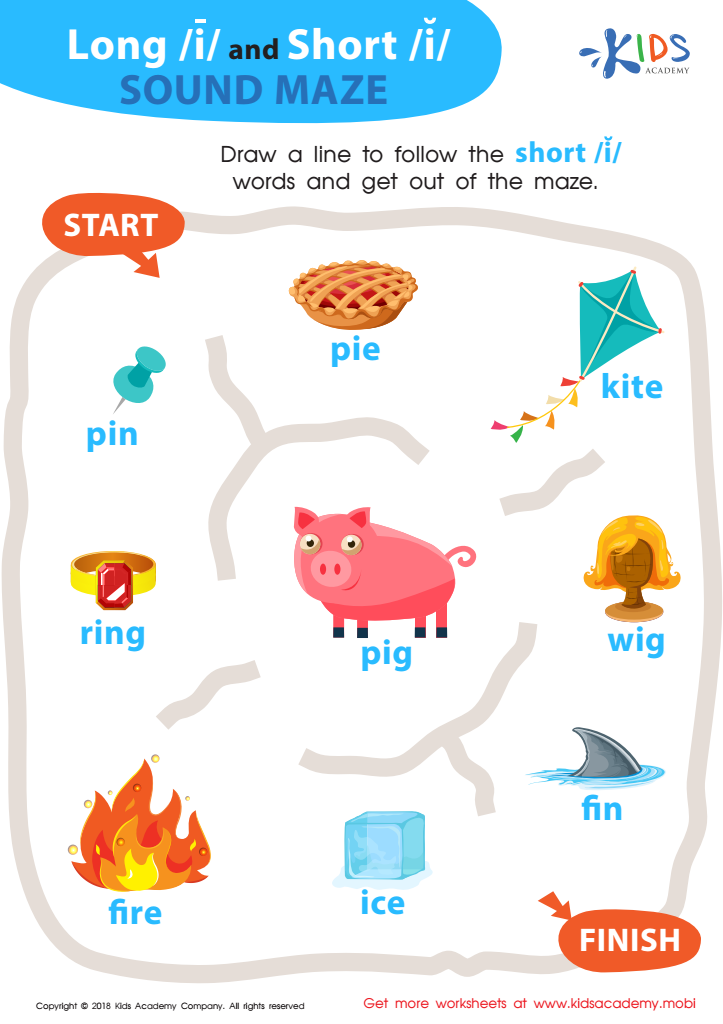
Question your students if the worksheet is entertaining. They may respond negatively! Nonetheless, this activity will bring satisfaction while learning the distinction between a long and short I sound. Students read the words in the maze and only follow the words with the short I sound to finish the exercise. Grasping the difference between long and short vowels is demanding, but this worksheet helps students understand this reading skill.
Reading: Long I and Short I Sound Maze Worksheet
Worksheet
Phonics and Word Recognition: Assessment 2 Worksheet
Phonics and Word Recognition: Assessment 2 Worksheet

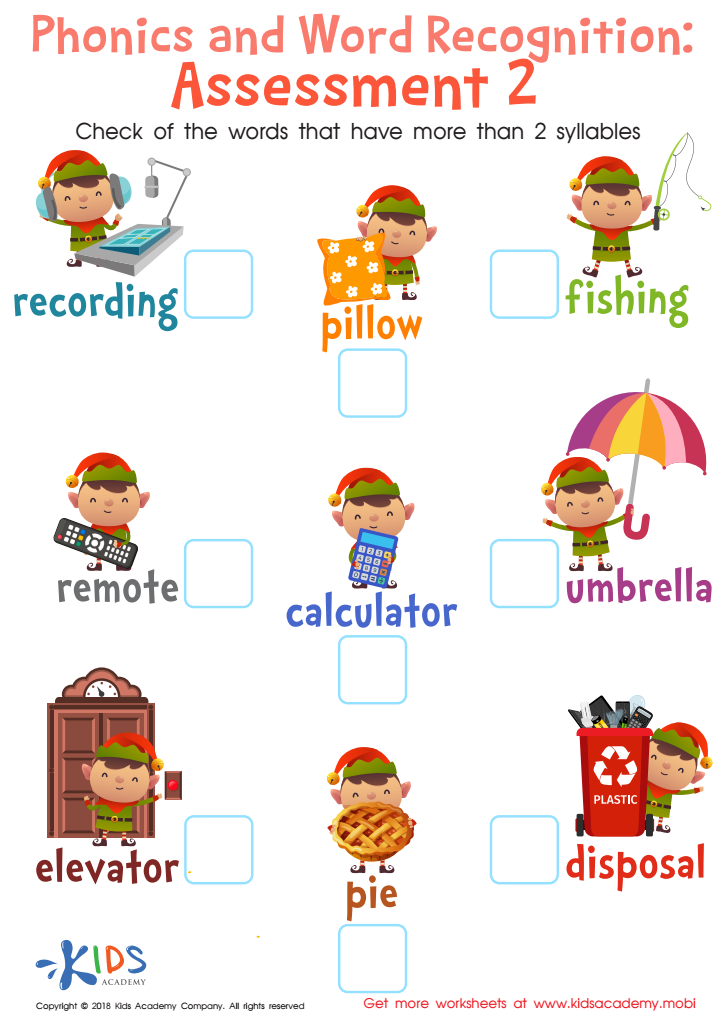
Help your kids learn proper pronunciation by counting syllables. Most words they'll encounter have 1-3 syllables, making them simple to say. Have them repeat the words in your worksheet after you. Focus on longer words with more than two syllables.
Phonics and Word Recognition: Assessment 2 Worksheet
Worksheet
Phonics and Word Recognition: Assessment 2

Phonics and Word Recognition: Assessment 2

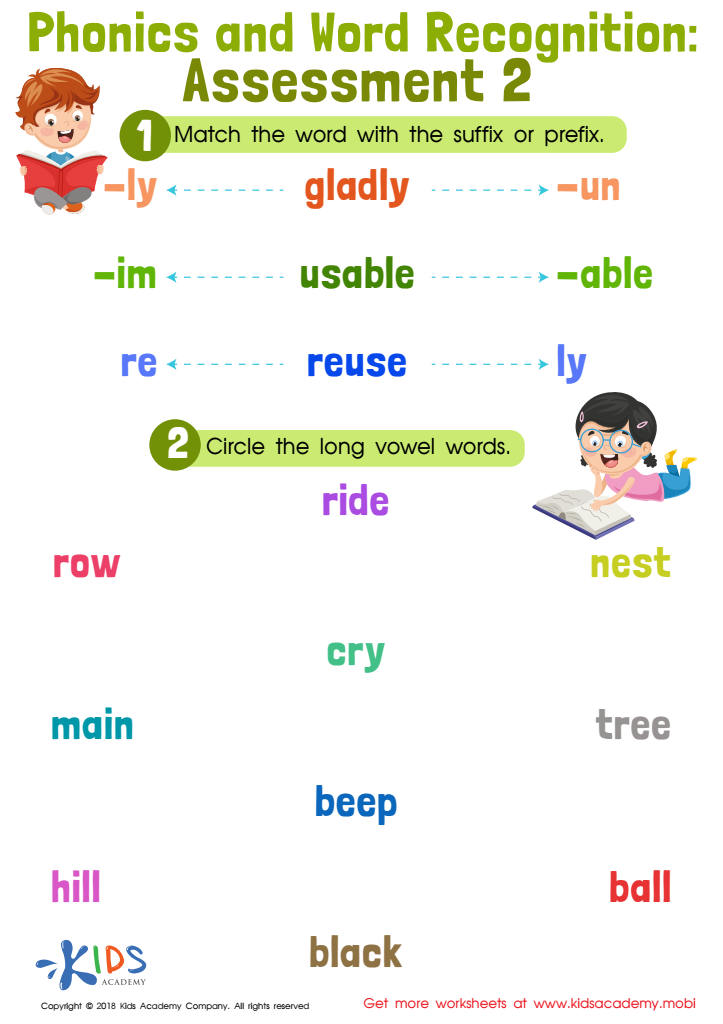
Give kids common examples of suffixes and prefixes, such as "un-," "unhappy," "ness," "happyness." Ask them to match each word in the word recognition exercise to the correct suffix or prefix. Test phonetic understanding by having them circle the long vowel sounds.
Phonics and Word Recognition: Assessment 2
Worksheet
Ir ur er words worksheet

IR UR ER Words Worksheet

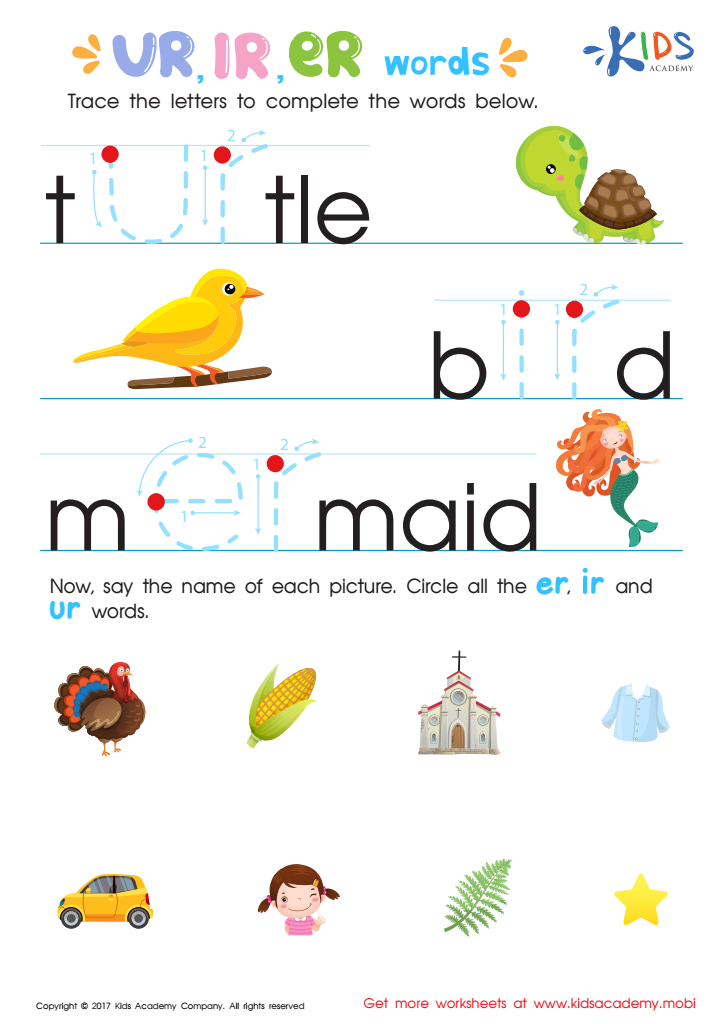
Trouble spelling words with the same initial vowel sound? Our worksheet is here to help! With its exercises to help your child learn to read and spell turtle, bird, and mermaid, it'll make differentiating these tricky digraphs a snap.
IR UR ER Words Worksheet
Worksheet


Phonics recognition is crucial for children aged 8-9 as it forms the foundational skill for reading proficiency. At this age, children transition from 'learning to read' to 'reading to learn.' Phonics helps them understand how letters correspond to sounds, a fundamental aspect of decoding words. Mastery in phonics boosts word recognition, which is vital for fluent reading.

Fluent readers are better equipped to comprehend texts, enabling them to absorb information across various subjects. Poor phonics skills can lead to reading difficulties, making educational content across subjects more challenging and potentially diminishing a child's enthusiasm for learning. This, in turn, impacts academic performance and self-esteem.

In addition, phonics extends beyond academics; it enhances vocabulary and spelling skills, promotes a love for reading, and fosters independence. When children read comfortably, they are more likely to explore books, discover interests, and develop critical thinking skills.

For parents, ensuring strong phonics skills means setting a foundation for lifelong learning and success. For teachers, it means preparing students to engage fully with the curriculum. Engaging in activities like phonics games or reading together can make learning fun and effective, benefiting the child's overall development. Thus, prioritizing phonics at this stage is indispensable for holistic education.