Problem-solving ability Worksheets for Ages 8-9
3 filtered results
-
From - To
Unlock your child's potential with our Problem-Solving Ability Worksheets designed for ages 8-9. Tailored to enhance critical thinking, these engaging activities empower young learners to tackle various challenges confidently. From multifaceted word problems to logical puzzles, each worksheet aims to develop essential skills such as reasoning, pattern recognition, and decision-making. Perfect for classroom use or at-home practice, our worksheets are aligned with educational standards and beneficial for honing your child's cognitive abilities. Foster a love for problem-solving and watch them excel in academics and beyond. Visit Kids Academy to download and print these invaluable learning tools today!
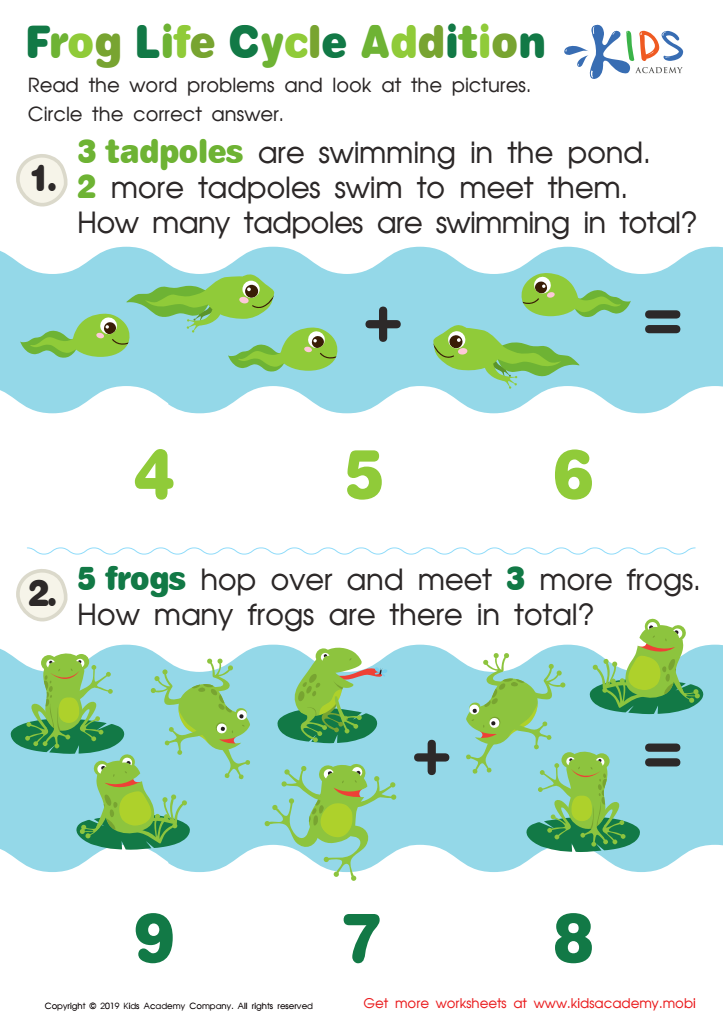
Frog Life Cycle Addition Worksheet
 Assign to My Students

Animal Hide and Seek Worksheet


.jpg)



.jpg)
.jpg)
The problem-solving ability in children aged 8-9 is crucial for their overall development and should be a priority for both parents and teachers. At this tender age, children are navigating the world with freshly acquired foundational skills in reading, writing, and arithmetic. Fostering problem-solving skills helps them apply these academic basics creatively to real-world situations.
Firstly, problem-solving nurtures critical thinking. When children encounter challenges, they learn to assess situations, weigh options, and devise strategies. This cognitive engagement builds their reasoning and logic, making them capable thinkers who can approach complex scenarios intelligently.
Secondly, it promotes independence and self-confidence. Successfully solving problems, whether in academics, social interactions, or daily activities, provides a sense of accomplishment. This boosts their self-esteem and motivates them to tackle new challenges confidently.
Moreover, problem-solving skills are essential for collaboration. Children often need to communicate and work with peers to find solutions, which sharpens their teamwork and interpersonal skills. This collaboration is foundational for their future personal and professional relationships.
Lastly, these skills underpin lifelong learning. As children grow, the ability to face unknown problems and think critically become pivotal in their continuous academic journey and adaptability in a rapidly changing world. Therefore, investing in problem-solving ability at this formative age equips children with a vital toolkit for life’s challenges.








