Understanding bar graphs Worksheets for Ages 8-9
5 filtered results
-
From - To
Our "Understanding Bar Graphs Worksheets for Ages 8-9" are designed to transform young learners into confident data analysts! These engaging worksheets introduce children to the fundamentals of bar graphs, teaching them how to read, interpret, and create their own graphs using real-world data. Through fun and interactive exercises, students will develop crucial math and analytical skills, enhancing their ability to visually represent information. Perfect for classroom use or at-home practice, our worksheets cater to a variety of learning styles and help make mastering bar graphs an enjoyable experience for every child. Download now to kickstart graphing success!
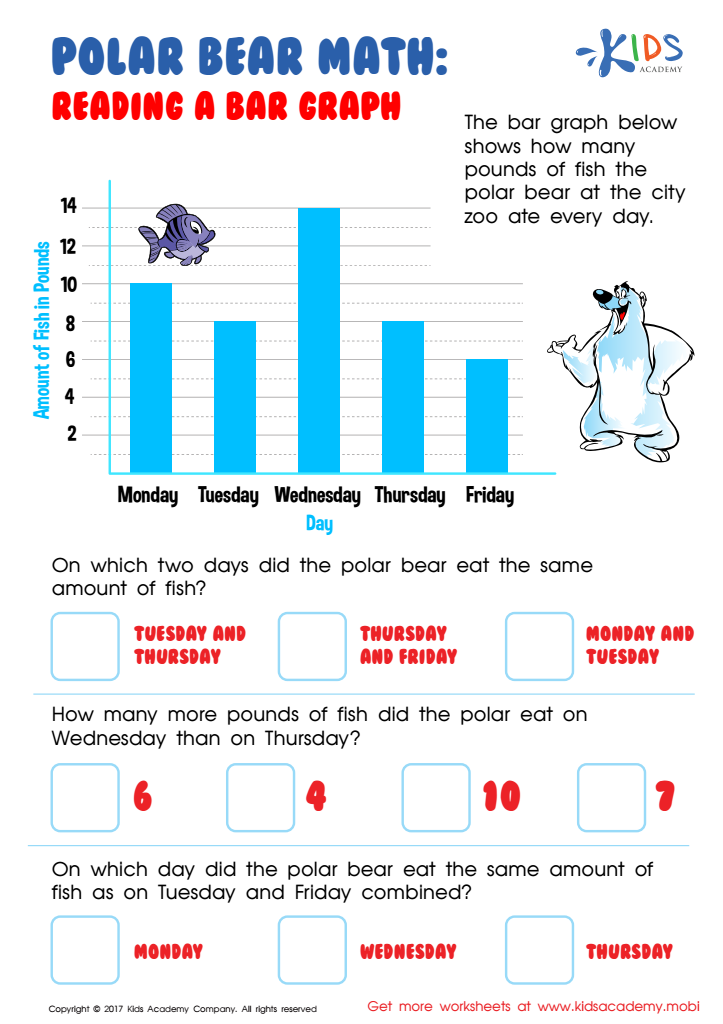
Reading Bar Graph Worksheet
 Assign to My Students
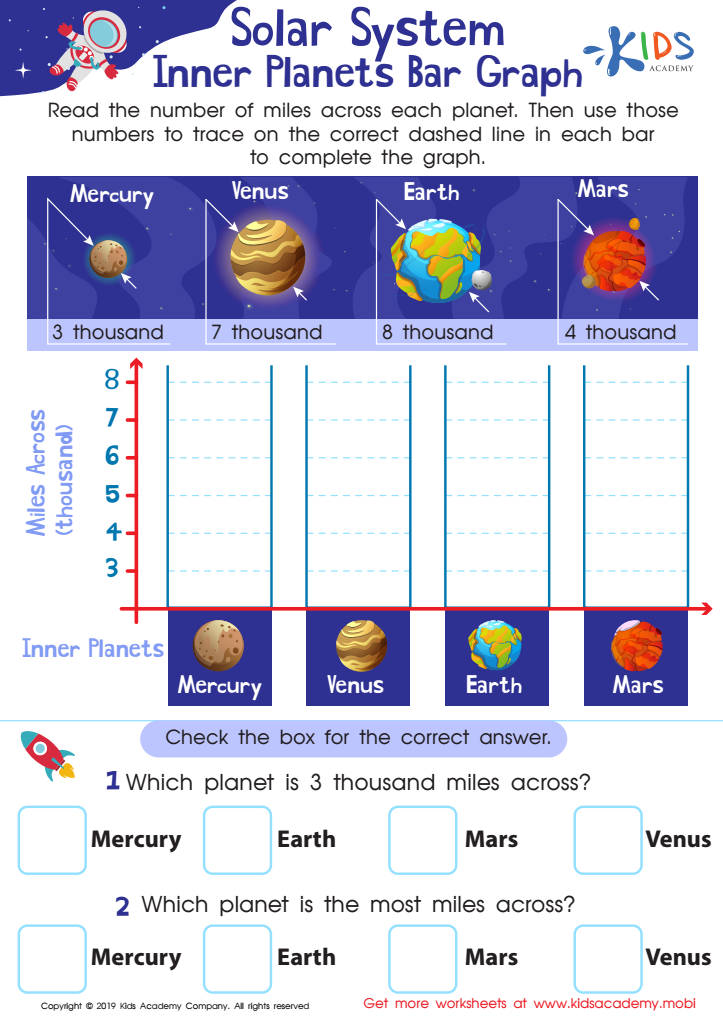
Planets Bar Graph Worksheet
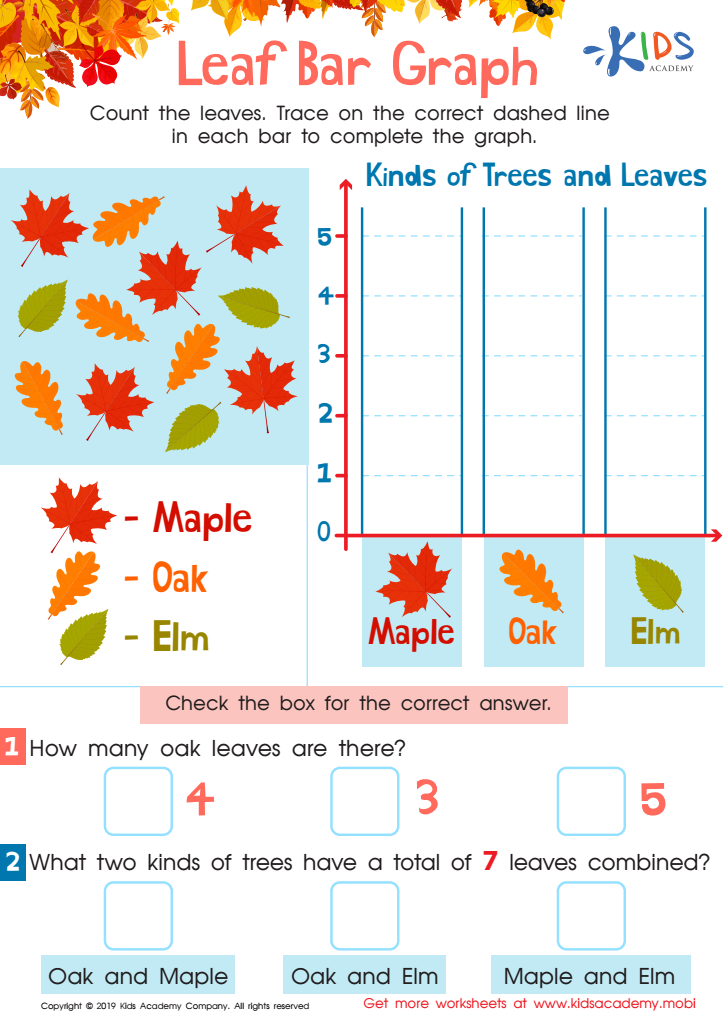
Leaf Bar Graph Worksheet
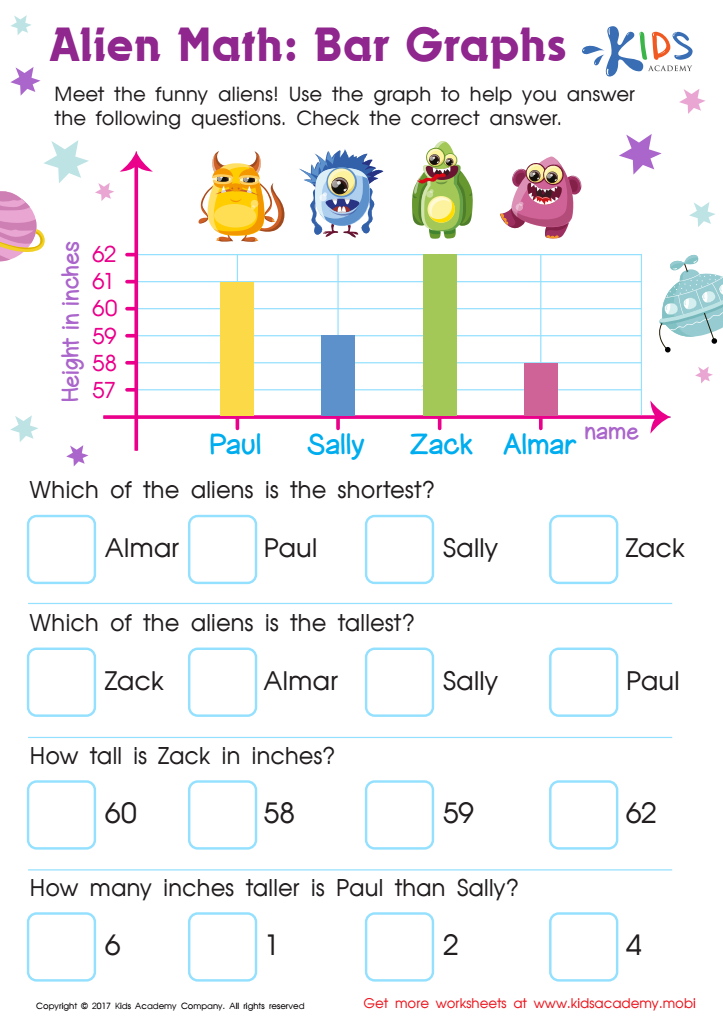
Bar Graphs Worksheet
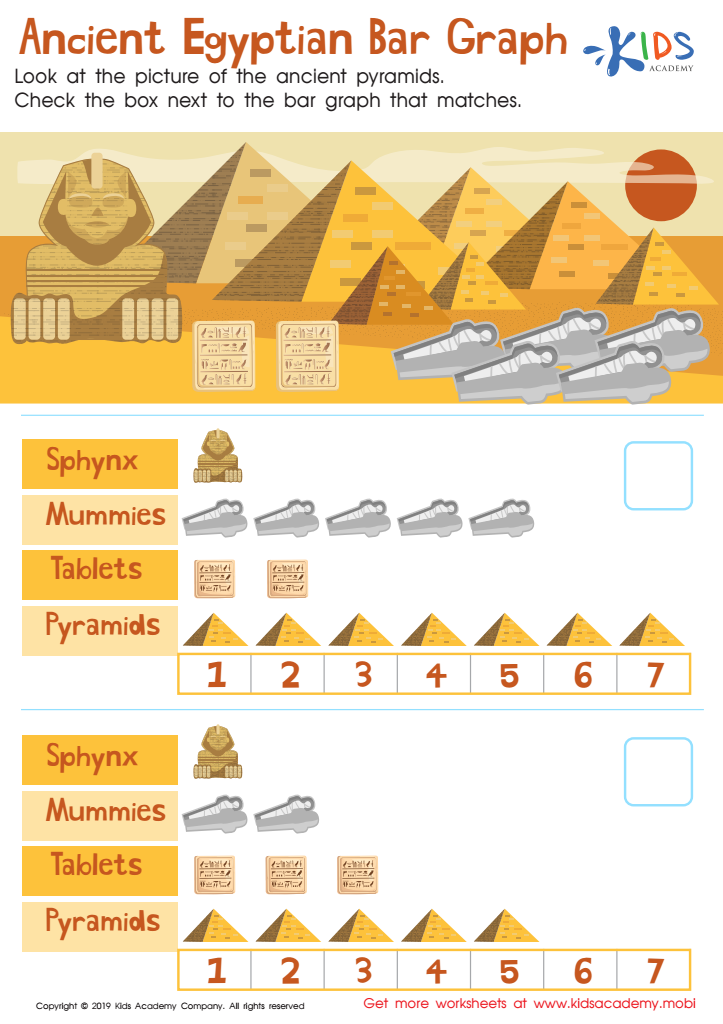
Egyptian Bar Graph Worksheet







Understanding bar graphs is a crucial skill for children aged 8-9, and there are multiple reasons parents and teachers should care about fostering this knowledge.
Firstly, bar graphs are fundamental tools in mathematics and everyday life. They help children develop key analytical skills by visually comparing quantities and easily identifying patterns or trends. This visual interpretation aligns well with the developmental stage of 8-9-year-olds, who learn effectively through visual aids.
Secondly, early familiarity with bar graphs can boost a child's confidence in handling data, a critical component of STEM (Science, Technology, Engineering, and Mathematics) education. Proficiency in interpreting data lays the groundwork for more complex math and science concepts that they will encounter in later grades.
Additionally, understanding bar graphs helps children in decision-making processes. By analyzing information represented in graphs, children can make informed choices and reason logically, skills applicable in real-world situations such as budgeting their allowance or scheduling their free time.
Lastly, bar graphs can make learning fun and interactive. Creating and interpreting bar graphs can involve hands-on activities, such as conducting simple surveys among classmates, which not only reinforce math skills but also encourage teamwork and communication.
In summary, mastering bar graphs at an early age fosters important analytical, mathematical, and life skills that benefit children both academically and in their daily experiences.








