Vowel Recognition Worksheets for Ages 8-9
8 filtered results
-
From - To
Enhance your child's reading skills with our engaging Vowel Recognition Worksheets for ages 8-9! Designed by expert educators, these worksheets offer a fun and interactive way for second and third graders to master vowel sounds. With varied and colorful exercises, children will practice identifying, pronouncing, and using vowels in different contexts. Each worksheet aims to strengthen literacy foundations critical for effective reading and writing. Ideal for classroom use or home reinforcement, our resources are perfect for young learners aiming to excel in their language skills. Unlock their potential with our top-quality vowel recognition worksheets today!
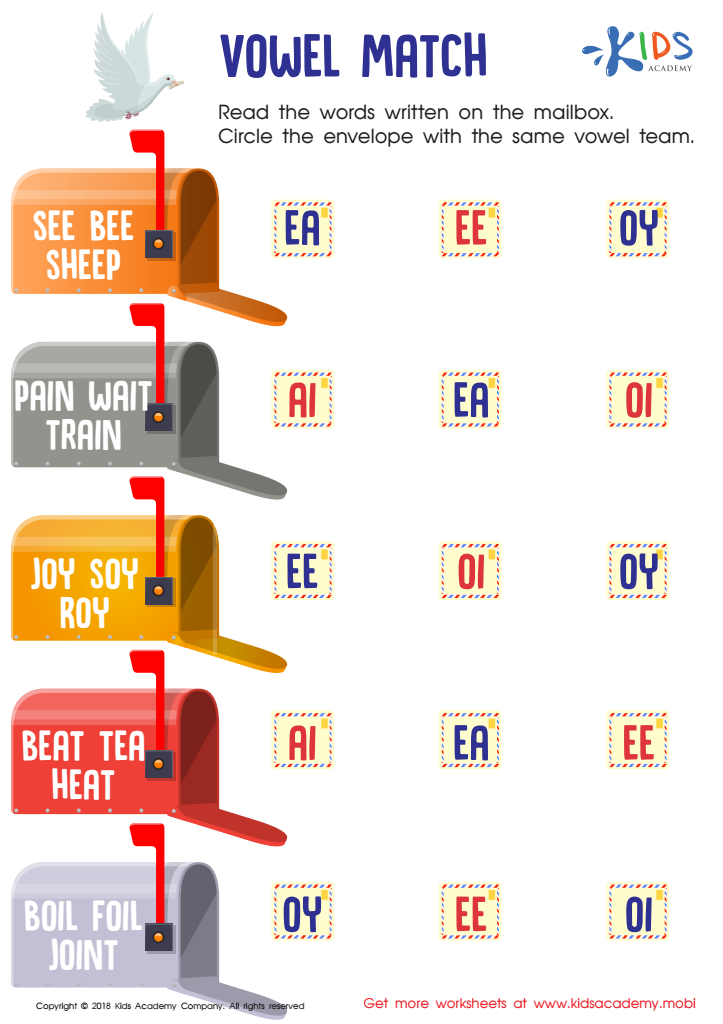
Vowel match Worksheet
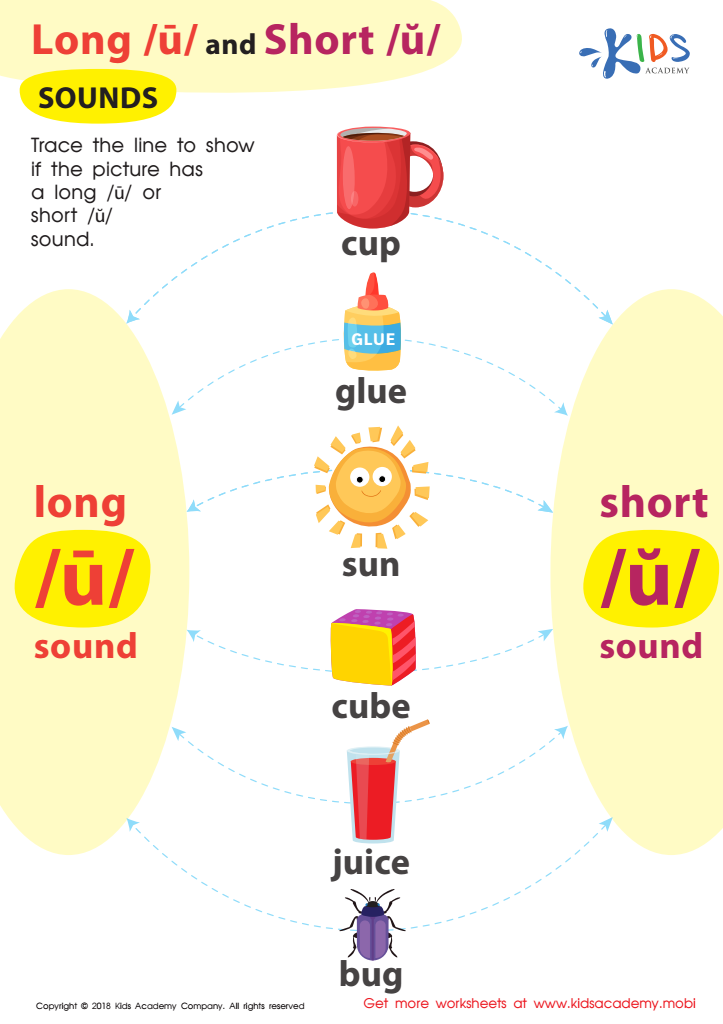
Reading: Long U and Short U Sounds Worksheet
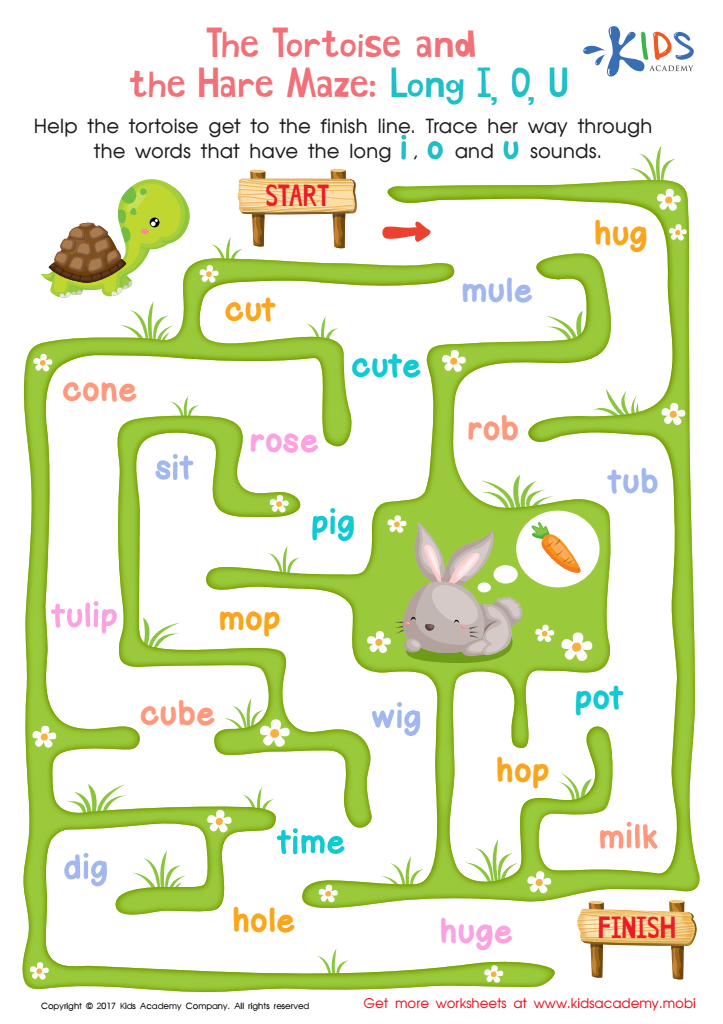
Long I, O, U Words Worksheet
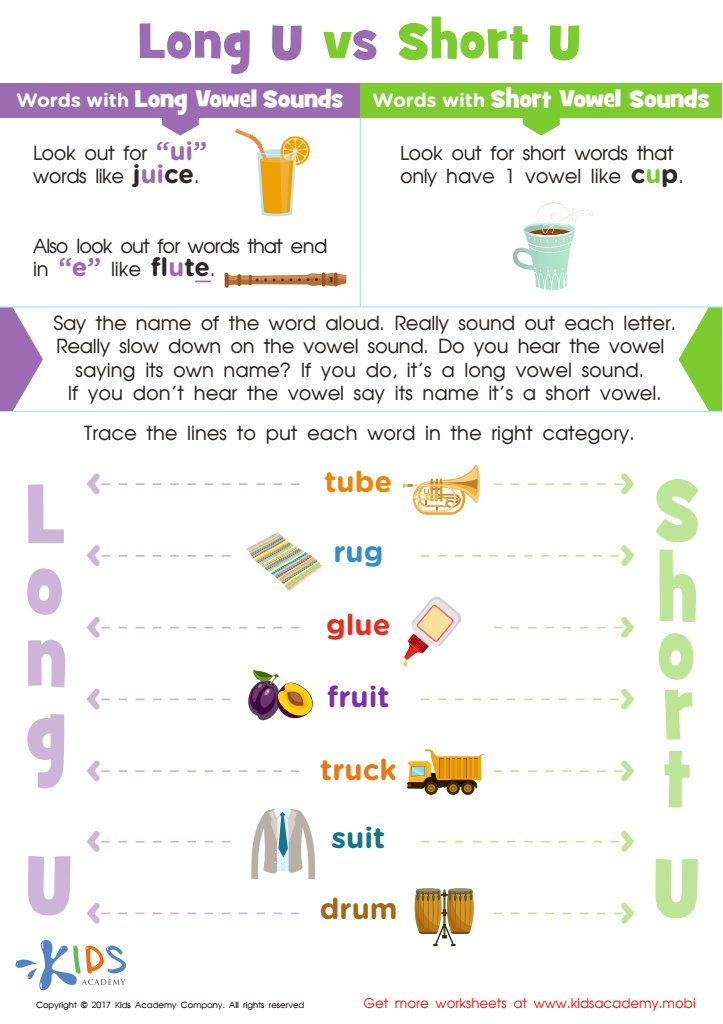
Long and Short Vowel U Spelling Worksheet
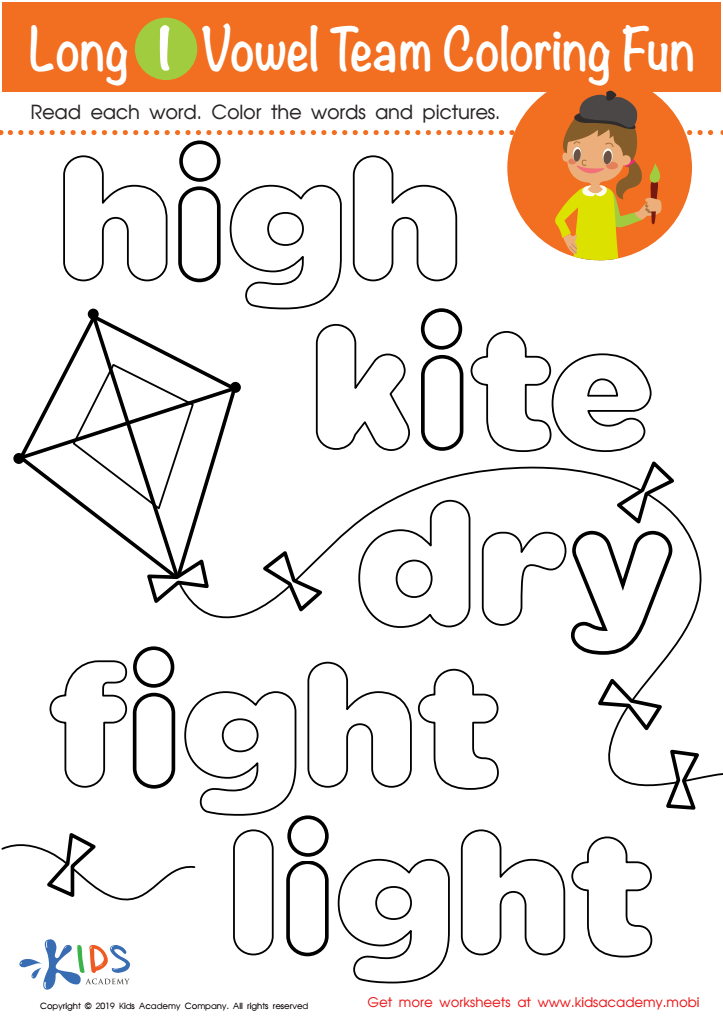
Long I Vowel Team Coloring Worksheet
 Assign to My Students
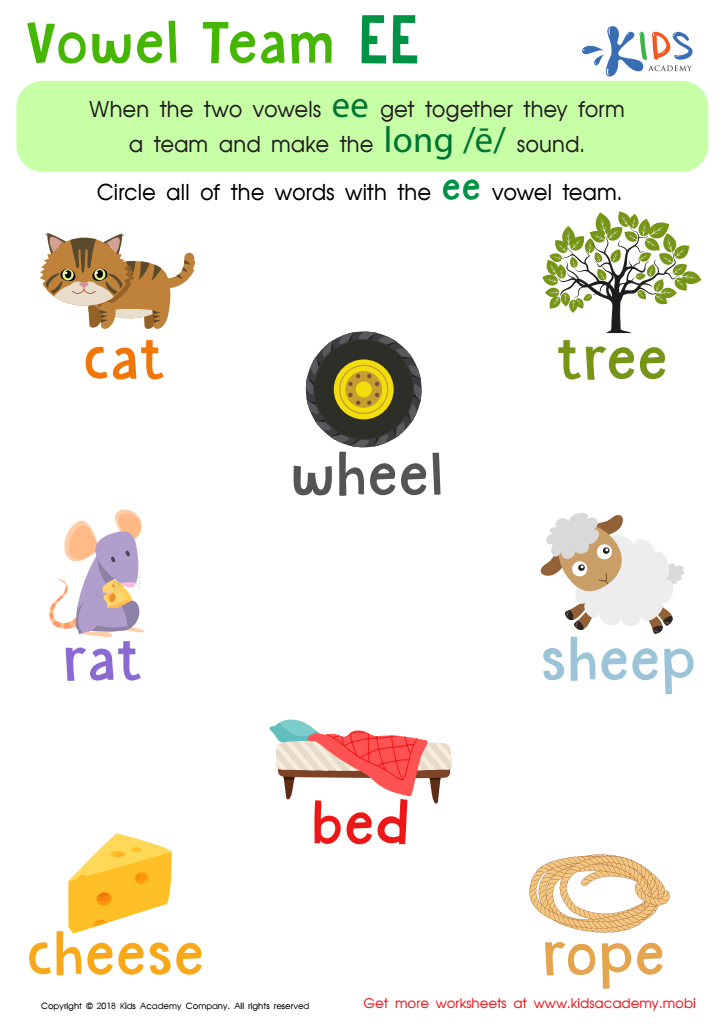
Reading: Vowel Team EE Worksheet
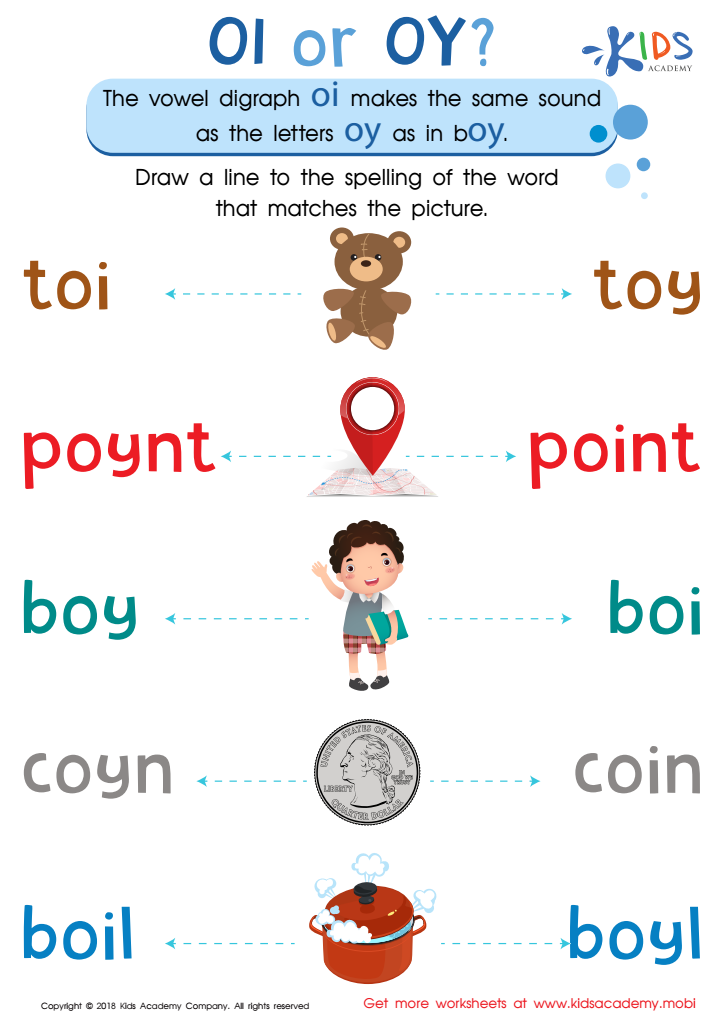
Reading: OI and OY Worksheet
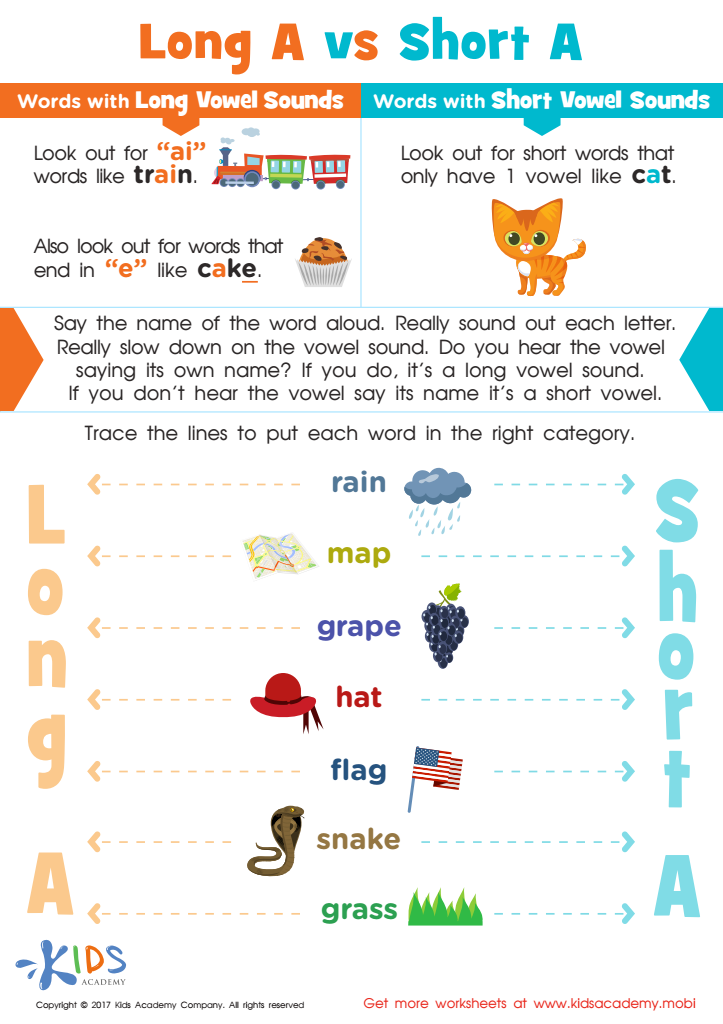
Long and Short Vowel A Spelling Worksheet








Vowel recognition is a cornerstone of literacy for children aged 8-9, and is crucial for their overall academic development. At this stage, children transition from learning to read to reading to learn, and a firm grasp of vowel sounds significantly supports fluent reading and writing. Vowel sounds form the heart of English phonics, aiding in the decoding of words. Effective vowel recognition helps children differentiate between similar sounding words, improves their spelling, and enhances their ability to tackle new, unfamiliar words with confidence.
Moreover, strong vowel recognition helps in understanding word meaning. For instance, confusing the vowels in "bit" and "bit" or "cat" and "cut" can change the meaning entirely, potentially leading to misunderstandings in comprehension.
Beyond academics, practicing and mastering vowel recognition can boost a child's confidence and love for reading, fostering a lifelong interest in books and learning. It also directly impacts their ability to engage in class discussions, follow written instructions, and express their thoughts clearly through writing.
In sum, prioritizing vowel recognition equips children with fundamental reading and spelling skills, essential for academic success and effective communication. Parents and teachers who focus on this critical area lay the groundwork for successful learners and articulate communicators.








