Shape Recognition 2D Shapes Worksheets for Ages 8-9
9 filtered results
-
From - To
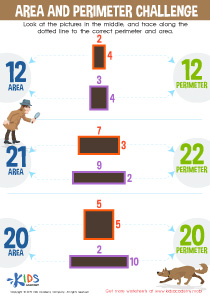
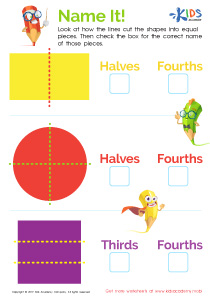
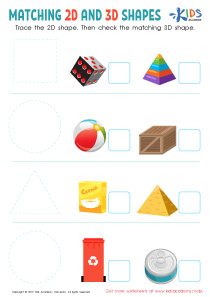
Explore our high-quality "Shape Recognition 2D Shapes Worksheets for Ages 8-9" at Kids Academy, designed to enhance your child's geometry skills through fun and engaging exercises. These worksheets help young learners identify and differentiate between various 2D shapes, such as circles, squares, triangles, and hexagons. Our expertly crafted pages promote critical thinking and problem-solving skills by including activities like shape matching, drawing, and completing patterns. Perfect for complementing classroom learning or home revision, these worksheets are an excellent tool to solidify foundational math skills and encourage a lifelong love of learning in young mathematicians.
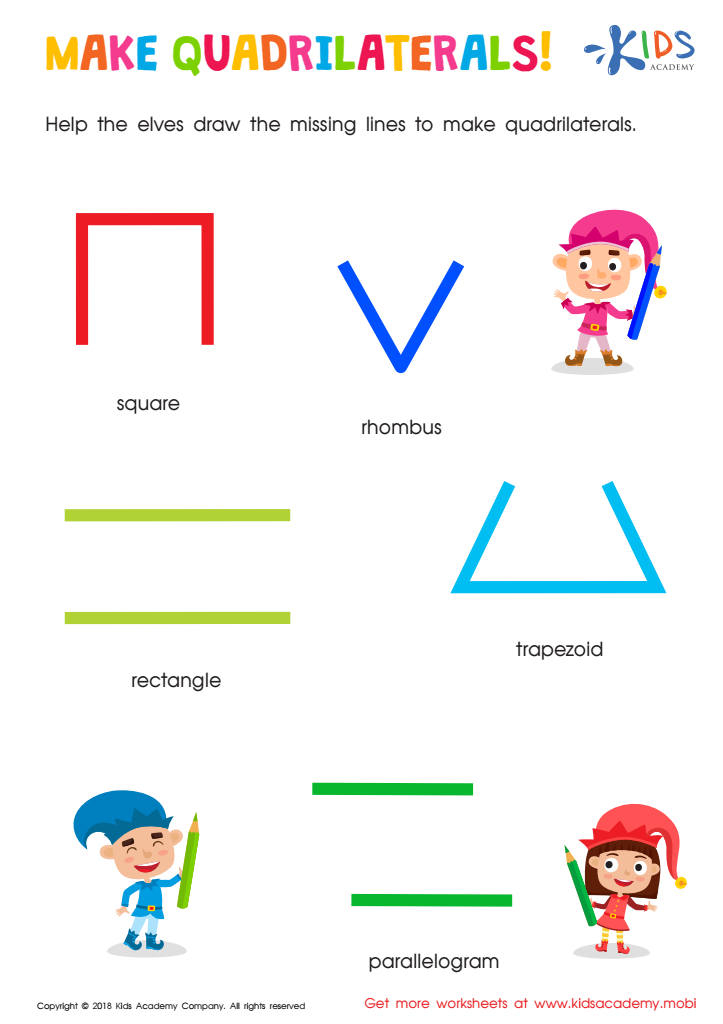
Make Quadrilaterals Worksheet
 Assign to My Students






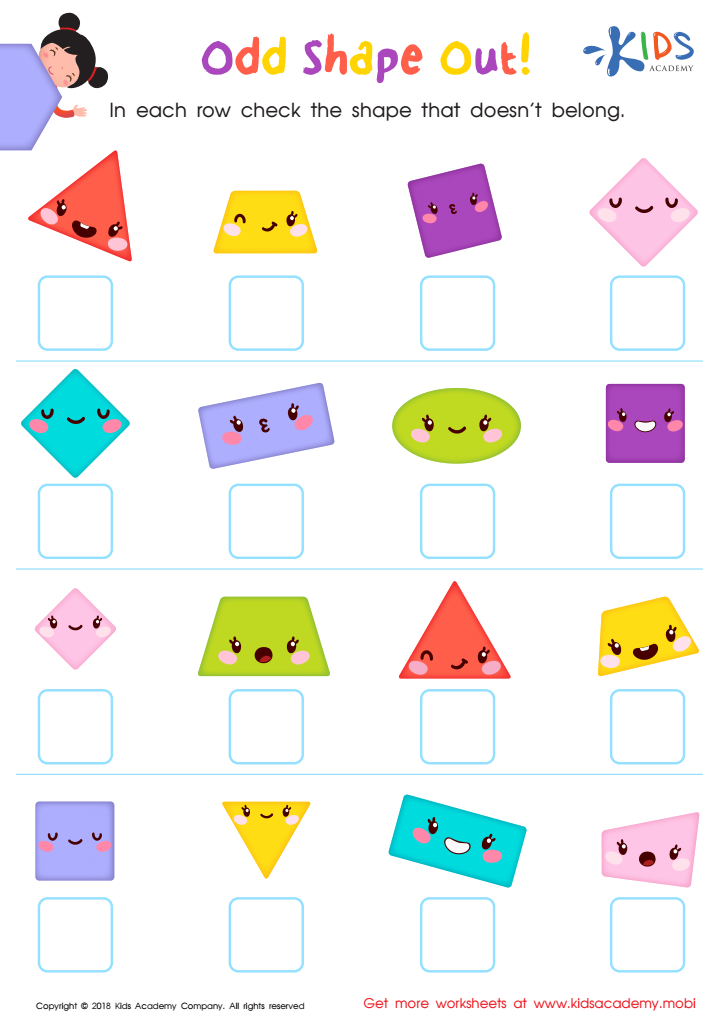
Odd Shape Out Worksheet for Grade 3
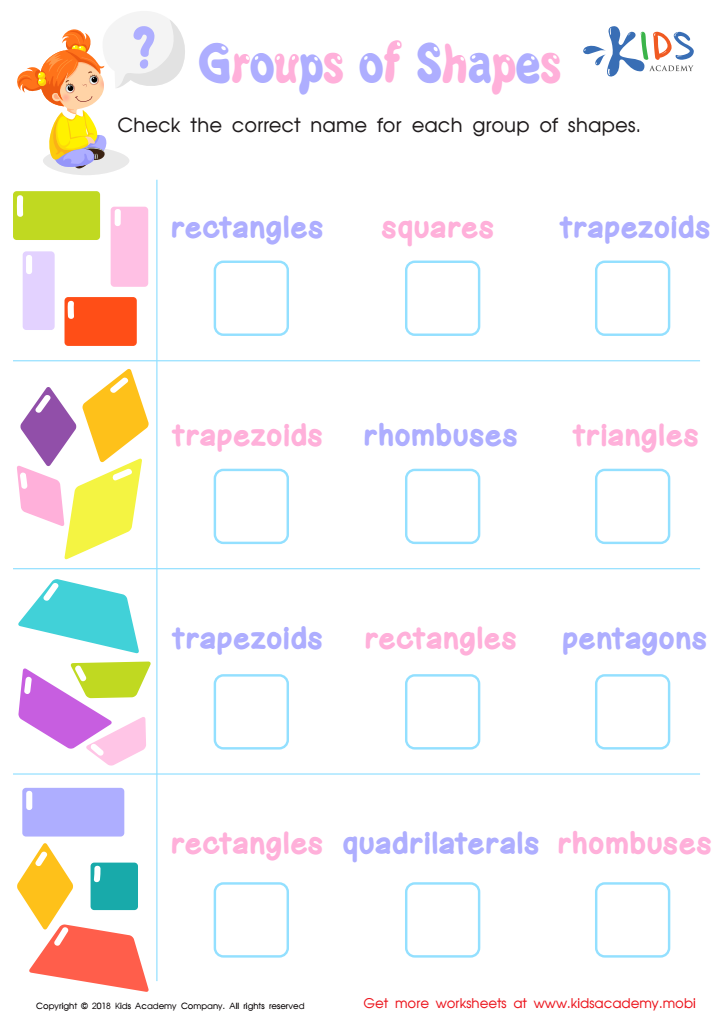
Groups of Shapes Worksheet
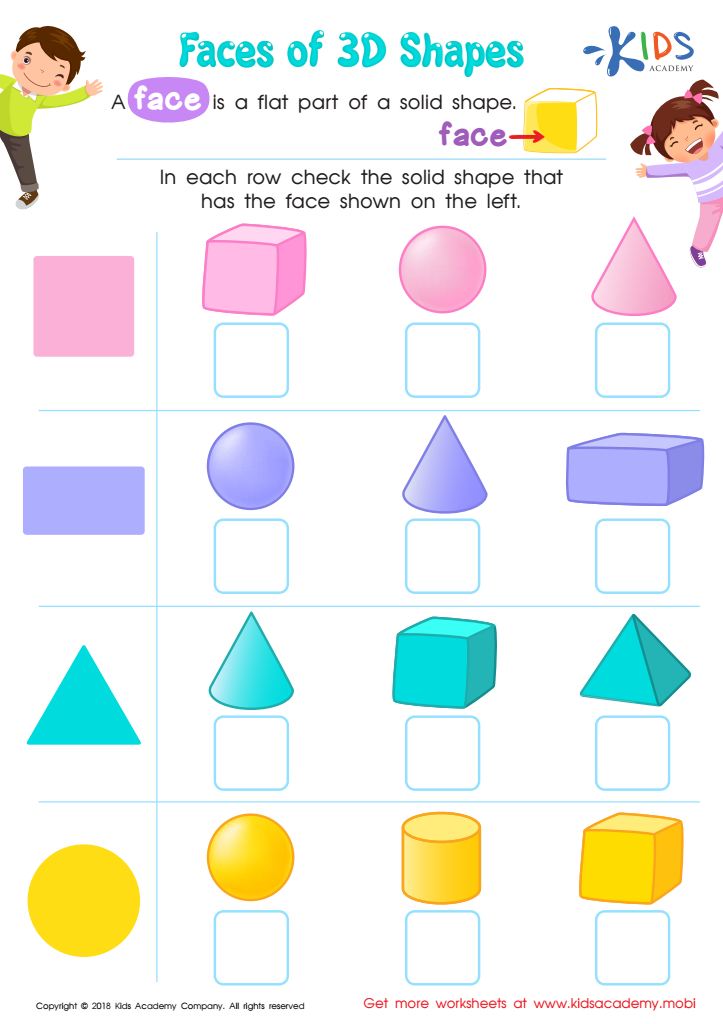
Faces of 3D Shapes Worksheet
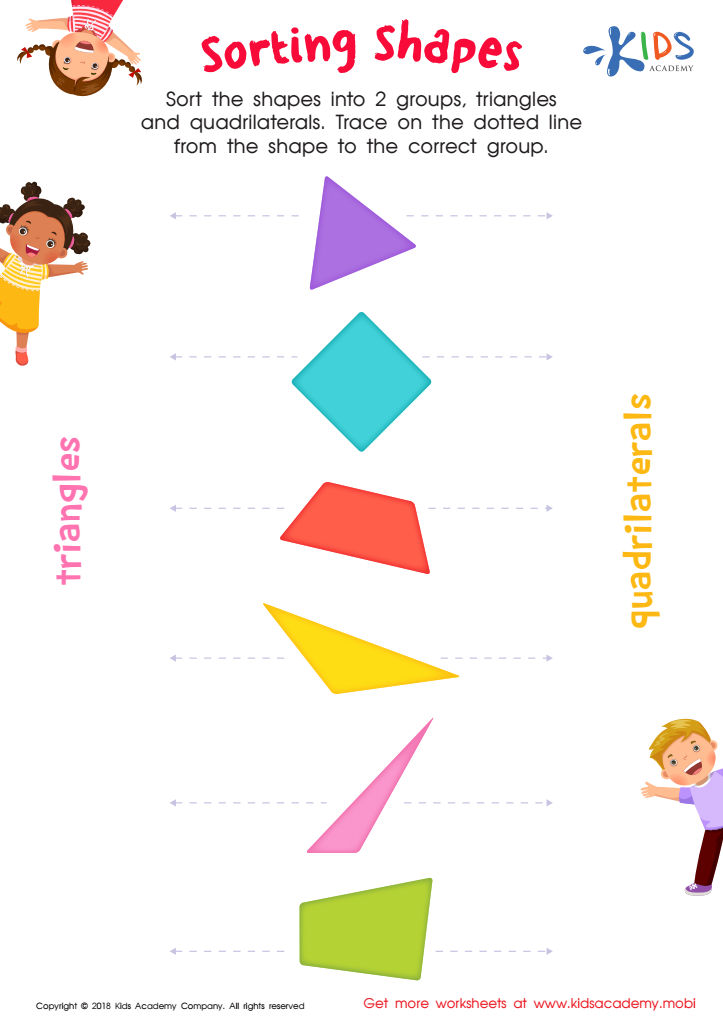
Sorting Shapes Worksheet
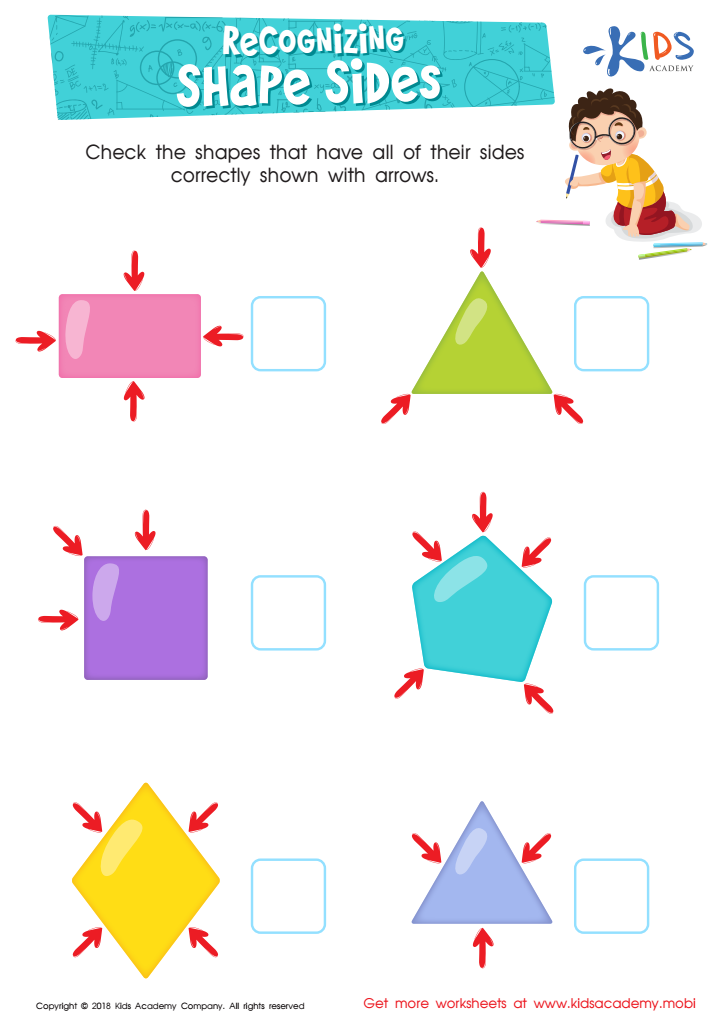
Recognizing Shape Sides Worksheet
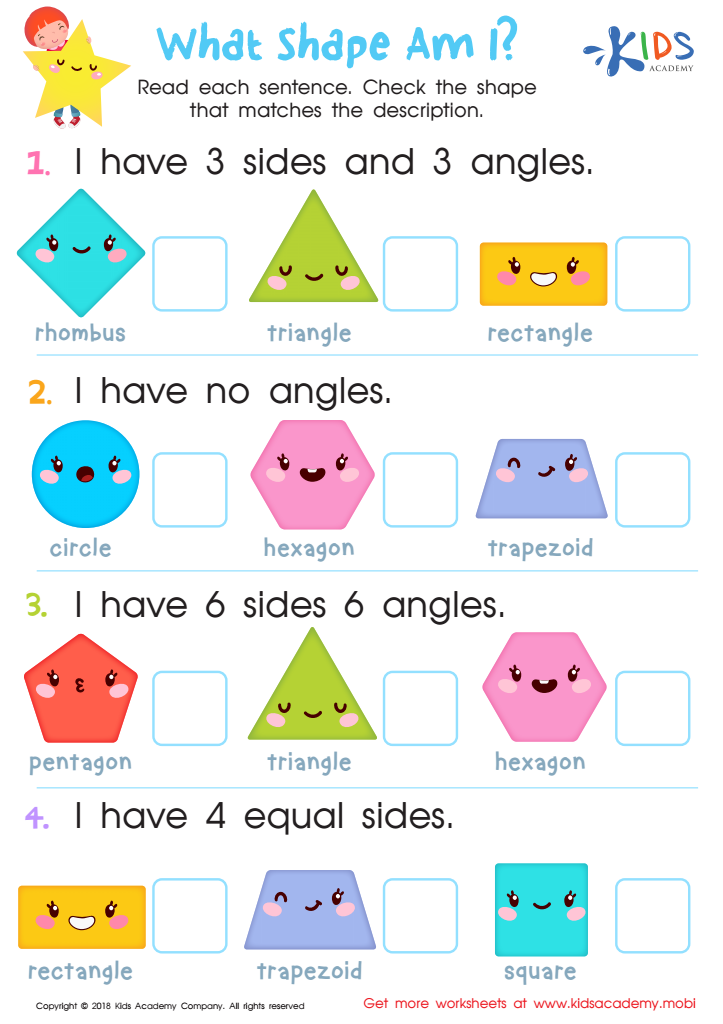
What Shape Am I? Worksheet
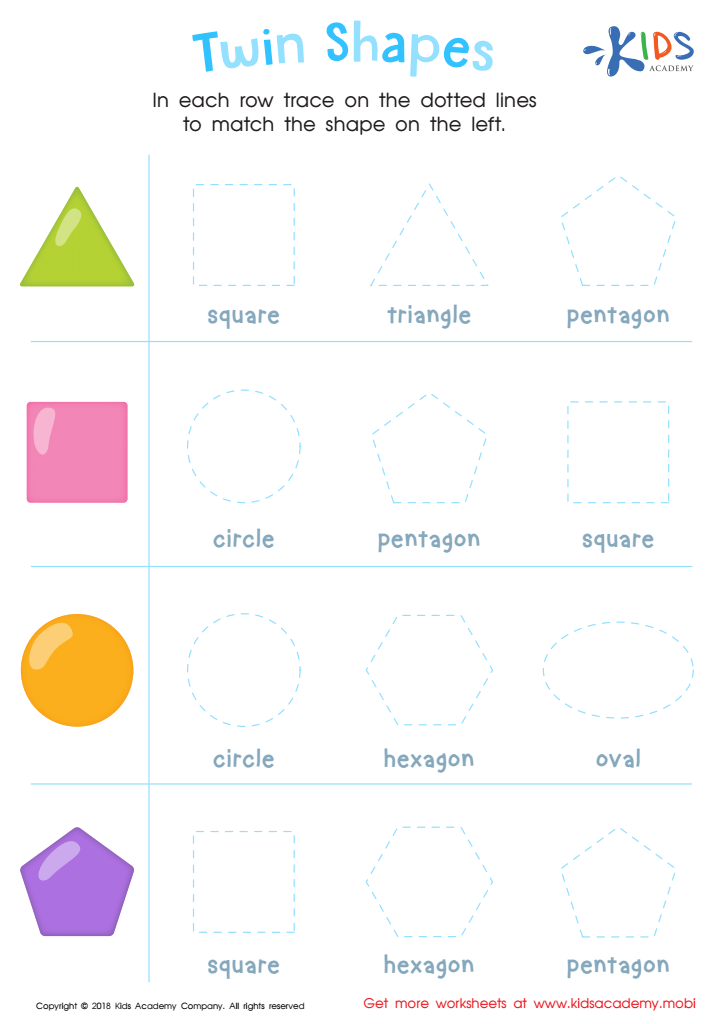
Twin Shapes Dot-to-Dot Worksheet
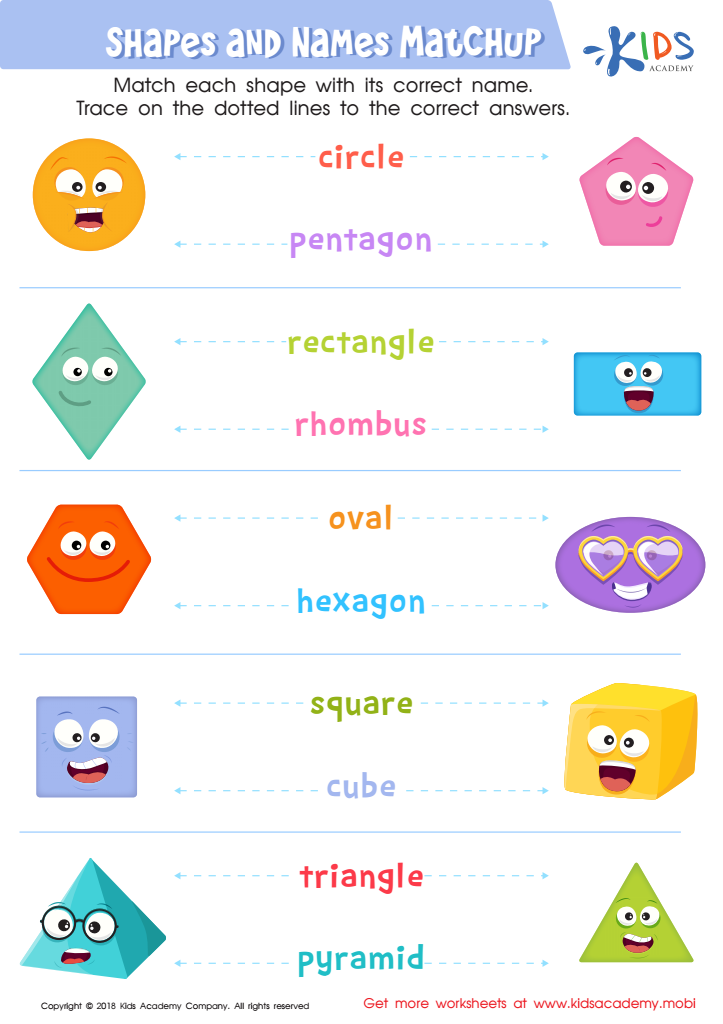
Shapes and Names Matchup Worksheet








Caring about shape recognition, particularly 2D shapes, for children ages 8-9 is crucial for a multitude of developmental reasons. At this age, children are in a key cognitive developmental stage where they transition from recognizing simple shapes to understanding how these shapes interact and combine in the world around them. This skill sets the foundation for a variety of higher-level cognitive abilities such as spatial awareness, geometry, and even problem-solving capabilities.
When children recognize and differentiate between 2D shapes, they improve their memory and attention to detail. This aids in more advanced tasks like map reading, understanding graphs, and creating complex patterns, all of which are vital for academic success in subjects like math and science. Furthermore, these skills are not just bound to academics; they contribute to everyday tasks and hobbies, ranging from organizing physical spaces (like arranging toys or drawing), to understanding visuals and art.
Additionally, shape recognition is interdisciplinary. It enhances language skills through descriptive vocabulary and strengthens handwriting and motor skills through drawing and tracing shapes. It is also linked to critical thinking and logical reasoning, allowing children to classify objects and understand their attributes, leading to better problem-solving skills.
In conclusion, nurturing shape recognition in children fosters a well-rounded cognitive development that translates into various essential life skills, making it a significant aspect of their growth that parents and teachers should actively support.