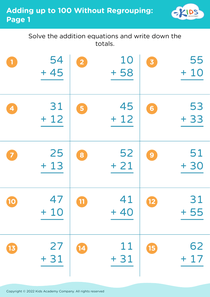
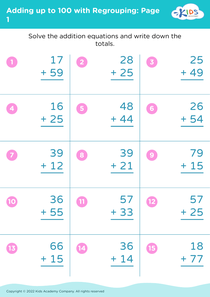
Fine Motor Skills Adding up to 100 Misc Worksheets for Ages 8-9
5 filtered results
-
From - To
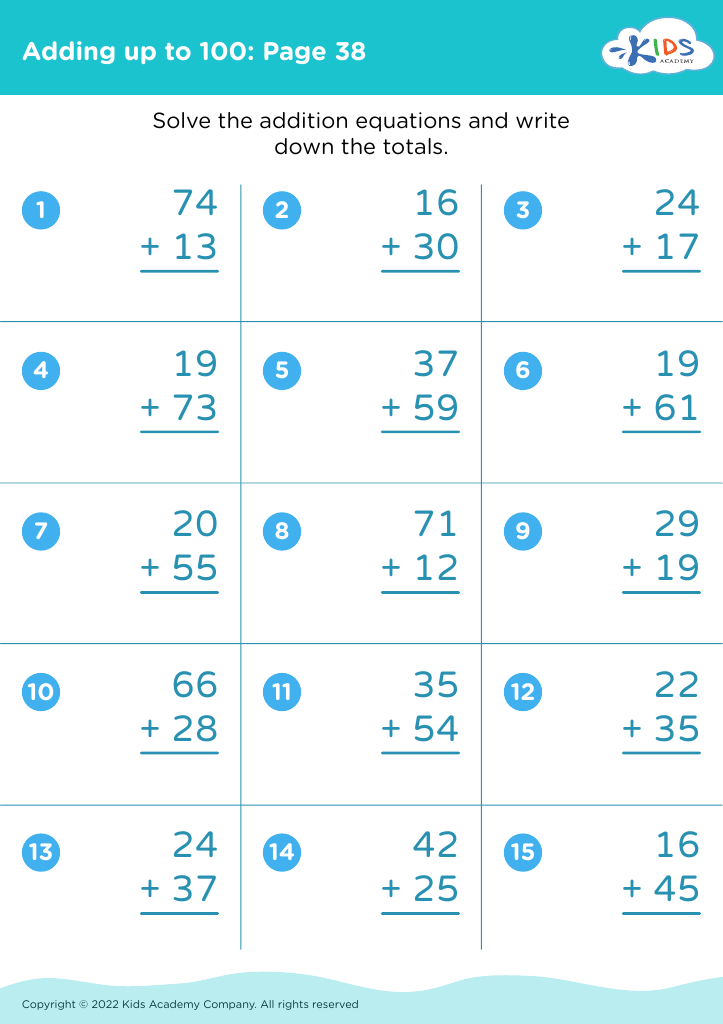
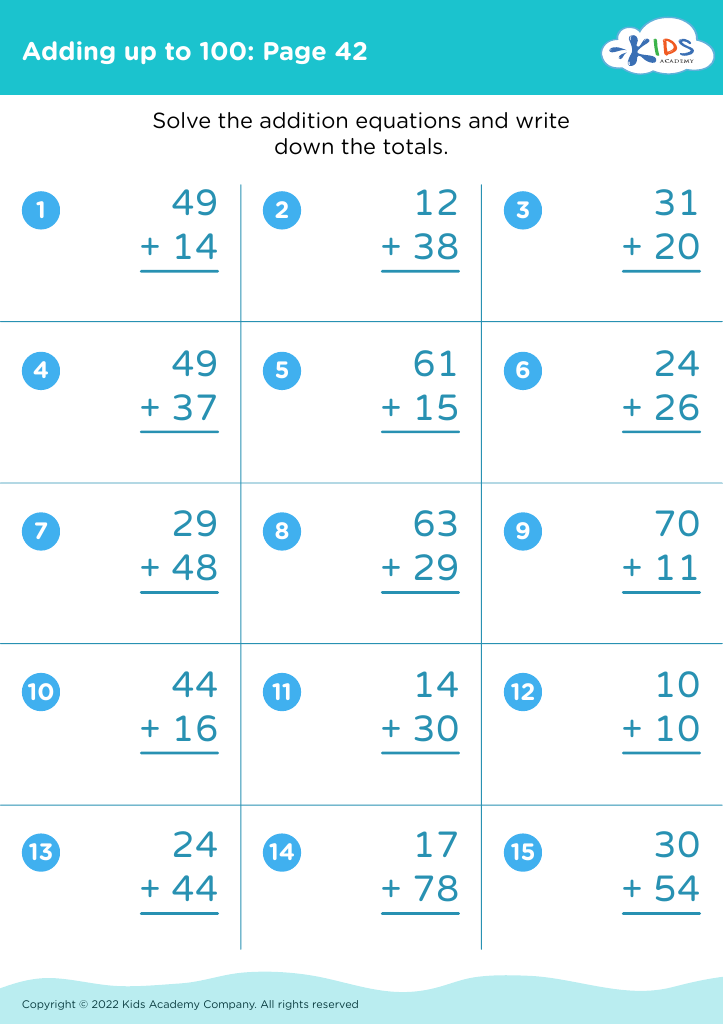
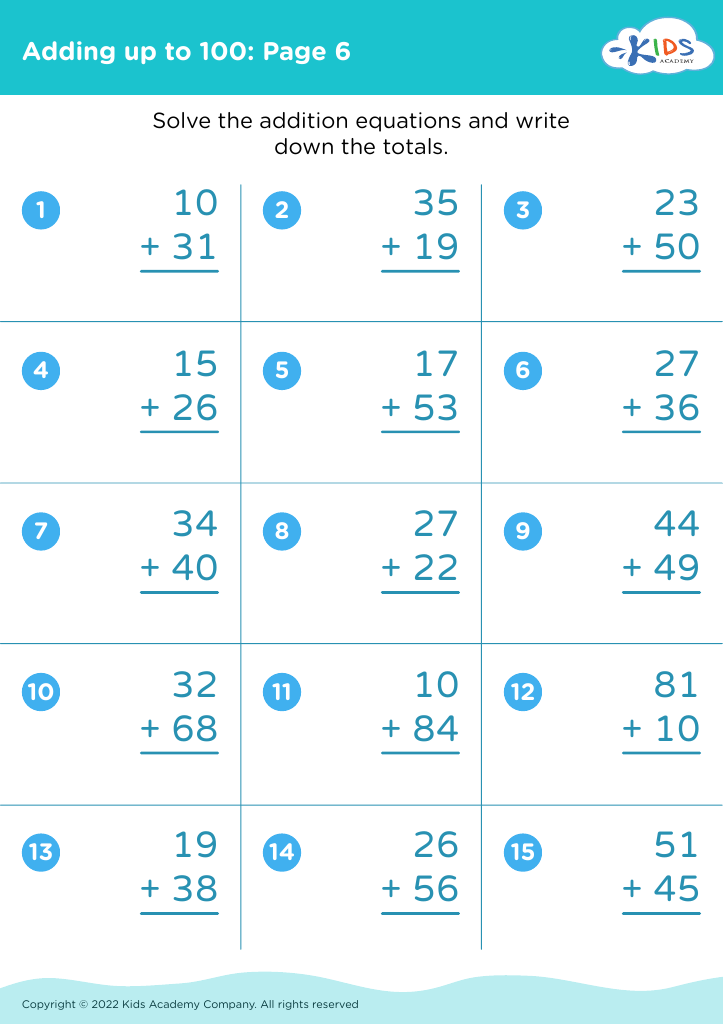
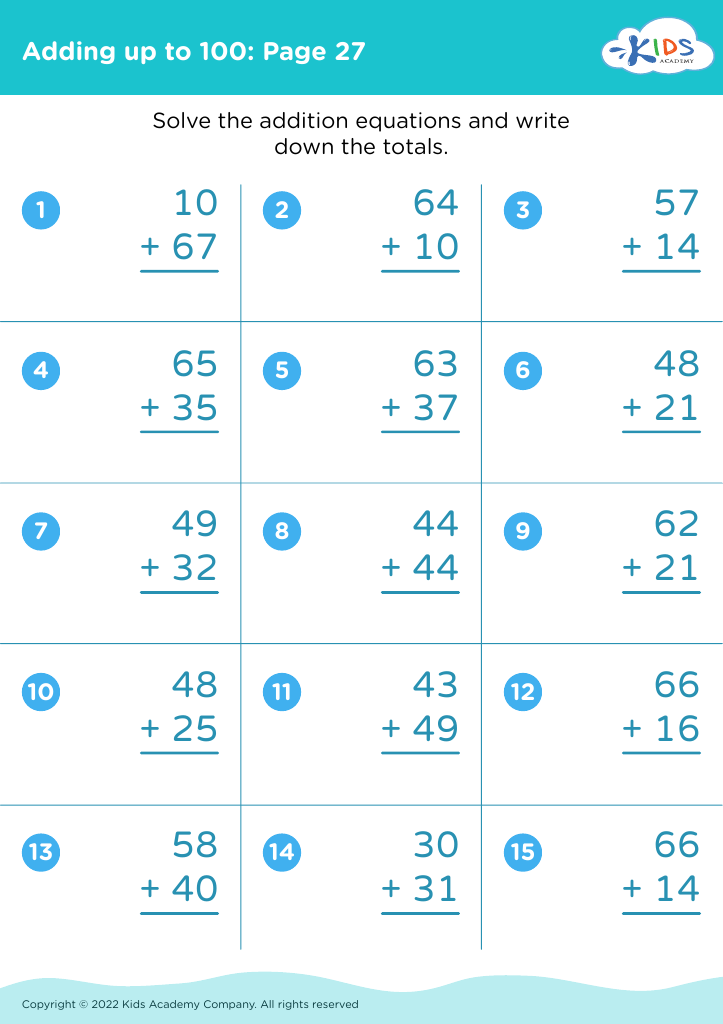
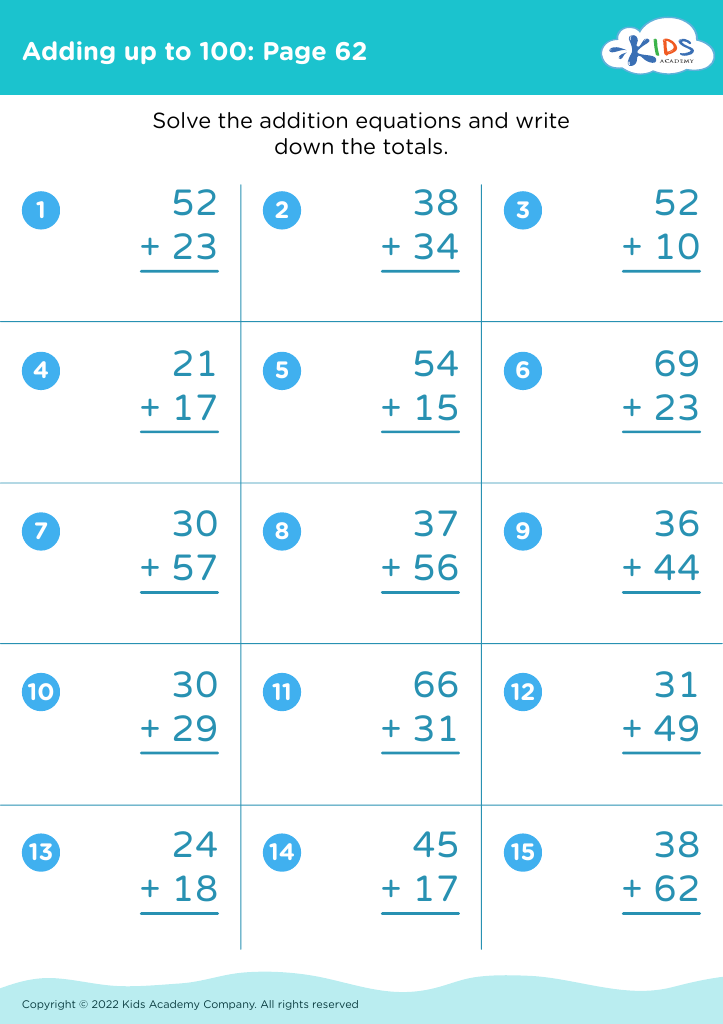
Unlock your child’s potential with our “Fine Motor Skills Adding up to 100 Misc Worksheets” designed for ages 8-9. These engaging worksheets combine essential math practice with exciting fine motor challenges, ensuring your child develops coordination while mastering addition up to 100. From cutting and pasting activities to tracing numbers and shapes, these worksheets provide a hands-on approach to learning that keeps young minds engaged. Watch as your child enjoys improving their precision and concentration skills while building confidence in their math abilities. Perfect for home schooling or supplementary practice, these worksheets help blend academic learning with playful exploration. Start your journey today!


Fine motor skills are essential for children aged 8-9 as they form the foundation for a range of everyday activities and academic tasks. These skills involve the coordination of small muscles in actions such as writing, typing, tying shoelaces, and using tools effectively. For parents and teachers, fostering fine motor development can significantly enhance a child's independence and self-confidence.
At this age, children are engaging in more complex tasks that require precise movements. Strong fine motor skills can improve handwriting clarity and speed, making it easier for children to express their thoughts and ideas on paper. Moreover, activities that promote these skills, like drawing, cutting, or manipulating small objects, can enhance cognitive development by encouraging problem-solving and focus.
Additionally, fine motor skills contribute to success in various subjects, particularly in STEM areas where precise manipulation of tools is often required. By supporting fine motor development through engaging activities, parents and teachers can facilitate better learning experiences, nurture creativity, and prepare children for future skills needed in a technology-driven world. Ultimately, investing time in enhancing fine motor skills helps foster overall growth and prepares children for both academic and real-life challenges ahead.