Develop fine motor skills Adding up to 100 Worksheets for Ages 8-9
5 filtered results
-
From - To
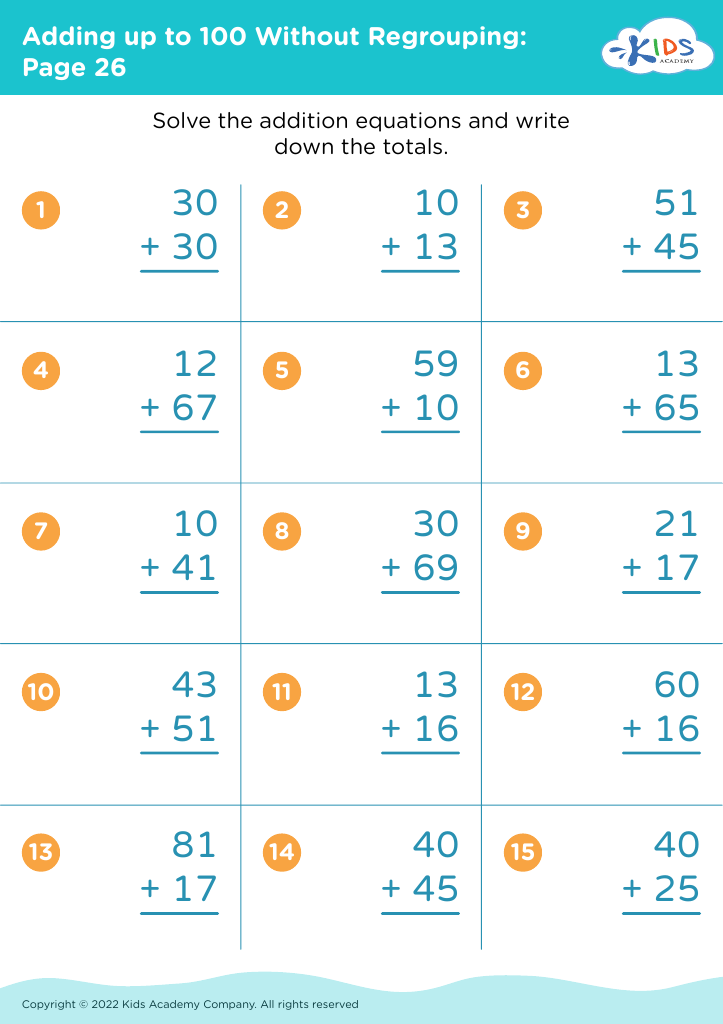
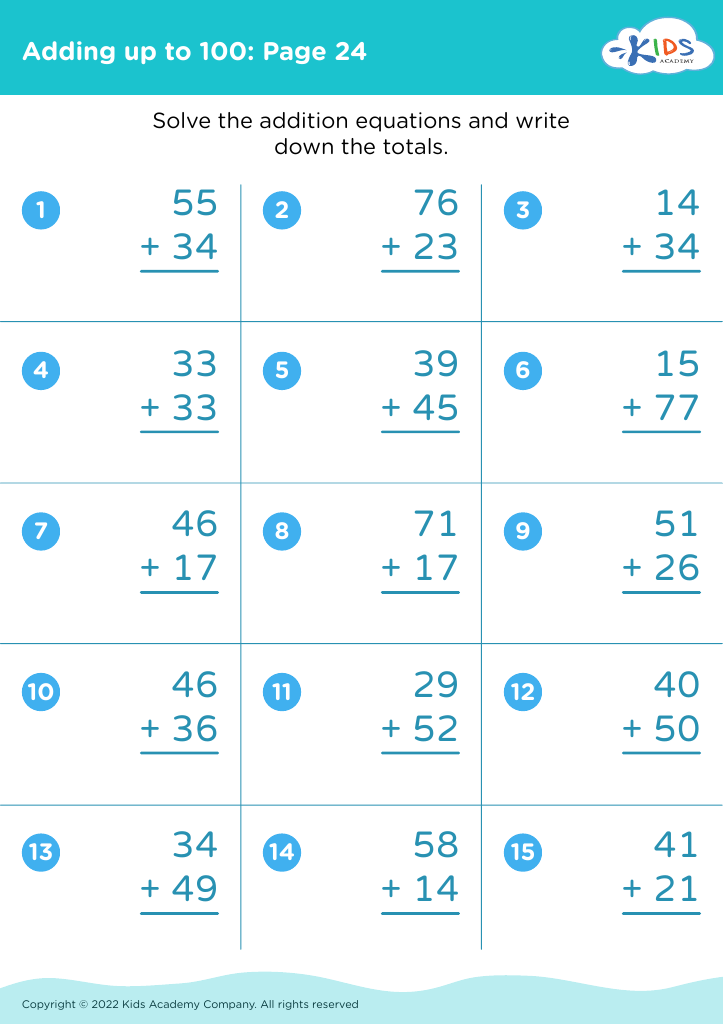
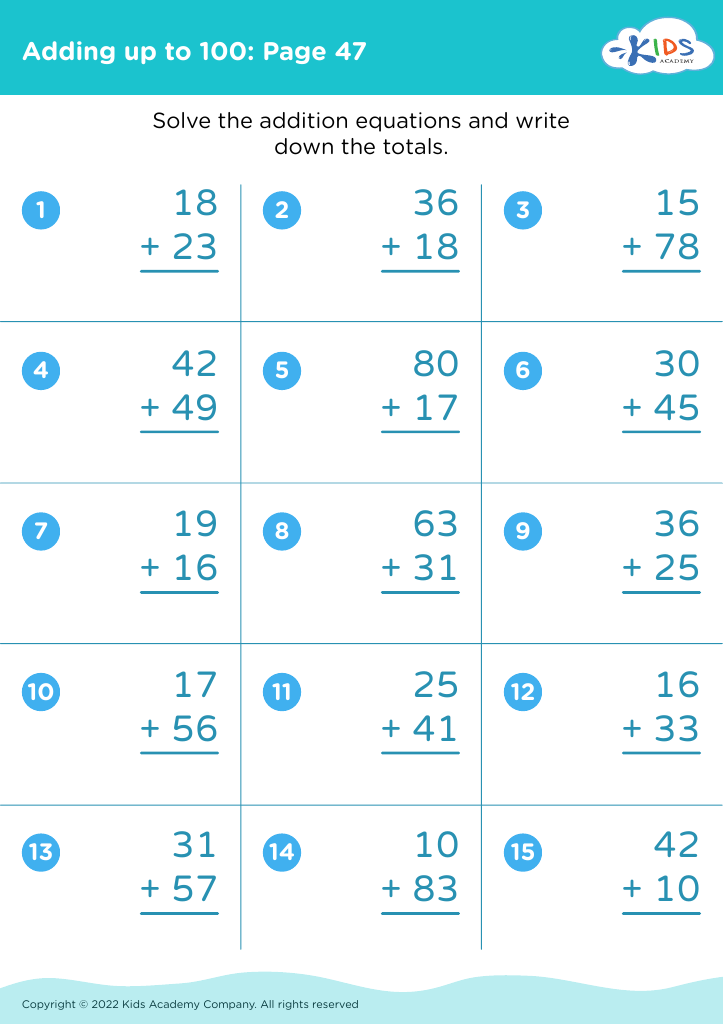
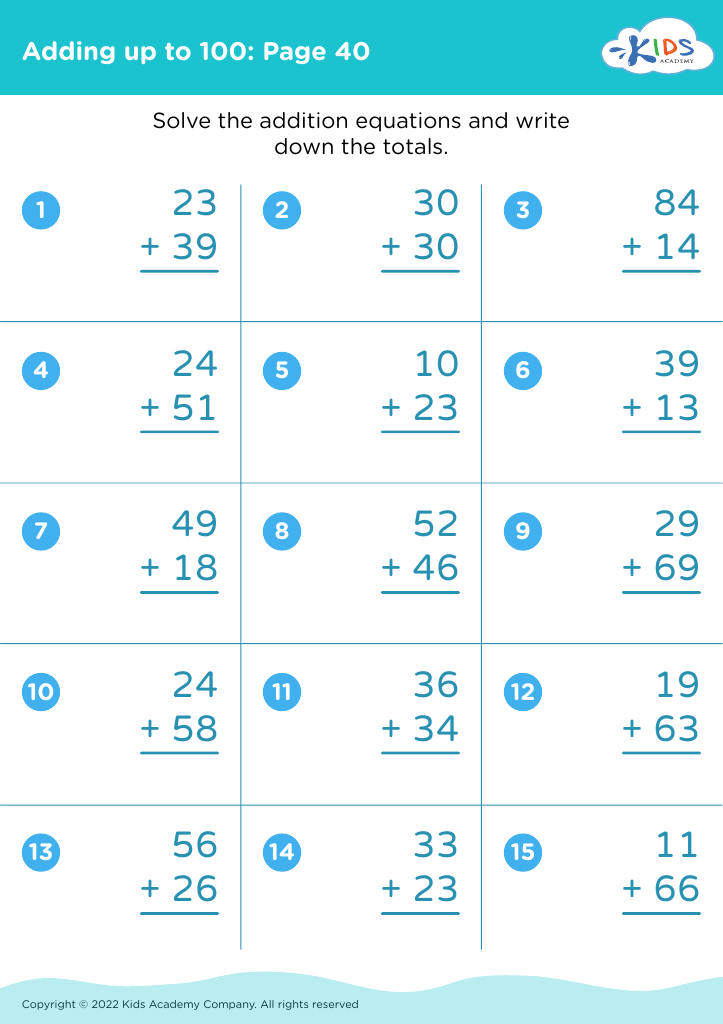
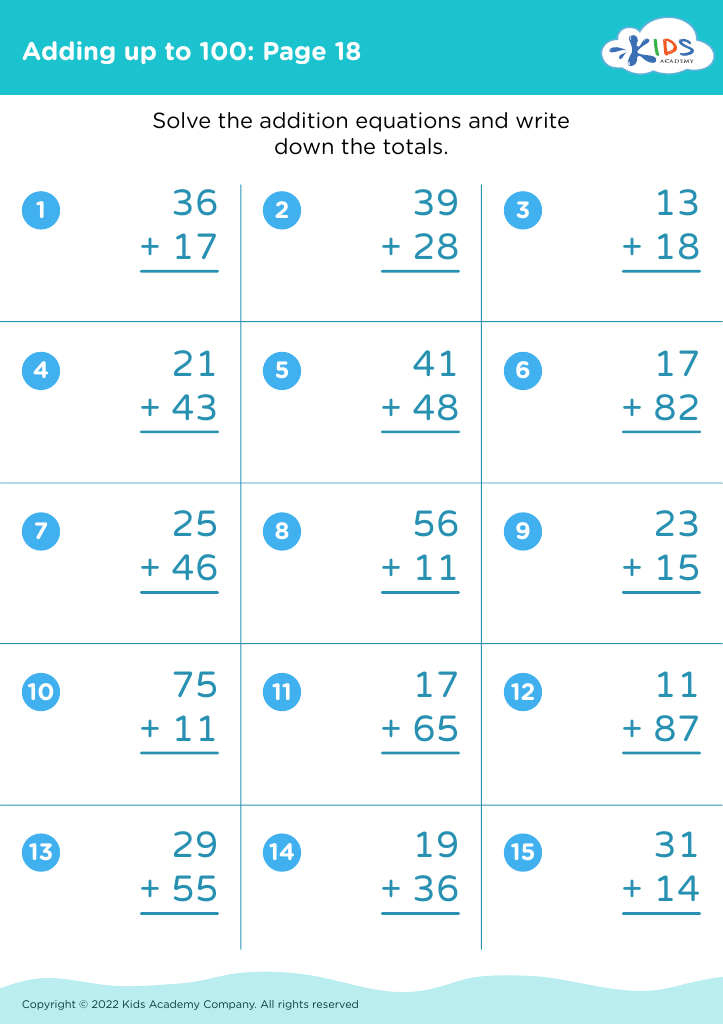
Enhance your child's fine motor skills with our engaging "Adding Up to 100 Worksheets" designed for ages 8-9. These worksheets combine math practice with fun activities, encouraging children to improve their pencil control, coordination, and hand strength as they solve addition problems. Ideal for at-home learning or classroom use, our worksheets facilitate independent learning and stimulate cognitive development. With a variety of exercises, your child will enjoy practicing math while developing essential motor skills. Unlock the perfect blend of education and creativity, ensuring your child builds confidence and dexterity as they advance in their arithmetic journey. Download now and watch them flourish!




%20(1).jpg)


Developing fine motor skills in children aged 8-9 is crucial for promoting their overall growth and academic success. Fine motor skills, which involve the coordination of small muscles in the hands and fingers, play a significant role in daily activities, including writing, drawing, and using tools, all vital for school-aged kids. By honing these skills, children enhance their ability to execute more precise movements, leading to improved handwriting and expression in their work.
Additionally, early mastery of fine motor skills can foster confidence and independent problem-solving abilities. For instance, tasks that require manipulating objects or completing puzzles engage children in hands-on learning, boosting their cognitive development as they learn to concentrate, plan, and execute tasks successfully.
Furthermore, engaging with fine motor activities, like arts and crafts or building with small blocks, can also encourage creativity and imagination. As kids explore and create, they establish neurological pathways that contribute to lifelong learning skills. Teachers and parents who support fine motor development contribute to their child's physical, cognitive, and emotional growth, setting the stage for a successful and engaged learner in future academic environments. Thus, cultivating these skills is essential for preparing children for various challenges in school and beyond.








