Improve number recognition Adding up to 100 Worksheets for Ages 8-9
7 filtered results
-
From - To
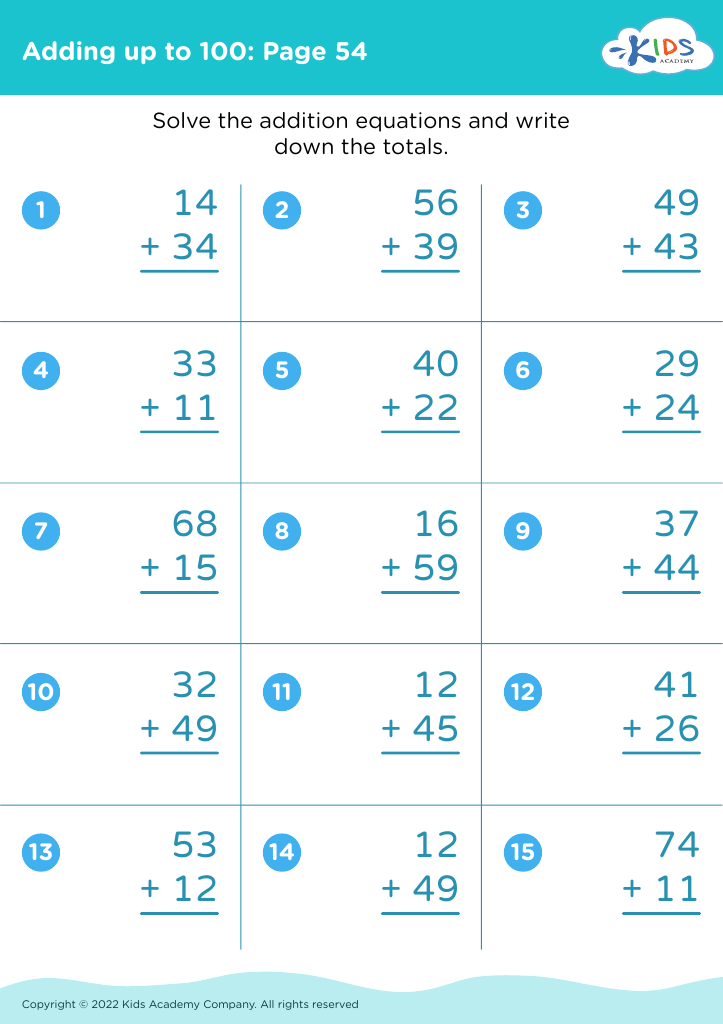
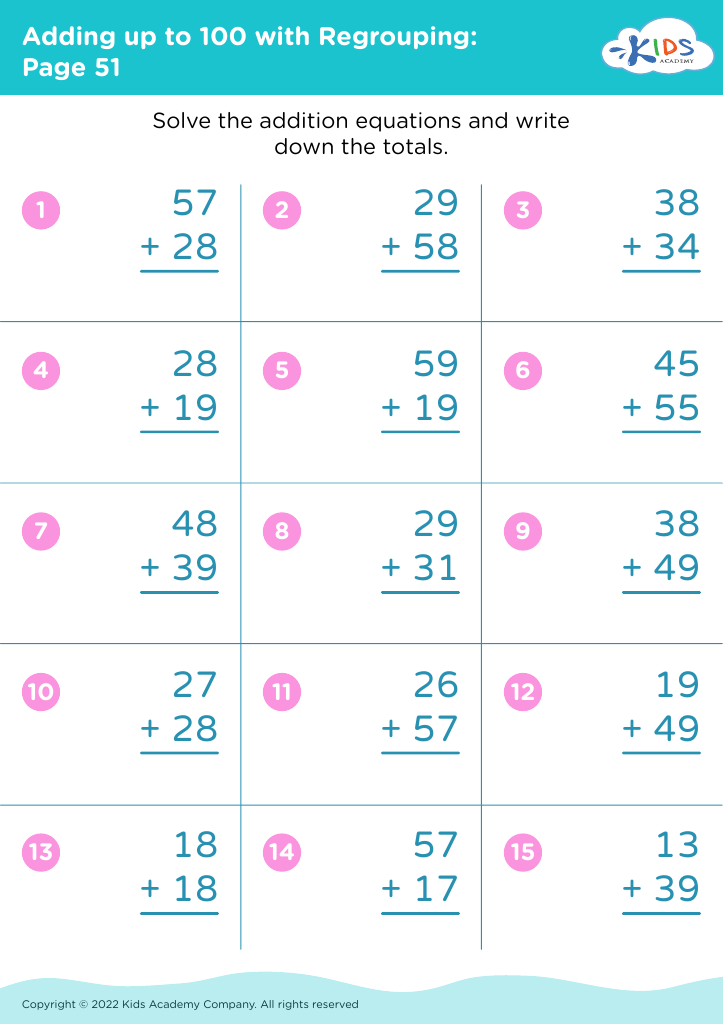
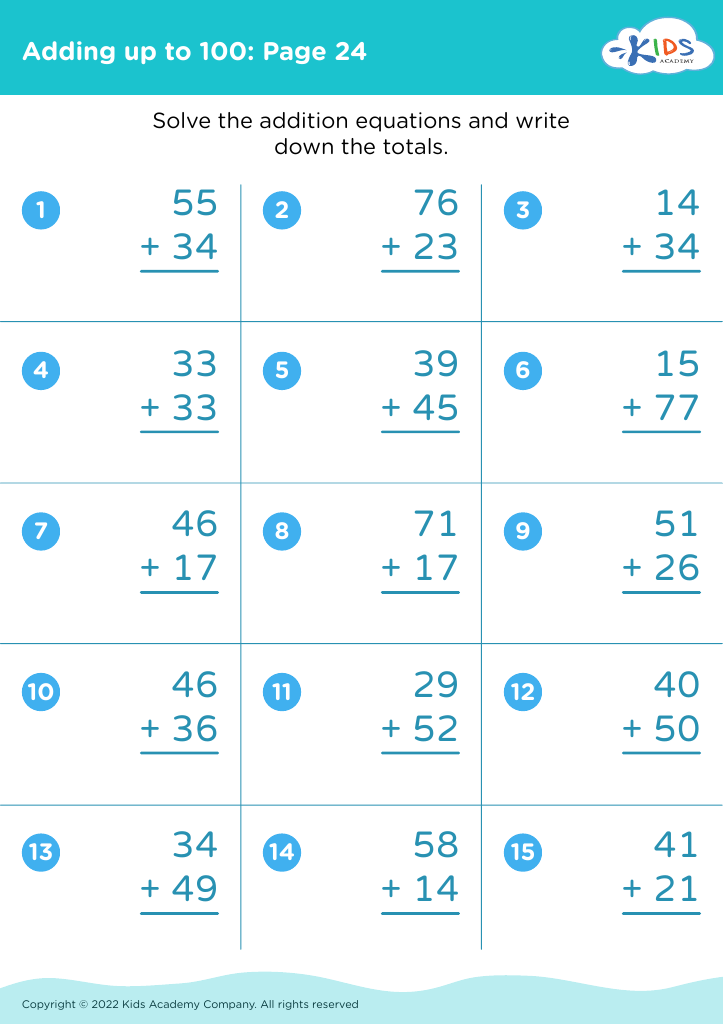
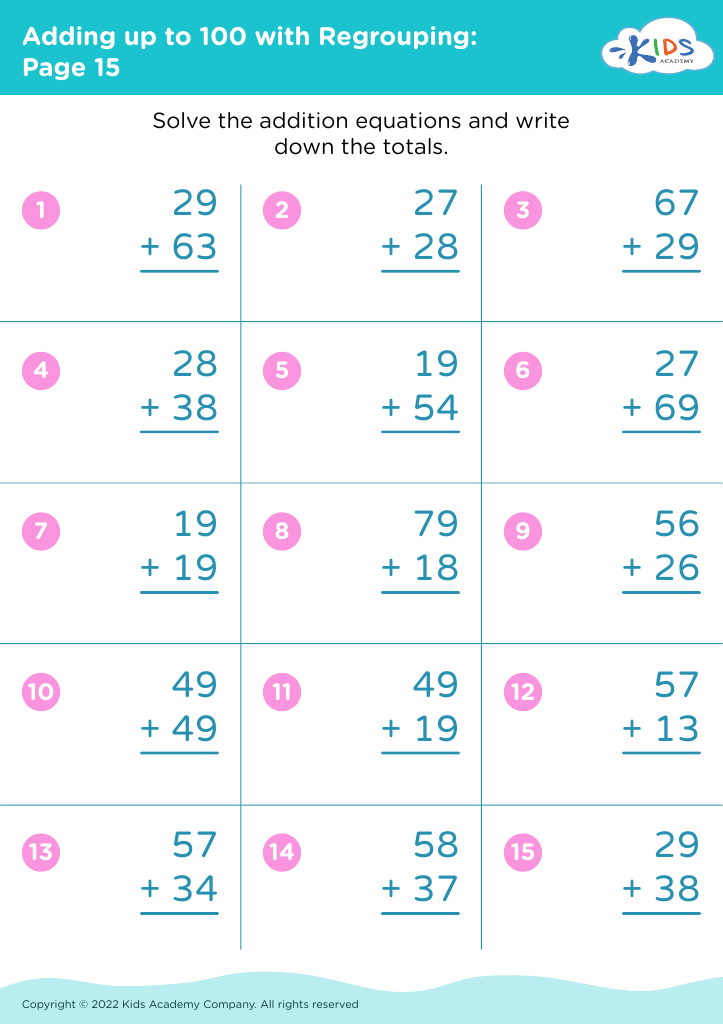
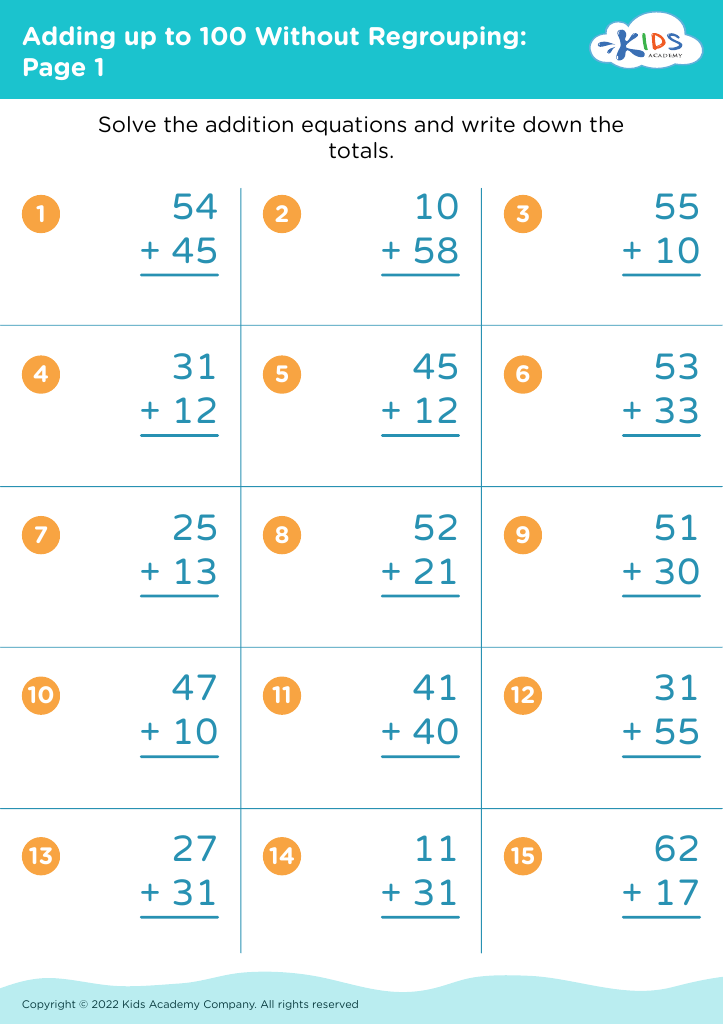
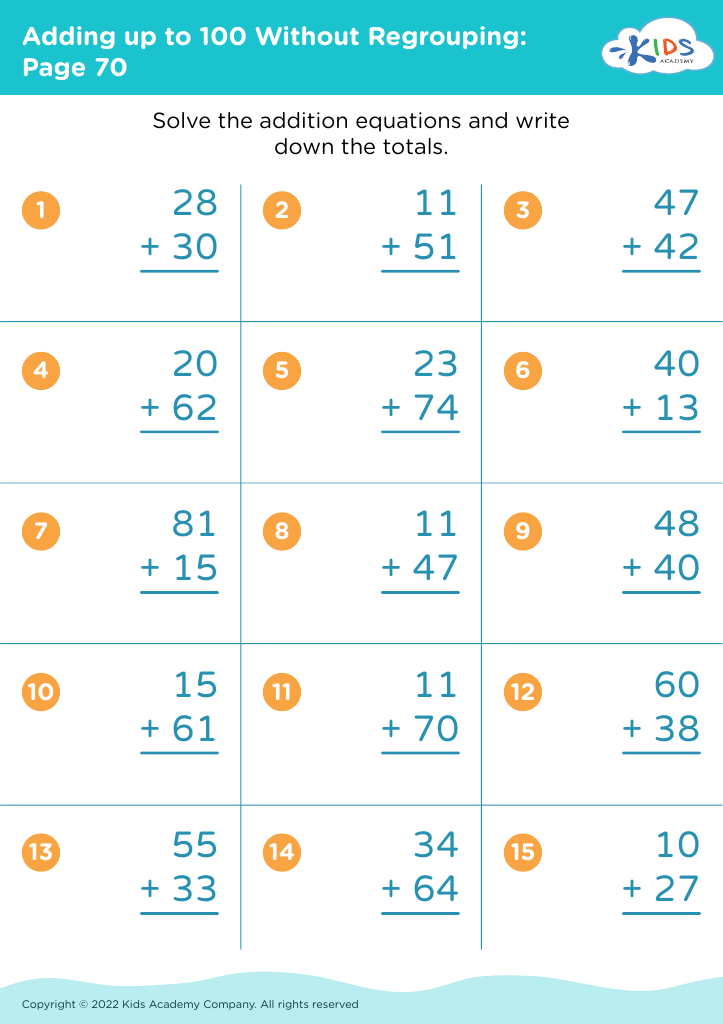
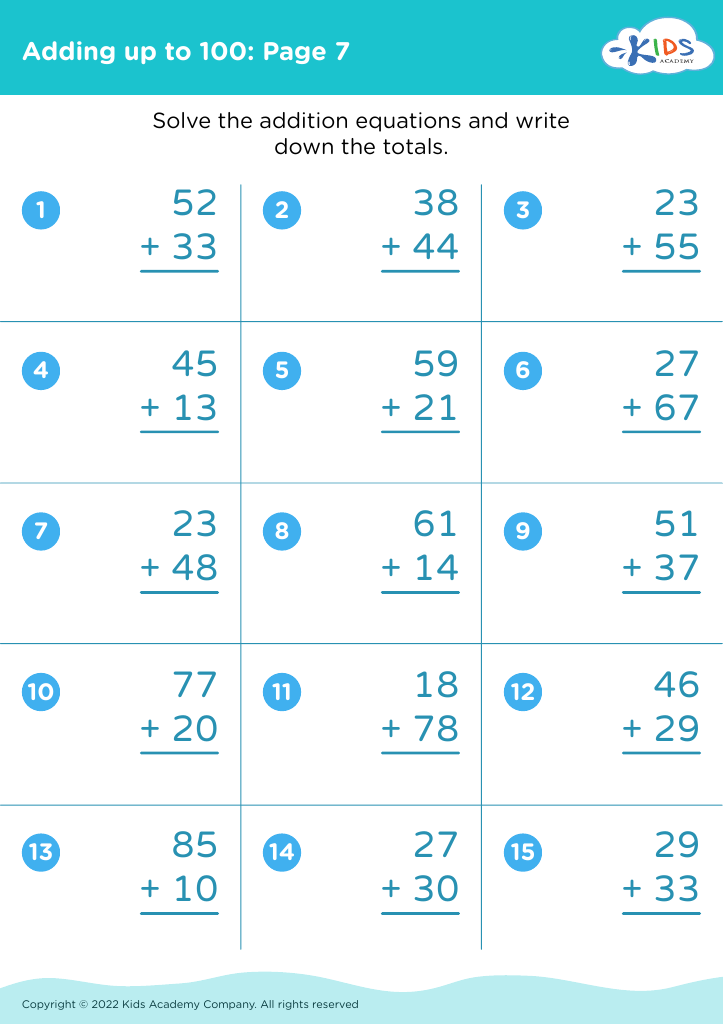
Discover the perfect addition to your teaching toolkit with our "Improve Number Recognition: Adding Up to 100 Worksheets" tailored for ages 8-9! These engaging and carefully crafted worksheets from Kids Academy help young learners master essential math skills, enhancing their ability to recognize and add numbers up to 100. With a variety of fun, interactive activities, children will build their confidence and proficiency in number recognition while refining their addition skills. Ideal for both classroom and home use, our worksheets are designed to make learning enjoyable and effective. Empower your students to excel in math today!





%20(1).jpg)

Number recognition and the ability to add up to 100 are foundational skills in early elementary education, particularly for ages 8-9. At this developmental stage, children are transitioning from simple arithmetic to more complex mathematical concepts that require strong number recognition and mental math abilities.
Parents and teachers should prioritize improving these skills because they build the groundwork for future math success. High fluency in basic addition helps children avoid frustration in higher grades when they encounter multi-step problems and advanced operations. Mastering addition up to 100 also aids in understanding number relationships and patterns, such as place value and regrouping, which are central to tasks in both math and real life.
Enhanced number recognition and addition skills encourage mathematical confidence and curiosity. When children can quickly and accurately sum numbers, they feel more capable and are more likely to engage with the subject. This engagement is crucial for developing critical thinking and problem-solving skills that extend beyond math to other academic areas.
Furthermore, parents and teachers play a pivotal role in identifying and supporting children who may struggle with these concepts. Early interventions can prevent math anxiety and set a positive trajectory for a child's academic journey. By focusing on these essential skills now, they help ensure children are mathematically literate and prepared for future challenges.








