Recognize patterns Adding up to 100 Worksheets for Ages 8-9
4 filtered results
-
From - To
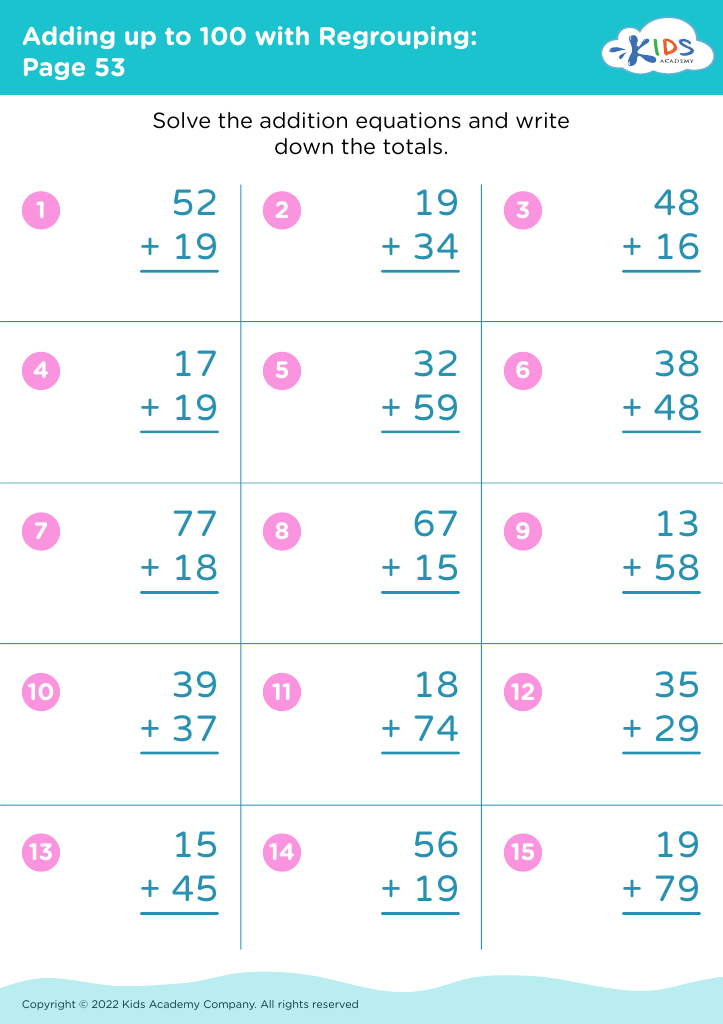
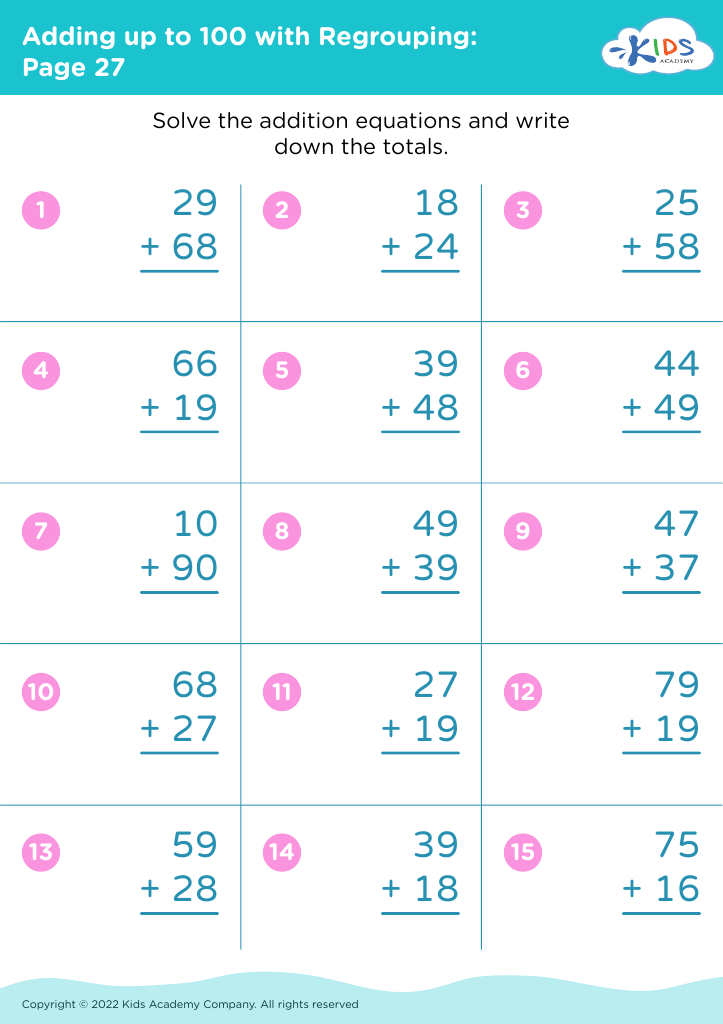
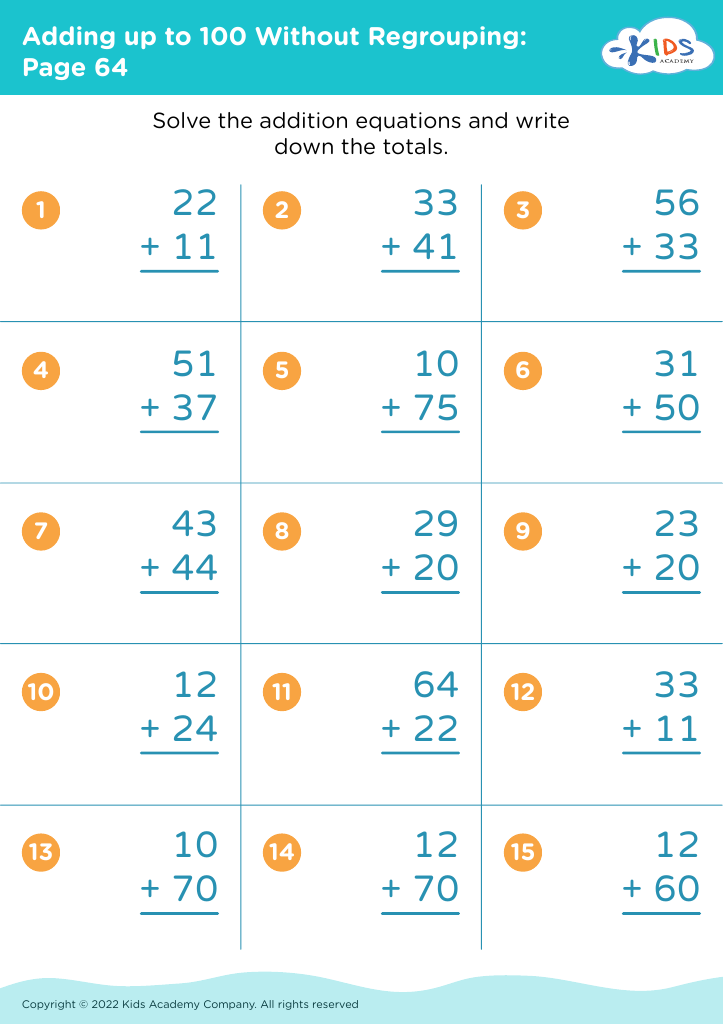
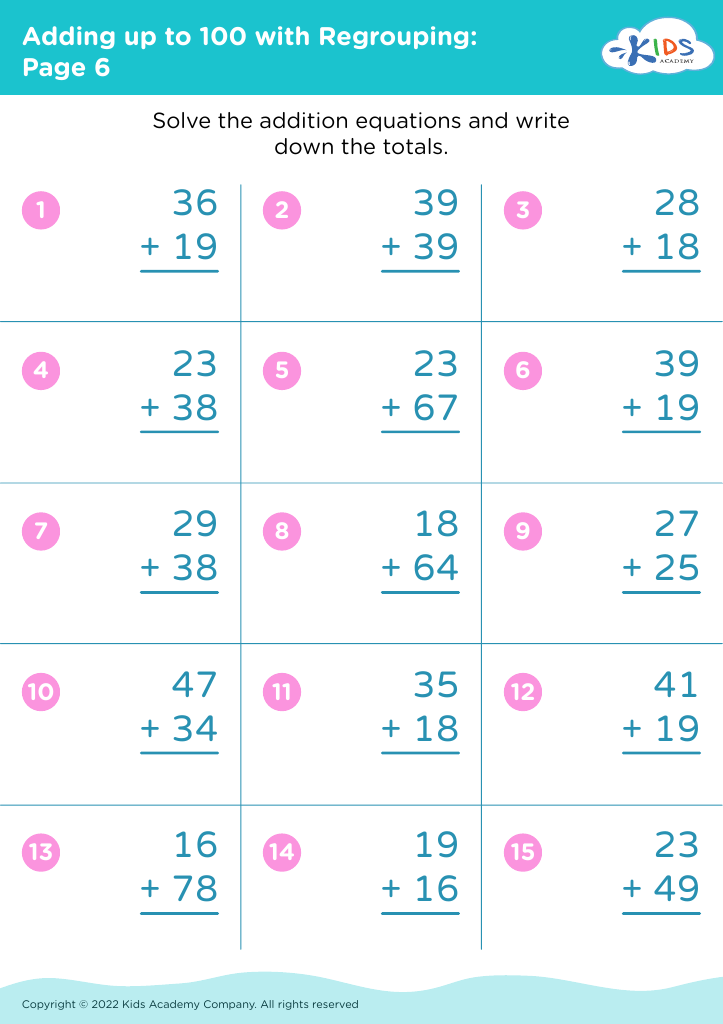
Welcome to our "Recognize Patterns Adding Up to 100 Worksheets" designed specifically for children ages 8-9! These engaging worksheets enhance math skills by helping students identify and understand numerical patterns while mastering addition up to 100. Each worksheet provides a variety of exercises that promote critical thinking and problem-solving abilities, encouraging kids to recognize patterns in numbers, making their learning experience fun and interactive. Ideal for classroom activities or at-home practice, these resources foster a strong foundation in math fluency. Explore our comprehensive collection and empower your young learners to build confidence and proficiency in mathematical concepts!





%20(1).jpg)

Recognizing patterns and mastering addition concepts that sum to 100 is crucial for children aged 8-9 because it builds foundational mathematical skills essential for future learning. At this age, students are transitioning from basic arithmetic to more complex problem-solving, and understanding patterns helps make math more intuitive. By identifying patterns, children can enhance their ability to recognize relationships between numbers, which fosters mental math skills and increases their computational efficiency.
Furthermore, adding up to 100 is a practical skill that prepares students for real-world applications, such as budgeting, measuring, and other everyday tasks. Encouraging pattern recognition promotes critical thinking and can lessen math anxiety, creating a more positive association with the subject.
Teachers and parents play a vital role in reinforcing these concepts in engaging ways. Whether through games, visual aids, or interactive activities, they can help kids visualize and manipulate numbers, making learning fun. Ultimately, recognizing patterns in addition not only strengthens a child's math fluency but also develops essential problem-solving skills, laying a strong groundwork for algebra and statistics in later grades. Promoting these skills early on encourages confidence and a lifelong appreciation for mathematical concepts.








