Simplifying Fractions Adding up to 100 Worksheets for Ages 8-9
3 filtered results
-
From - To
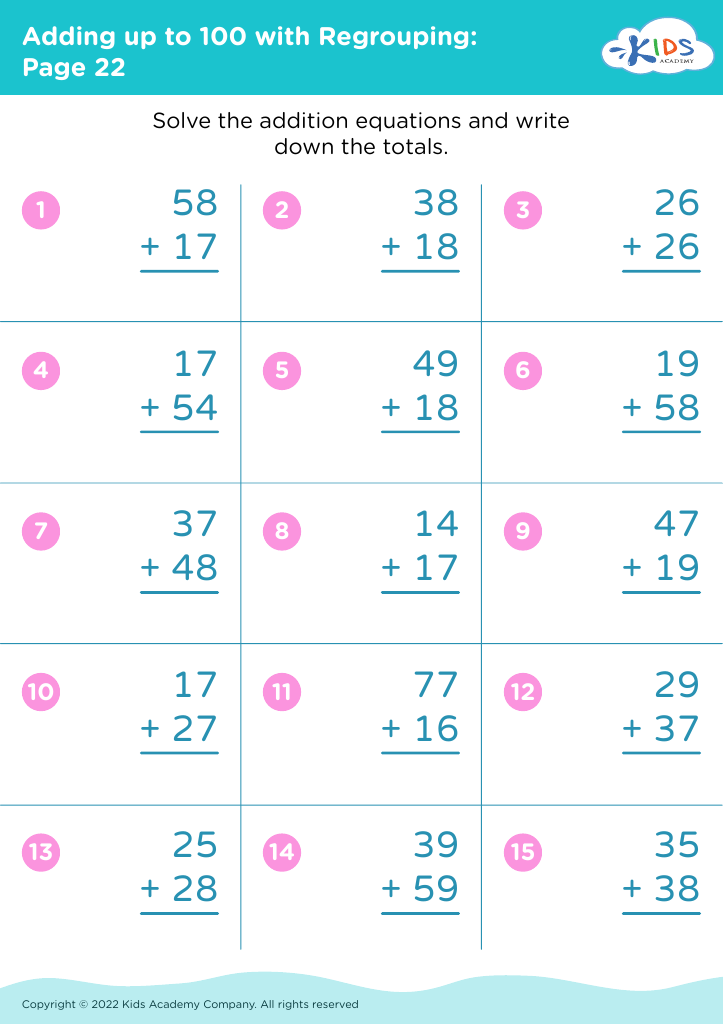
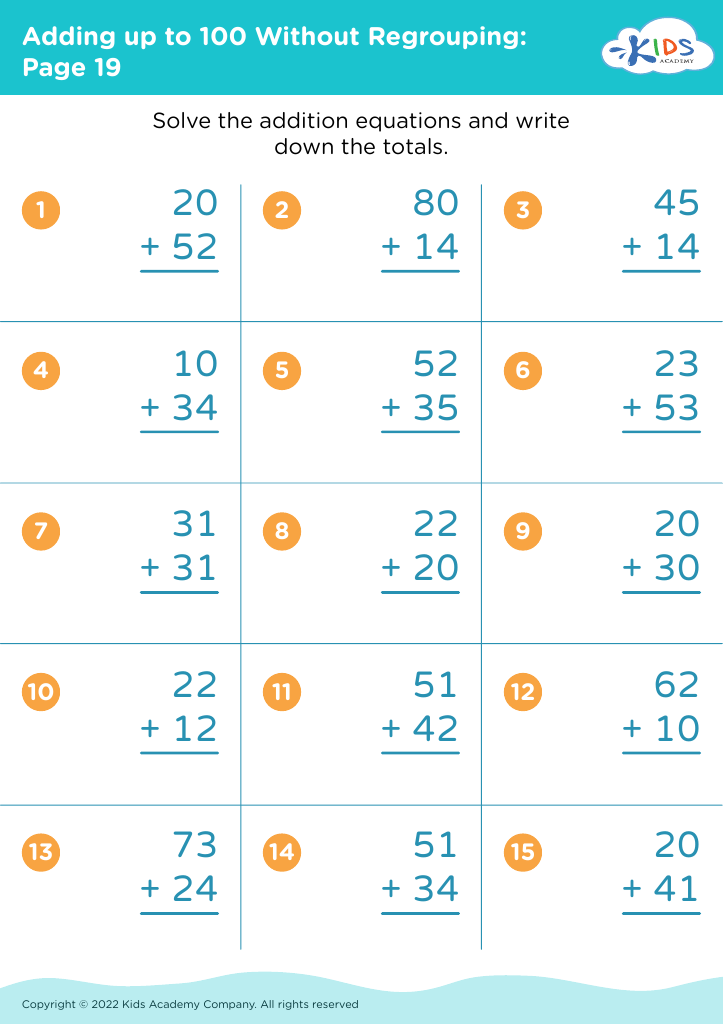
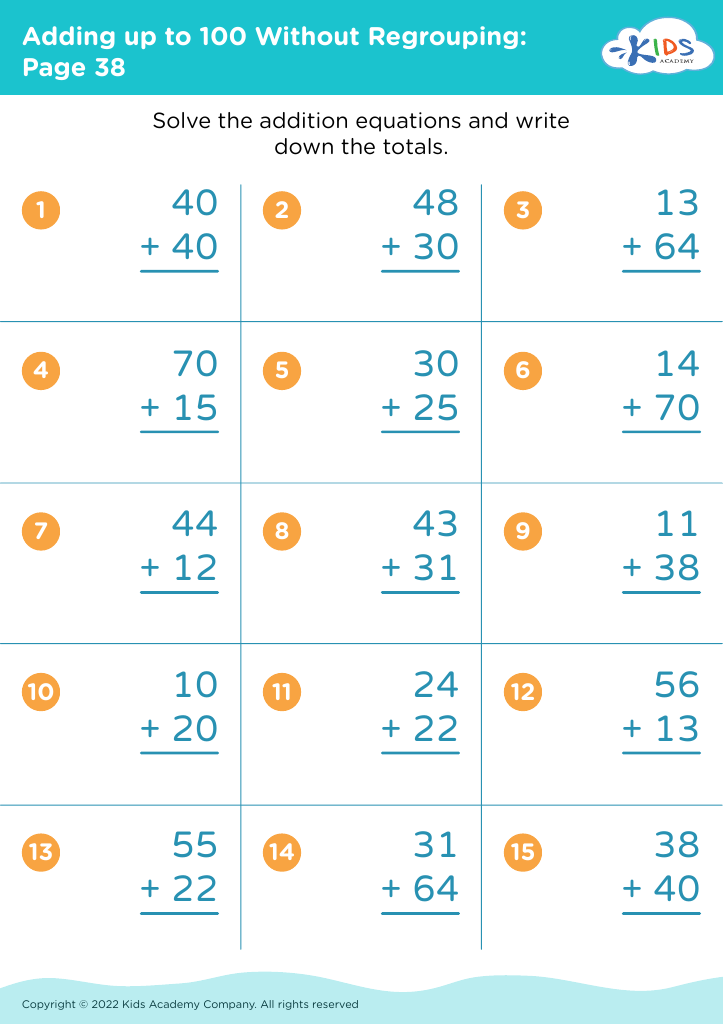
Discover our engaging "Simplifying Fractions Adding Up to 100 Worksheets" tailored for children aged 8-9. Designed to enhance math skills, these activities guide young learners through the process of simplifying fractions, making complex concepts accessible and enjoyable. Each worksheet combines visual aids and interactive exercises, providing a fun way for students to practice and master their understanding of fractions while reinforcing addition up to 100. Perfect for classroom use or home practice, these worksheets aim to boost confidence and encourage analytical thinking in math. Equip your child with essential skills that will last a lifetime! Get started today!


%20(1).jpg)




Simplifying Fractions that add up to 100 is a crucial skill for children aged 8-9, as it lays the foundation for their understanding of fractions, percentages, and overall mathematics. At this developmental stage, children are beginning to grasp more complex mathematical concepts, and mastering fractions can enhance their problem-solving abilities and boost their confidence in math.
Parents and teachers should care about this foundational concept because it promotes critical thinking and enhances cognitive skills. By learning to simplify fractions, children develop analytical skills needed to determine equivalent values and relationships between numbers. It encourages them to visualize how parts combine to form a whole, fostering a deeper understanding of mathematics.
Moreover, mastering this skill prepares students for real-life applications, such as budgeting, cooking, and understanding statistics, which are skills they will encounter in everyday life. It also serves as a stepping stone to more advanced mathematical concepts, including ratios and proportions.
Involving parents in this learning process reinforces the idea that math can be both fun and applicable, helping to create a supportive environment conducive to learning. Ultimately, simplifying fractions plays a pivotal role in shaping confident and capable learners in mathematics.








