Vocabulary Building Adding up to 100 Worksheets for Ages 8-9
3 filtered results
-
From - To
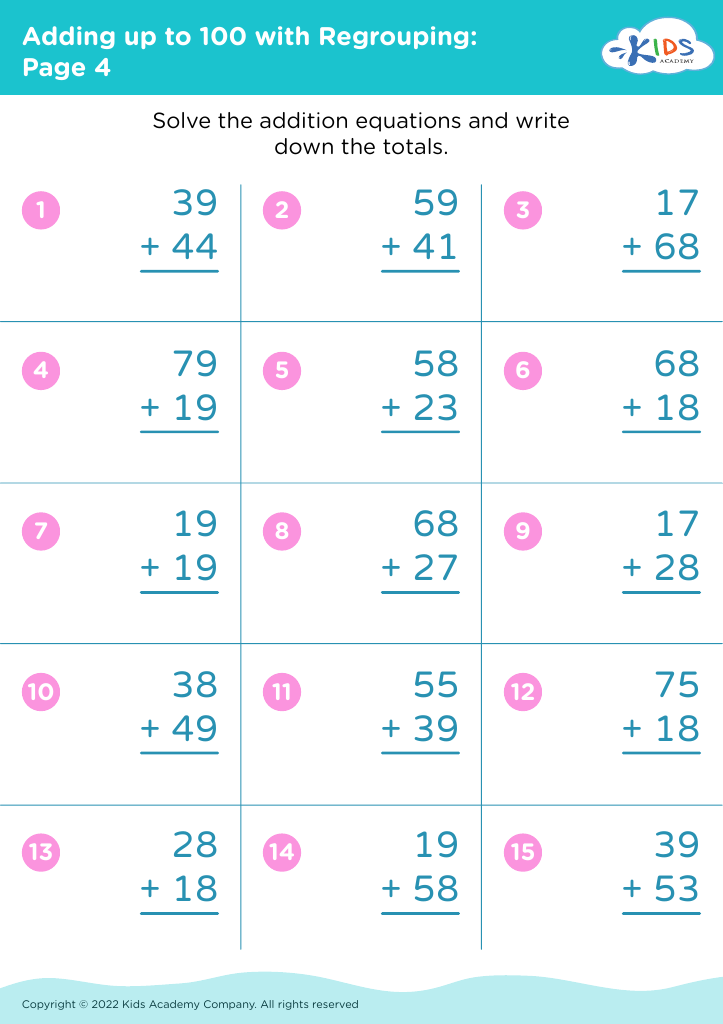
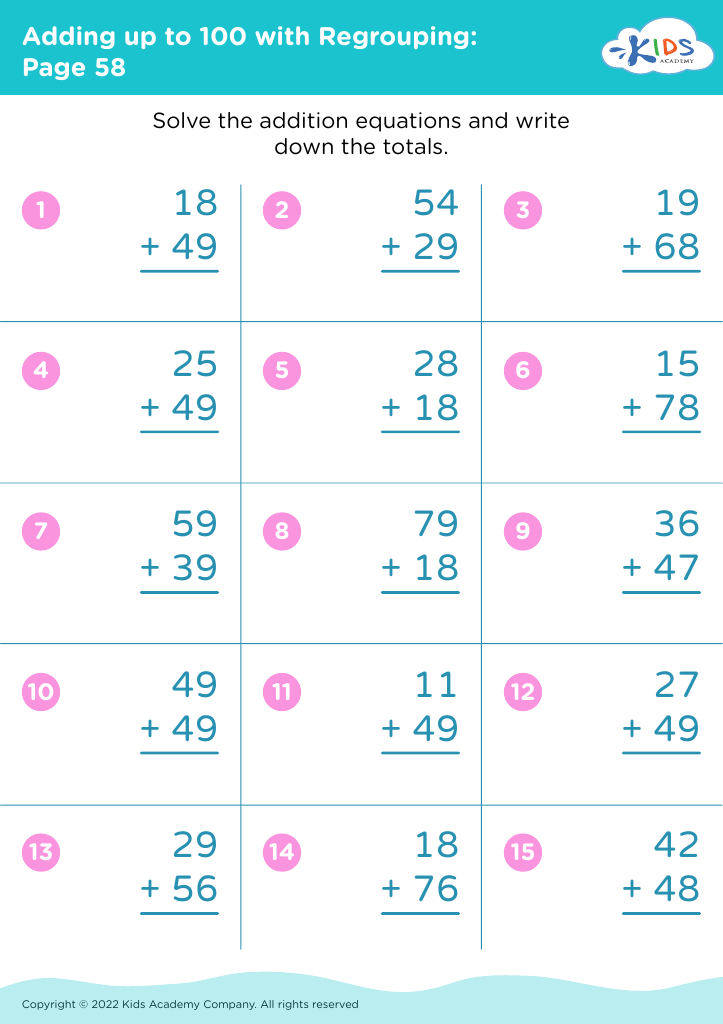
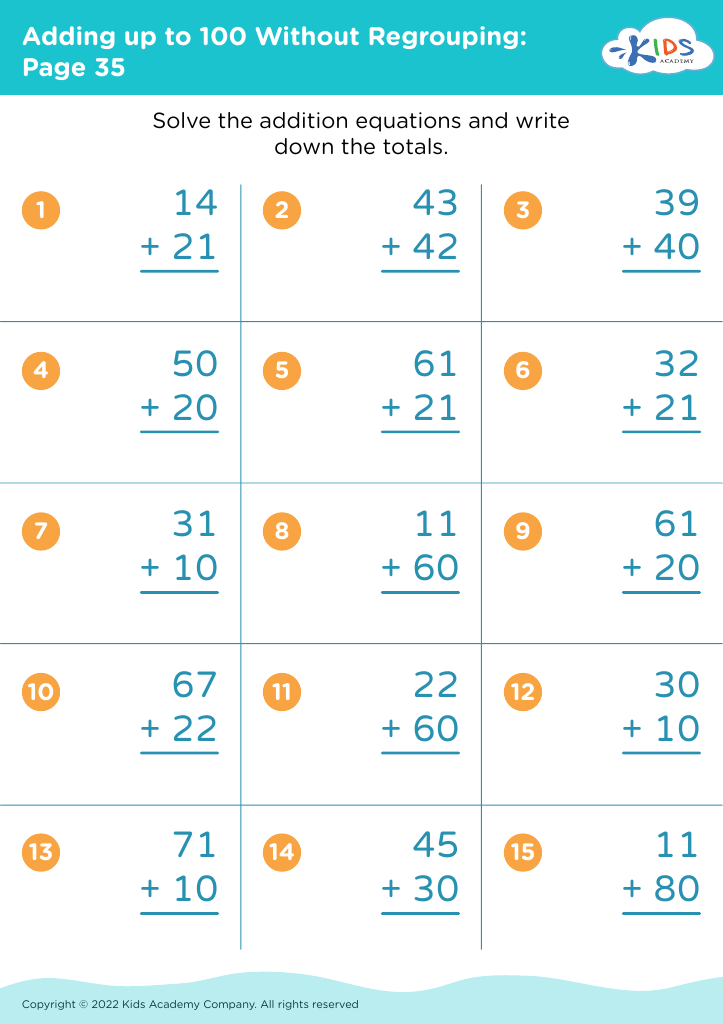
Welcome to our "Vocabulary Building: Adding Up to 100 Worksheets for Ages 8-9" page! These engaging worksheets are designed to enhance vocabulary while reinforcing essential math skills. Perfect for young learners, our resources focus on key terms related to addition and numbers up to 100. Each activity fosters comprehension and application, enabling students to connect math concepts and language. With a variety of fun exercises, children will enjoy expanding their word bank while practicing critical math skills. Ideal for homeschoolers, teachers, or parents, our worksheets support a holistic learning approach, ensuring that learning is both effective and enjoyable! Get started today!






%20(1).jpg)
Vocabulary building is crucial for children aged 8-9 as it lays the foundation for effective communication and comprehension skills essential for academic success. At this age, children are expanding their reading and writing abilities, making vocabulary development particularly pertinent. A robust vocabulary enables them to express their thoughts clearly, understand complex texts, and engage meaningfully in discussions, which are vital for their learning journey.
Moreover, vocabulary proficiency directly impacts a child's academic performance across subjects, especially in reading comprehension and writing. A rich vocabulary facilitates a deeper understanding of texts, allowing students to grasp nuances and context, which is essential for critical thinking skills. It also enhances their ability to infer meanings and engage with a broader range of content in science, social studies, and arts.
Lastly, vocabulary building nurtures confidence in social interactions and lays the groundwork for lifelong learning. By investing time in vocabulary development, parents and teachers prepare children not just for immediate educational challenges but also equip them with skills for future academic endeavors and personal growth. Thus, nurturing vocabulary in this pivotal stage is essential for holistic development and success.








