Filters

16 filtered results

Clear all filters
Favorites
With answer key
Interactive

16 filtered results

Difficulty Level

Grade


Enhance your child's math skills with our "Counting Practice Adding up to 50 Worksheets for Ages 8-9." These fun and engaging worksheets are designed to master counting and addition up to 50, helping build a strong foundation in basic arithmetic. Each worksheet is crafted to challenge young minds, encouraging problem-solving and critical thinking. Ideal for complementing classroom learning or homeschooling, these exercises are a valuable resource for teachers and parents. Watch your child gain confidence and enjoy the journey of mathematics with our easy-to-download, printable worksheets. Boost your child's counting skills today!
Check out this FREE Trial Lesson on Adding up to 50 for age 8-9!

Exactly the Same, or Not

Favorites
With answer key
Interactive
  • 8-9
  • Counting practice
  • Adding up to 50
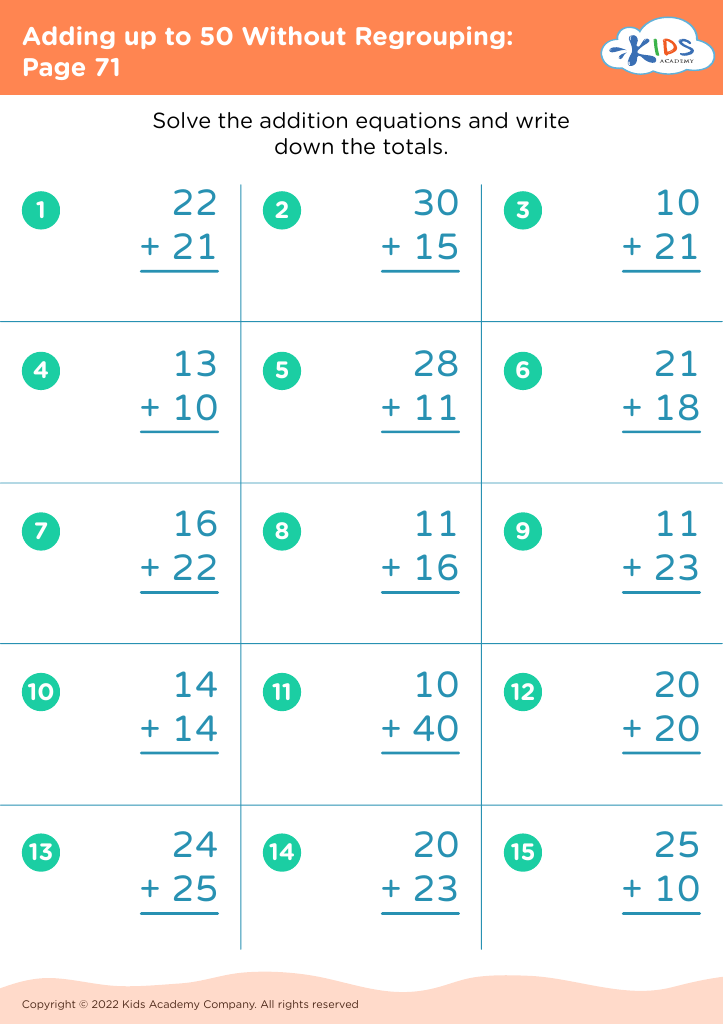
Adding up to 50 Without Regrouping: Page 71
Worksheet
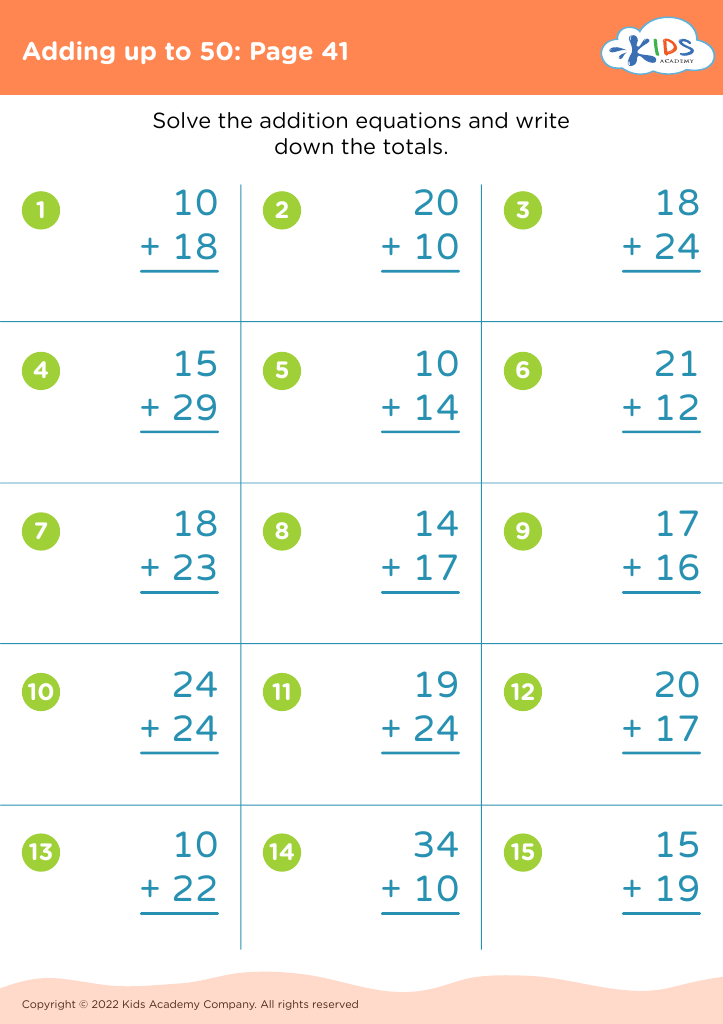
Adding up to 50: Page 41

Adding up to 50: Page 41

Adding up to 50: Page 41
Worksheet
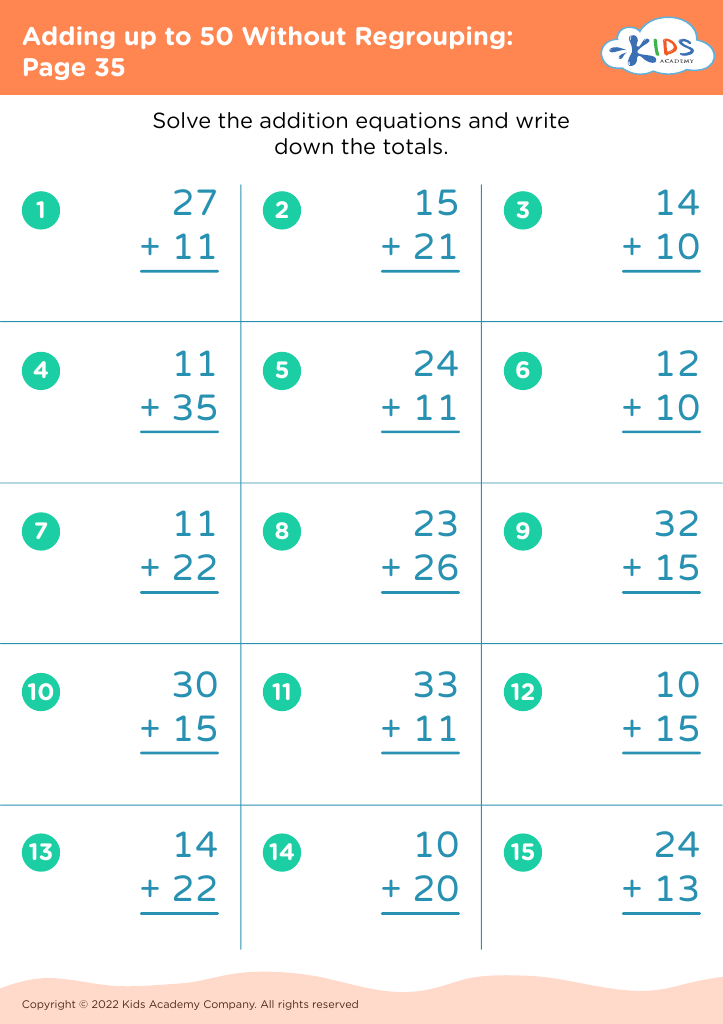
Adding up to 50 Without Regrouping: Page 35
Worksheet
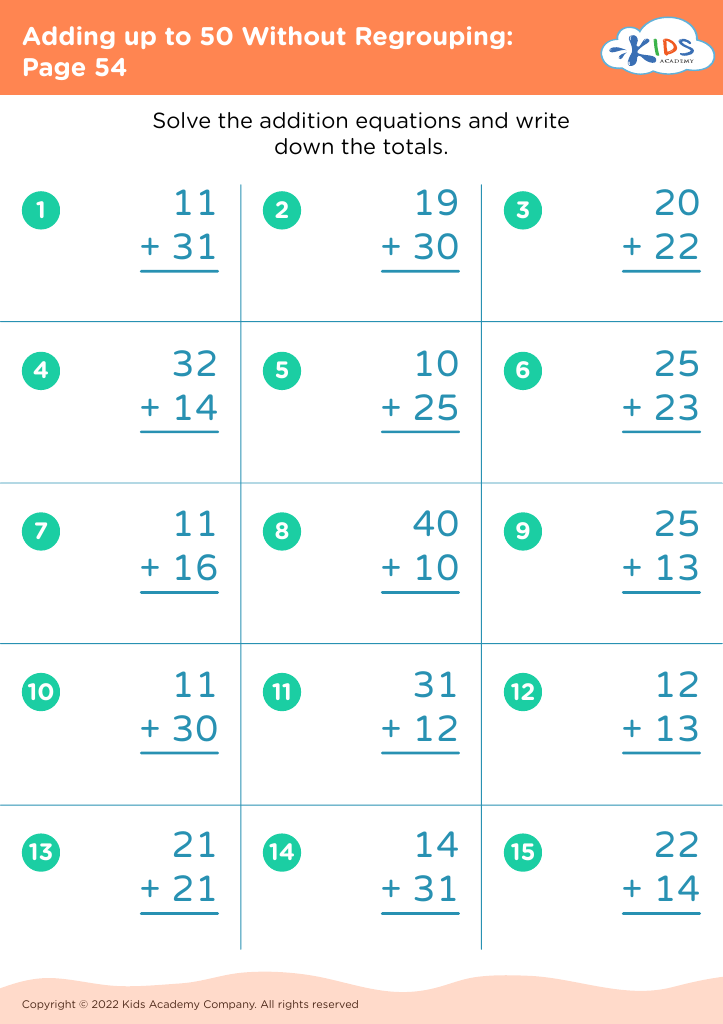
Adding up to 50 Without Regrouping: Page 54
Worksheet
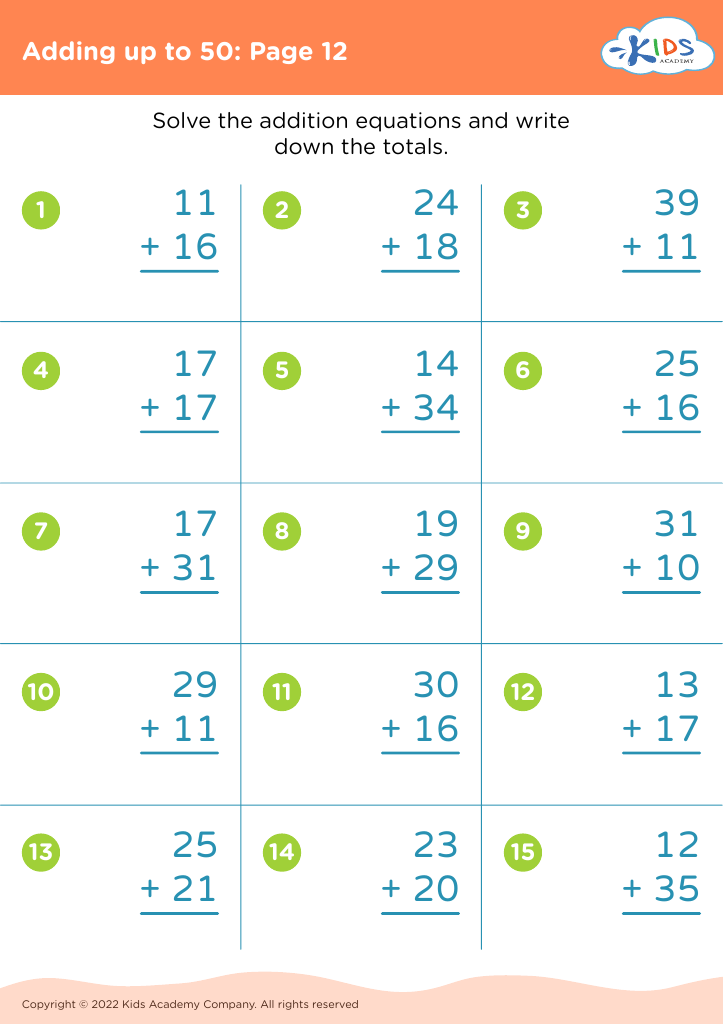
Adding up to 50: Page 12

Adding up to 50: Page 12

Adding up to 50: Page 12
Worksheet
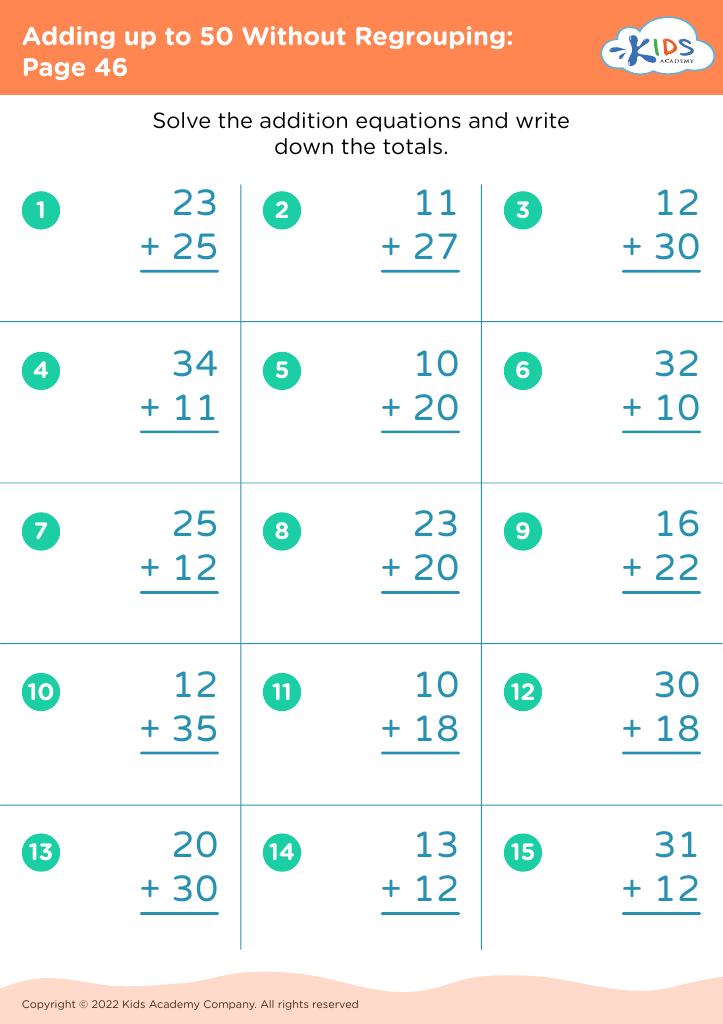
Adding up to 50 Without Regrouping: Page 46
Worksheet
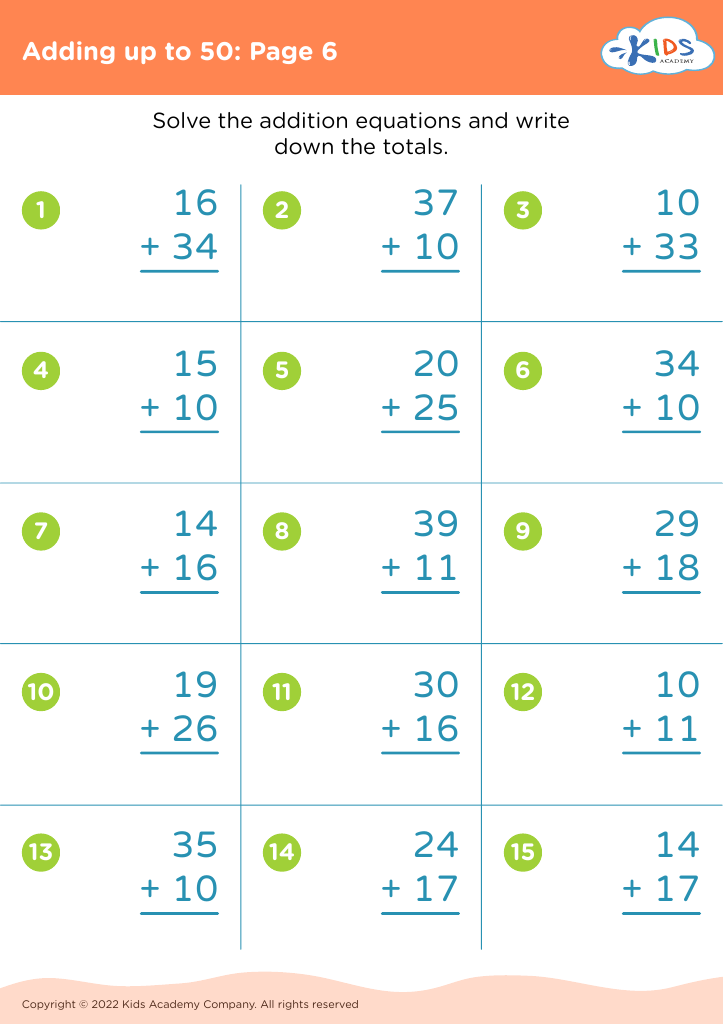
Adding up to 50: Page 6

Adding up to 50: Page 6

Adding up to 50: Page 6
Worksheet
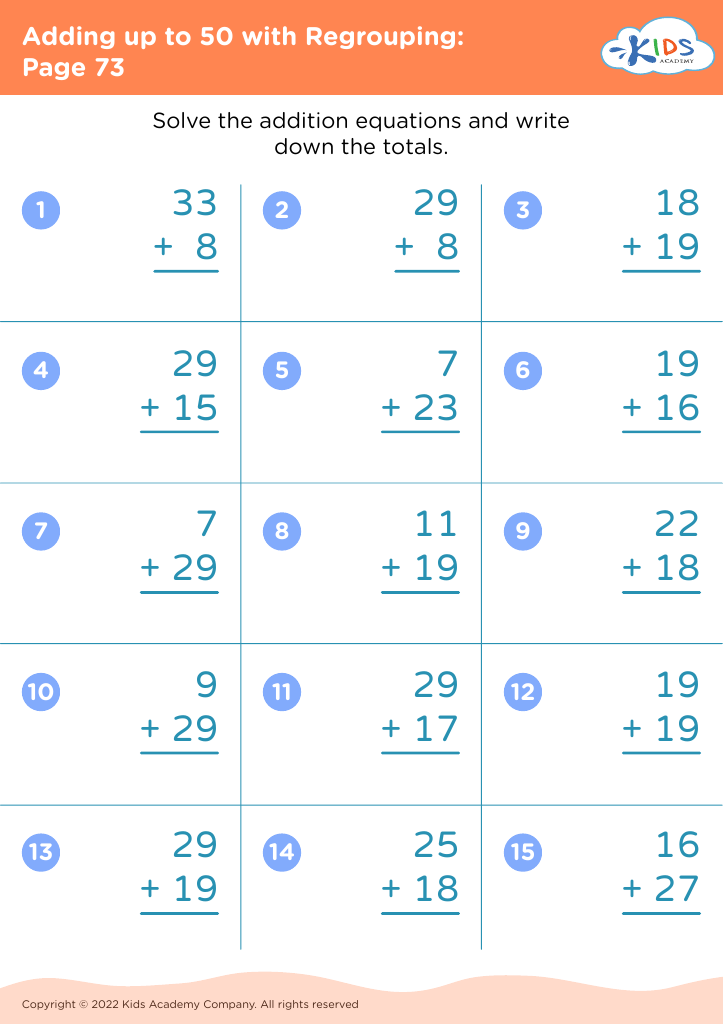
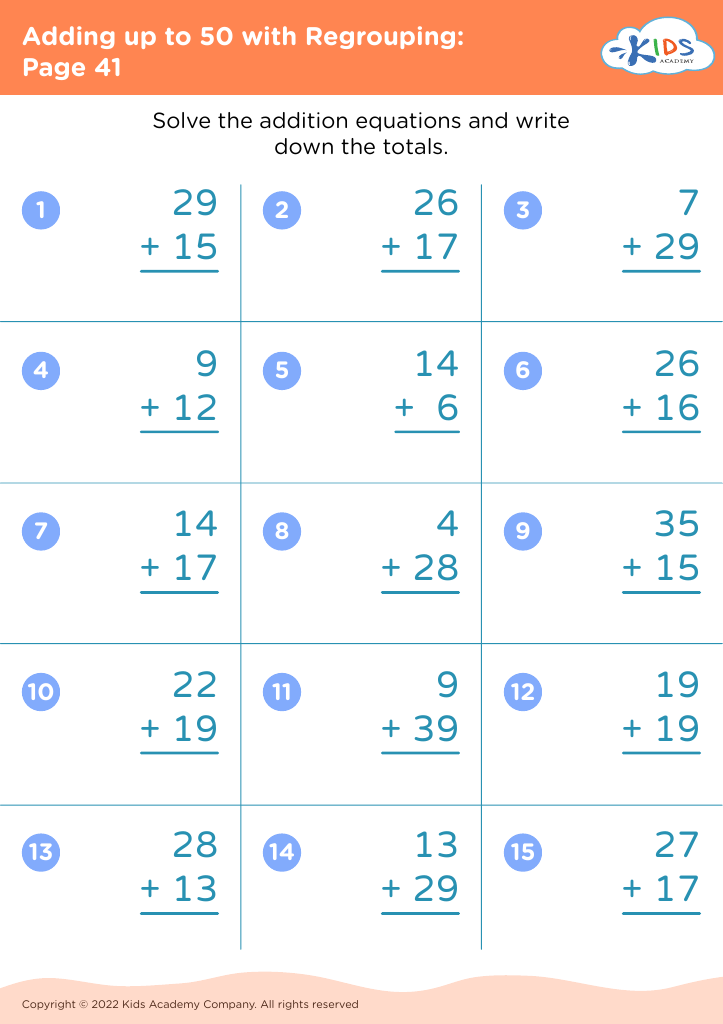
Adding up to 50 with Regrouping: Page 73
Worksheet
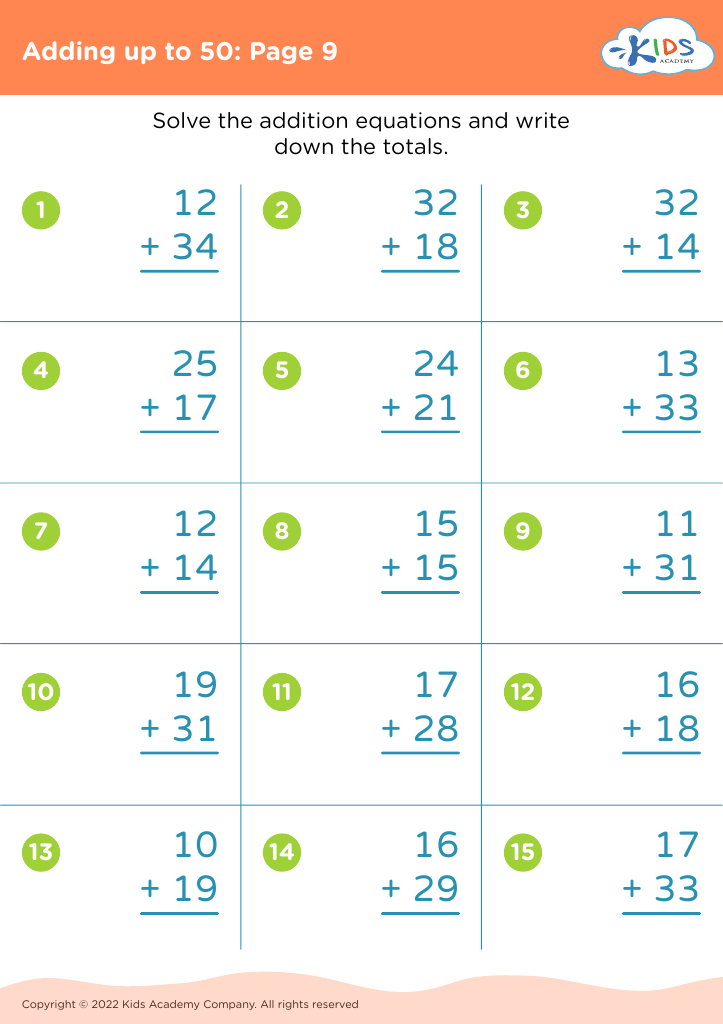
Adding up to 50: Page 9

Adding up to 50: Page 9

Adding up to 50: Page 9
Worksheet
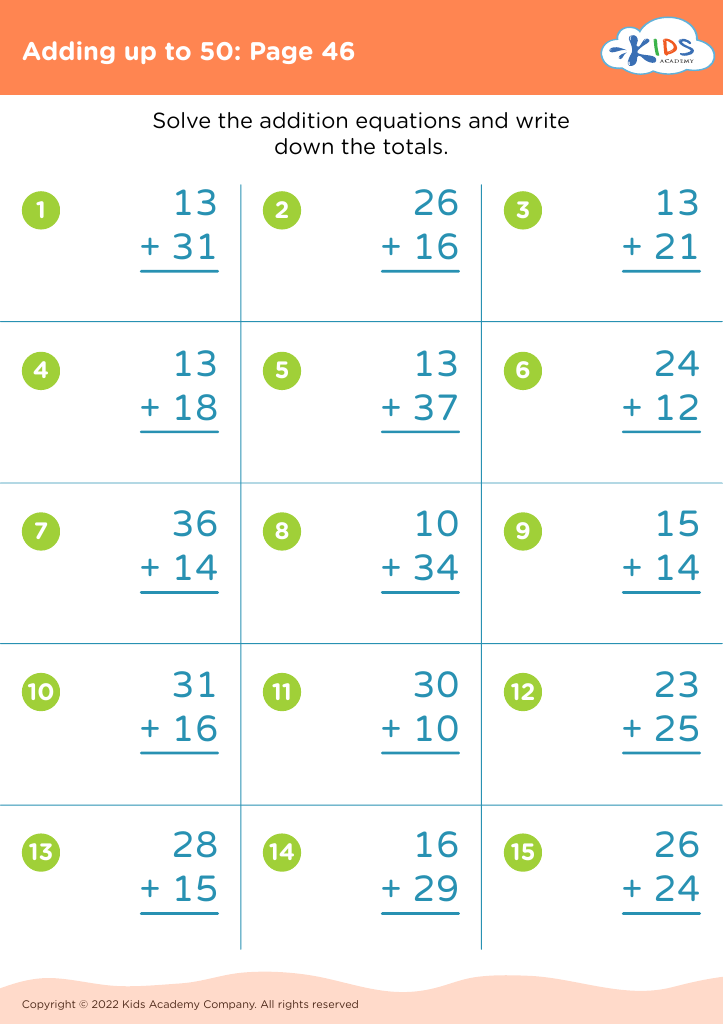
Adding up to 50: Page 46

Adding up to 50: Page 46

Adding up to 50: Page 46
Worksheet
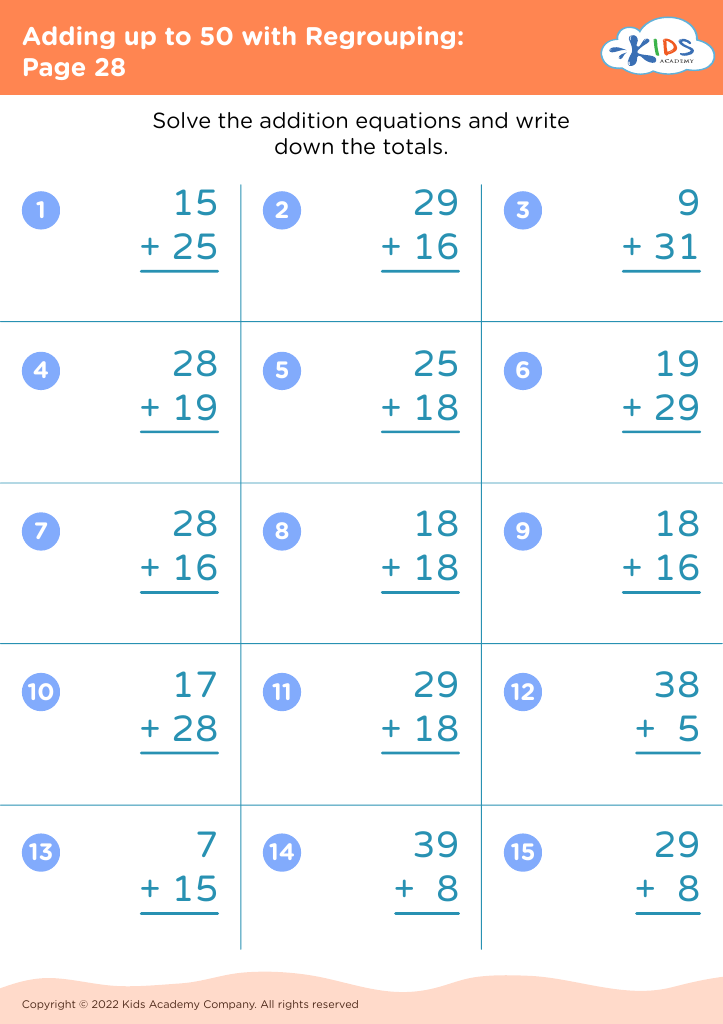
Adding up to 50 with Regrouping: Page 28
Worksheet
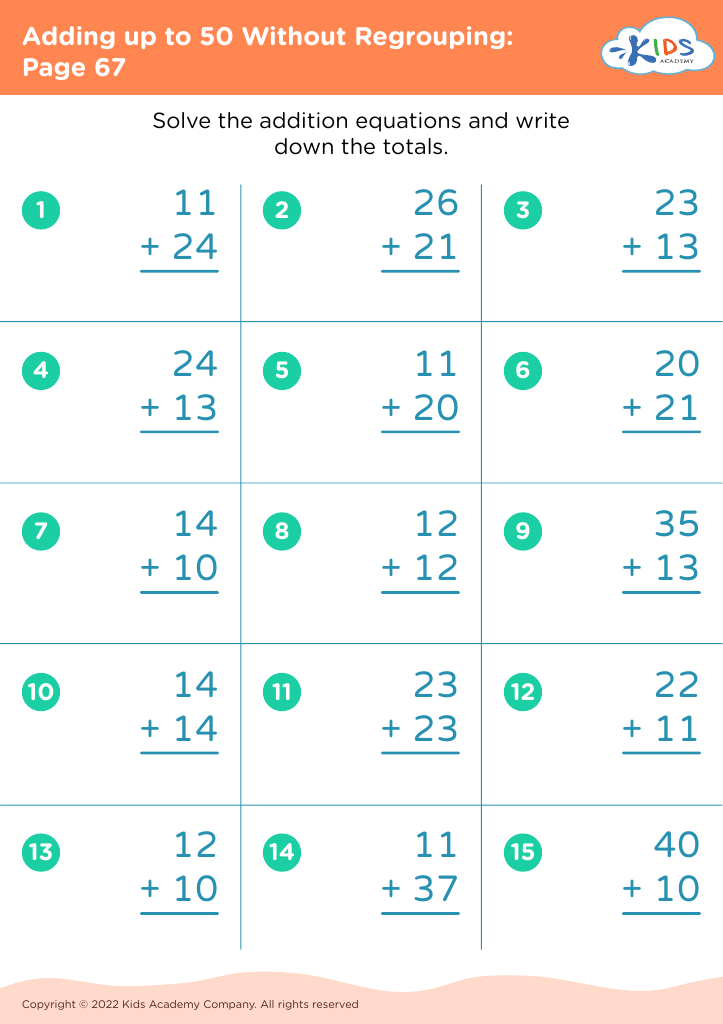
Adding up to 50 Without Regrouping: Page 67
Worksheet
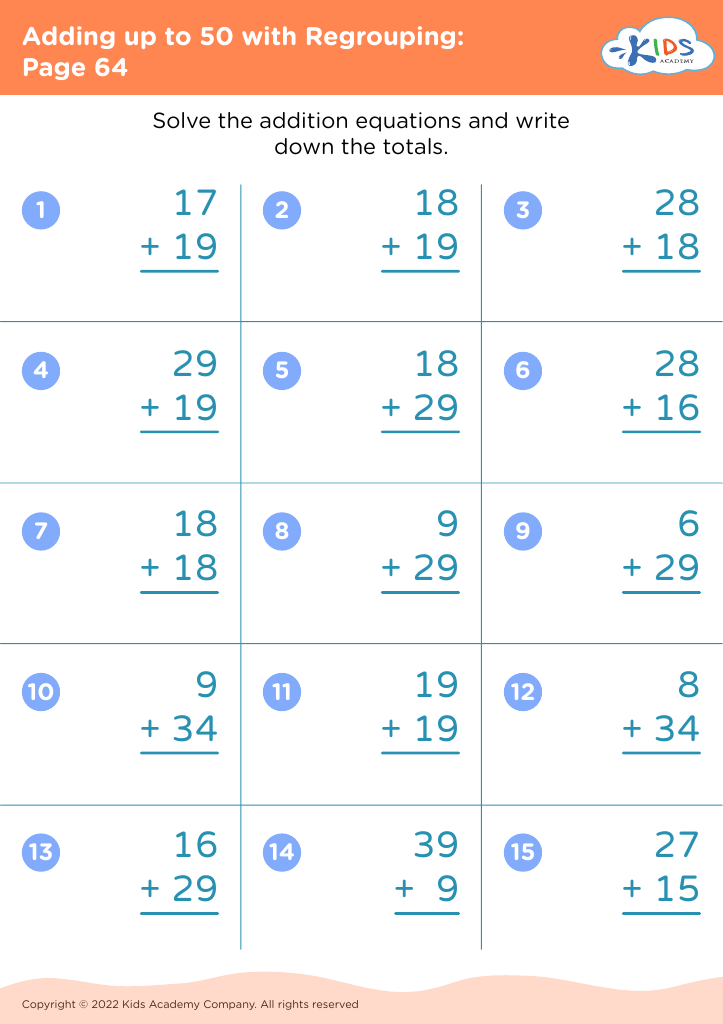
Adding up to 50 with Regrouping: Page 64
Worksheet
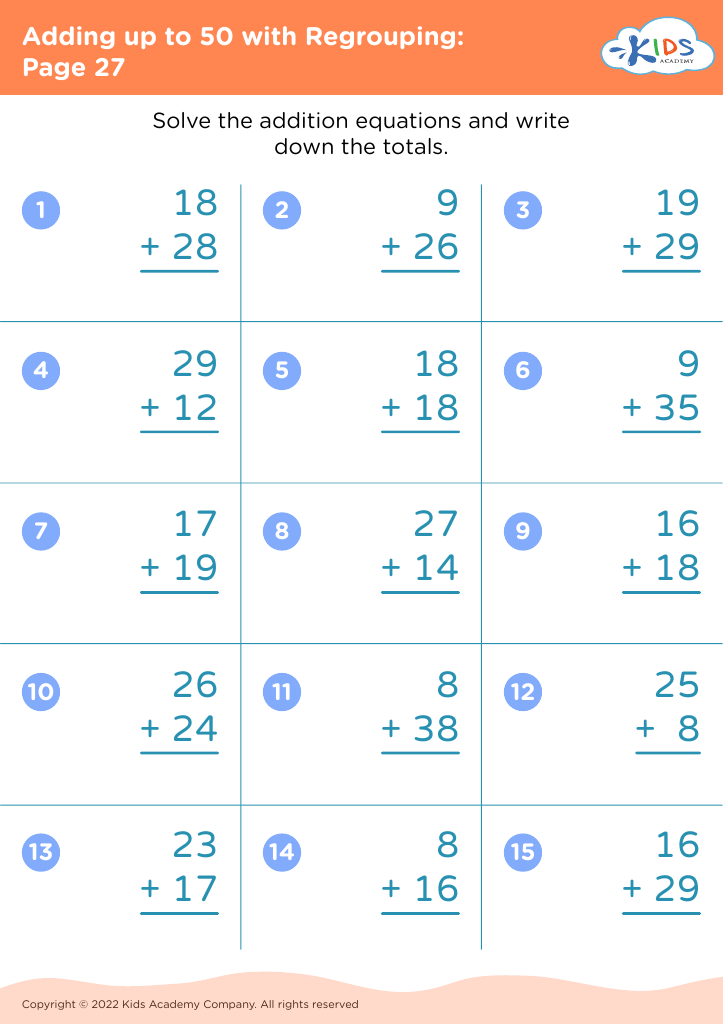
Adding up to 50 with Regrouping: Page 27
Worksheet
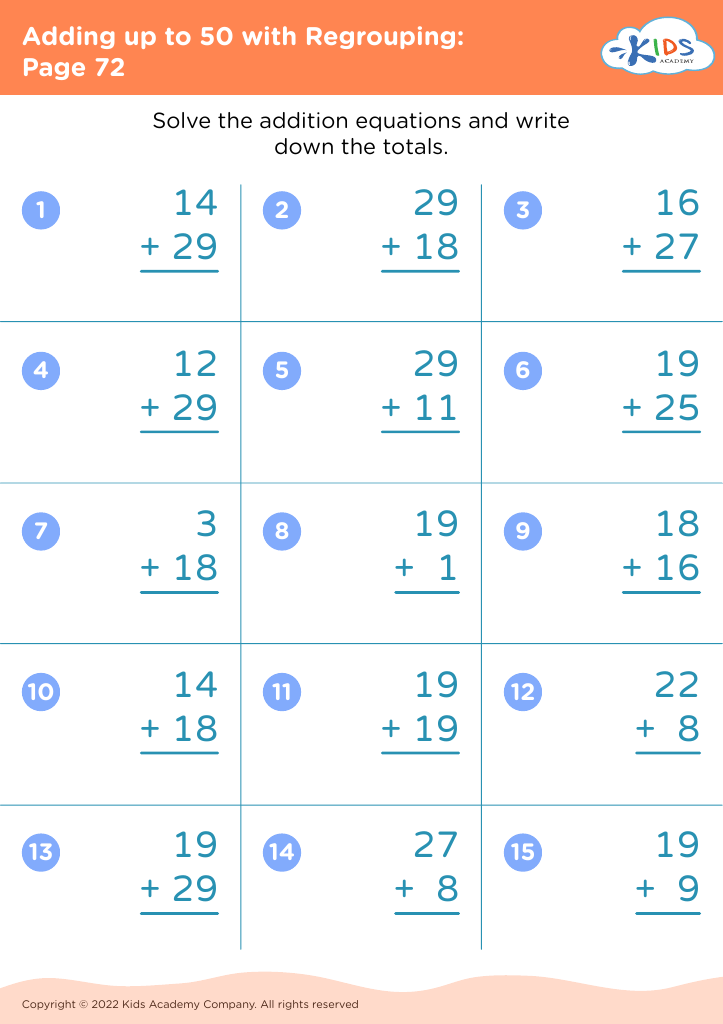
Adding up to 50 with Regrouping: Page 72
Worksheet
Adding up to 50 with Regrouping: Page 41
Worksheet


Counting practice adding up to 50 for ages 8-9 is crucial for several reasons. At this developmental stage, children are starting to build foundational math skills that will be essential throughout their academic journey. Mastering simple addition helps strengthen number sense, a critical component of early math literacy that speeds up learning complex math concepts later. Furthermore, developing fluency in adding numbers up to 50 creates confidence, as children can solve problems quicker and with less anxiety.

Working with numbers in this range necessitates the use of mental math and strengthens cognitive abilities, enhancing memory and problem-solving skills. This practice also helps students grasp the concept of place value more effectively, developing an understanding of how tens and ones work together, ultimately supporting addition and subtraction of larger numbers.

Parents and teachers should recognize that regular counting and adding practice is not just about repetition but about embedding these skills into everyday learning. Incorporating interactive and engaging activities can make learning how to count and add fun. For instance, play-based exercises or using everyday situations like counting toys or snacks can reinforce these skills while keeping children engaged. Consequently, prioritizing counting practice at this age sets a robust mathematical foundation, fostering educational success in the future.