Visual Learning Addition and Subtraction Word Problems Worksheets for Ages 8-9
5 filtered results
-
From - To
Explore our engaging Visual Learning Addition and Subtraction Word Problems Worksheets designed specifically for children ages 8-9. These interactive worksheets utilize vivid imagery and relatable scenarios to help students better understand mathematical concepts through visual cues. By connecting word problems with visual representation, children can enhance their problem-solving skills and boost their confidence in math. Ideal for home or classroom use, these resources cater to diverse learning styles, making math not only educational but also fun. Foster your child’s critical thinking abilities and arithmetic fluency with our carefully crafted worksheets. Discover the joy of learning through visually stimulating experiences today!
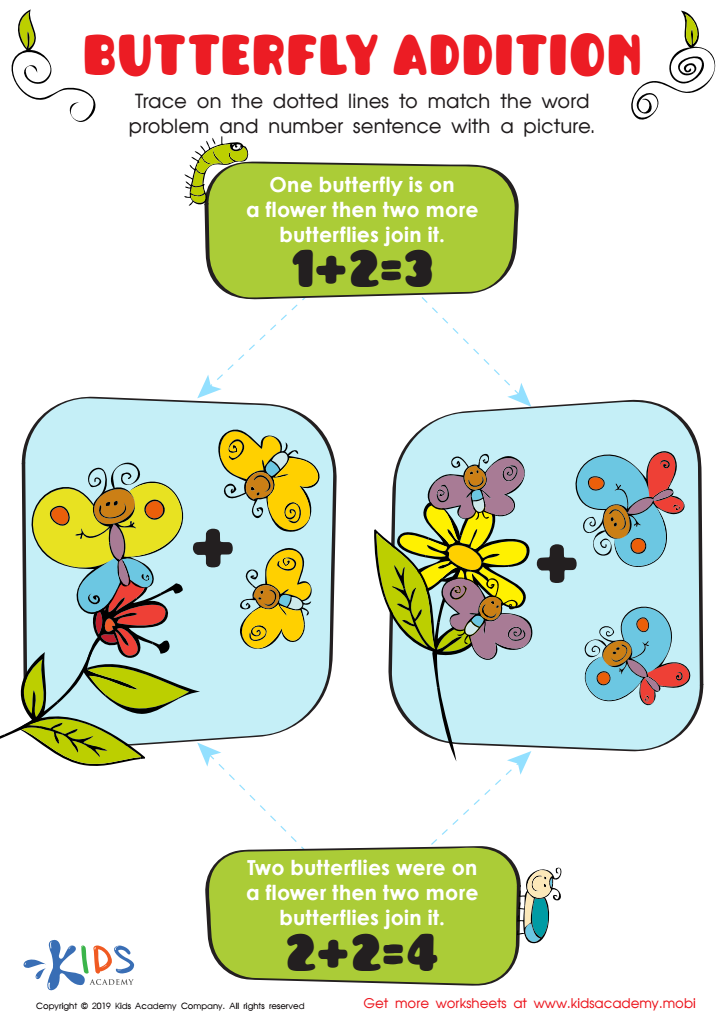
Butterfly Addition Worksheet
 Assign to My Students
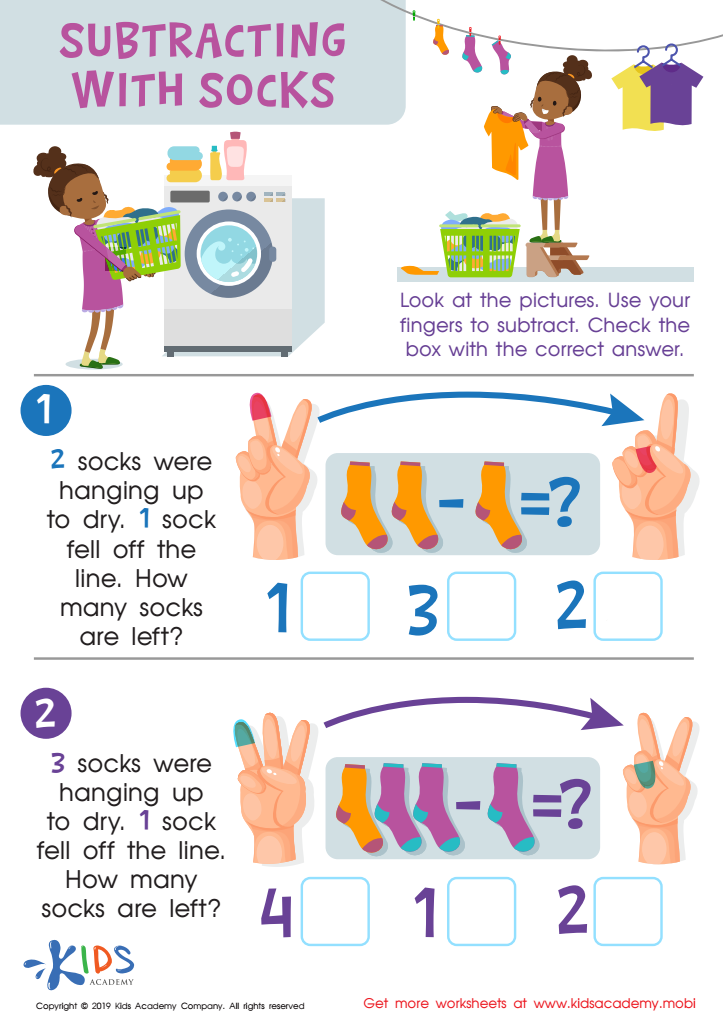
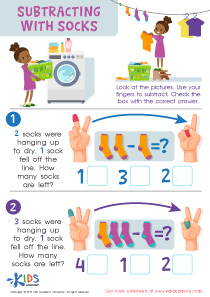
Subtracting Socks Worksheet
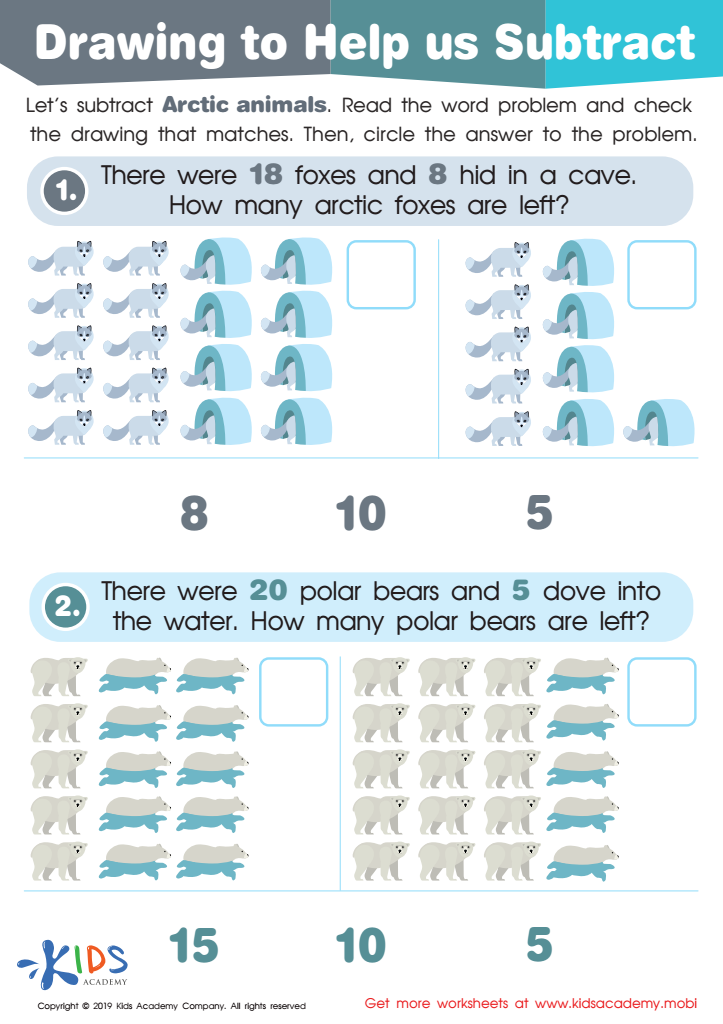
Drawing to Help Us Subtract Worksheet
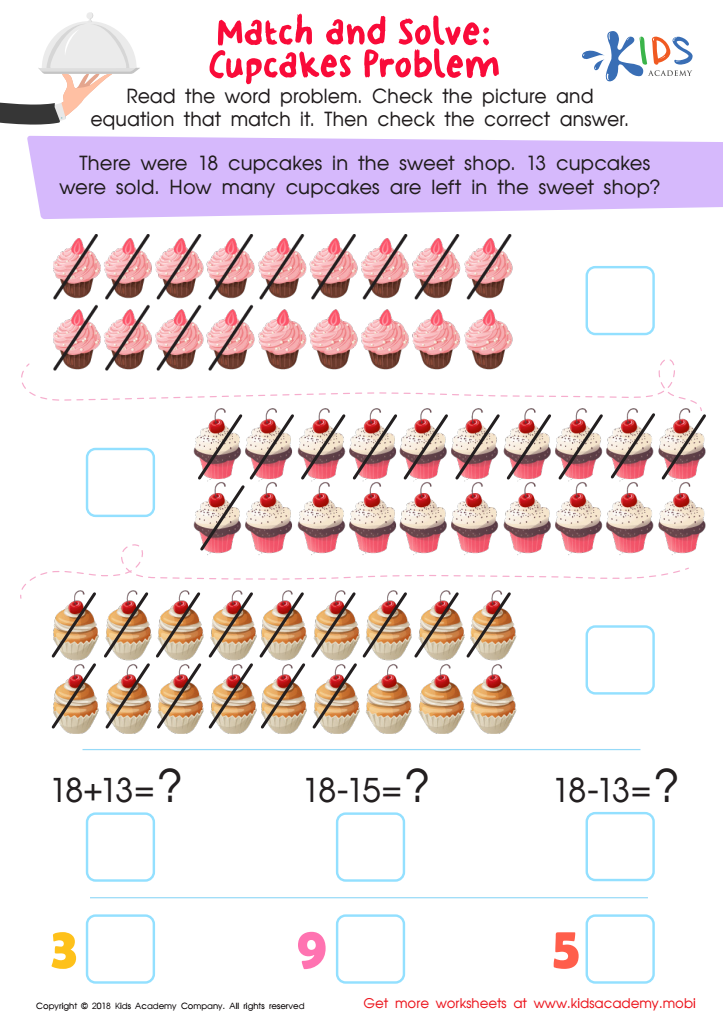
Match and Solve: Cupcakes Problem Worksheet
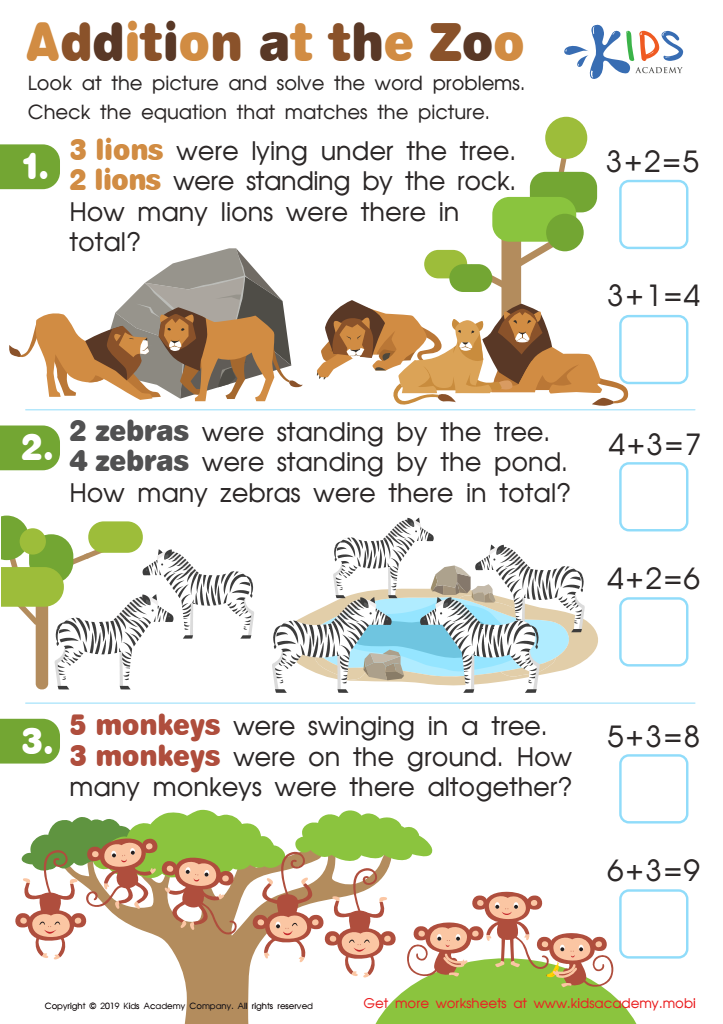
Addition at the Zoo Worksheet








Parents and teachers should care about visual learning in addition and subtraction word problems for children aged 8-9 for several compelling reasons. First, this age group is transitioning from concrete to more abstract mathematical concepts, making it vital to incorporate visual aids that facilitate this shift. Visual learning enhances comprehension by allowing children to see problem relationships, thus making it easier to understand the concepts behind addition and subtraction.
Additionally, visual tools such as drawings, charts, or manipulatives reinforce problem-solving abilities. They provide a clear representation of the problem, helping students visualize and break down the steps needed to arrive at the solution. As a result, students are less likely to feel overwhelmed by complex word problems.
Moreover, fostering visual learning promotes critical thinking skills, as children learn to interpret and analyze visual information. This approach not only aids in mathematical proficiency but also supports overall cognitive development. Finally, engaging in visual learning creates a more enjoyable and interactive learning experience, encouraging students to pursue mathematics with enthusiasm and confidence. By nurturing these skills at an early age, parents and teachers set the foundation for future academic success in mathematics and beyond.