Filters

15 filtered results

Clear all filters
Favorites
With answer key
Interactive

15 filtered results

Difficulty Level

Grade


Boost your child's cognitive skills with our engaging Addition & Subtraction Worksheets designed specifically for ages 8-9. These carefully crafted worksheets not only make math fun but also enhance critical thinking and problem-solving abilities. As children practice various addition and subtraction problems, they will learn to approach math tasks with confidence and creativity. Our resources align with educational standards, ensuring that each worksheet effectively contributes to your child's developmental growth. Explore a variety of exercises, puzzles, and games that promote understanding and mastery of essential math concepts. Start nurturing your child's cognitive skills today with our printable worksheets!
Check out this FREE Trial Lesson on Addition & Subtraction for age 8-9!

Enrichment

Favorites
With answer key
Interactive
  • 8-9
  • Cognitive Development
  • Addition & Subtraction
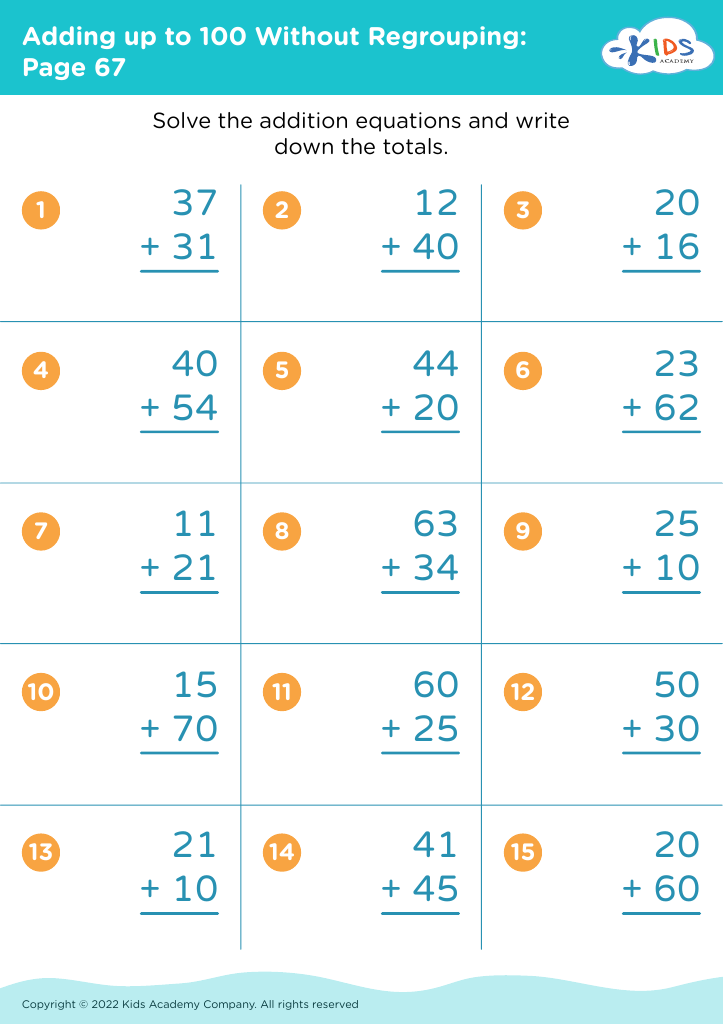
Adding up to 100 Without Regrouping: Page 67
Worksheet
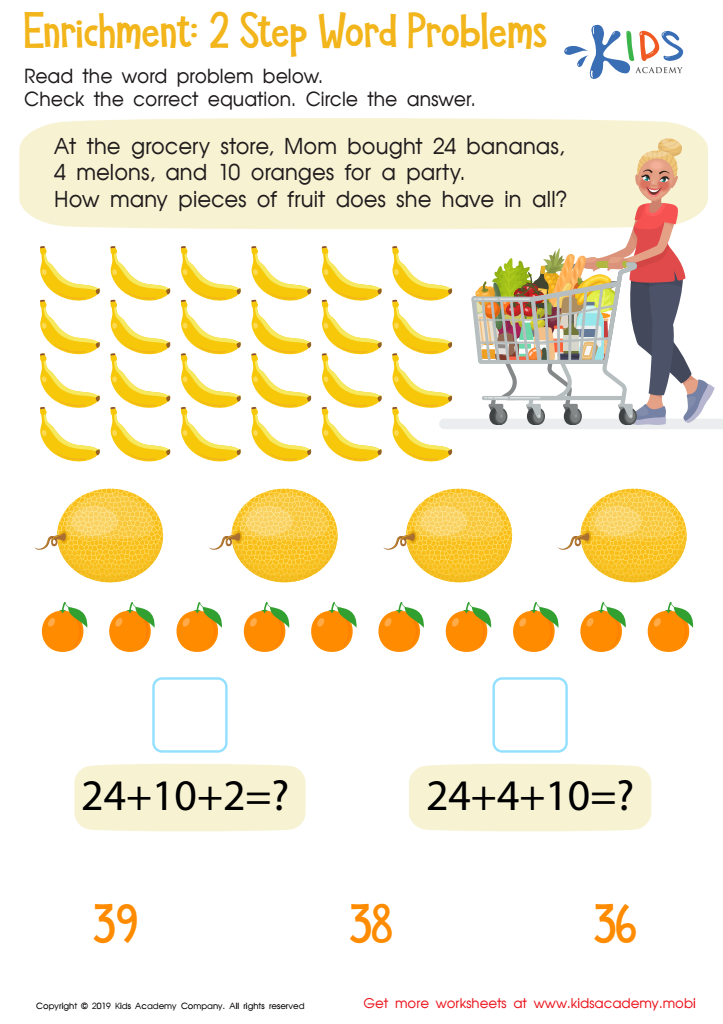
Enrichment -2 Step Word Problems Worksheet

Enrichment -2 Step Word Problems Worksheet

Help your students learn math easier and faster with this colorful worksheet. Read the word problem and then guide them in checking the correct equation and finding the answer. Your students will benefit from the extra help, as they work through new concepts each day.
Enrichment -2 Step Word Problems Worksheet
Worksheet
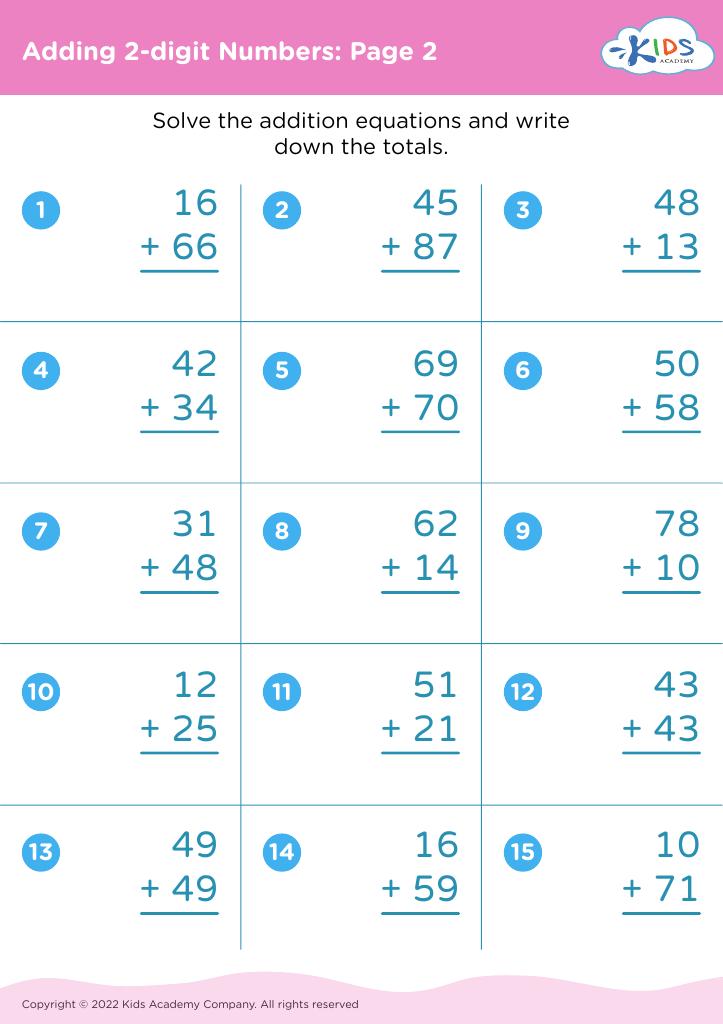
Adding 2-digit Numbers: Page 2

Adding 2-digit Numbers: Page 2

Adding 2-digit Numbers: Page 2
Worksheet
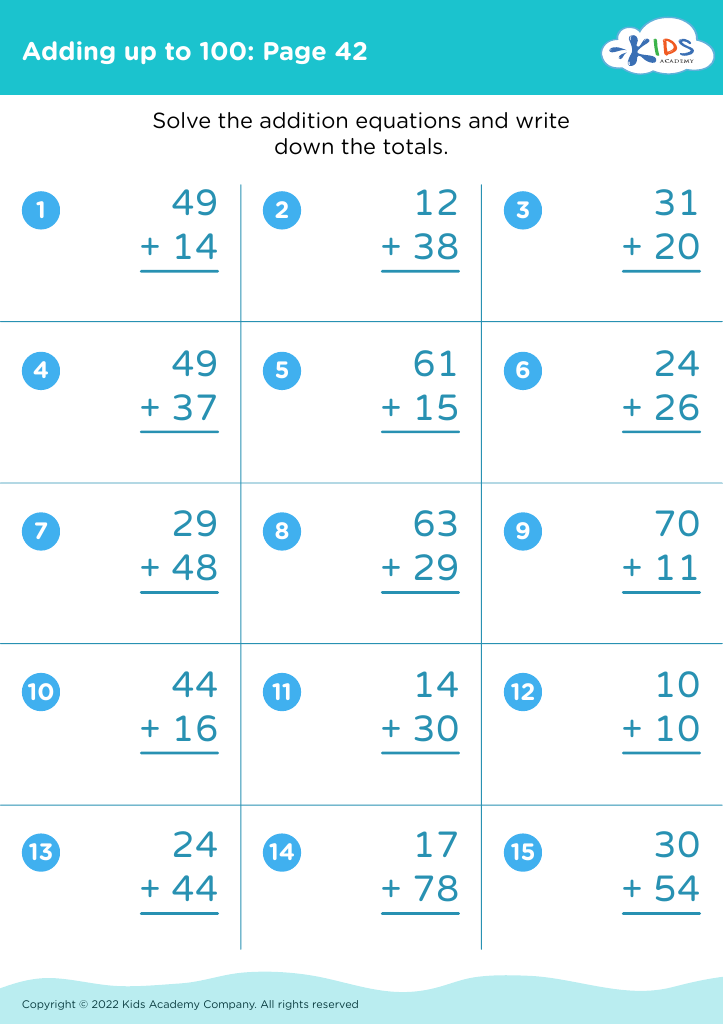
Adding up to 100: Page 42

Adding up to 100: Page 42

Adding up to 100: Page 42
Worksheet
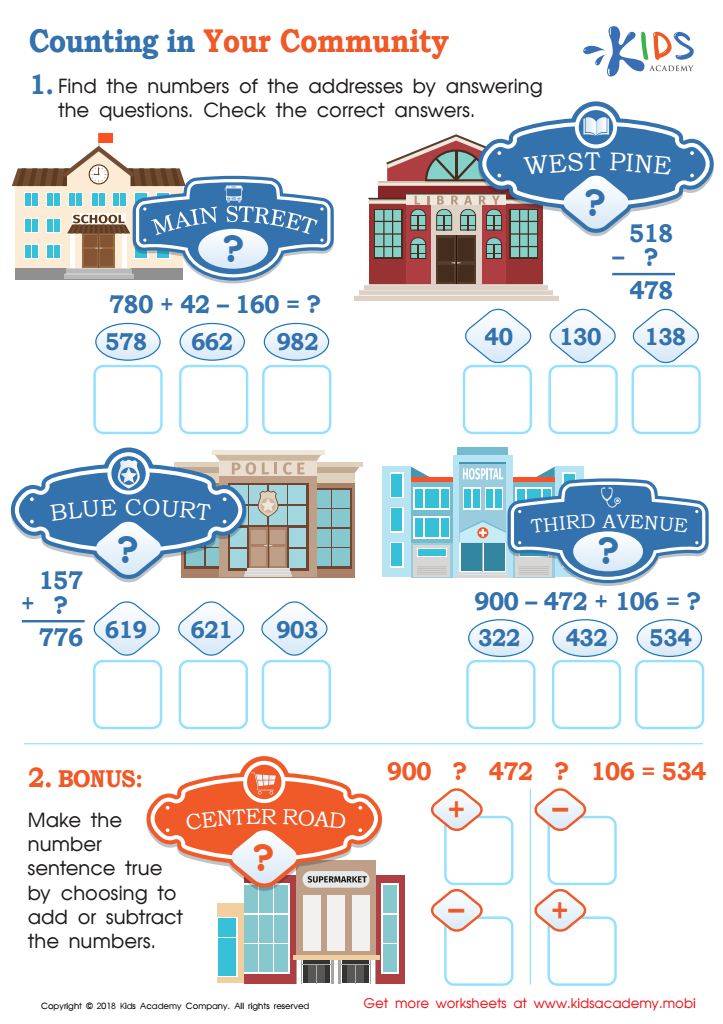
Counting in Your Community Worksheet
Counting in Your Community Worksheet

Introduce your kids to the idea of a community, where different people and buildings co-exist, each playing their part for the community's progress. Ask them to name the buildings they see in their community. Then work through this worksheet to find the numbers of the addresses by answering the questions. Check the answers once they've solved the equations.
Counting in Your Community Worksheet
Worksheet
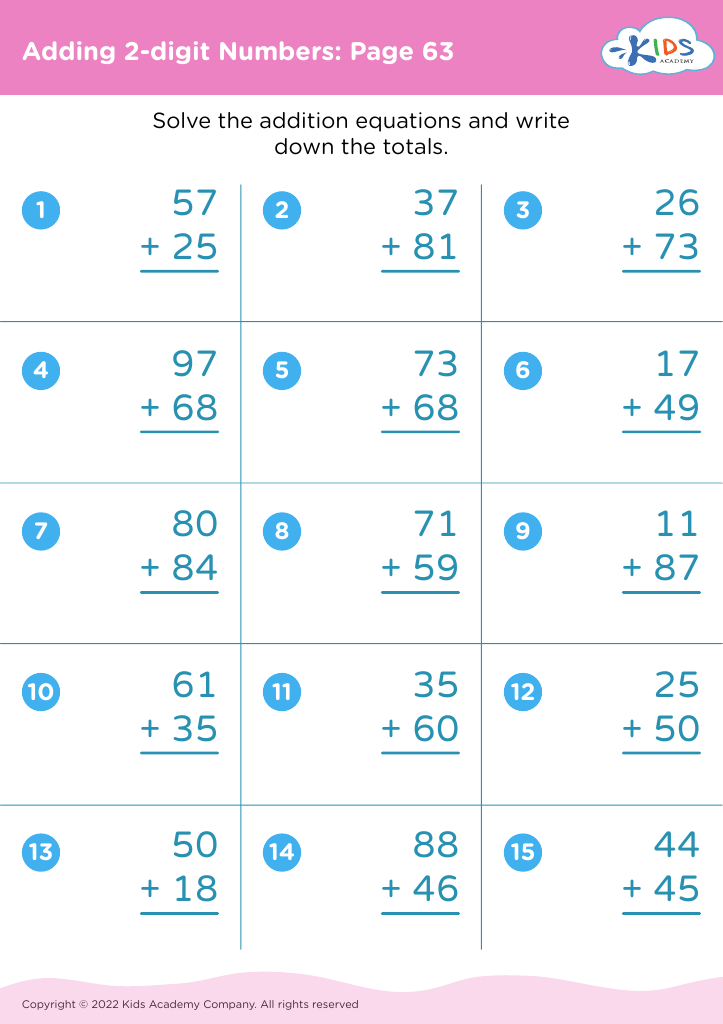
Adding 2-digit Numbers: Page 63

Adding 2-digit Numbers: Page 63

Adding 2-digit Numbers: Page 63
Worksheet
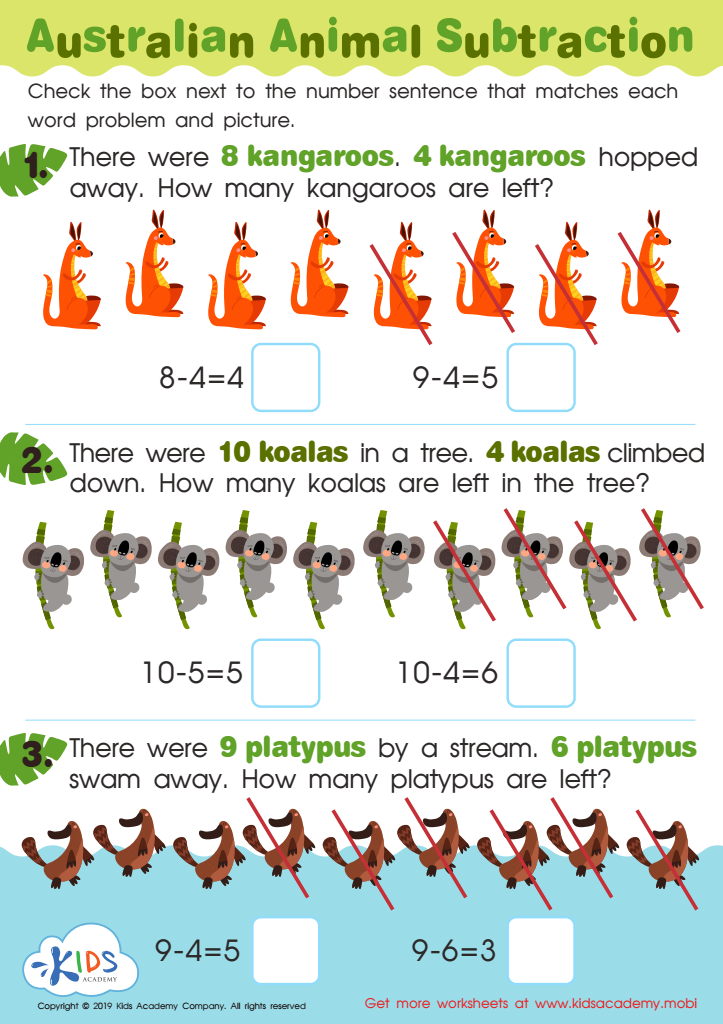
Australian Animal Subtraction Worksheet
Australian Animal Subtraction Worksheet
Test your child's wildlife knowledge. Ask them to name animals indigenous to Australia or other countries. Show them the animals in this worksheet and have them match each word problem and picture with the correct number sentence.
Australian Animal Subtraction Worksheet
Worksheet
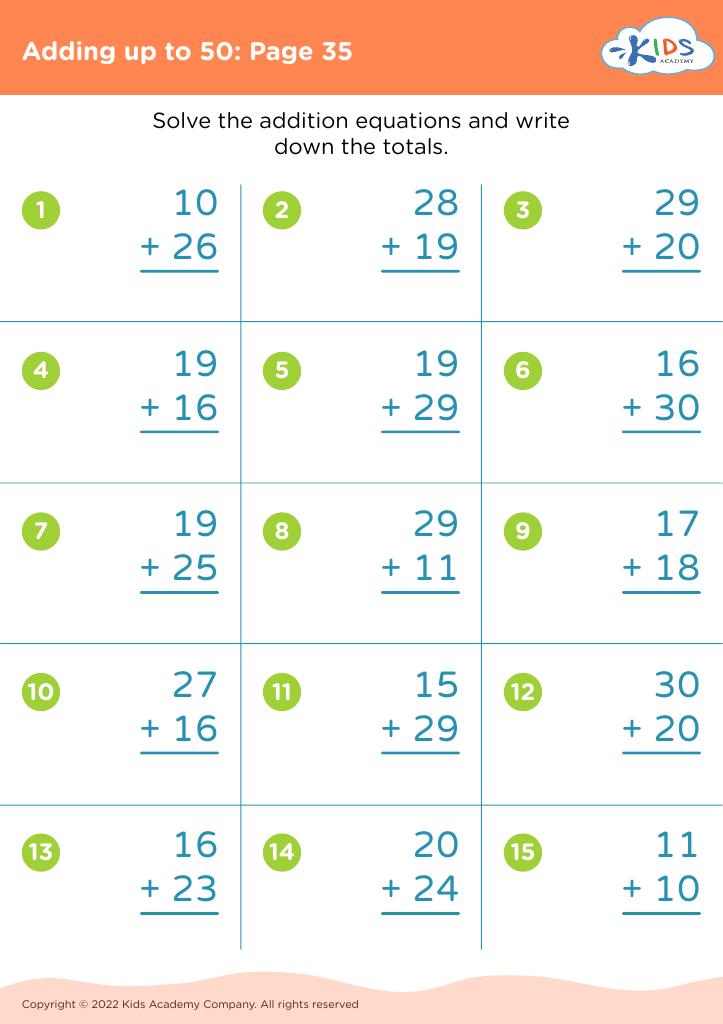
Adding up to 50: Page 35

Adding up to 50: Page 35

Adding up to 50: Page 35
Worksheet
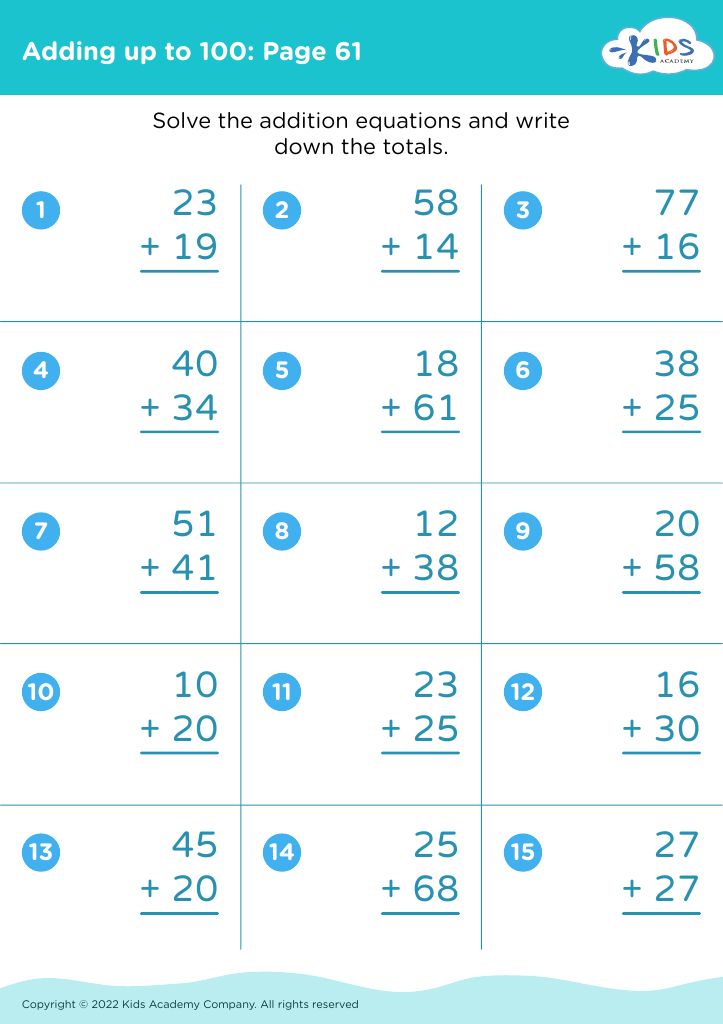
Adding up to 100: Page 61

Adding up to 100: Page 61

Adding up to 100: Page 61
Worksheet
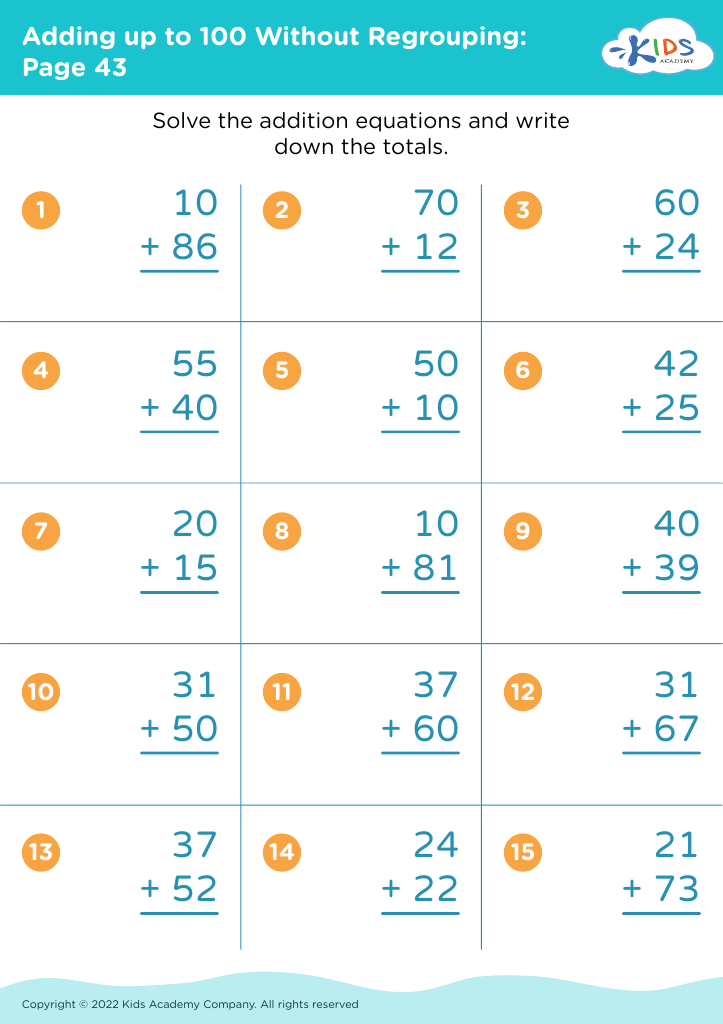
Adding up to 100 Without Regrouping: Page 43
Worksheet
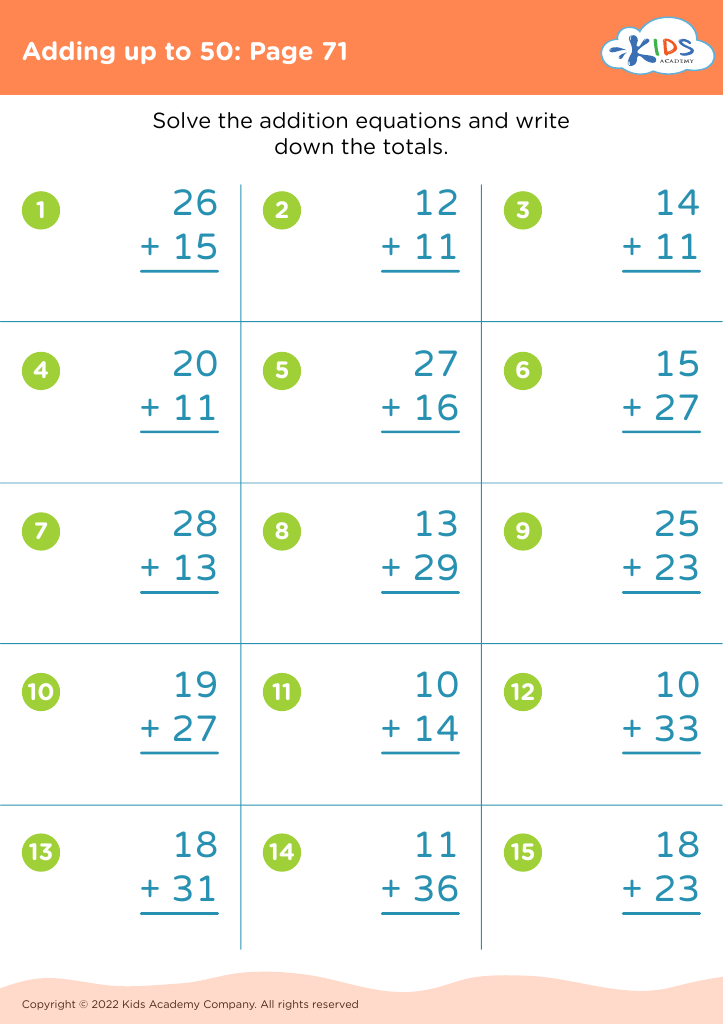
Adding up to 50: Page 71

Adding up to 50: Page 71

Adding up to 50: Page 71
Worksheet
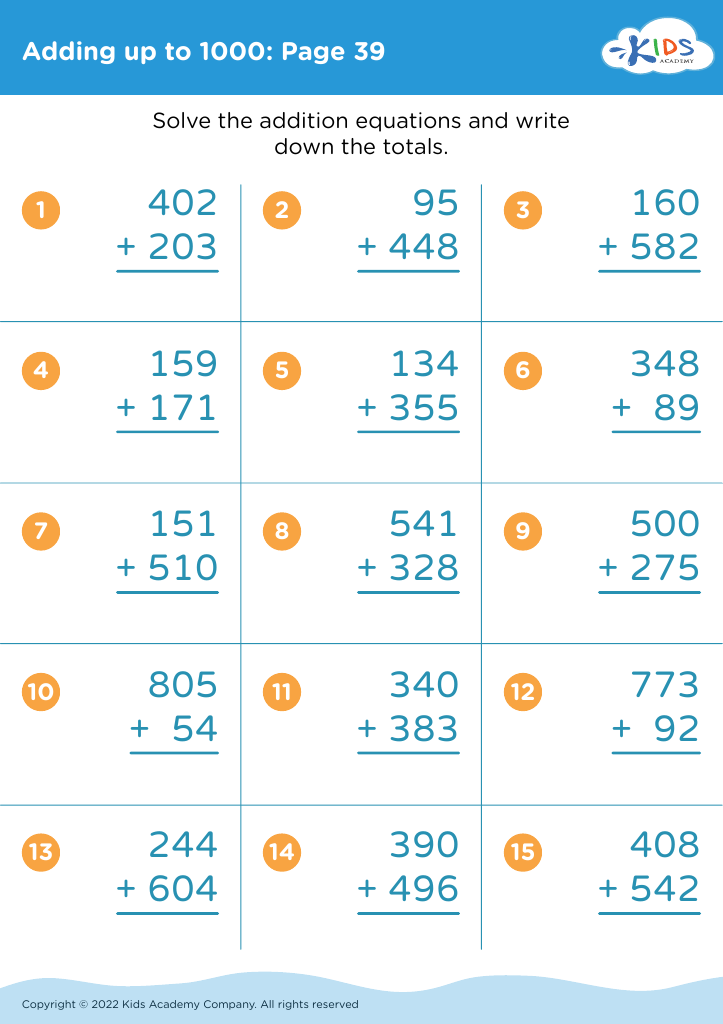
Adding up to 1000: Page 39

Adding up to 1000: Page 39

Adding up to 1000: Page 39
Worksheet
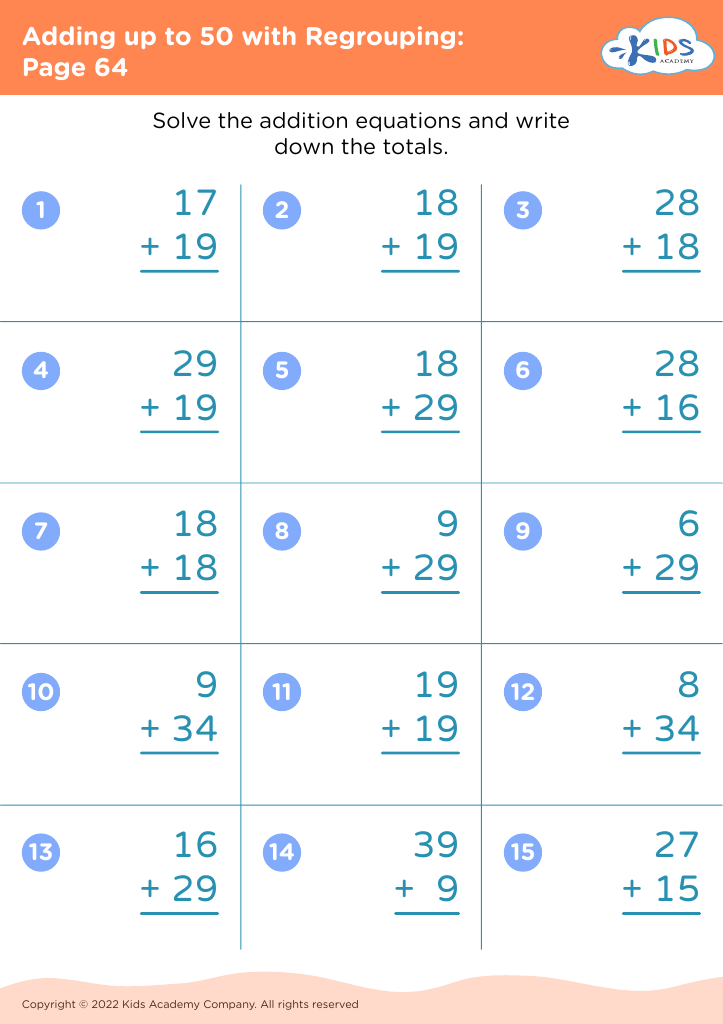
Adding up to 50 with Regrouping: Page 64
Worksheet
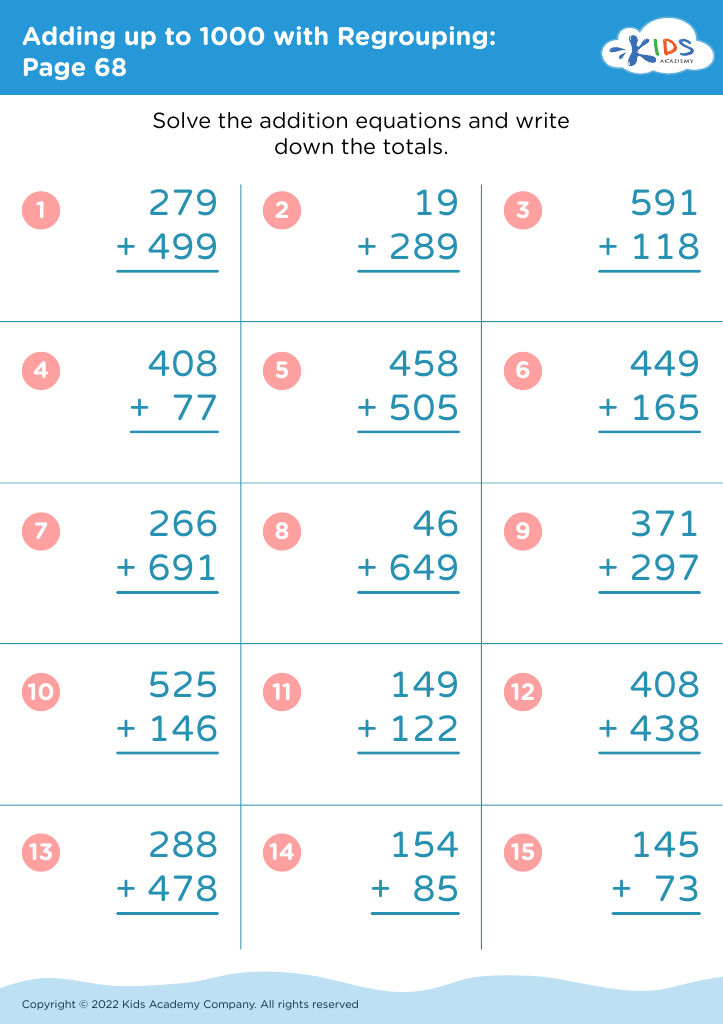
Adding up to 1000 with Regrouping: Page 68
Worksheet
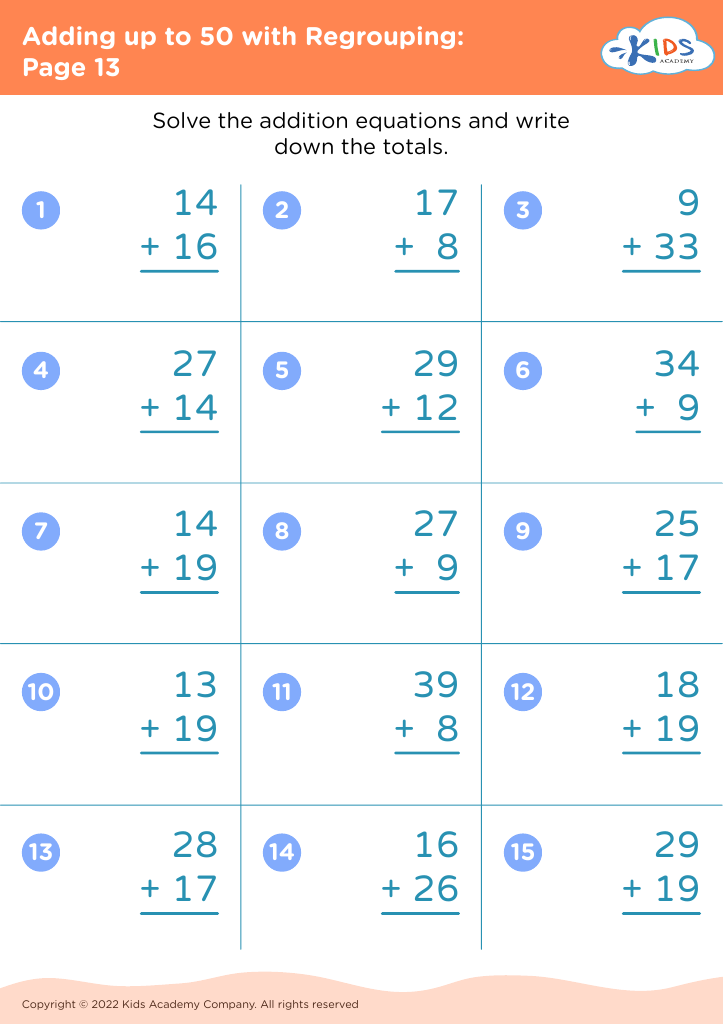
Adding up to 50 with Regrouping: Page 13
Worksheet


Cognitive development in addition and subtraction is crucial for children aged 8-9, as this period marks a significant transition in their mathematical understanding. During these formative years, children move from concrete operational thought, where they can perform basic arithmetic with tangible objects, to more abstract thinking, enabling them to manipulate numbers and concepts mentally.

Parents and teachers play a vital role in fostering this development. At this age, children are not only learning to perform operations but are beginning to understand the relationships between numbers, such as quantities and place values. Mastering addition and subtraction lays a strong foundation for more complex math skills, including multiplication, division, and problem-solving.

By focusing on these foundational skills, educators can help students build confidence and a positive attitude toward mathematics, which is essential for lifelong learning. Engaging children in diverse activities that encourage critical thinking and reasoning about numbers can enhance their cognitive abilities. Moreover, this proficiency impacts other subjects, promoting skills such as logical reasoning and analytical thinking. Thus, parents and teachers should prioritize cognitive development in addition and subtraction to ensure children are well-prepared for academic success and essential life skills.