Comparing lengths Addition & Subtraction Worksheets for Ages 8-9
3 filtered results
-
From - To
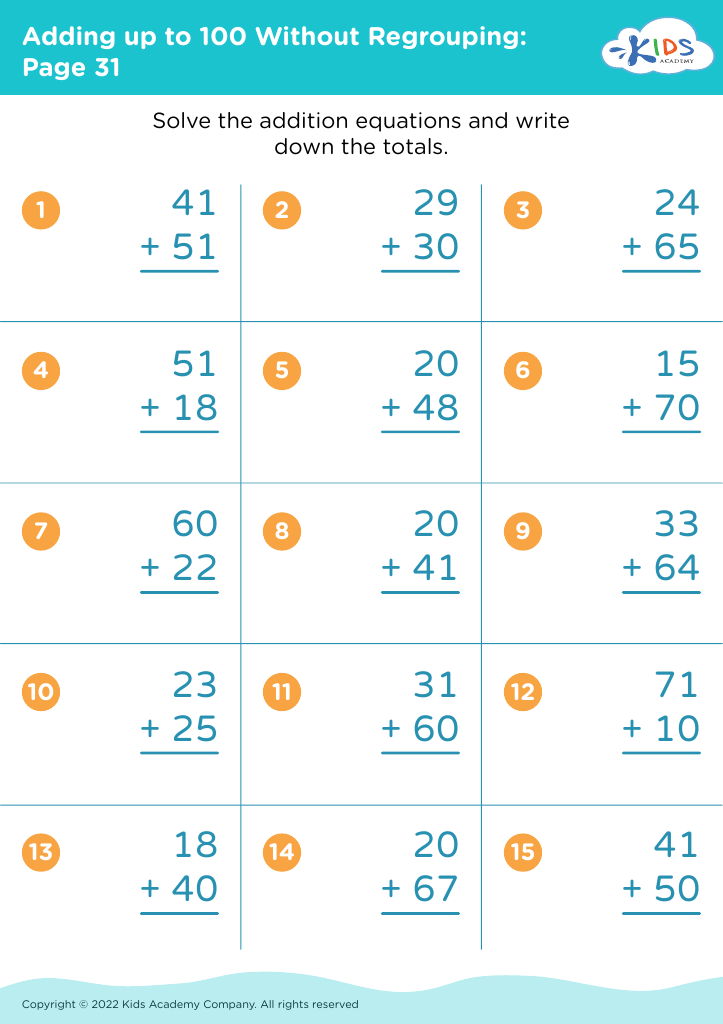
Explore our engaging "Comparing Lengths Addition & Subtraction Worksheets" designed specifically for children aged 8-9. These worksheets provide a fun and interactive way for young learners to master essential math skills by comparing different lengths using addition and subtraction. Through colorful visuals and relatable scenarios, students will enhance their understanding of measurements while developing their critical thinking abilities. Our carefully crafted exercises aim to reinforce problem-solving skills, ensuring kids gain confidence in working with numbers. Perfect for both classroom use and home practice, these worksheets offer a valuable resource to support your child's learning journey in mathematics. Try them today!
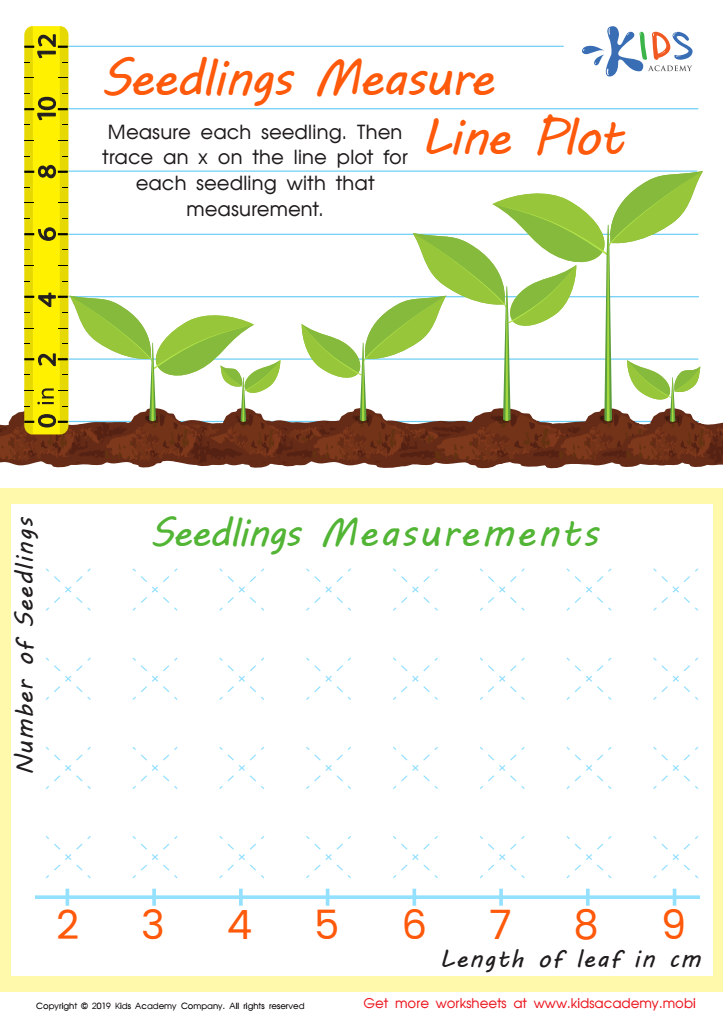
Seedling Measure Line Plot Worksheet
 Assign to My Students
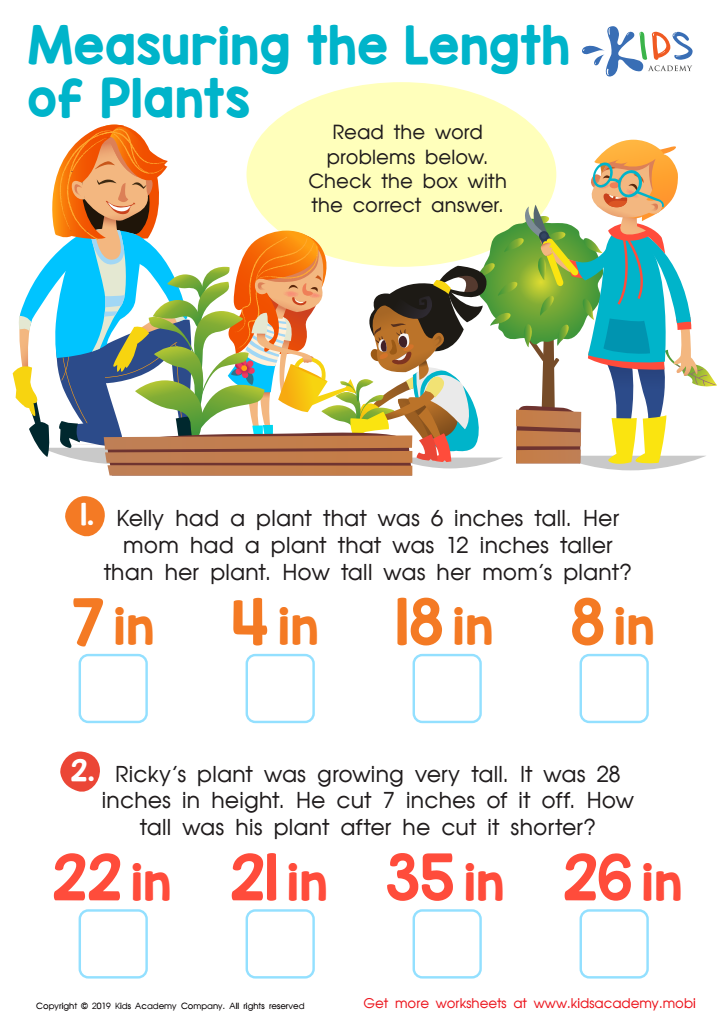
Measuring the Length of Plants Worksheet








Comparing lengths and understanding the concepts of addition and subtraction are vital skills for children ages 8-9. At this developmental stage, children refine their mathematical thinking and start applying these skills to real-world situations. By focusing on comparing lengths, parents and teachers can help children grasp the fundamental idea of measurement, which is essential not only in math but in science and everyday life.
Furthermore, fostering proficiency in addition and subtraction allows children to develop a stronger number sense. It encourages critical thinking and problem-solving as they learn to manipulate numbers and understand their relationships. By linking these concepts with comparing lengths, children gain practical experiences, such as measuring objects around them, which enhances their engagement and retention of mathematical concepts.
For example, calculating the total length of different items or determining how much longer one item is compared to another sharpens their analytical skills. It lays a strong foundation for more advanced math concepts in the future. Therefore, both parents and teachers should prioritize these subjects, as they contribute not only to academic success but also to the development of important life skills that children will carry forward into their future learning experiences.








