Developing problem-solving abilities Addition & Subtraction Worksheets for Ages 8-9
5 filtered results
-
From - To
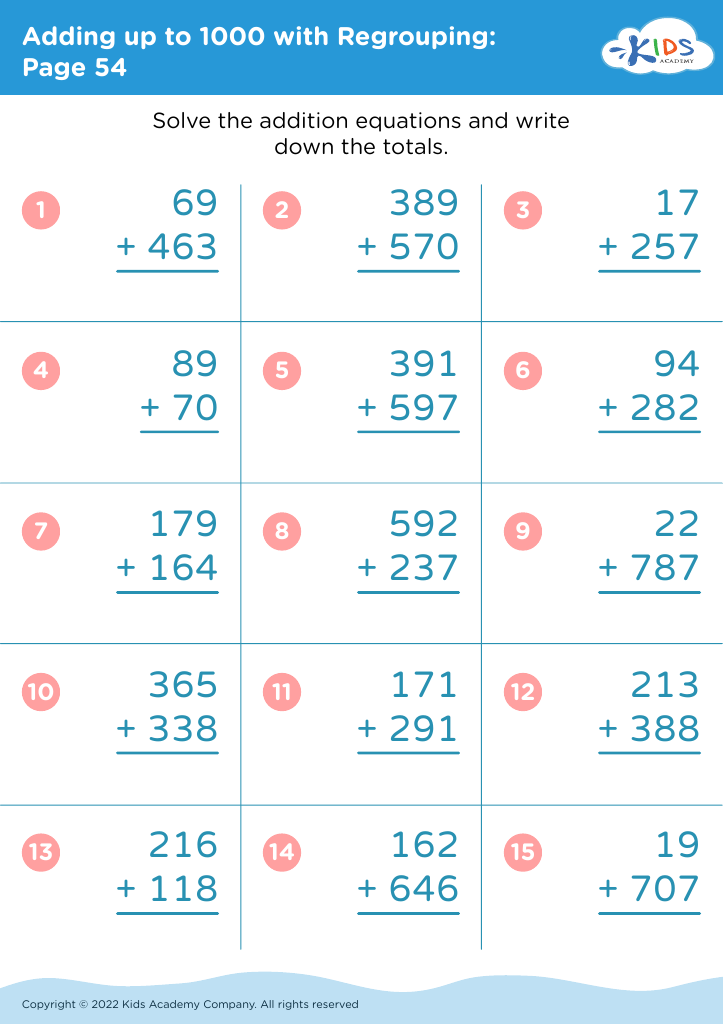
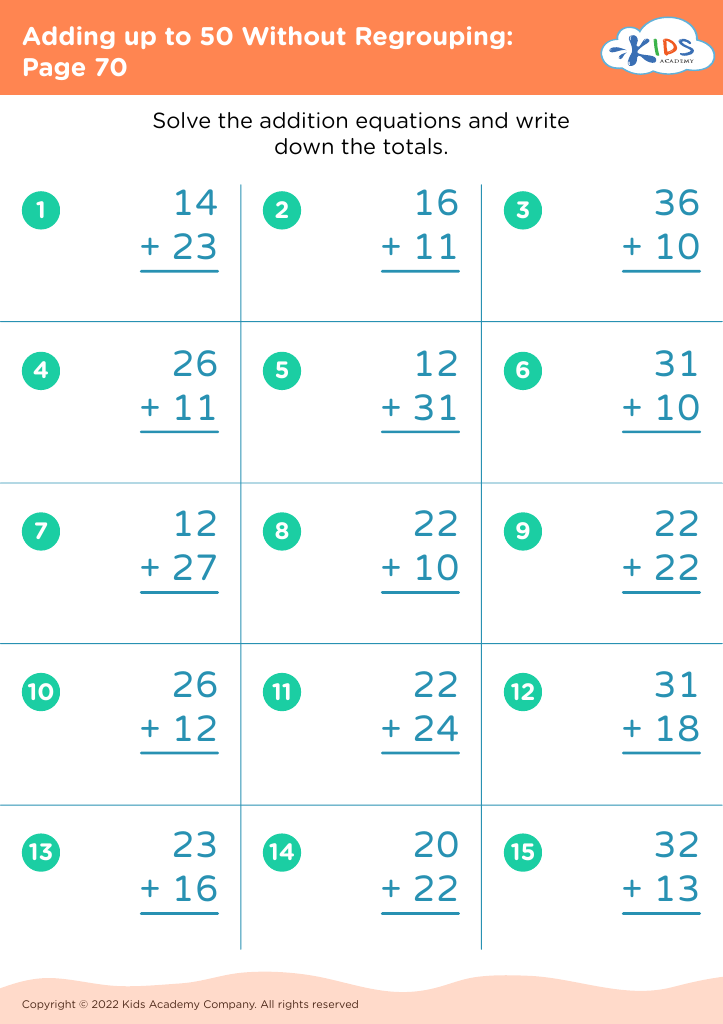
Unlock your child's potential with our Addition & Subtraction Worksheets Designed for ages 8-9, these engaging worksheets develop essential problem-solving skills. Balanced between challenges and fun, the activities bolster confidence in math basics while nurturing critical thinking and analytical abilities. Perfect for both classroom and at-home practice, these resources make learning math enjoyable and effective. Our expertly crafted problems are aligned with educational standards, ensuring your child gets the best foundation for future mathematical success. Start your 8-9-year-old on a journey to becoming a math whiz today! Visit Kids Academy for free, print-ready worksheets.
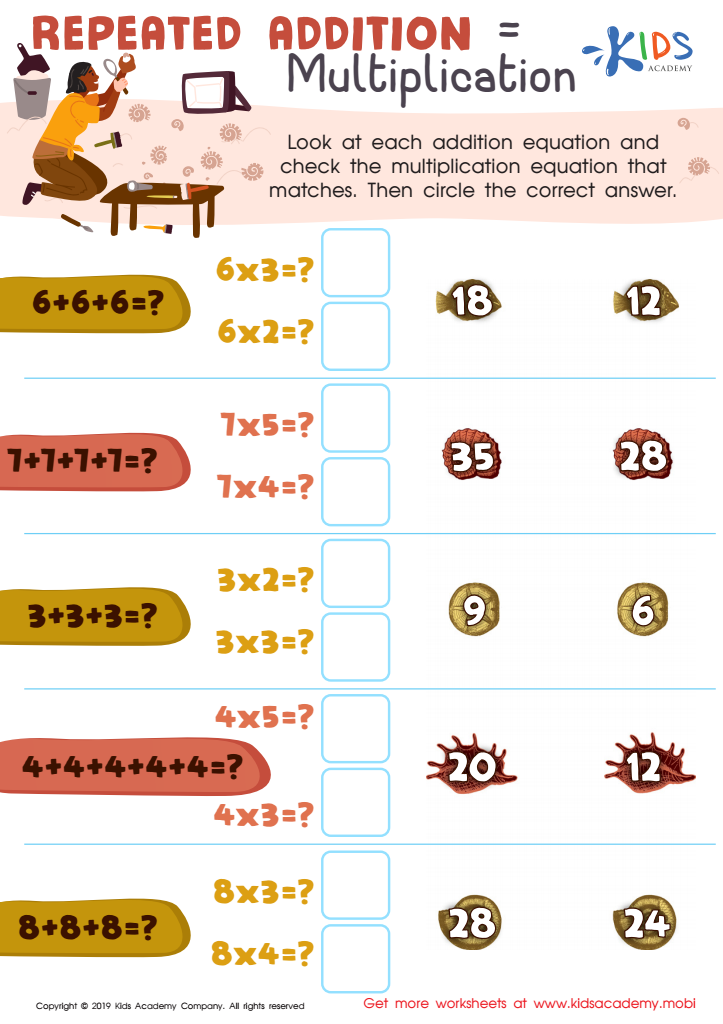
Repeated Addition = Multiplication Worksheet
 Assign to My Students
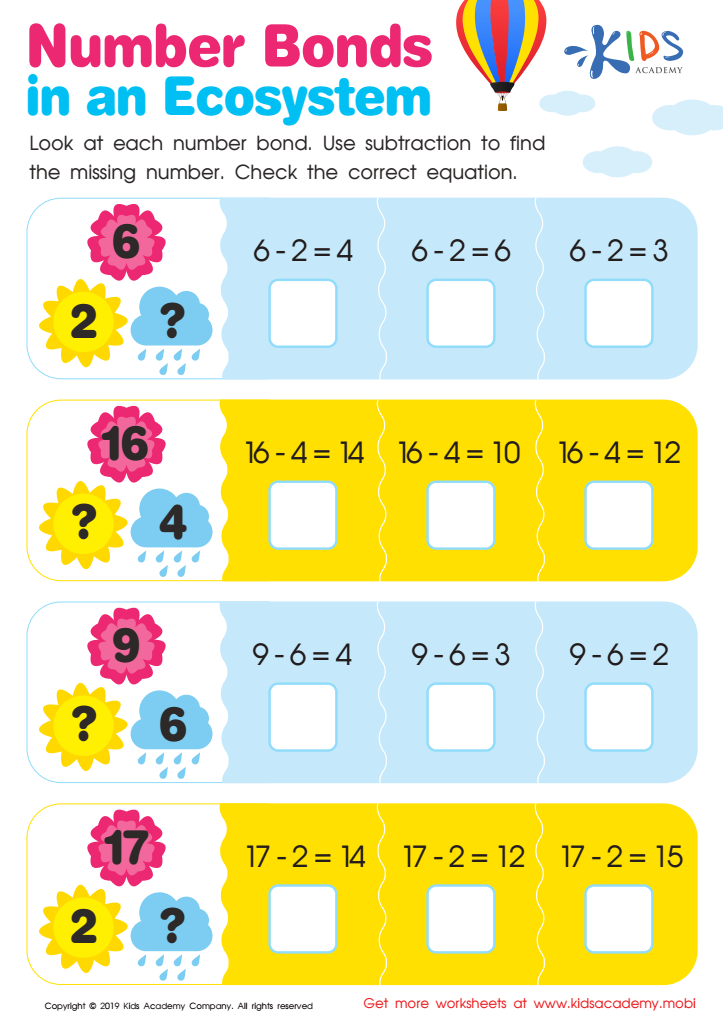
Number Bonds in an Ecosystem Worksheet
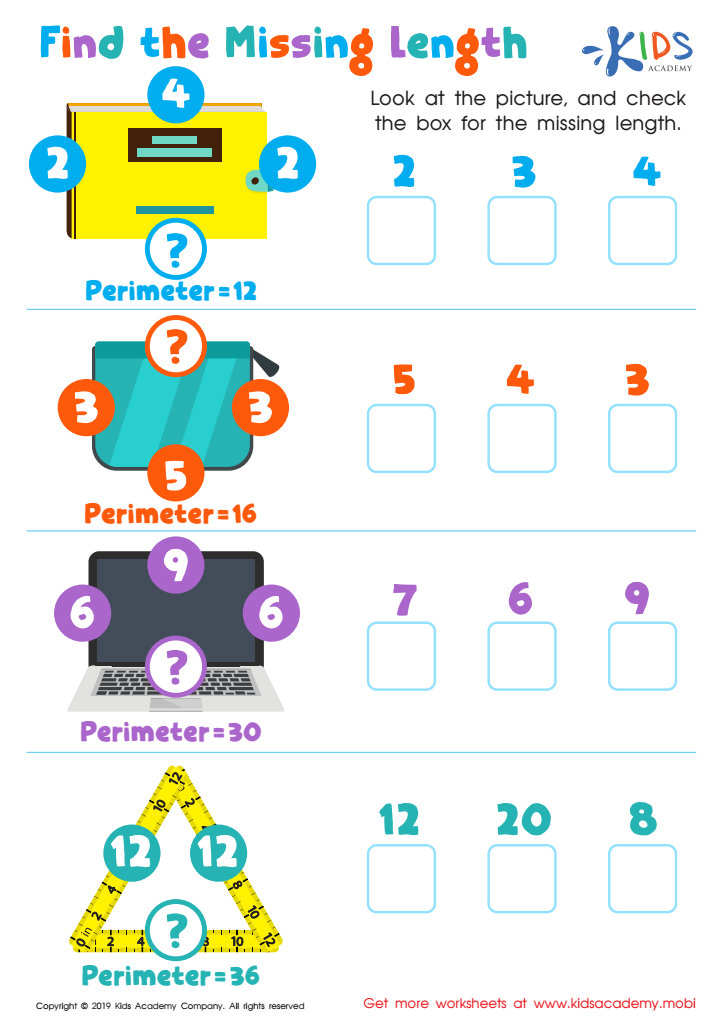
Find the Missing Length Worksheet








Developing problem-solving abilities in addition and subtraction for children aged 8-9 is crucial for their academic and personal growth. This phase, typically around third grade, is a critical period when they build on foundational math skills to become more proficient and confident learners. Strengthening these skills not only supports mathematical understanding but also enhances cognitive development, critical-thinking abilities, and decision-making skills.
Mastery of addition and subtraction underpins all future arithmetic and more complex math concepts. When children are adept at solving problems involving these operations, they develop a sense of numerical relationships and patterns, which bolsters their ability to understand and tackle advanced math topics like multiplication, division, fractions, and beyond.
Moreover, problem-solving skills in math foster broader life skills. As children learn to approach problems methodically, contemplate different strategies, and arrive at solutions, they cultivate perseverance, logical reasoning, and analytical thinking. These competencies are valuable in everyday situations, from academic assignments to real-world scenarios requiring decision-making and critical analysis.
For teachers and parents, nurturing these abilities through interactive activities, games, and practical examples can make learning engaging and relevant. This investment yields lifelong benefits, arming children with both the computational skills and the confidence needed to navigate more complex challenges as they progress through their education and later life.








