Developing problem-solving skills Addition & Subtraction Worksheets for Ages 8-9
6 filtered results
-
From - To
Explore our engaging "Developing Problem-Solving Skills: Addition & Subtraction Worksheets" designed specifically for children ages 8 to 9. These interactive worksheets not only reinforce fundamental math concepts of addition and subtraction but also enhance students' critical thinking and problem-solving abilities. Each worksheet presents various real-life scenarios that challenge young learners to apply their mathematical knowledge creatively. Encourage your child to tackle problems confidently and independently while building a strong foundation in math. Perfect for classroom use or home education, these resources make learning fun and effective, ensuring success in future mathematical endeavors. Start fostering problem-solving skills today!
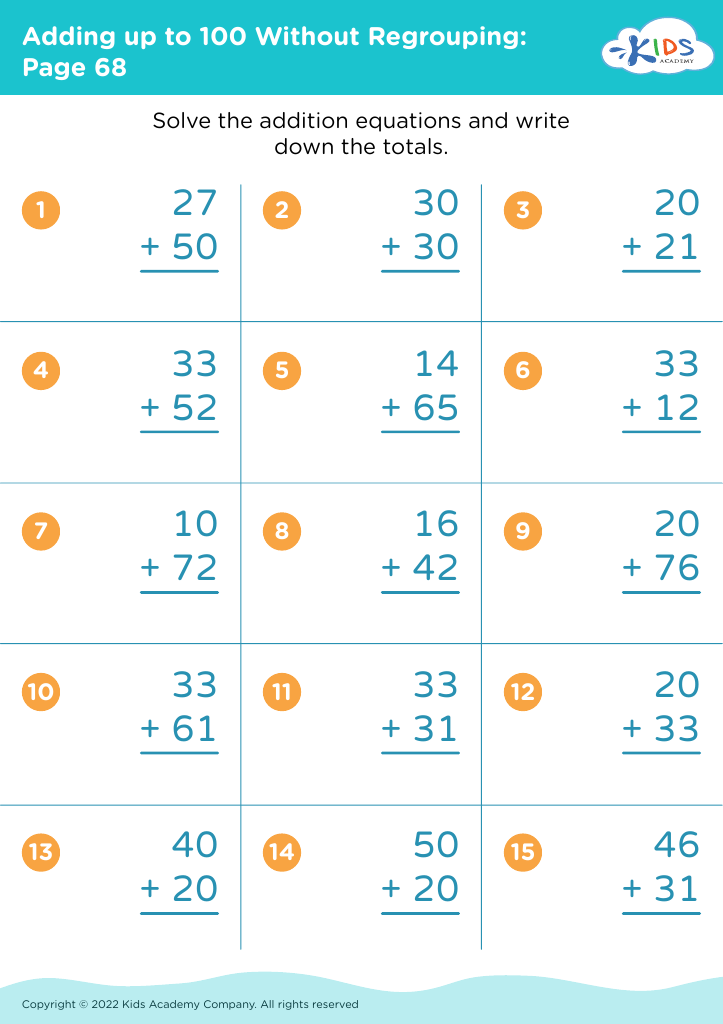
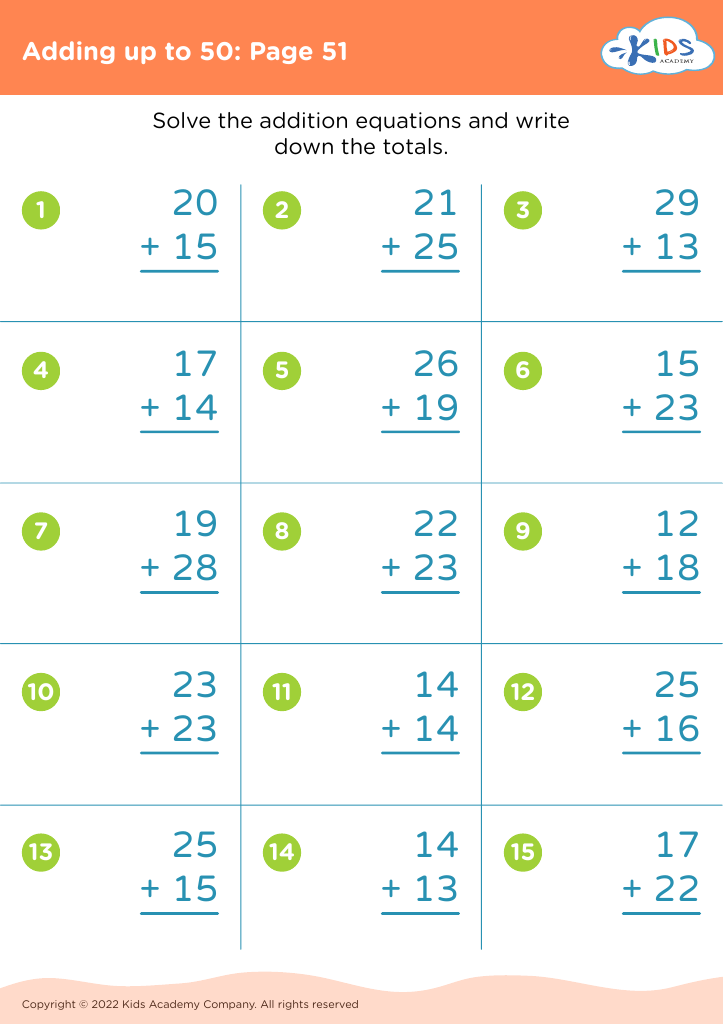

Under the Sea Addition Worksheet
 Assign to My Students
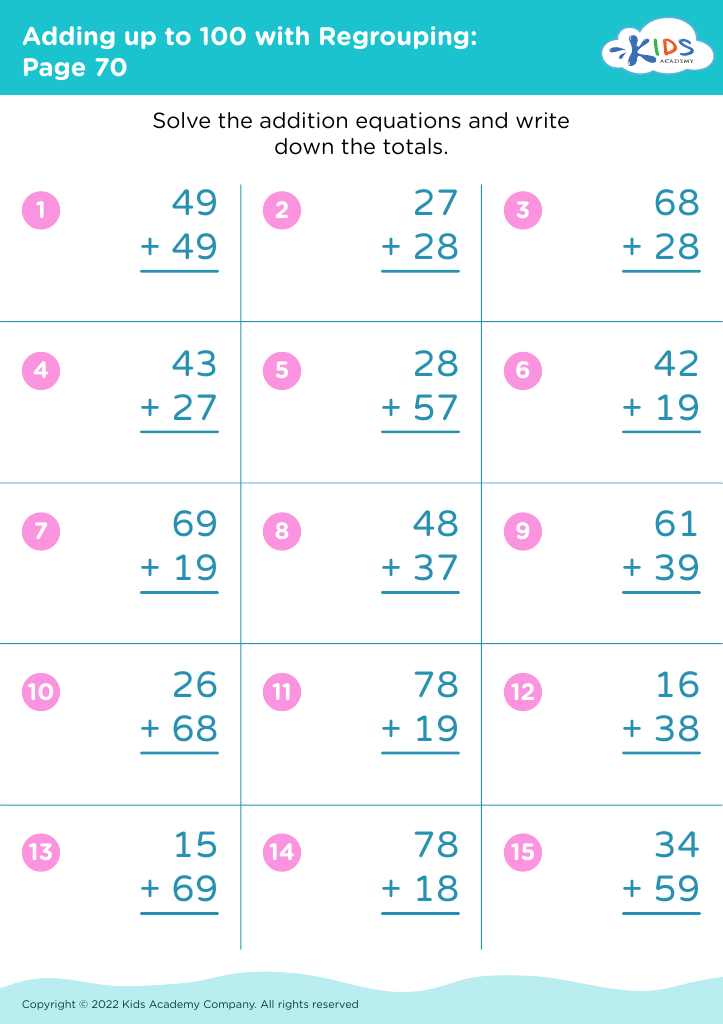
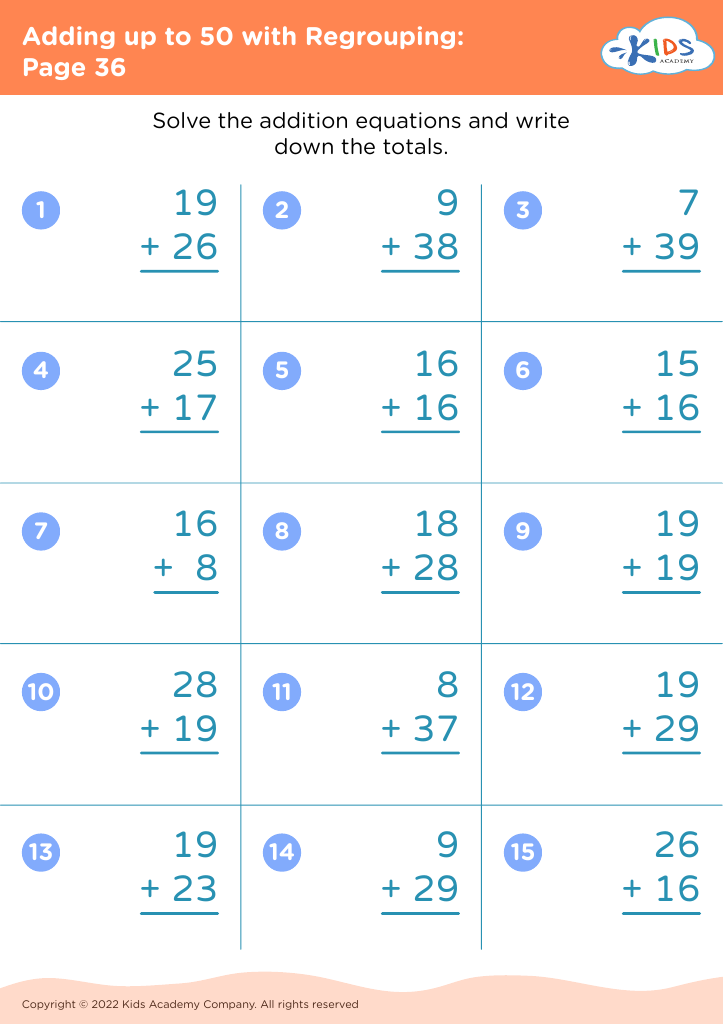
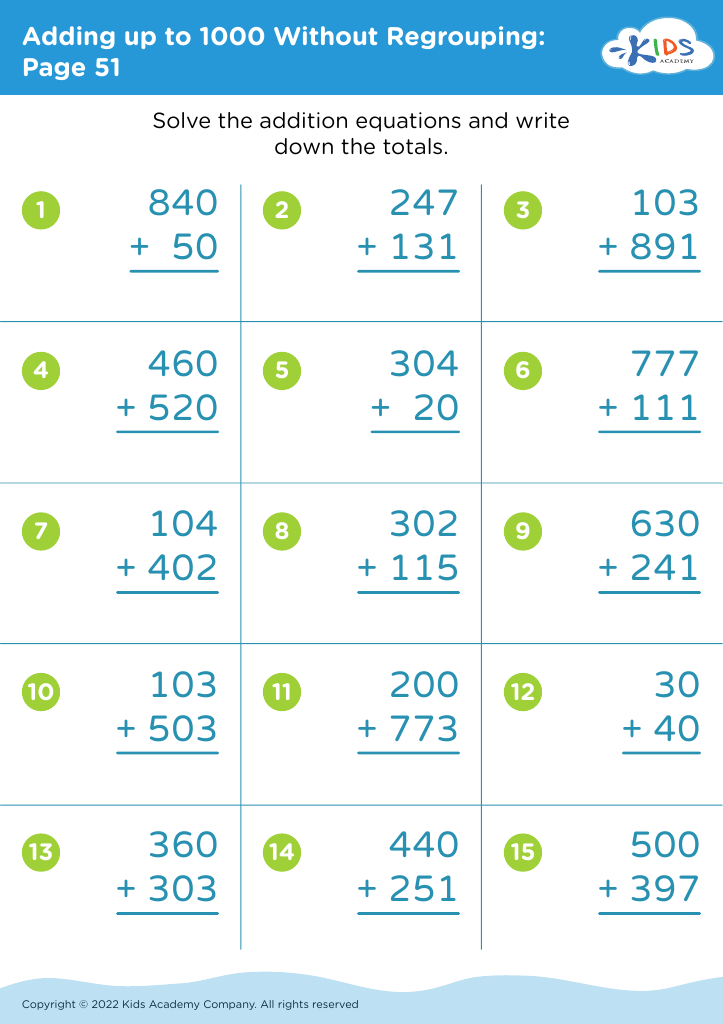








Developing problem-solving skills in addition and subtraction for children aged 8-9 is crucial for their overall cognitive and academic growth. At this age, children transition from concrete understanding of numbers to applying mathematical concepts in various contexts. Strengthening their problem-solving abilities not only enhances their numerical proficiency but also fosters critical thinking, perseverance, and creativity.
When parents and teachers encourage problem-solving in addition and subtraction, they help children develop the ability to analyze problems, formulate strategies, and evaluate their solutions. This skill set is not only foundational for mathematics but is transferable to everyday situations and future academic challenges. Problem-solving requires children to engage with math in a meaningful way, promoting deeper understanding rather than rote memorization.
Furthermore, instilling these skills boosts confidence. With each successful problem they tackle, children learn resilience and the value of learning from mistakes—far more impactful than simply getting the right answer. By nurturing these skills, parents and teachers play a vital role in preparing children for more complex mathematical concepts and life skills, laying the groundwork for their success in school and beyond. Ultimately, empowering young learners with strong problem-solving skills is an investment in their future.








