
Improve math skills Addition & Subtraction Worksheets for Ages 8-9
18 filtered results
Difficulty Level
Grade
Age
-
From - To
Subject
Activity
Standards
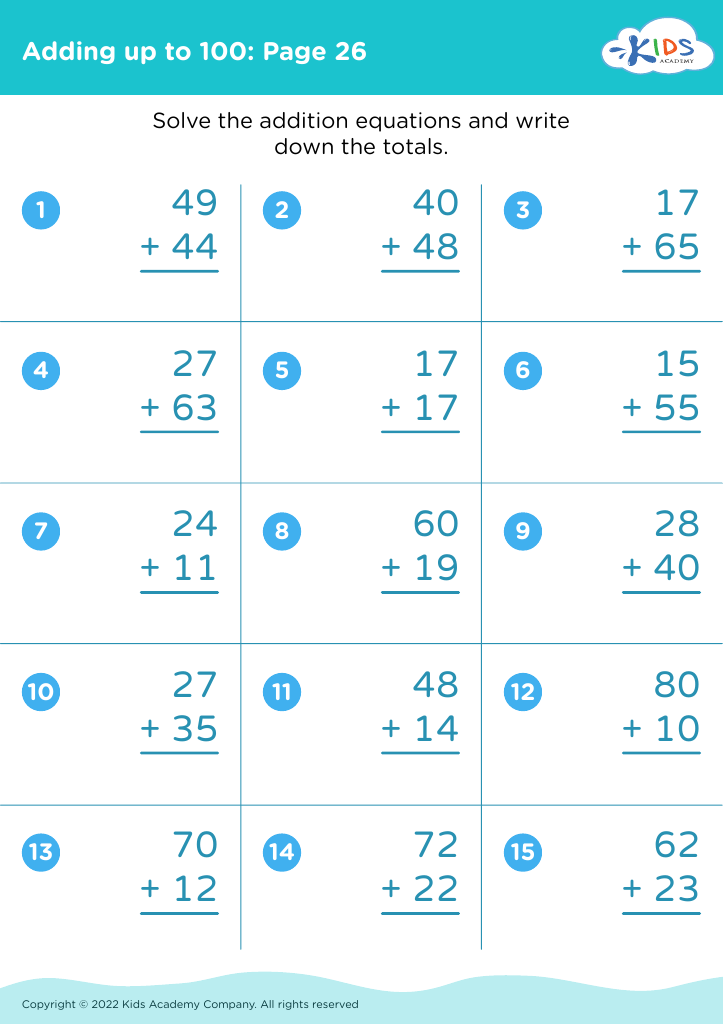
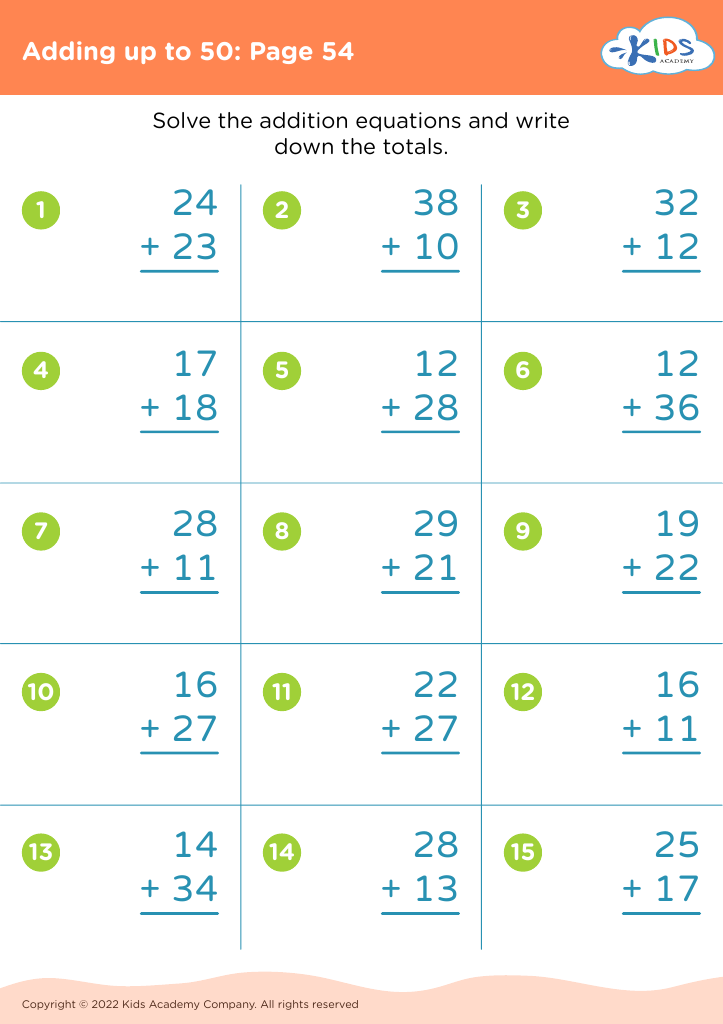
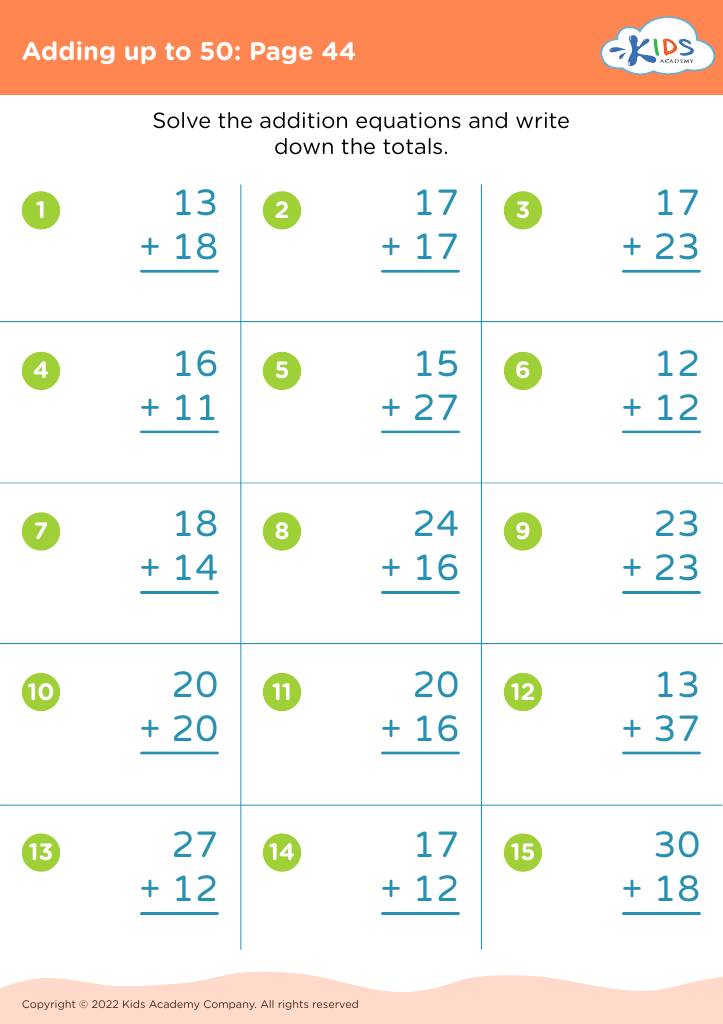
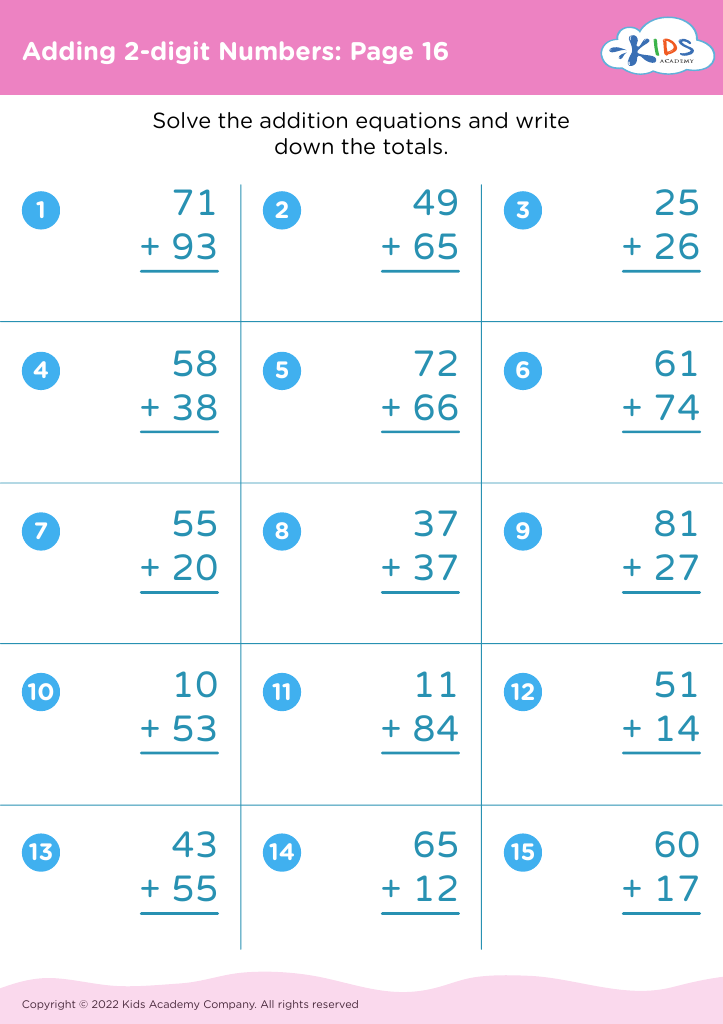
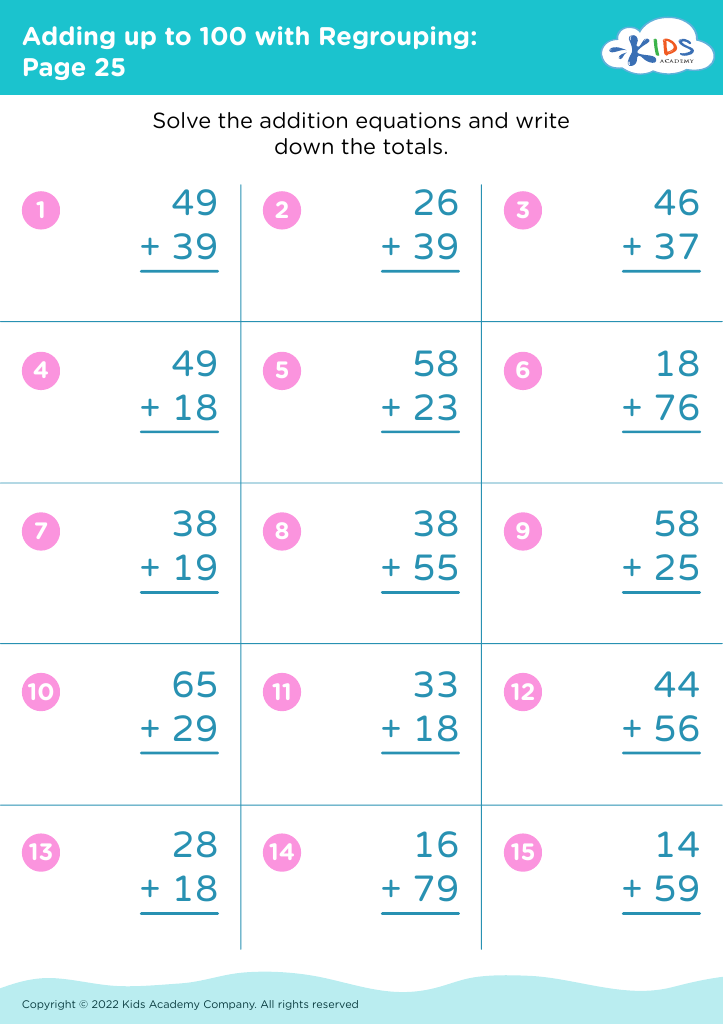
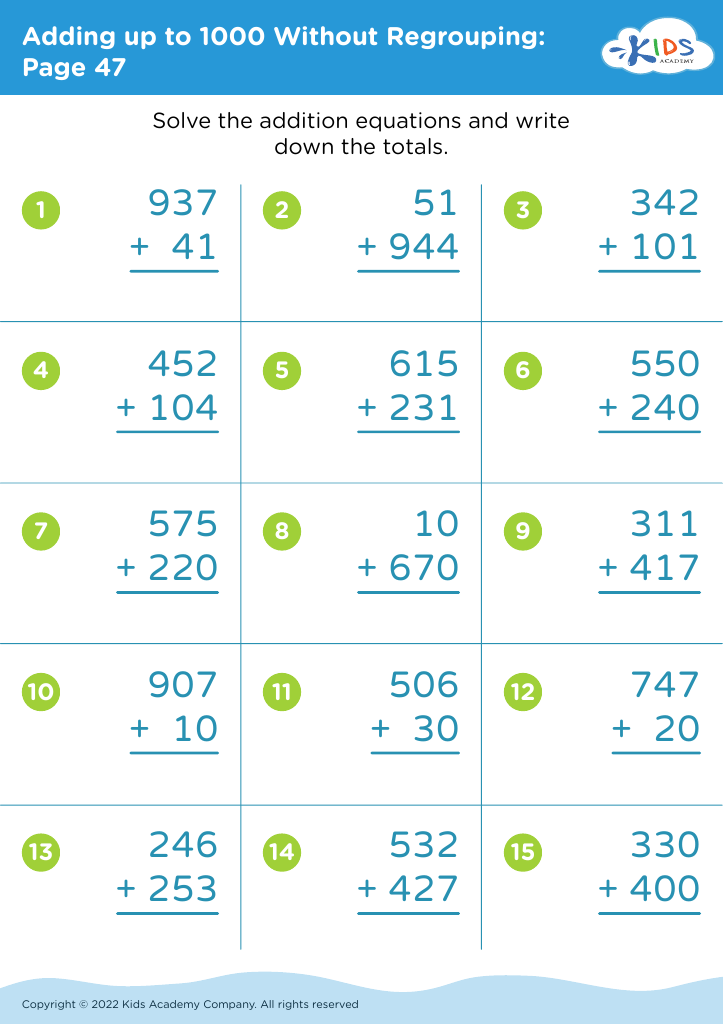
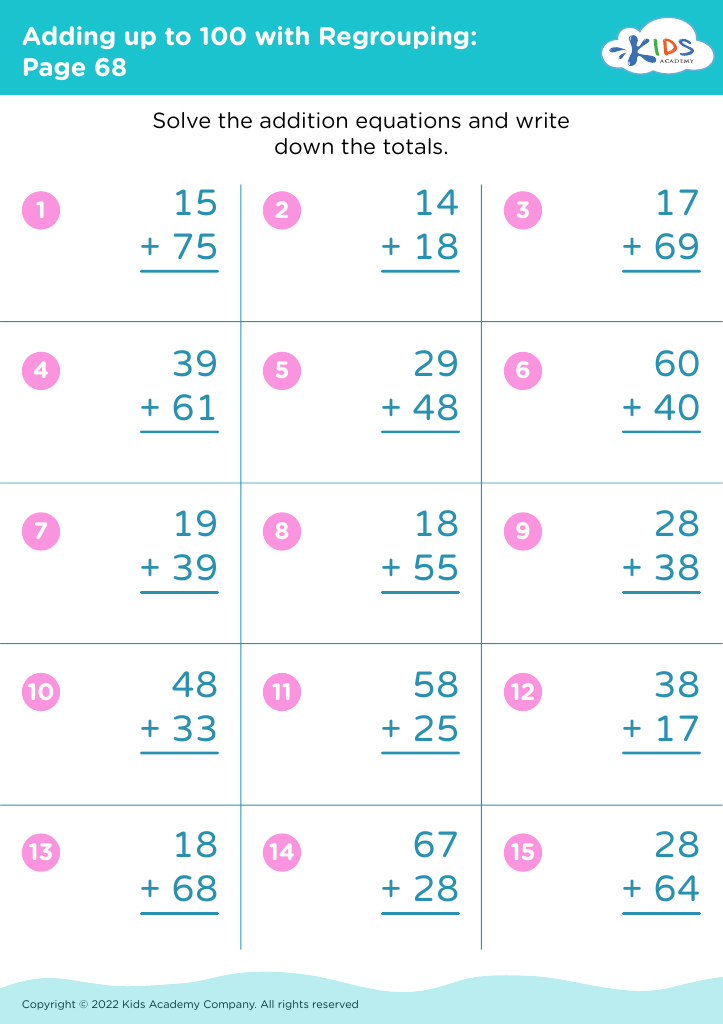
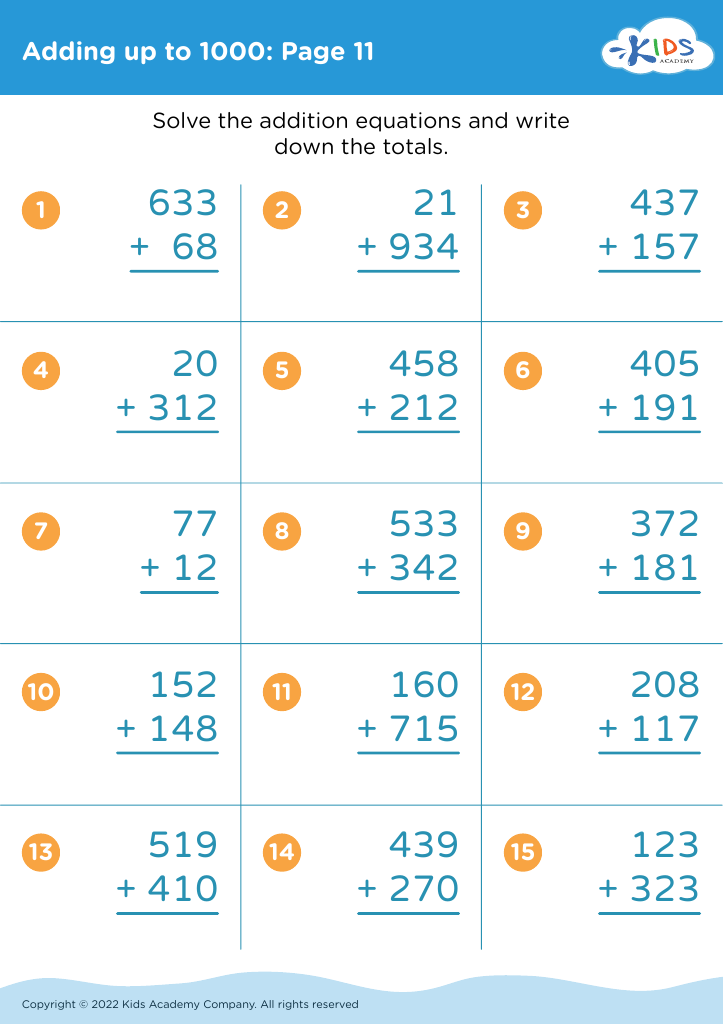
Help your child enhance their math skills with our Addition and Subtraction worksheets specifically designed for ages 8-9! These engaging, printable resources focus on improving fundamental math concepts through fun and interactive exercises. Our worksheets include varied problems that cater to different learning styles, ensuring that your young learners grasp addition and subtraction with confidence. With clear instructions and colorful illustrations, kids will enjoy practicing math while developing critical thinking and problem-solving skills. Perfect for homework, classroom activities, or extra practice at home, our worksheets make learning math enjoyable! Download now to support your child's math journey today!
Favorites
With answer key
Interactive
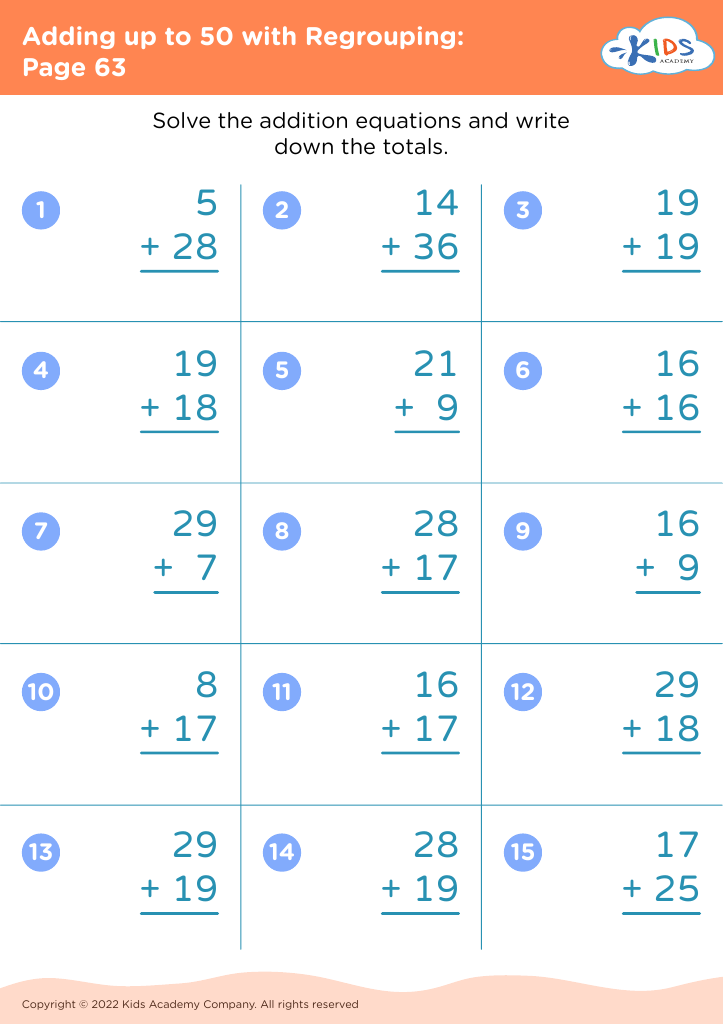
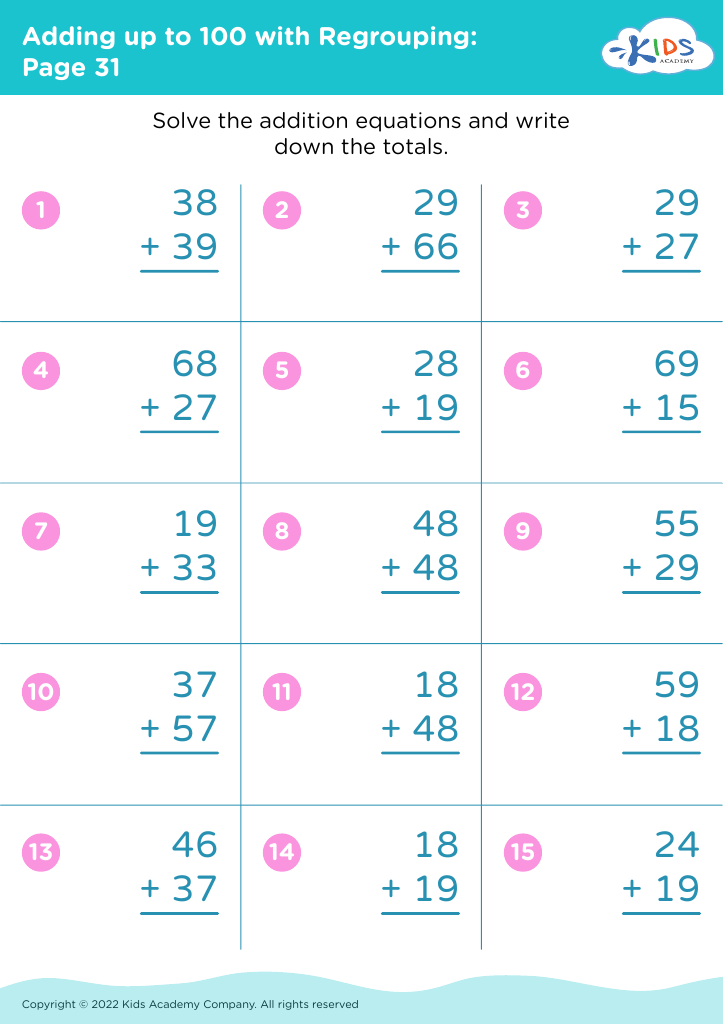
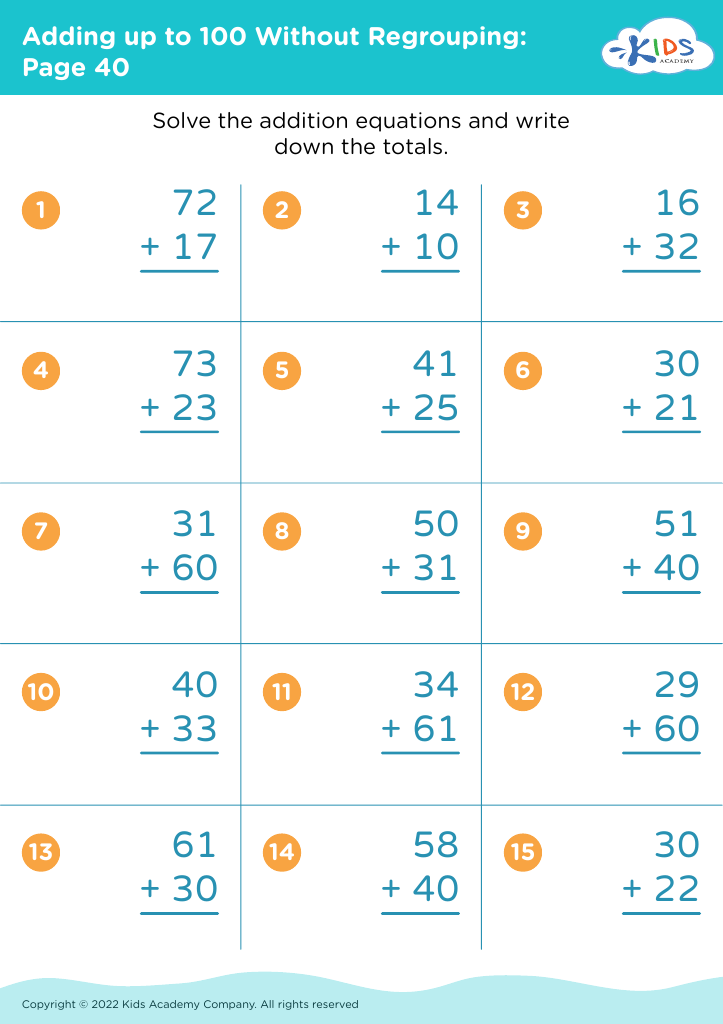
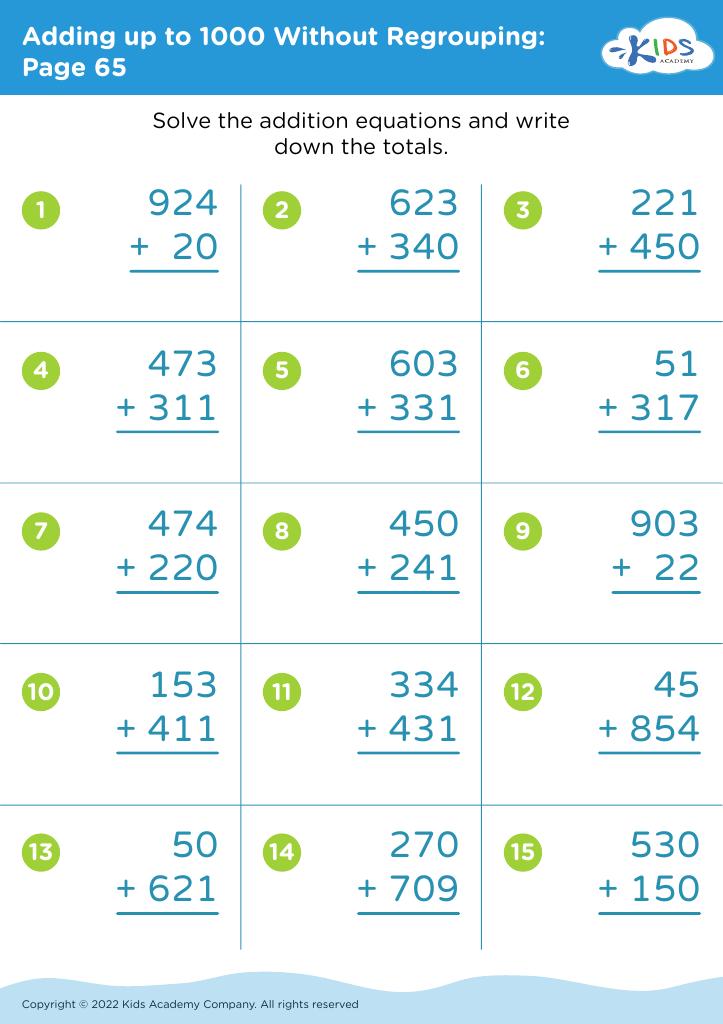
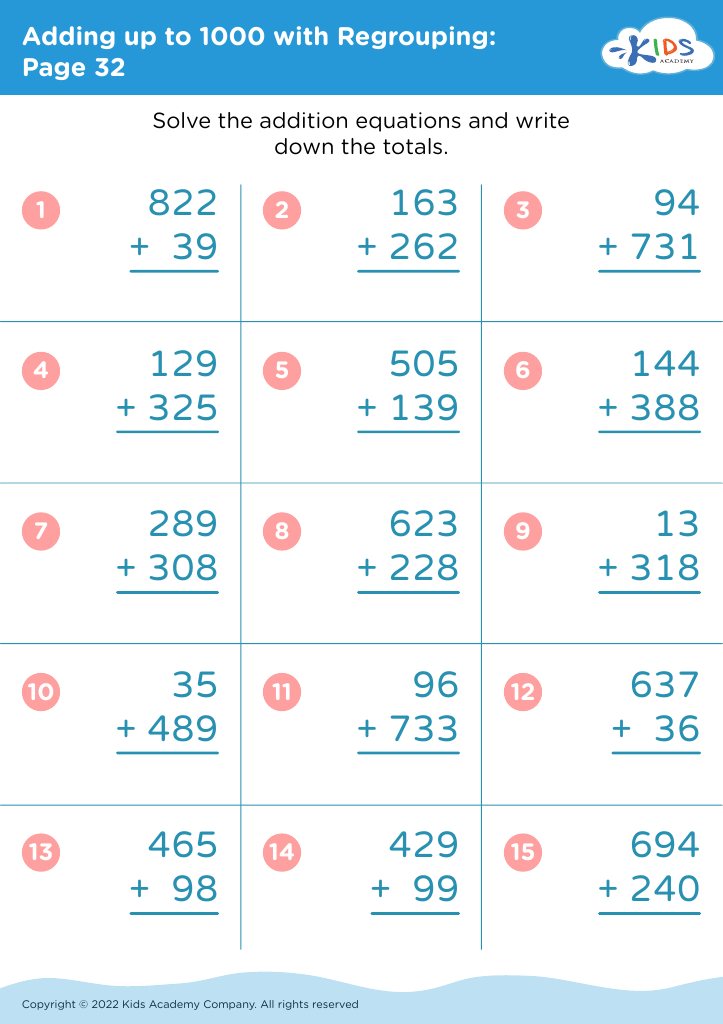
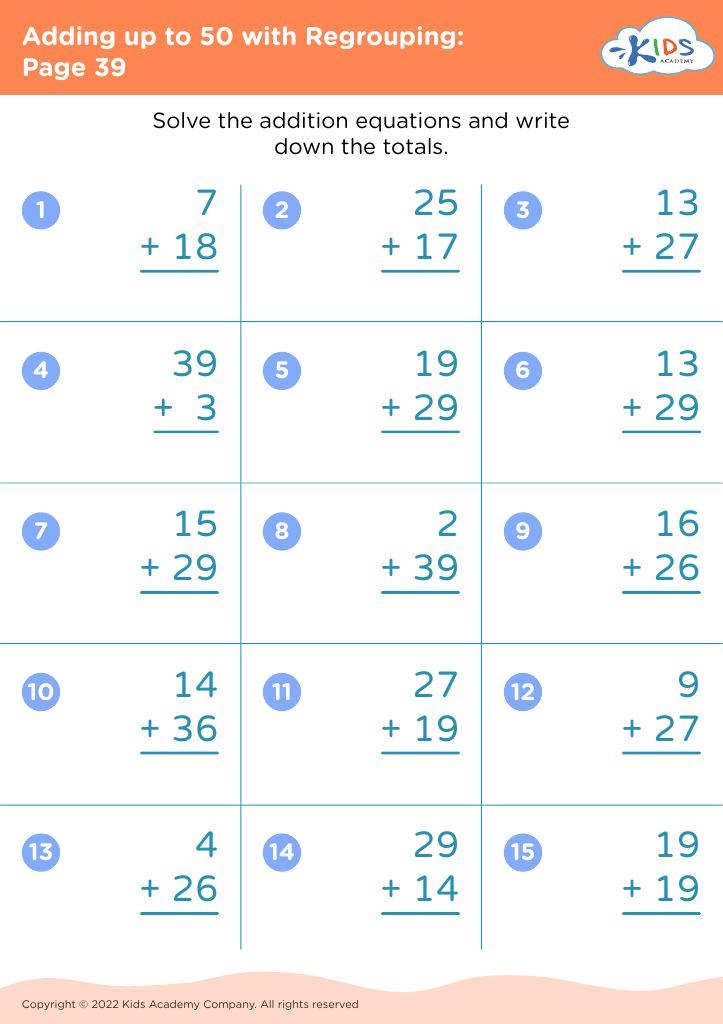
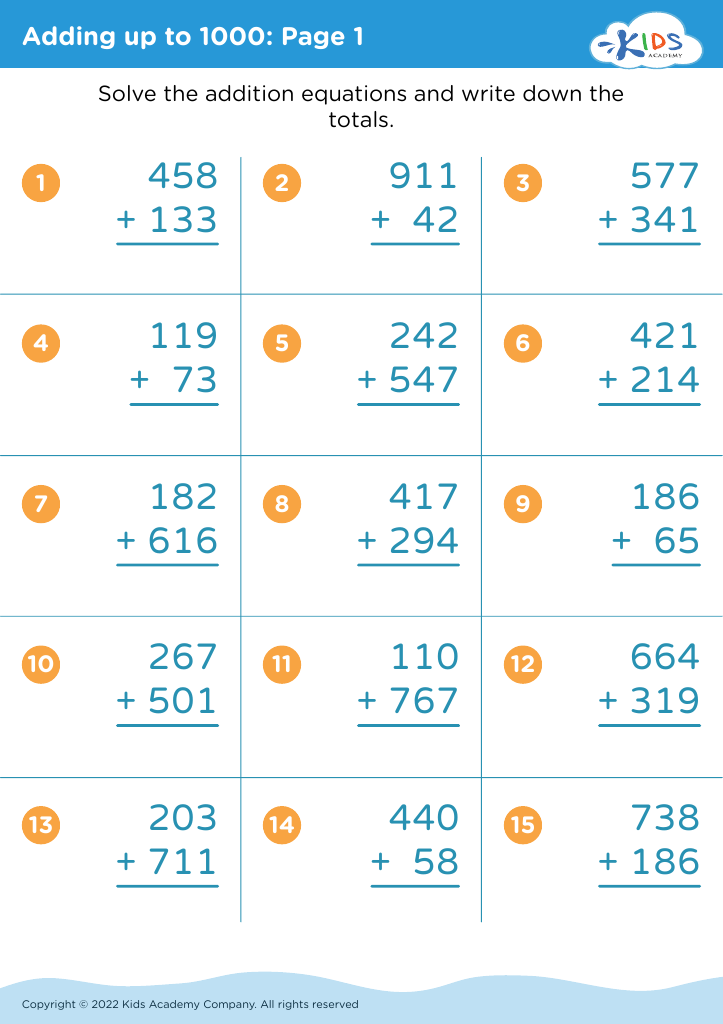
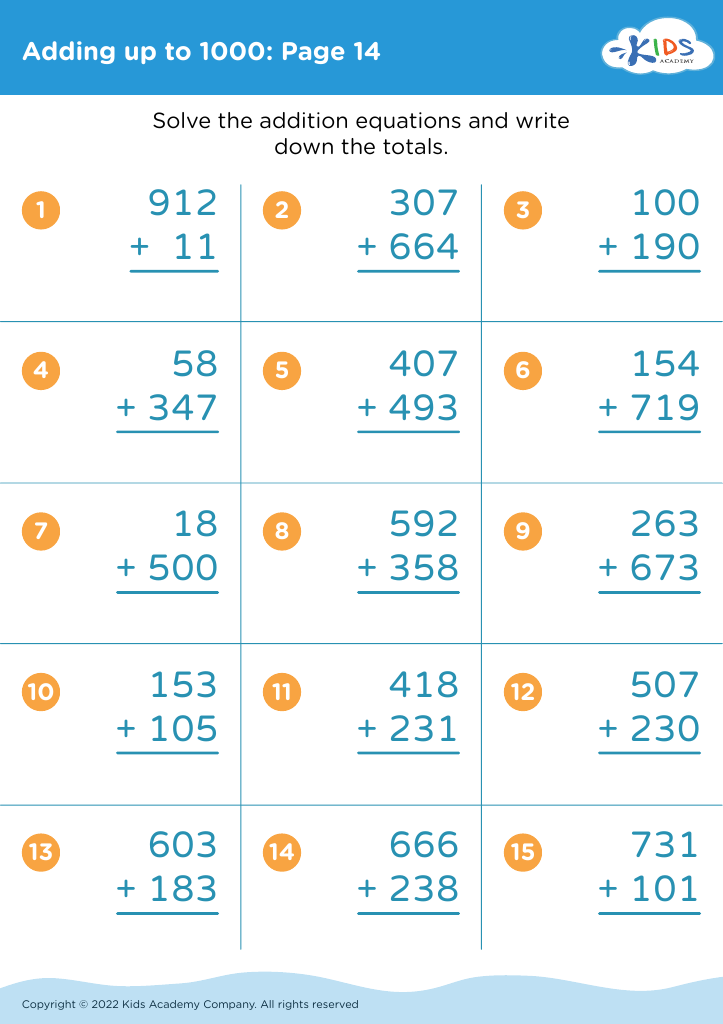
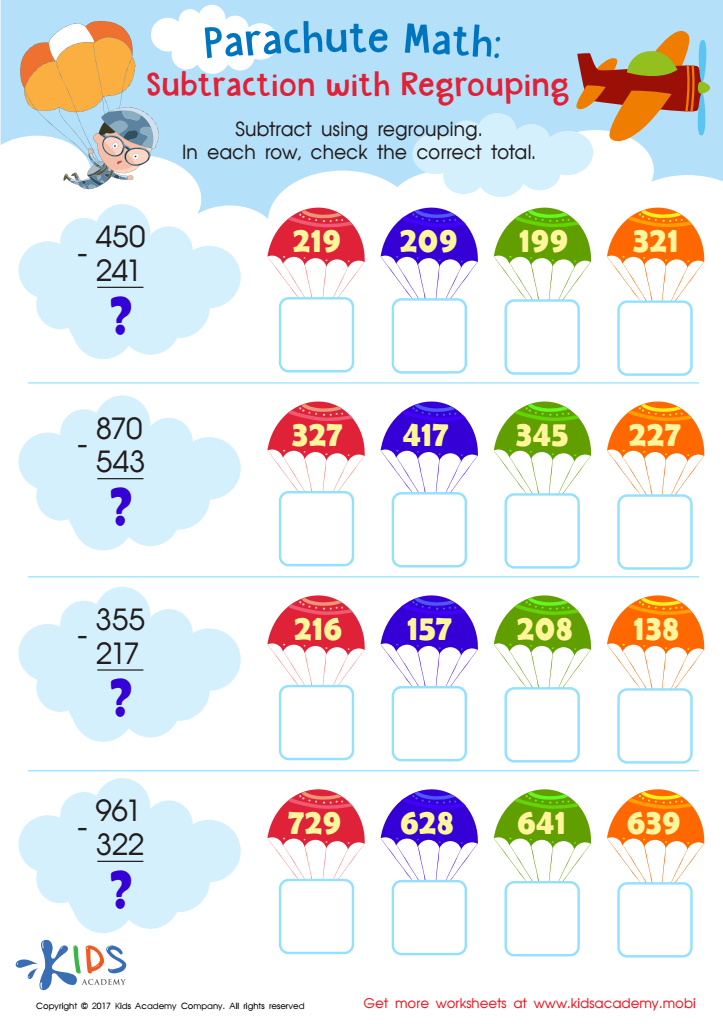
Subtraction with Regrouping for 3rd Grade Worksheet
Kids will have fun mastering subtraction with regrouping with this parachute-themed worksheet! Perfect for 3rd graders, it provides plenty of practice so your child can take to the skies in their math understanding.
 Assign to My Students
Subtraction with Regrouping for 3rd Grade Worksheet
Worksheet
Join Kids Academy for Free
Who is primarily going to use this learning content?








Parents and teachers should prioritize improving math skills in addition and subtraction for children aged 8-9, as these foundational concepts are pivotal for future learning. At this age, children start to encounter more complex mathematical operations, making a solid grasp of addition and subtraction essential for their academic journey.
Mastering these skills enhances children’s confidence, enabling them to tackle increasingly challenging math problems. Furthermore, strong addition and subtraction abilities support success in higher-level concepts such as multiplication, division, fractions, and even algebra in later grades. This, in turn, fosters critical thinking and problem-solving skills, vital for real-life applications and academic achievement.
Moreover, engaging children in math-related activities promotes cognitive development. Active participation in practices like puzzle-solving, games, and real-life scenarios makes learning enjoyable, which can significantly motivate children and improve their overall attitude toward math. Additionally, regular practice reinforces retention and long-term memory, setting the stage for a smoother educational experience.
Ultimately, caring about and investing time in enhancing these skills not only equips children with essential academic tools but also opens doors for a lifelong appreciation and understanding of mathematics. By nurturing their abilities during this formative stage, parents and teachers lay the groundwork for future success.








