Improving counting skills Addition & Subtraction Worksheets for Ages 8-9
11 filtered results
-
From - To
Enhance your child's counting abilities with our engaging Addition and Subtraction Worksheets designed specifically for ages 8-9. These fun and interactive resources aim to improve essential math skills through a variety of exercises that focus on counting, addition, and subtraction. By practicing these foundational concepts, kids will gain confidence in their math abilities and improve their problem-solving skills. Our worksheets cater to different learning styles, ensuring every child can grasp the material effectively. Perfect for classroom usage or home learning, these worksheets will keep children motivated while mastering essential counting skills—setting the stage for future math success.
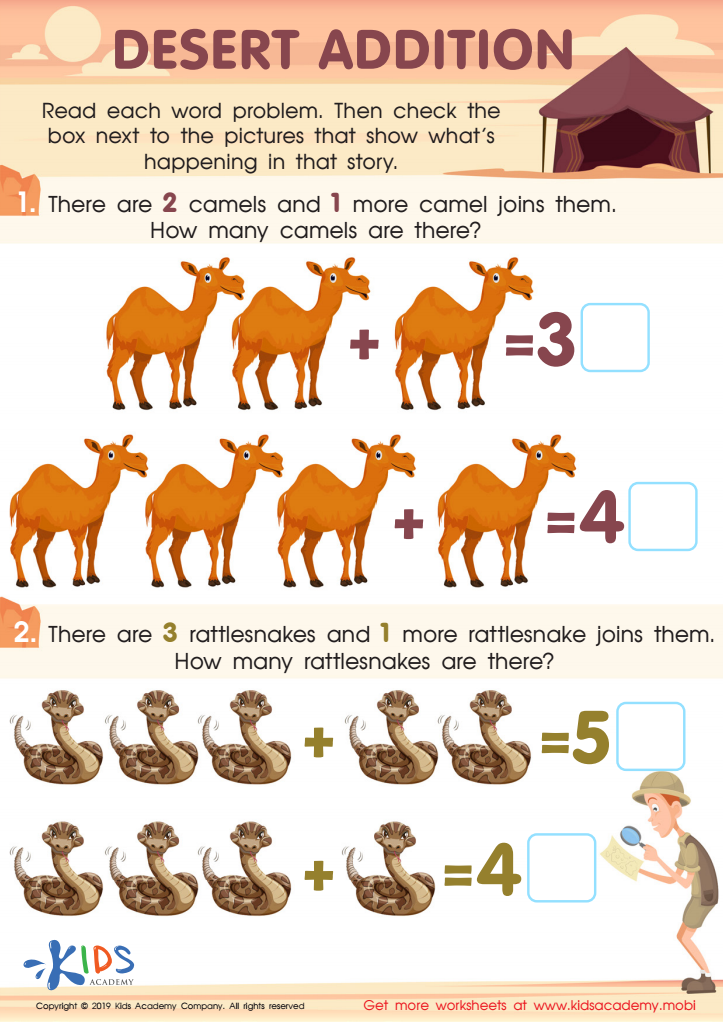
Desert Addition Worksheet
 Assign to My Students
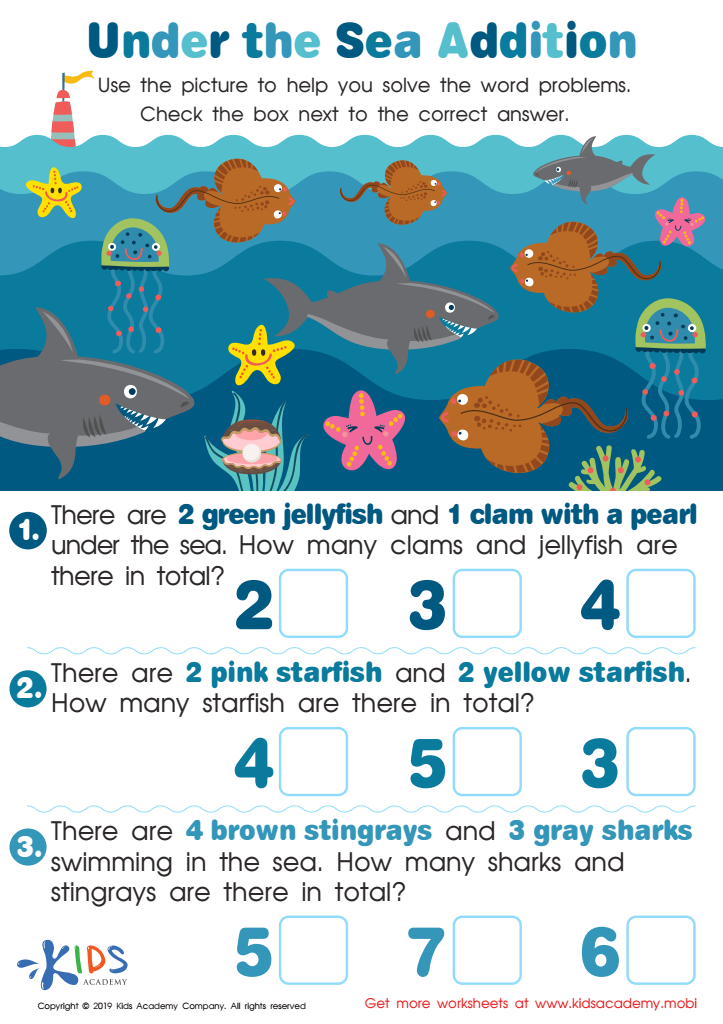
Under the Sea Addition Worksheet
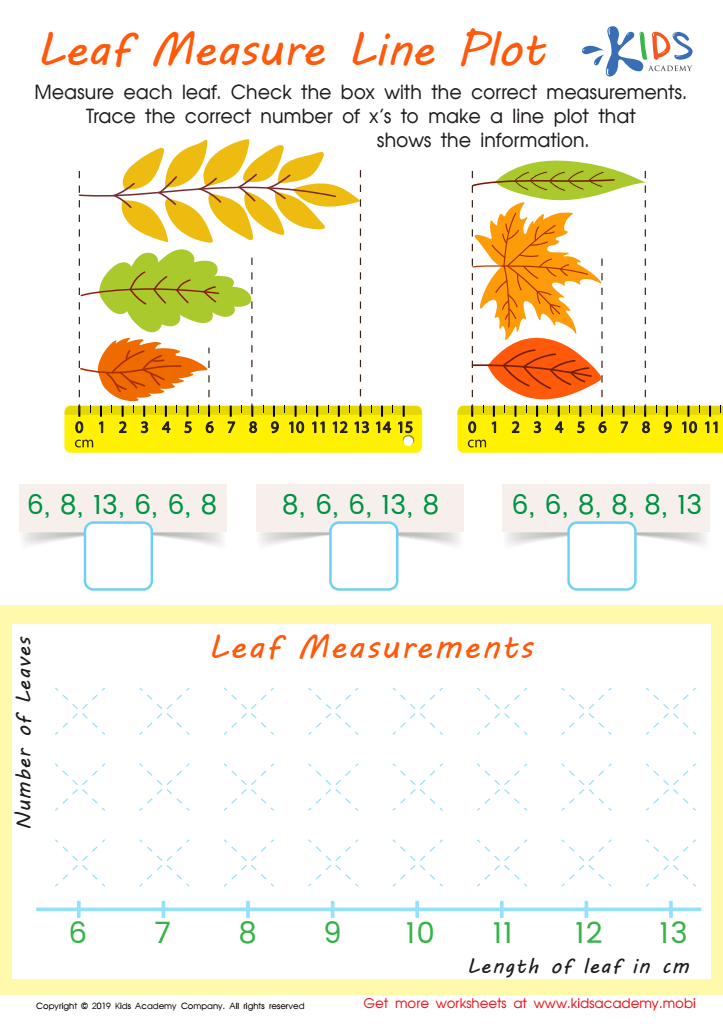
Leaf Measure Line Plot Worksheet








Improving counting skills as well as addition and subtraction is crucial for children aged 8-9 for several reasons. First, mastering these foundational arithmetic skills sets the stage for more advanced math concepts, such as multiplication and division, which they will encounter soon. Proficiency in basic operations enhances their confidence, allowing students to tackle more complex problems without fear of failure.
Furthermore, counting and simple calculations are integral to everyday situations, from managing money to measuring ingredients in cooking. As children deepen their understanding, they develop critical thinking skills that aid problem-solving in real-life contexts. This mathematical fluency translates to better performance in academic subjects, not just in math but also in science and logic-based disciplines.
Moreover, consistent practice fosters perseverance and patience, traits that benefit children beyond academics. Parents and teachers play crucial roles in this improvement process, as their support and encouragement can significantly influence a child's attitude towards mathematics. Engaging them in activities that promote counting and operations can make learning enjoyable and relatable.
By investing time and resources to enhance these skills, adults help lay a solid foundation for lifelong learning and success, ensuring children are prepared for future academic challenges and necessary life skills.








