Understand number relationships Addition & Subtraction Worksheets for Ages 8-9
3 filtered results
-
From - To
Unlock your child's math potential with our "Understand Number Relationships: Addition & Subtraction Worksheets for Ages 8-9." Tailored for young learners, these expertly crafted worksheets guide students through essential arithmetic concepts, ensuring they grasp the foundational relationships between numbers. Whether simplifying addition, tackling subtraction, or solving real-world problems, each sheet aims to build confidence and reinforce skills. Perfect for classroom use or at-home practice, our engaging exercises make learning fun and effective. Set your child on a path to math success with resources designed to ignite curiosity and foster a deeper understanding of number relationships.
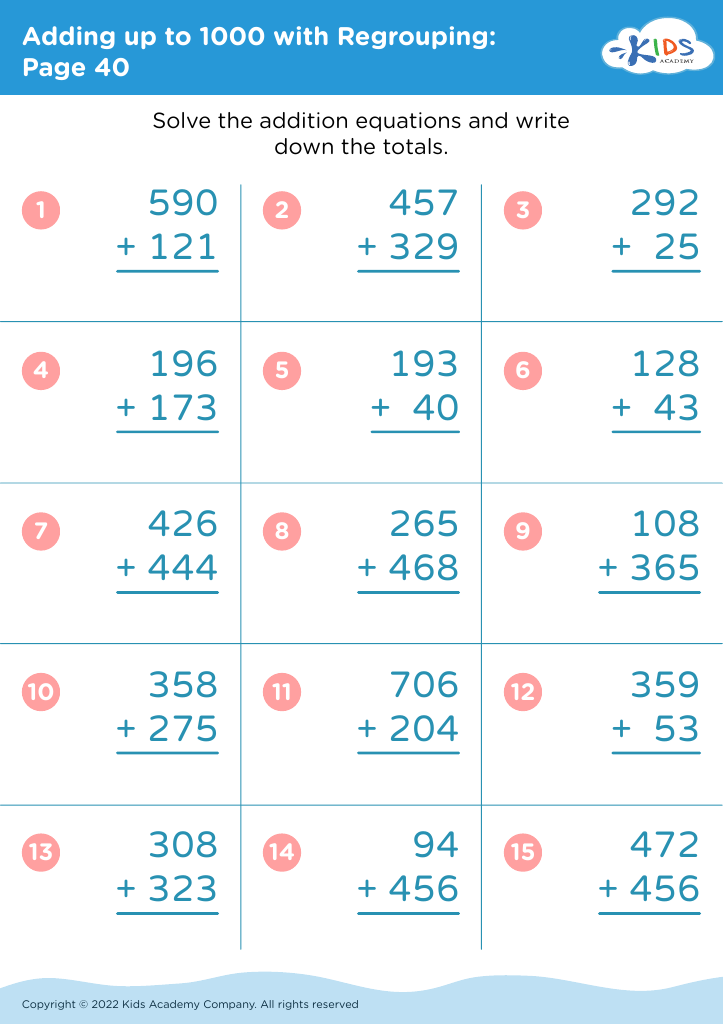
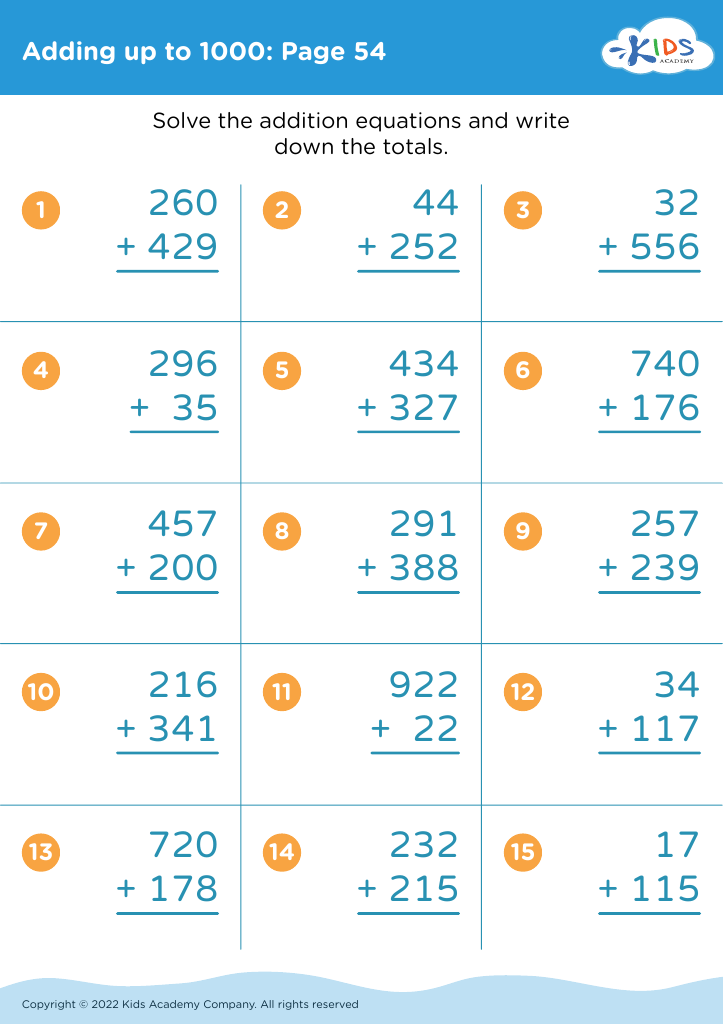
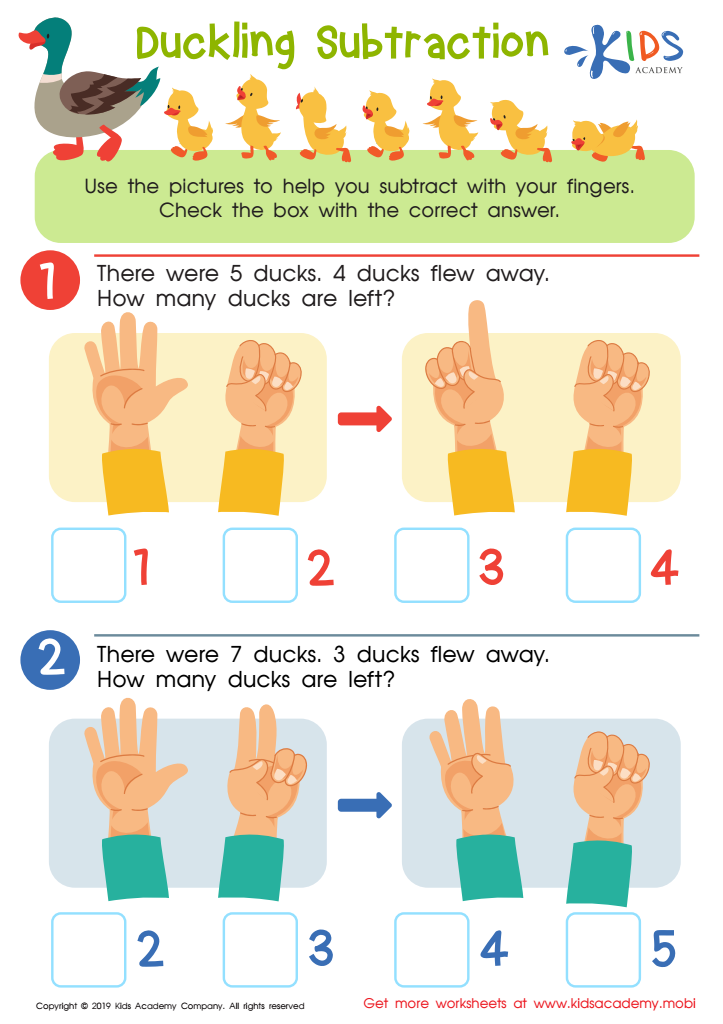
Duckling Subtraction Worksheet
 Assign to My Students








Understanding number relationships, particularly addition and subtraction, is crucial for children ages 8-9 for several reasons. First, these foundational arithmetic skills are the bedrock of more complex math concepts that students will encounter later in their academic journey, such as multiplication, division, and algebra. Developing a solid grasp of addition and subtraction helps create a strong mathematical foundation that aids problem-solving skills.
Second, proficiency in addition and subtraction promotes cognitive development. As children explore number relationships, they improve their mental math capabilities, reason logically as they solve problems, and develop critical thinking skills. These cognitive abilities are not only essential for math but also for other academic subjects and everyday decision-making.
Third, understanding basic arithmetic fosters confidence and a positive attitude towards math. Many children face math anxiety; proficiency in these skills early on can lead to greater self-assurance and motivation to tackle challenging tasks.
Lastly, in the broader context of 21st-century skill sets, math literacy, including basic arithmetic, is increasingly crucial in a technology-driven world. Encouraging children to master these early math skills is an investment in their future success, both academically and in their eventual careers.
In summary, parents and teachers should care about reinforcing number relationships, addition, and subtraction because these skills set the stage for advanced math learning, cognitive development, confidence in math, and future readiness.








