Check out this FREE Trial Lesson on Addition & Subtraction for age 8-9!

Match Exactly the Same

Favorites
With answer key
Interactive
  • 8-9
  • Understanding fractions
  • Addition & Subtraction
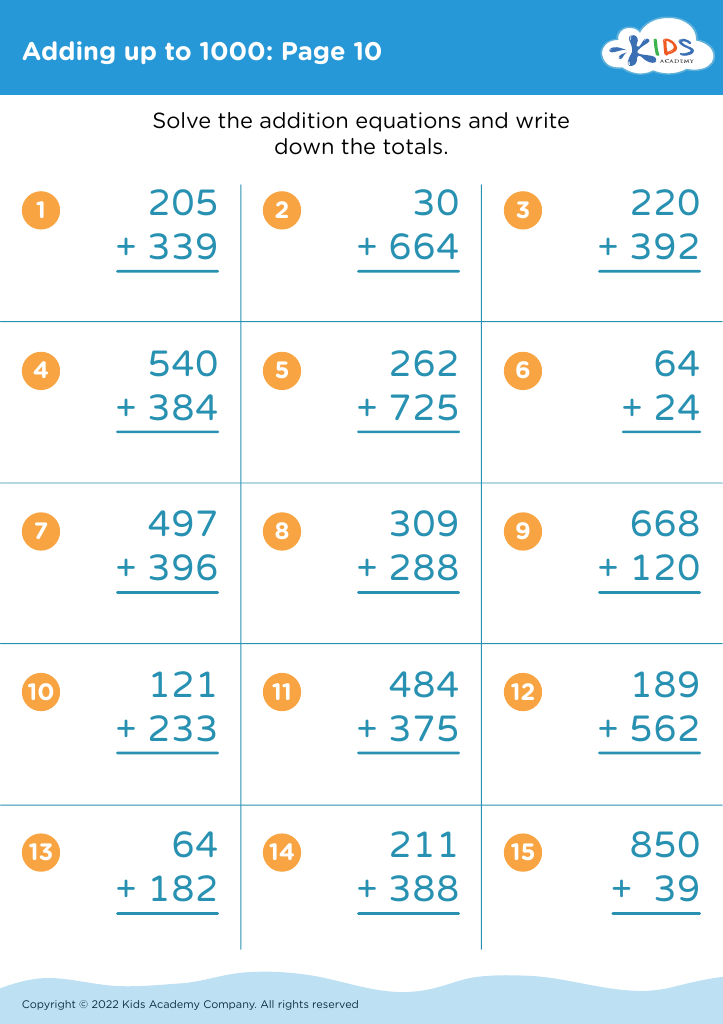
Adding up to 1000: Page 10

Adding up to 1000: Page 10

Adding up to 1000: Page 10
Worksheet
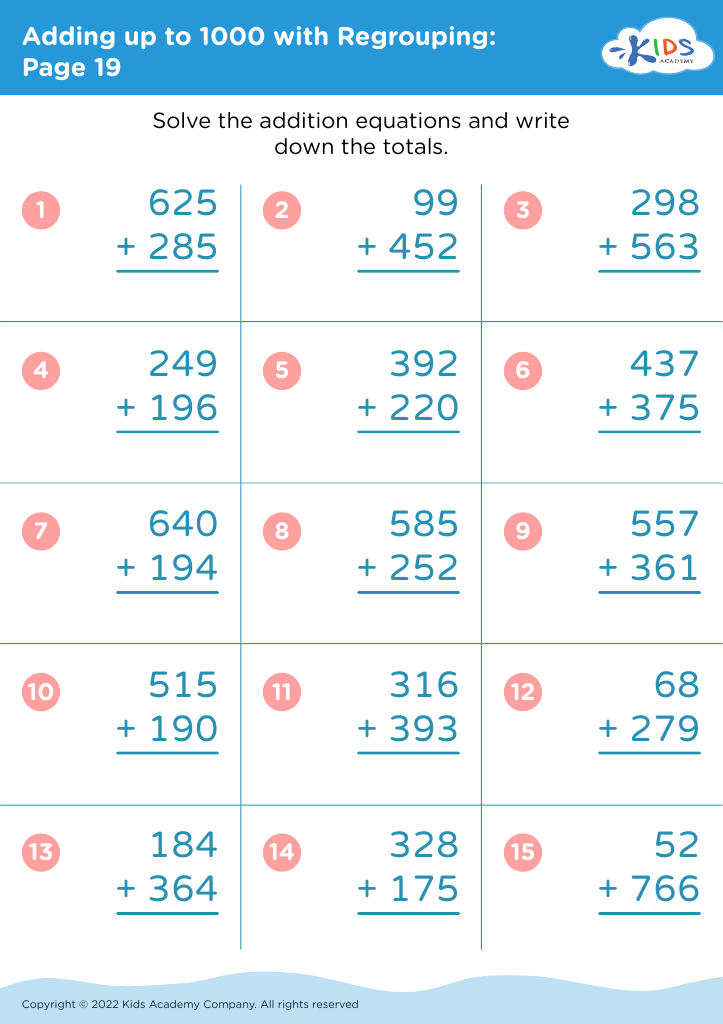
Adding up to 1000 with Regrouping: Page 19
Worksheet
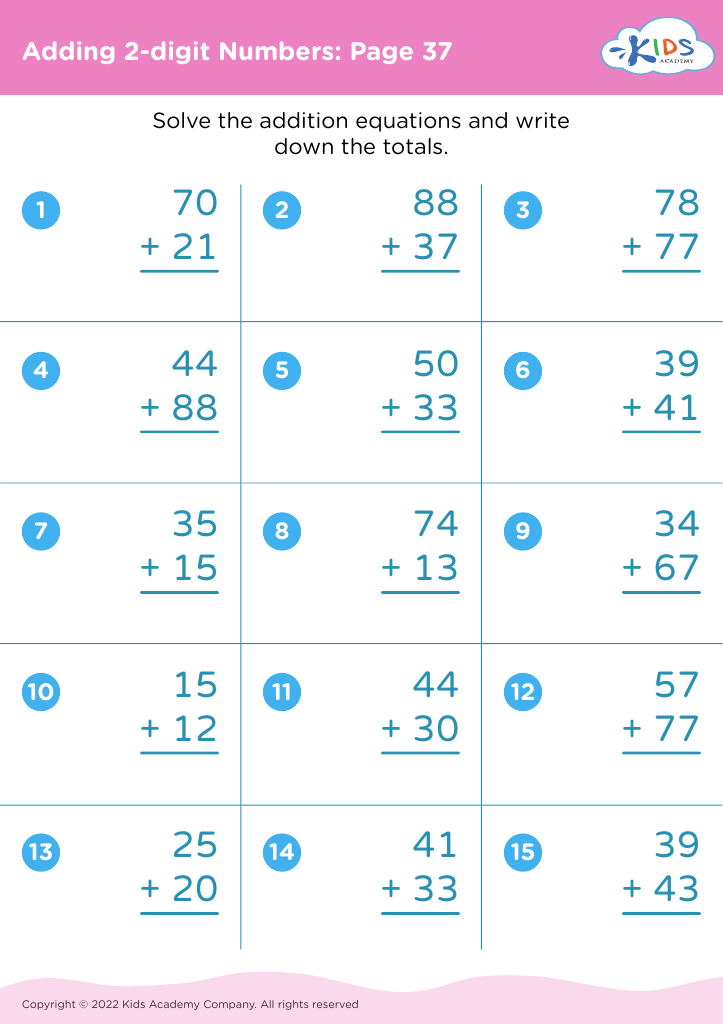
Adding 2-digit Numbers: Page 37

Adding 2-digit Numbers: Page 37

Adding 2-digit Numbers: Page 37
Worksheet
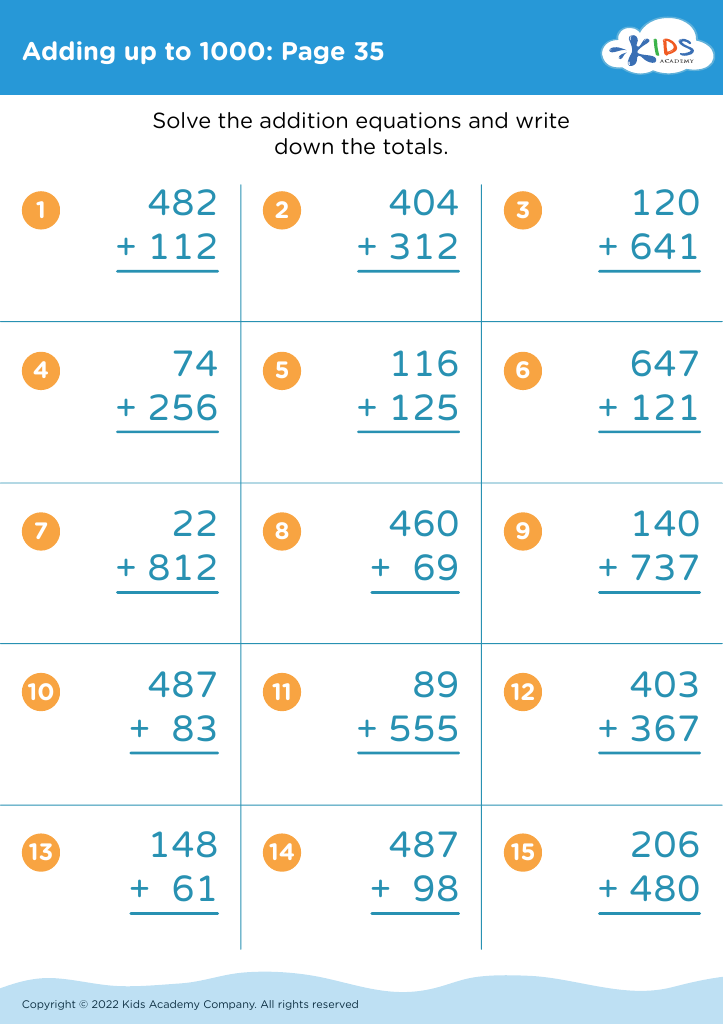
Adding up to 1000: Page 35

Adding up to 1000: Page 35

Adding up to 1000: Page 35
Worksheet
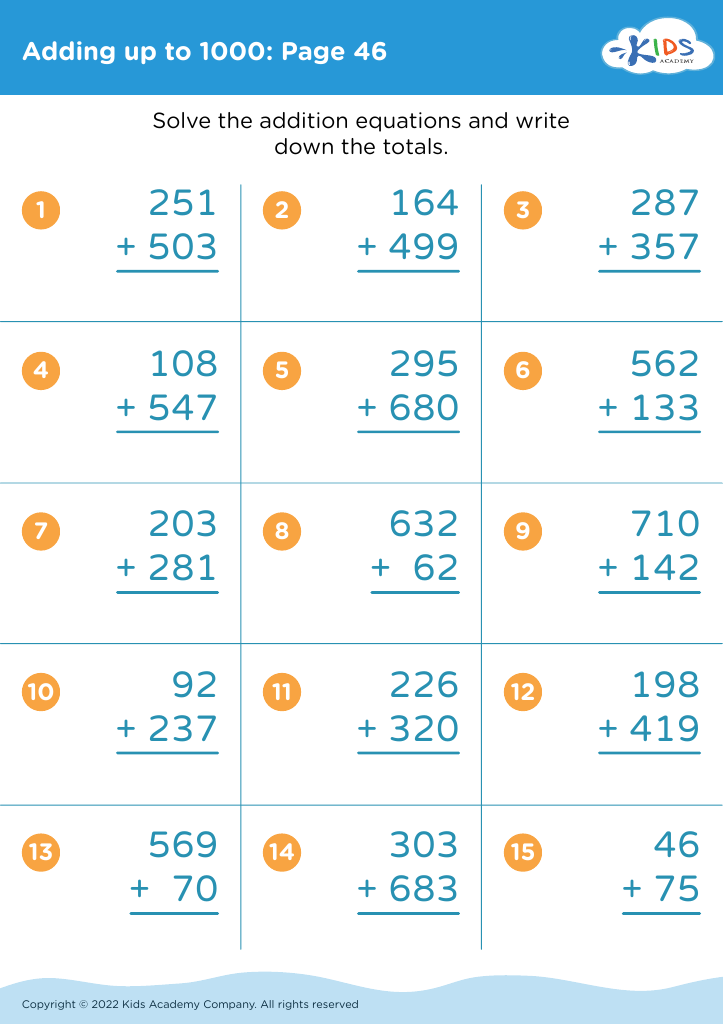
Adding up to 1000: Page 46

Adding up to 1000: Page 46

Adding up to 1000: Page 46
Worksheet
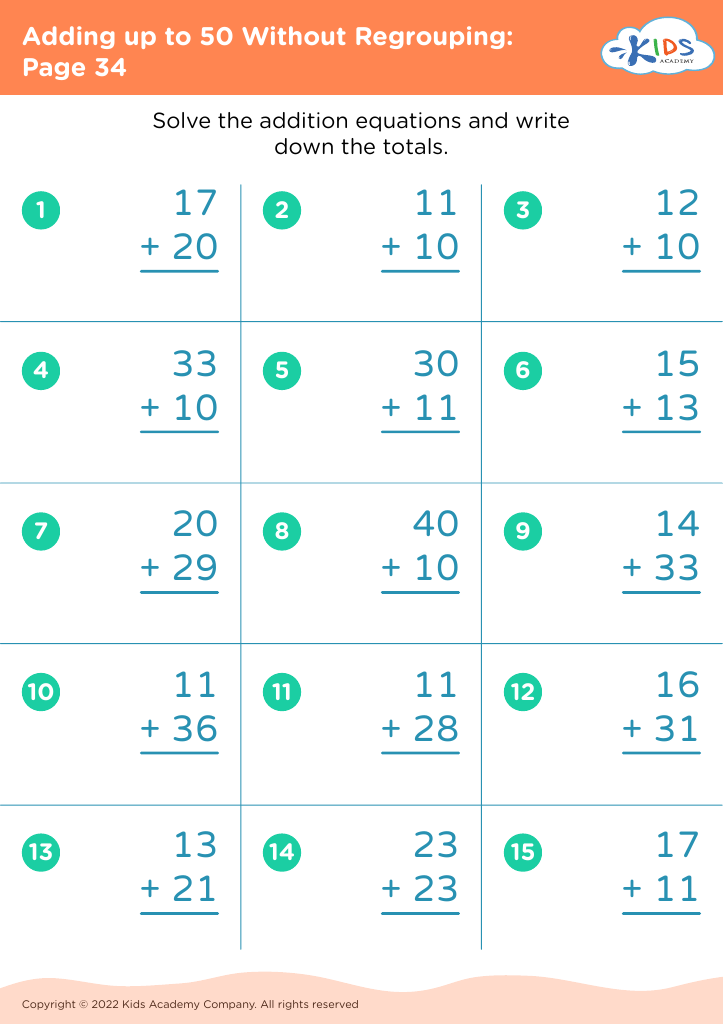
Adding up to 50 Without Regrouping: Page 34
Worksheet
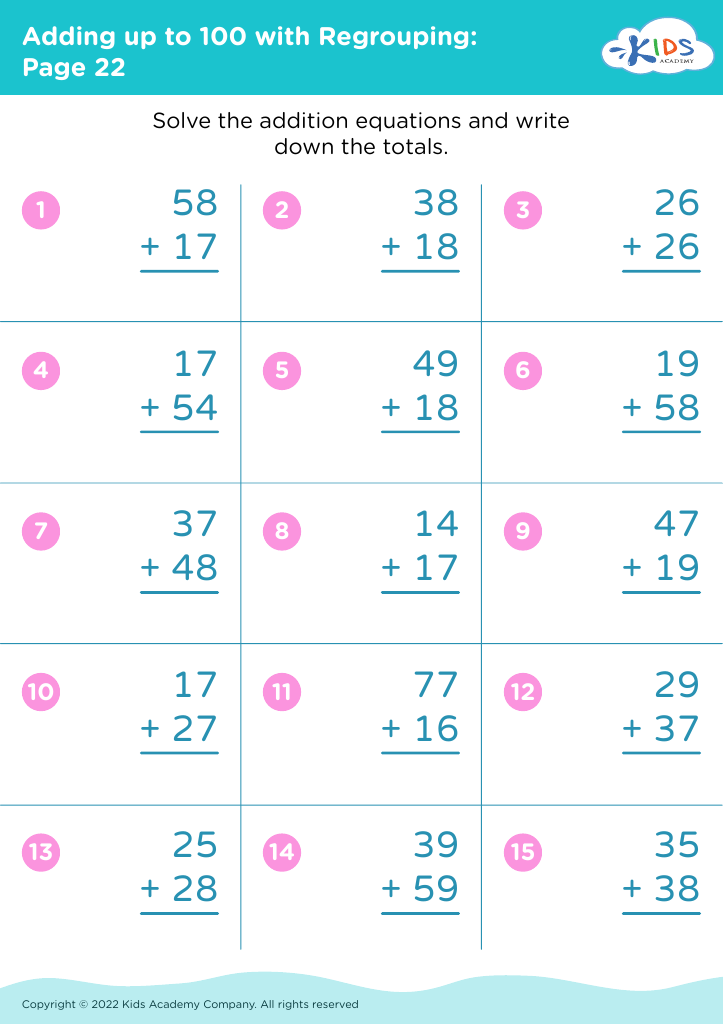
Adding up to 100 with Regrouping: Page 22
Worksheet
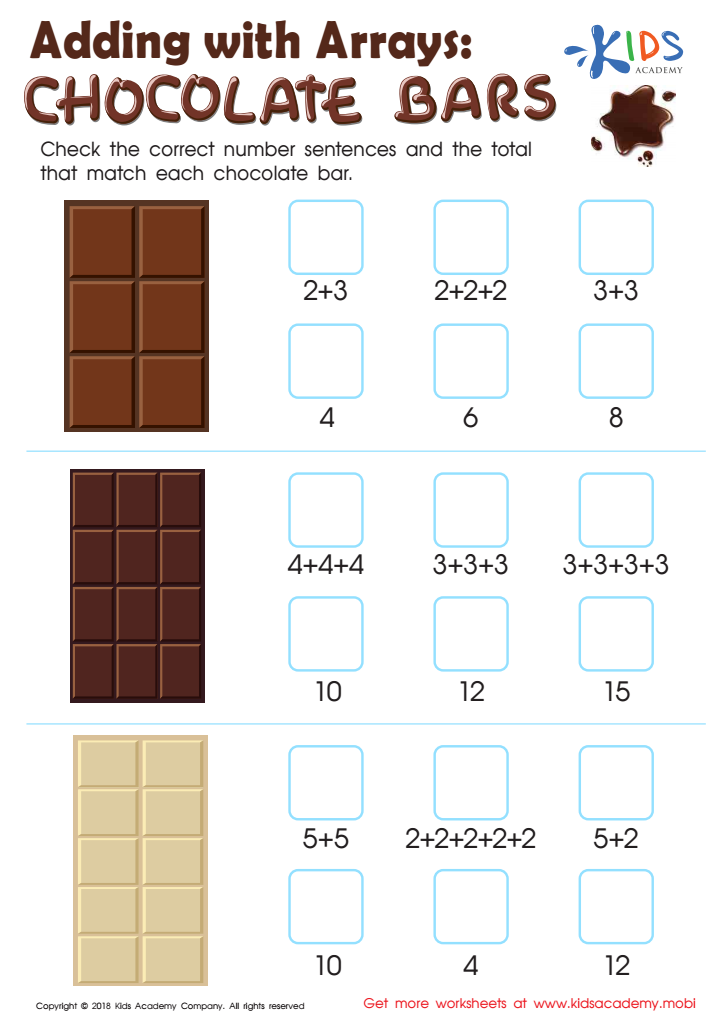
Adding with Arrays: Chocolate Bars Worksheet

Adding with Arrays: Chocolate Bars Worksheet

Kids love chocolates! Gauge how enthused your kids get when you mention them. This worksheet is a fun exercise about chocolates - get your kids to check the correct number sentences and totals for each chocolate bar. Reward their hard work with some chocolates - extra incentive for a job well done!
Adding with Arrays: Chocolate Bars Worksheet
Worksheet
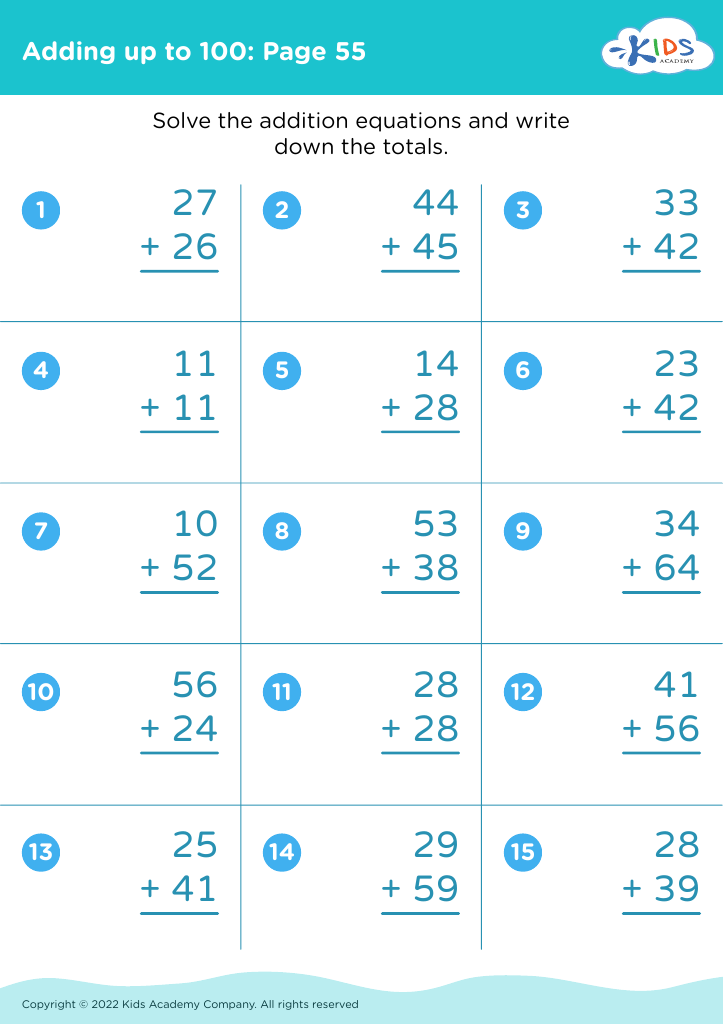
Adding up to 100: Page 55

Adding up to 100: Page 55

Adding up to 100: Page 55
Worksheet
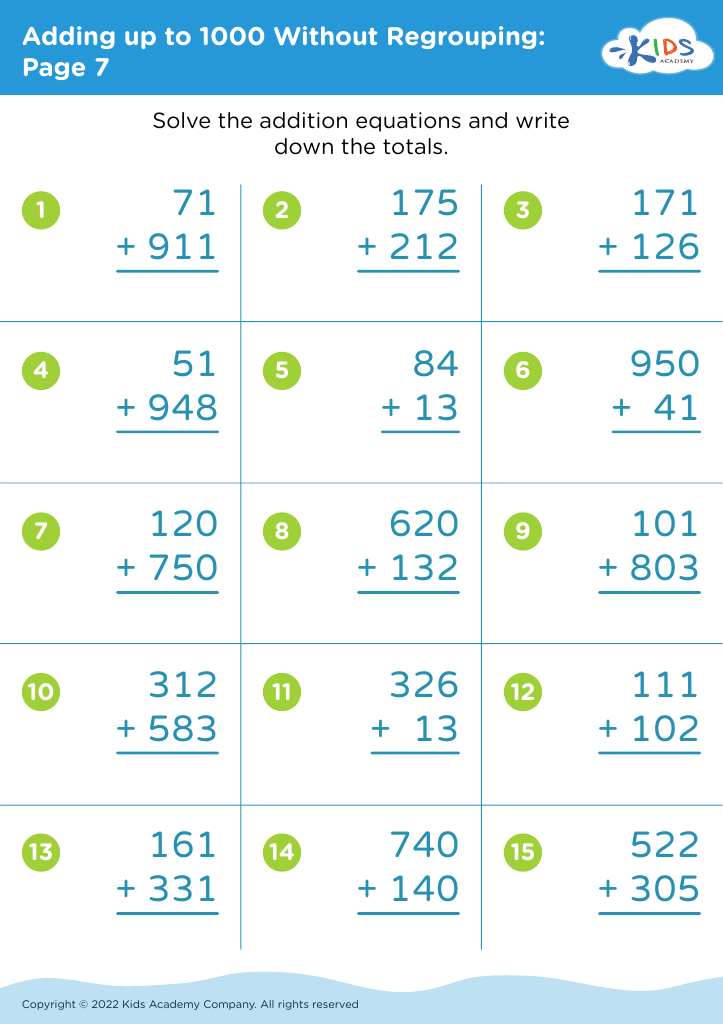
Adding up to 1000 Without Regrouping: Page 7
Worksheet
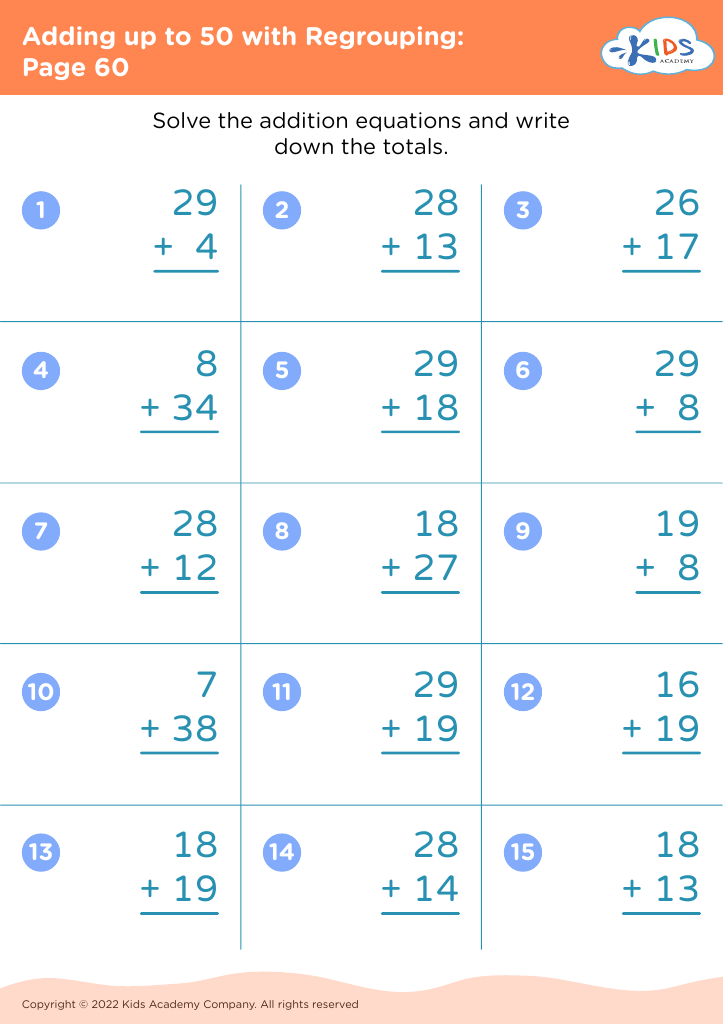
Adding up to 50 with Regrouping: Page 60
Worksheet
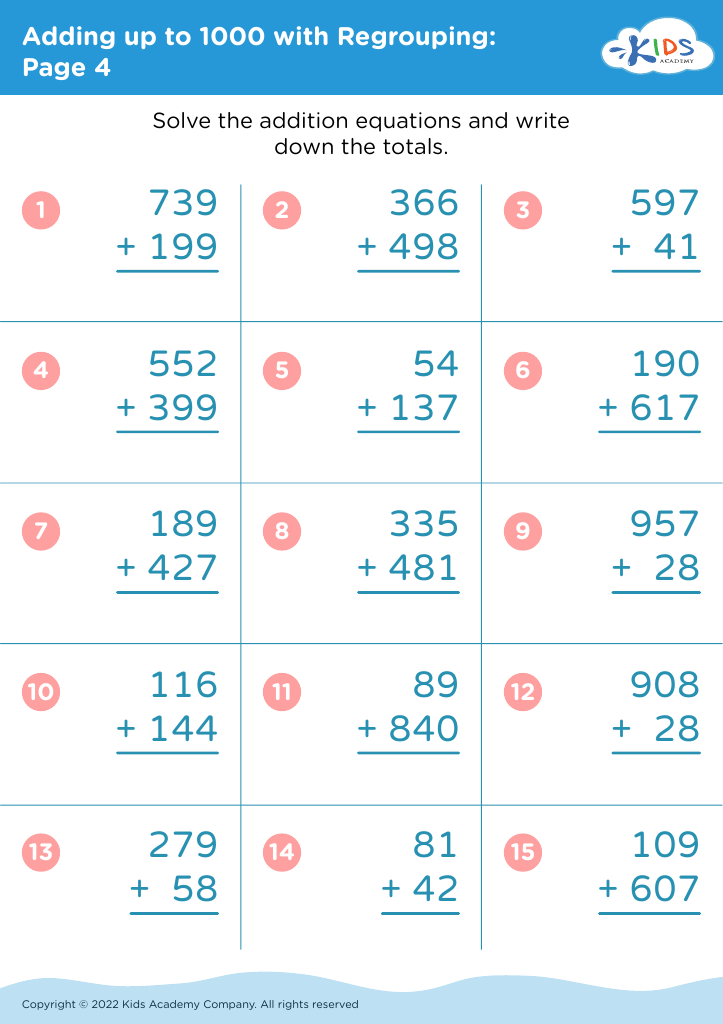
Adding up to 1000 with Regrouping: Page 4
Worksheet
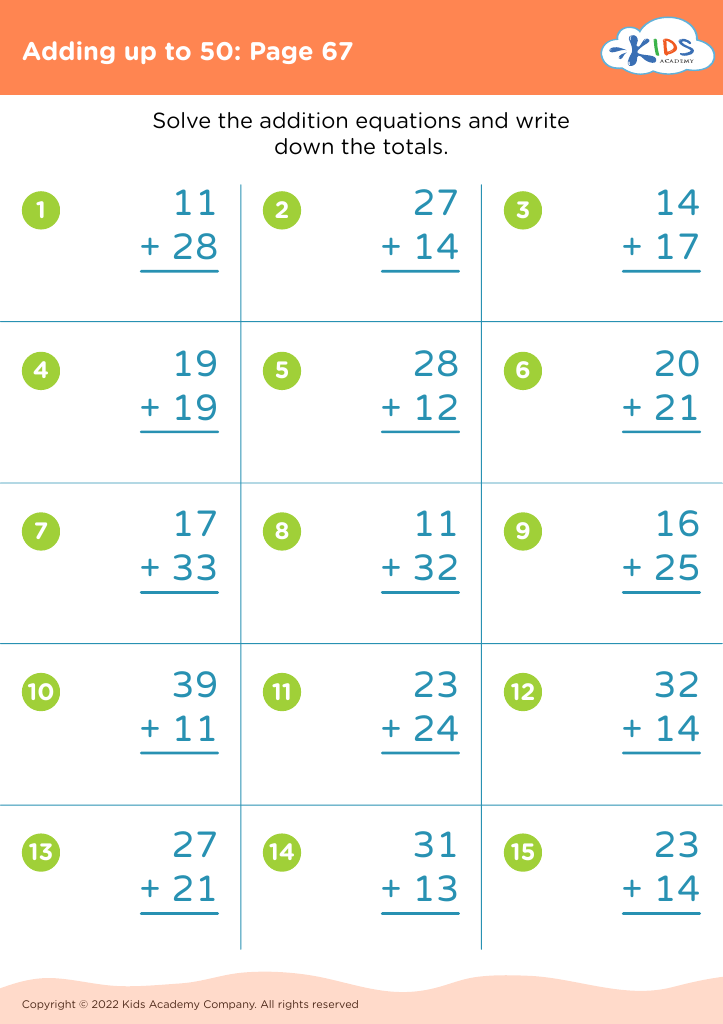
Adding up to 50: Page 67

Adding up to 50: Page 67

Adding up to 50: Page 67
Worksheet
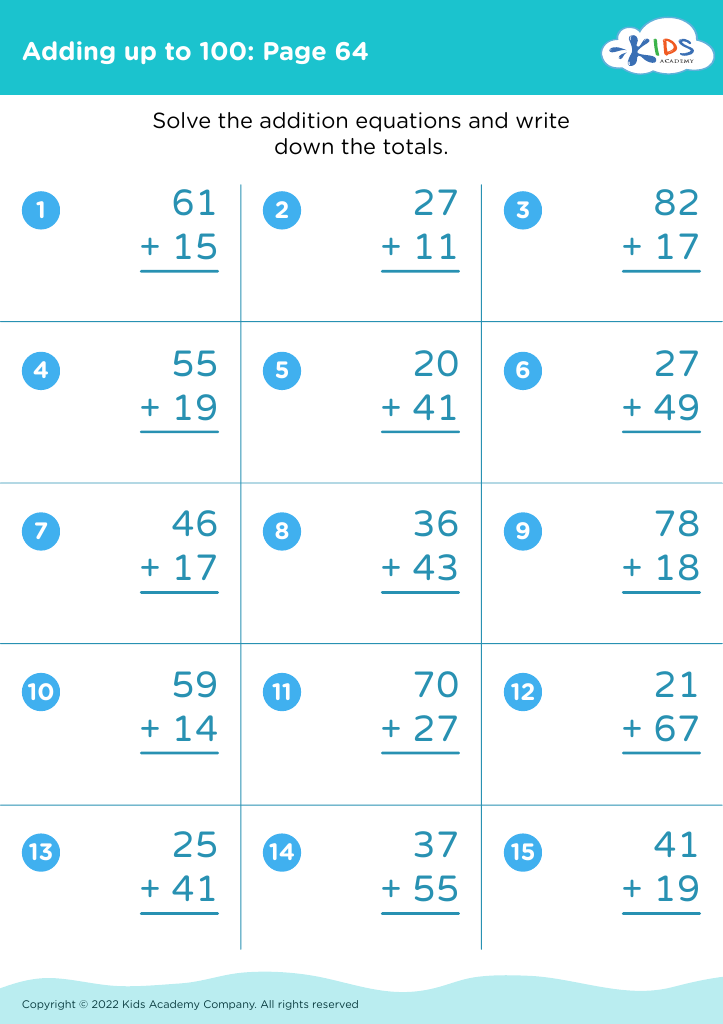
Adding up to 100: Page 64

Adding up to 100: Page 64

Adding up to 100: Page 64
Worksheet
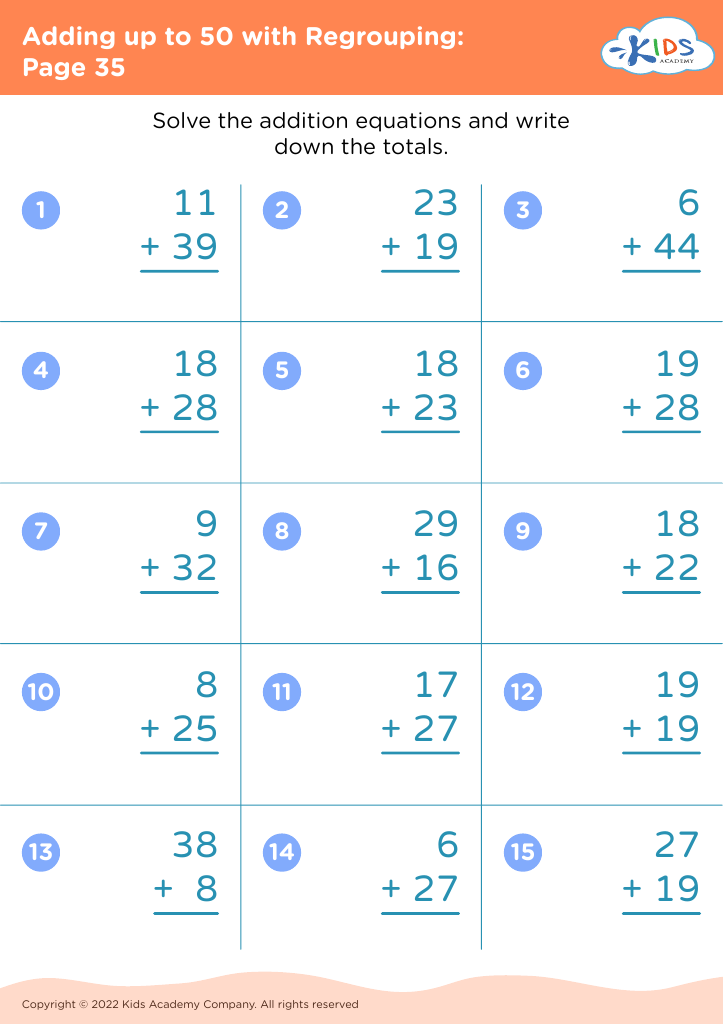
Adding up to 50 with Regrouping: Page 35
Worksheet
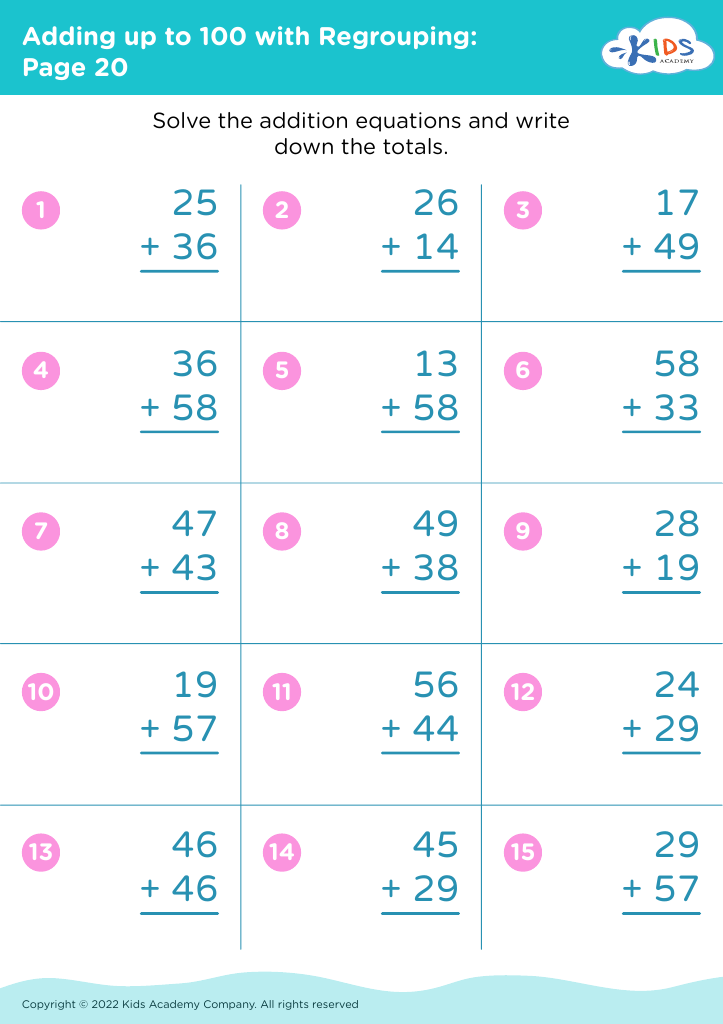
Adding up to 100 with Regrouping: Page 20
Worksheet
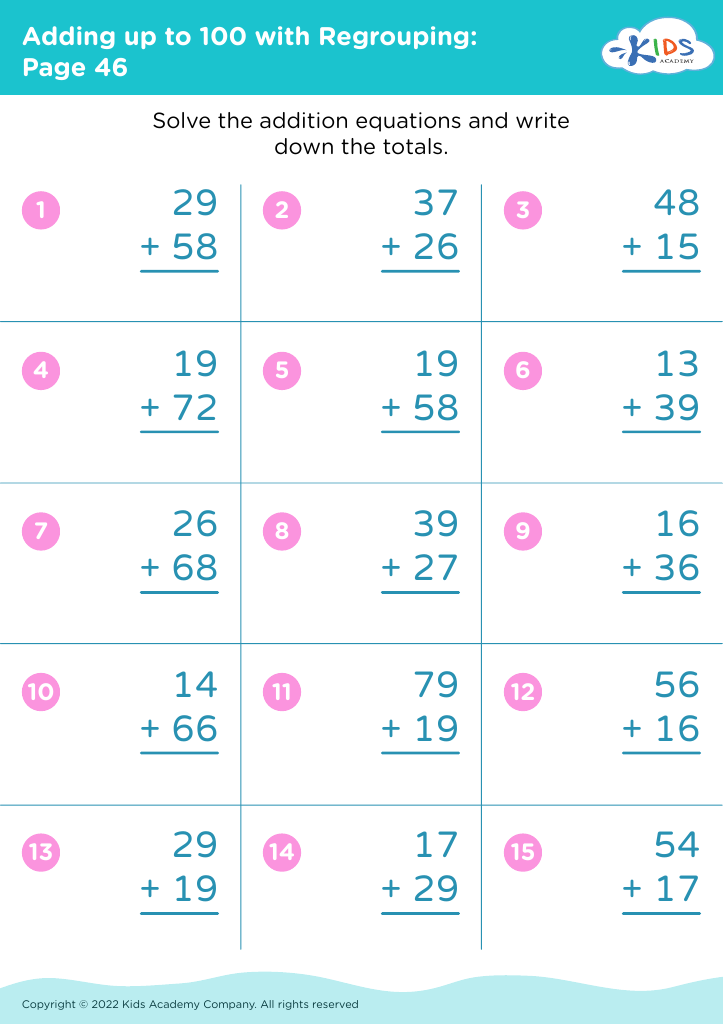
Adding up to 100 with Regrouping: Page 46
Worksheet
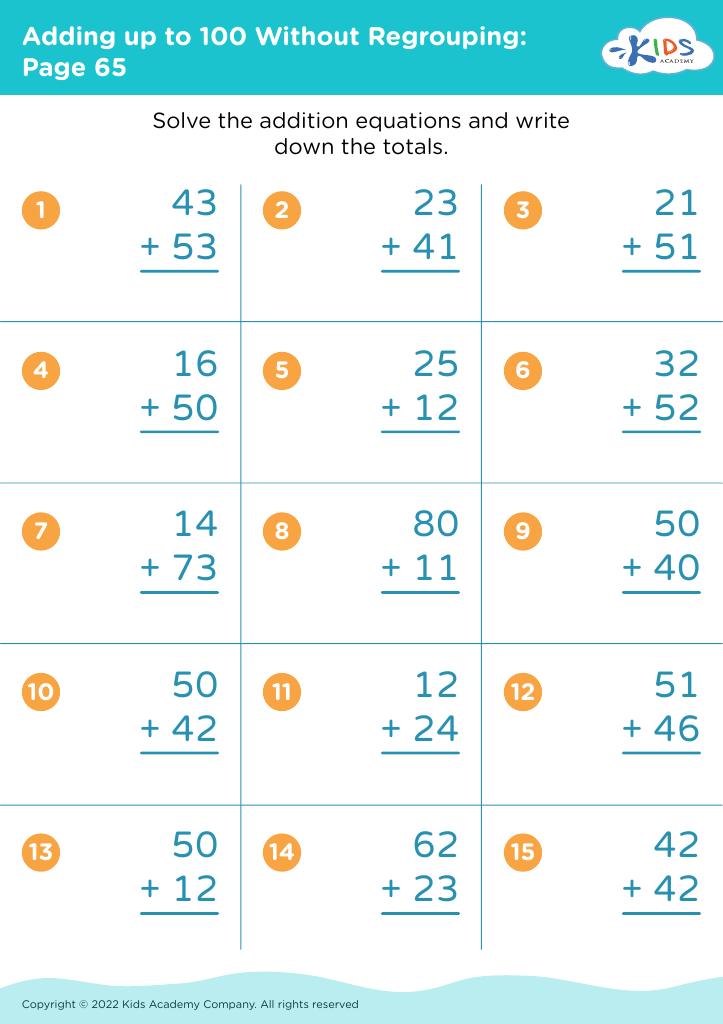
Adding up to 100 Without Regrouping: Page 65
Worksheet
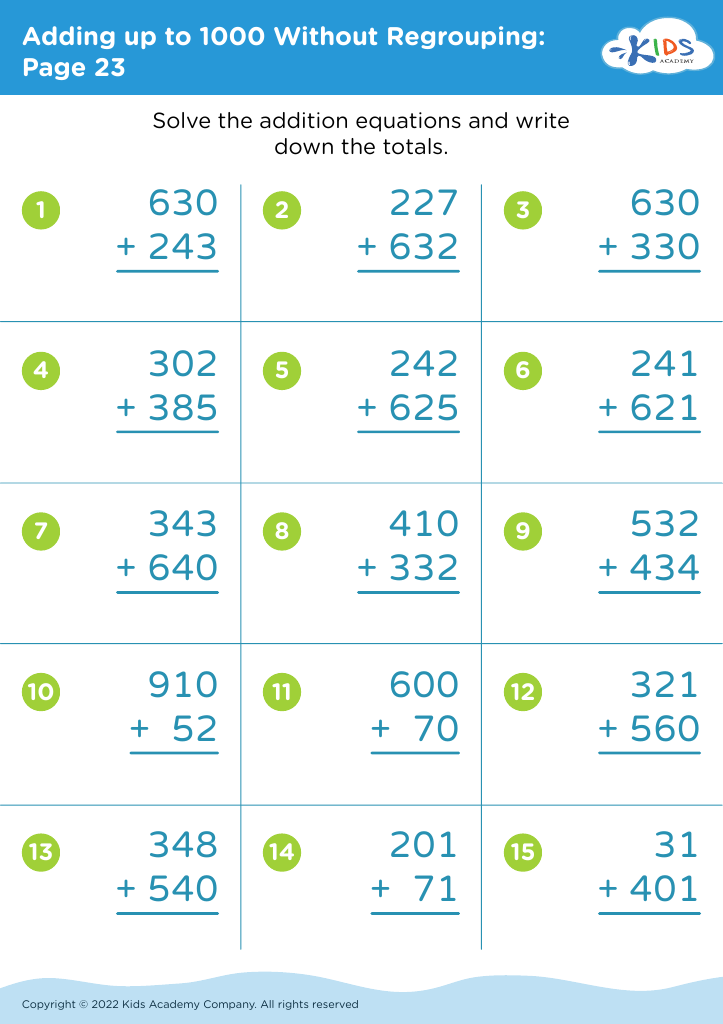
Adding up to 1000 Without Regrouping: Page 23
Worksheet
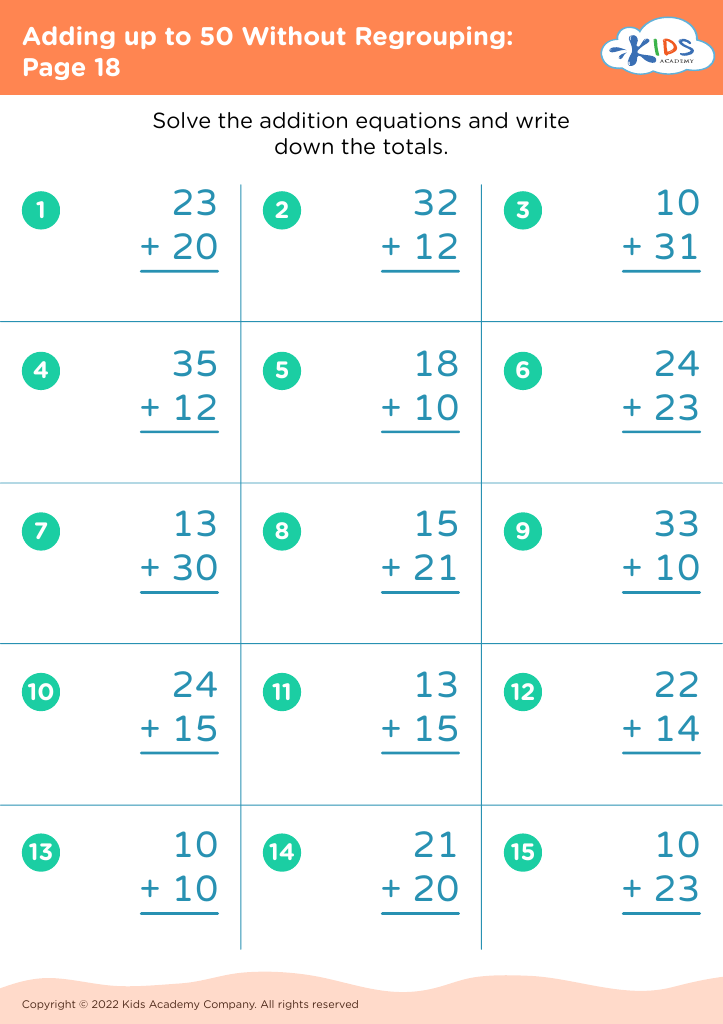
Adding up to 50 Without Regrouping: Page 18
Worksheet
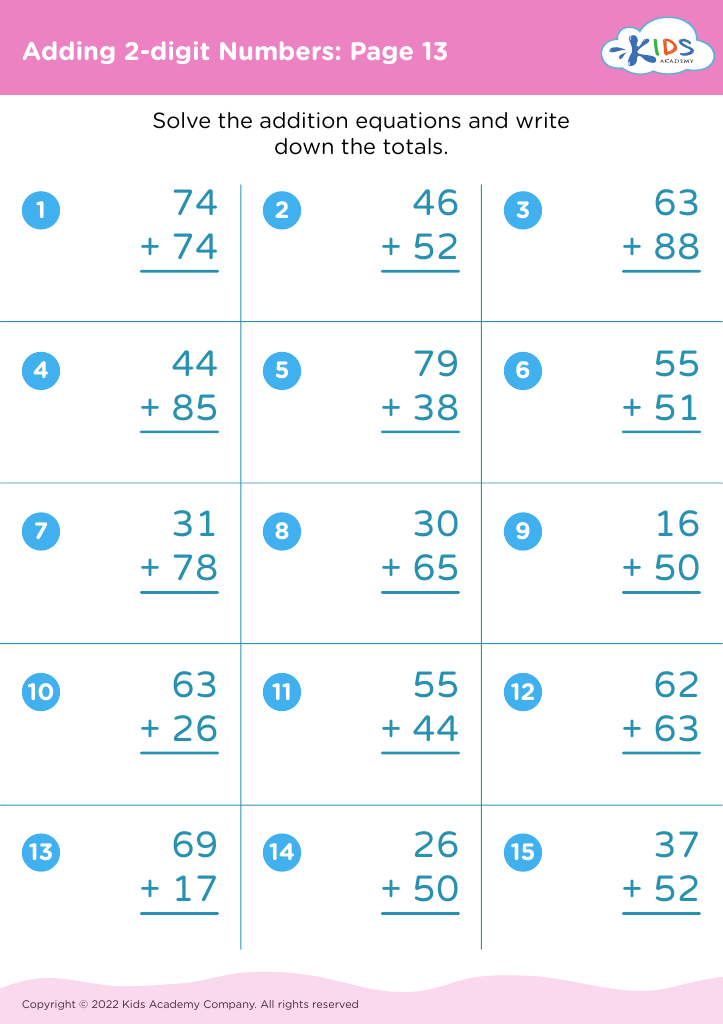
Adding 2-digit Numbers: Page 13

Adding 2-digit Numbers: Page 13

Adding 2-digit Numbers: Page 13
Worksheet
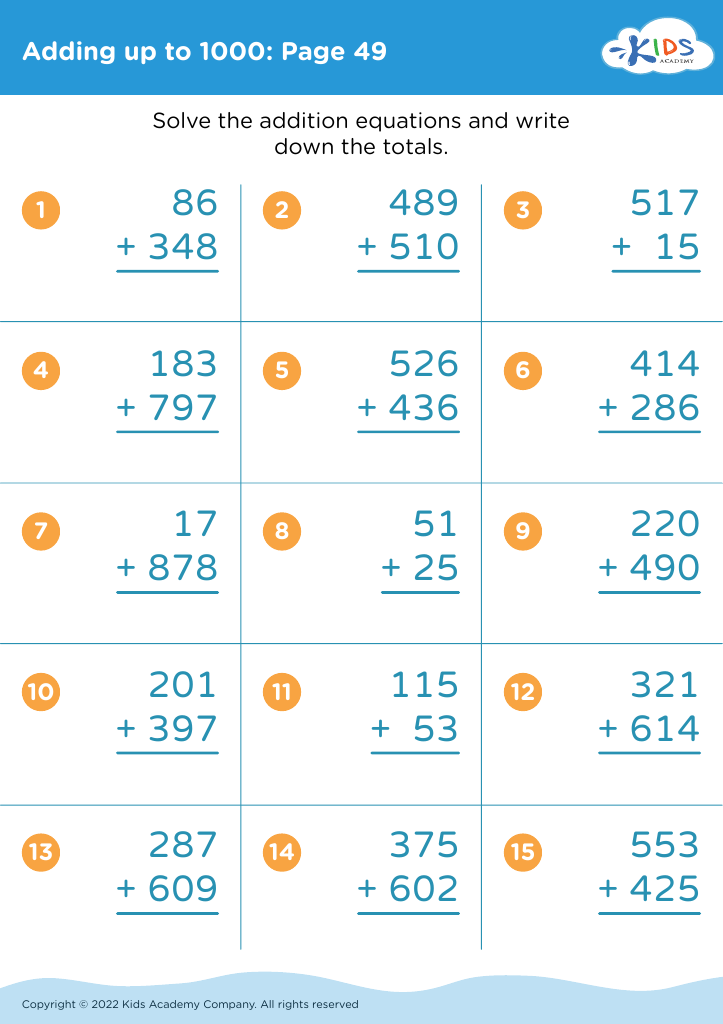
Adding up to 1000: Page 49

Adding up to 1000: Page 49

Adding up to 1000: Page 49
Worksheet
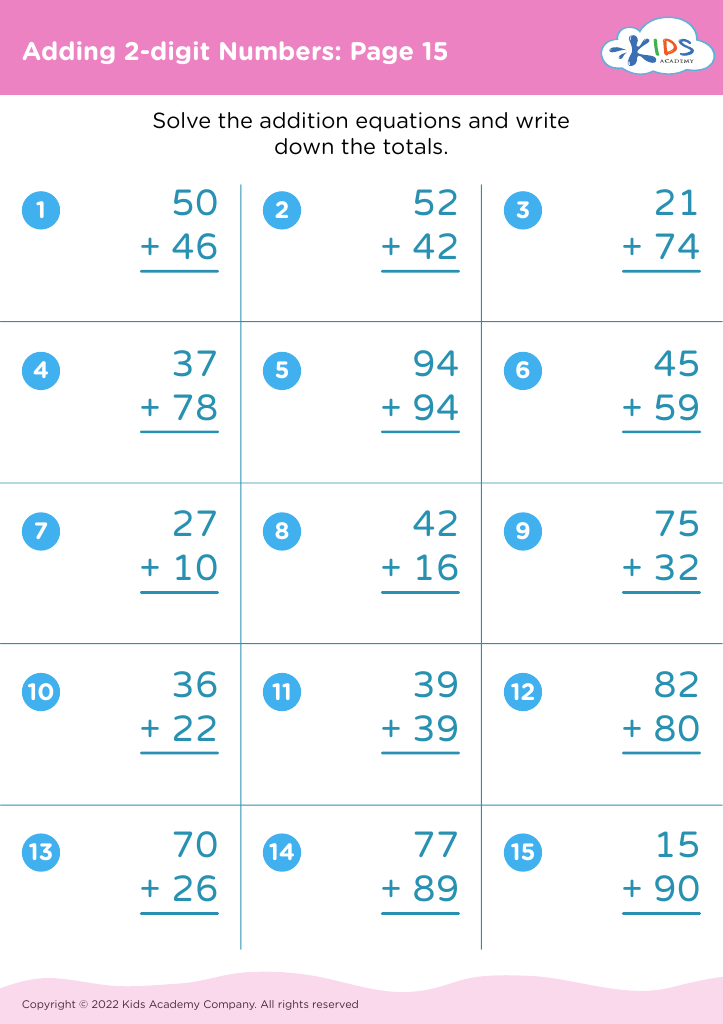
Adding 2-digit Numbers: Page 15

Adding 2-digit Numbers: Page 15

Adding 2-digit Numbers: Page 15
Worksheet
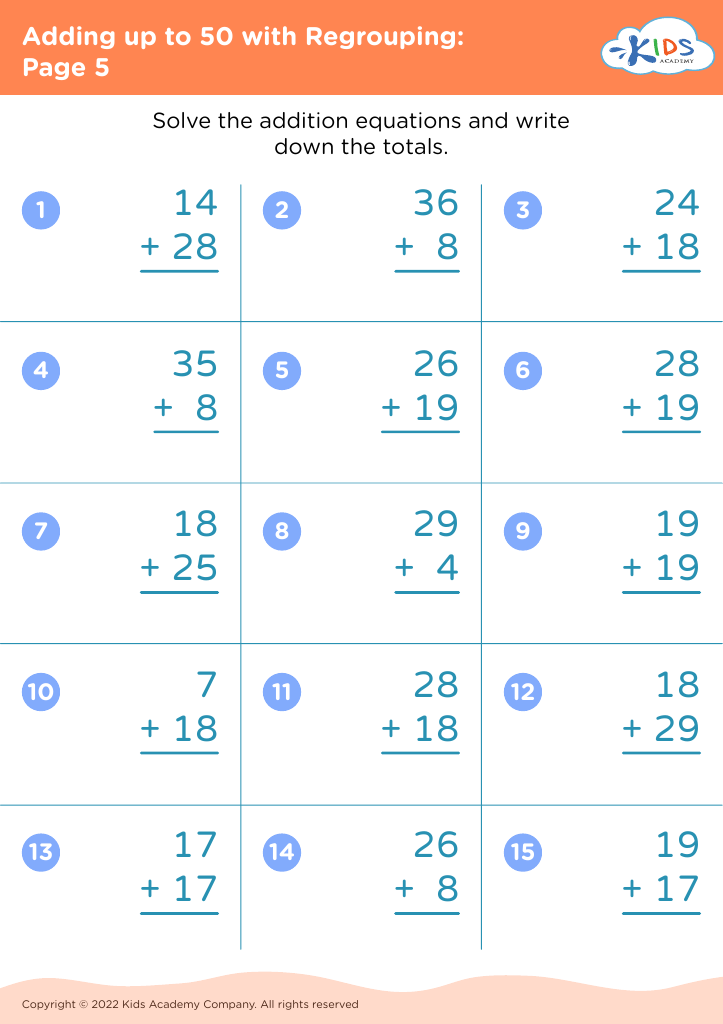
Adding up to 50 with Regrouping: Page 5
Worksheet


Understanding fractions, particularly addition and subtraction, is a crucial skill for 8- to 9-year-old students. At this age, children are transitioning from concrete to more abstract mathematical concepts, and mastering fractions lays a solid foundation for their future math education. Parents and teachers play vital roles in this developmental phase.

Firstly, fractions are essential in everyday life. From cooking to budgeting, people frequently deal with parts of whole numbers. By fostering a strong understanding of fractions, we equip children with practical skills that will serve them throughout their lives.

Moreover, a solid grasp of fraction addition and subtraction enhances critical thinking skills. It encourages students to visualize problems, consider common denominators, and apply problem-solving strategies. This cognitive development is beneficial not just in math but across all subjects.

Additionally, mastering fractions helps prevent future math anxiety. Confidence in math builds a positive attitude towards learning and academic achievement, reducing the chances of struggling with more complex topics later on.

In conclusion, it’s essential for parents and teachers to prioritize the understanding of fraction addition and subtraction, as it offers invaluable life skills and fosters a love for learning in young children.