Understanding patterns Addition & Subtraction Worksheets for Ages 8-9 - Page 2
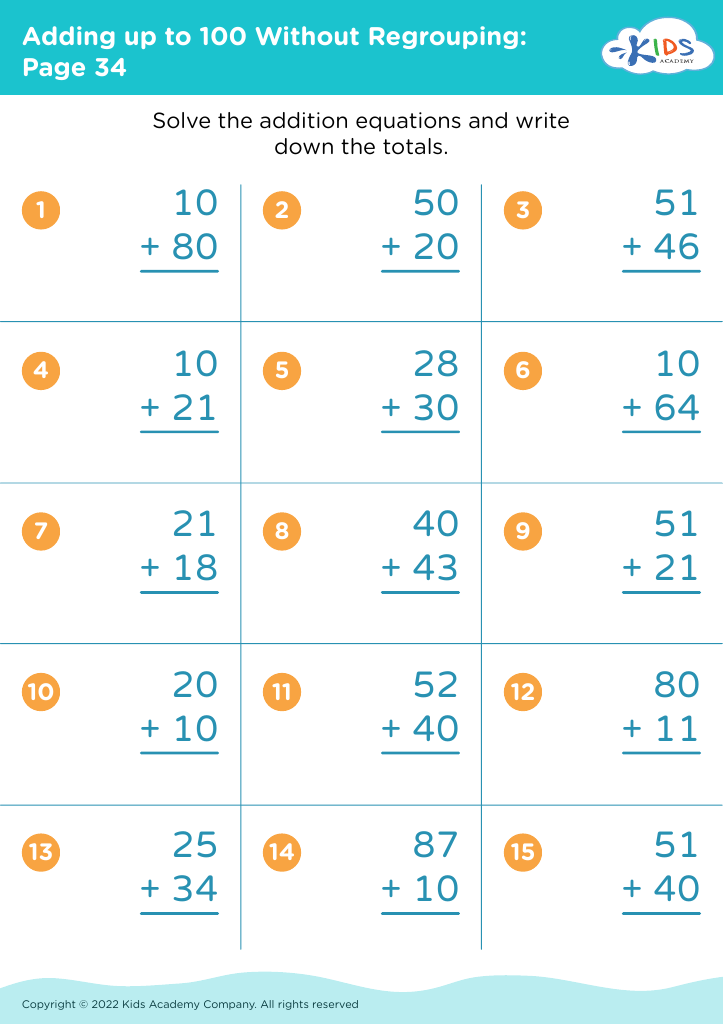
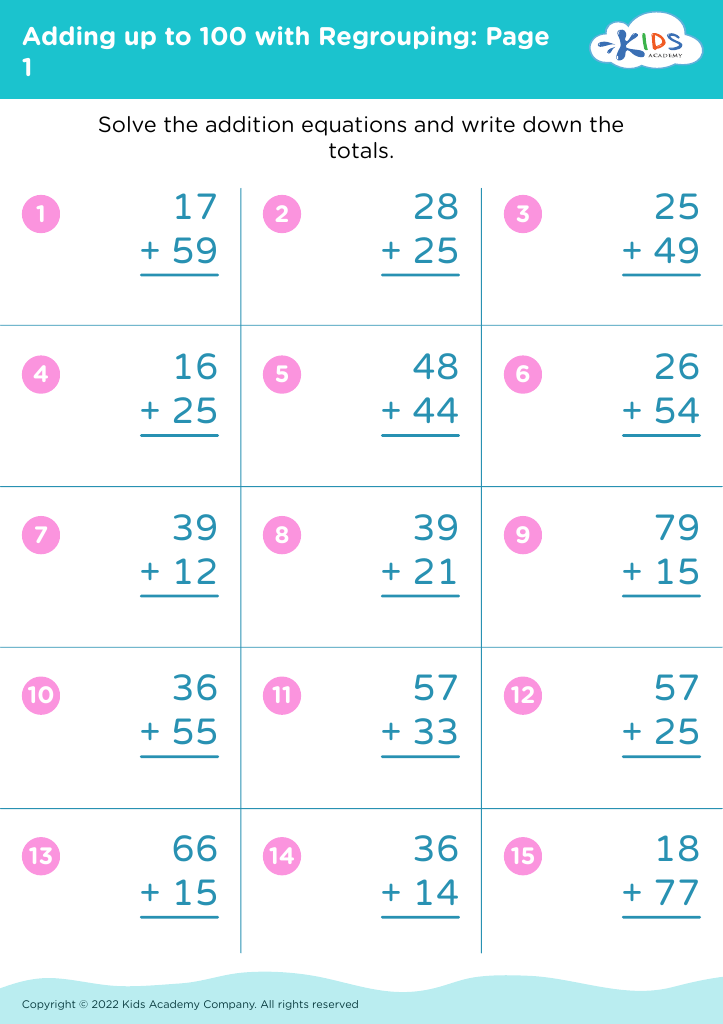
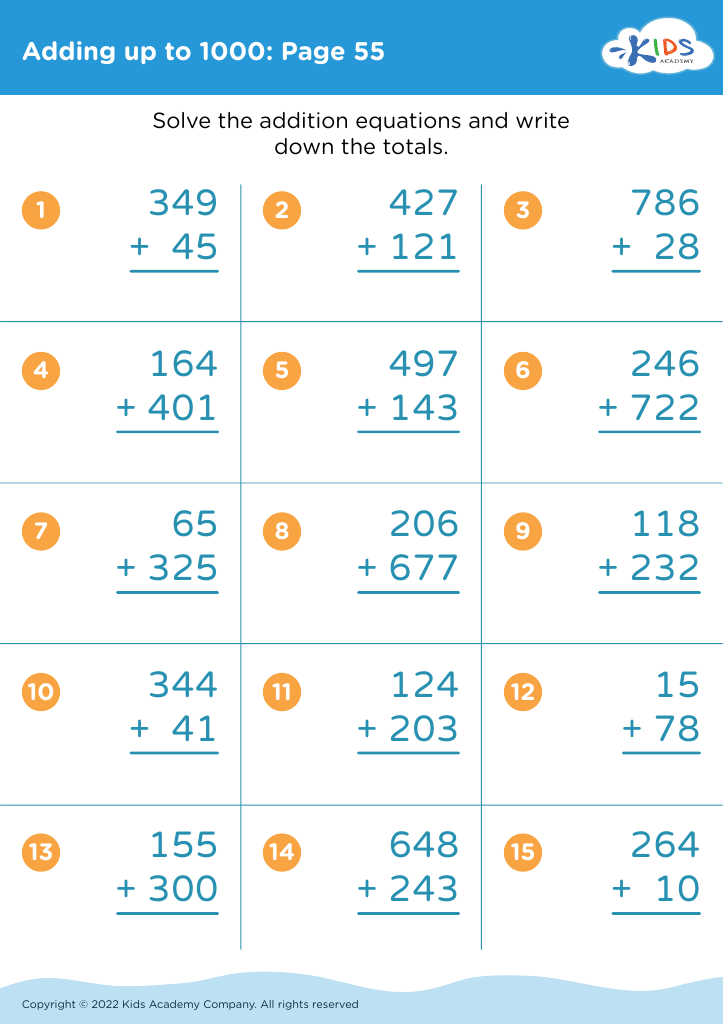
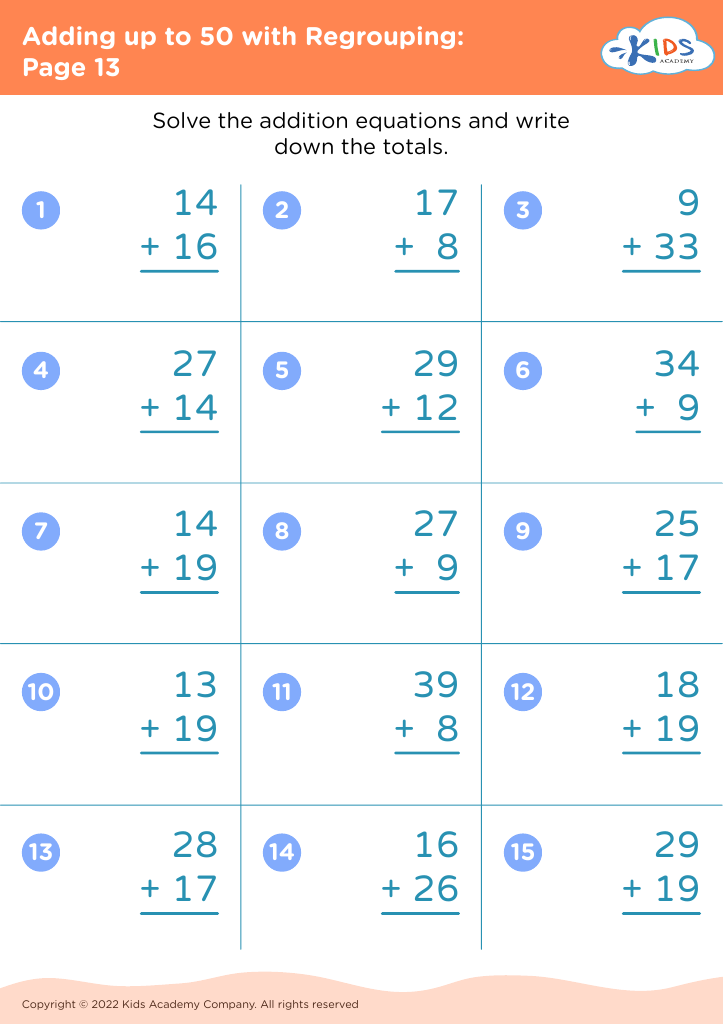








Understanding patterns in addition and subtraction is crucial for children aged 8-9 for several reasons. First, recognizing patterns enhances mathematical fluency. When children see regularities—whether in sequential numbers or relationships among operations—they can more easily solve problems and perform calculations. For instance, knowing that adding two even numbers always results in an even number helps children develop predictable strategies for addition.
Moreover, pattern recognition supports problem-solving skills. It enables children to anticipate outcomes, make generalizations, and apply these insights to new situations, reinforcing their overall mathematical understanding. This skill builds a strong foundation for future algebra concepts, as patterns are often integral in higher-level math.
In addition, understanding patterns fosters critical thinking. When students are encouraged to explore and explain patterns, they learn to articulate their reasoning, a key competency in both math and other subject areas. For teachers and parents, nurturing this understanding also inspires confidence in children; when they recognize patterns, they may feel more empowered to tackle challenging math problems. Ultimately, fostering an early interest in patterns in addition and subtraction provides a gateway to a lifetime of mathematical competence and curiosity, equipping children to excel academically.








