Understanding sequence Addition & Subtraction Worksheets for Ages 8-9
4 filtered results
-
From - To
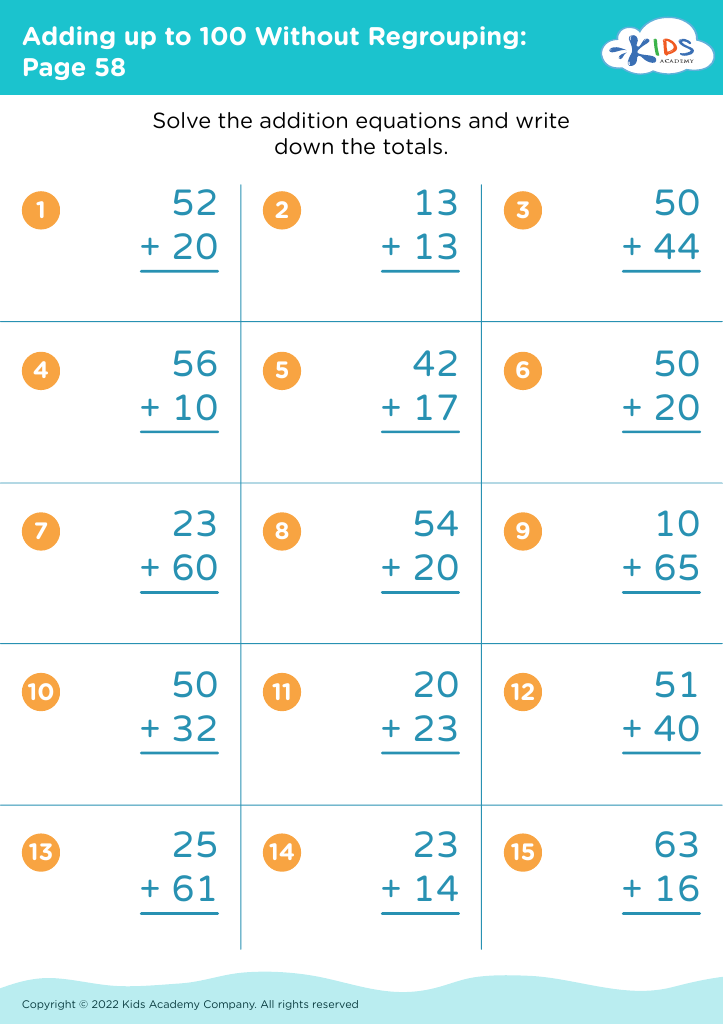
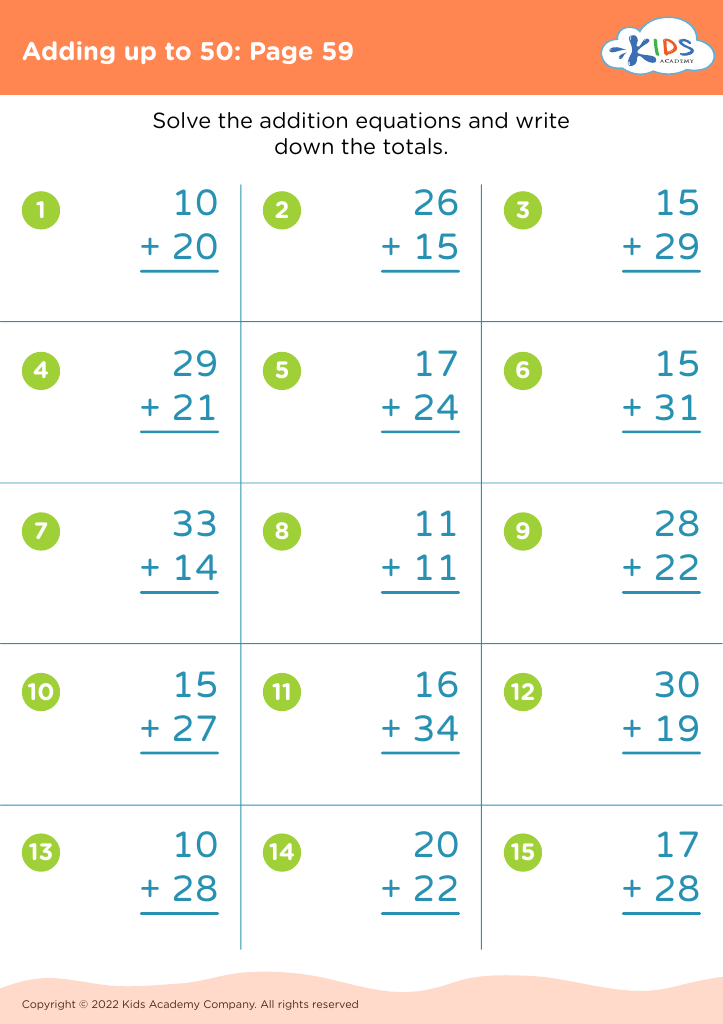
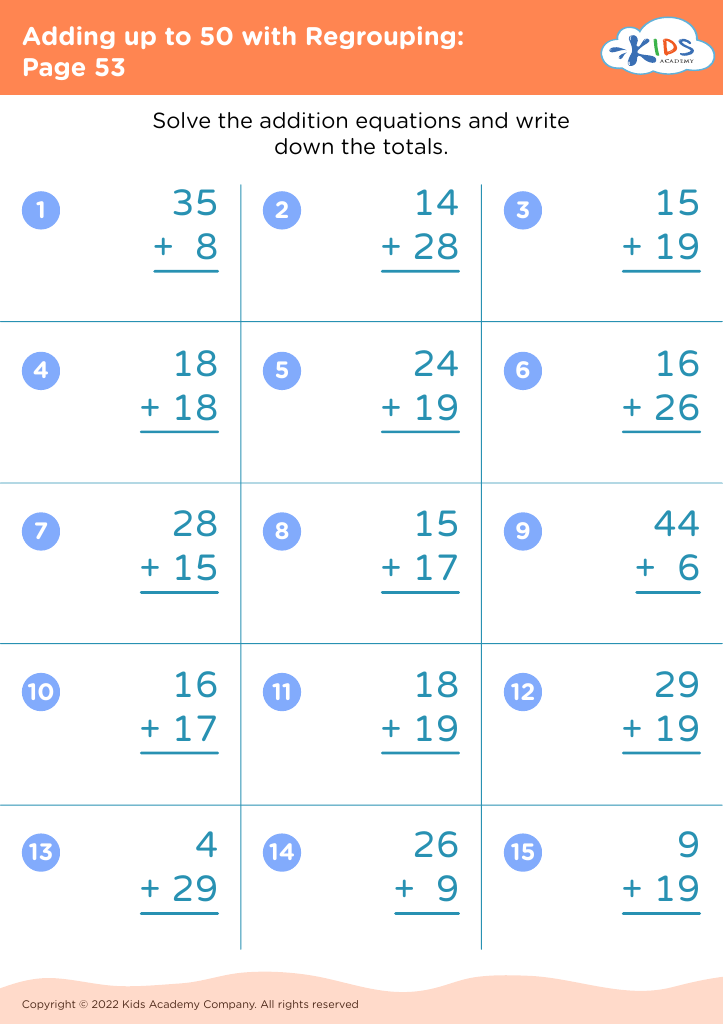
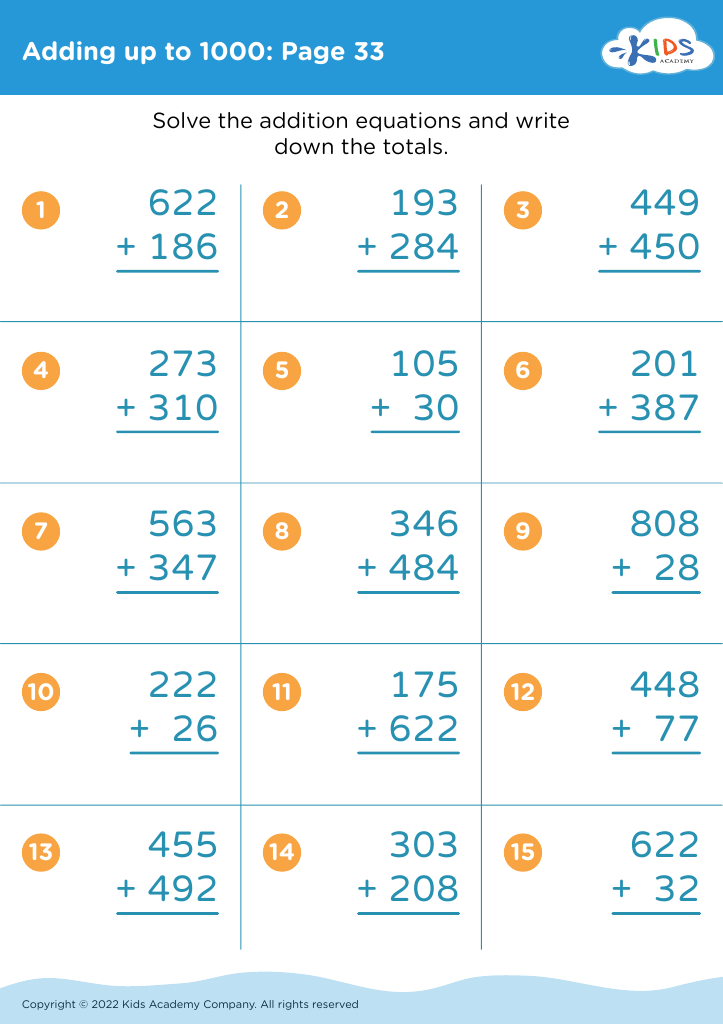
"Understanding Sequence Addition & Subtraction Worksheets for Ages 8-9" are meticulously designed to enhance your child’s mathematical proficiency. These engaging worksheets focus on reinforcing concepts of sequential operations in both addition and subtraction. Through a variety of problem-solving exercises, children will improve their ability to follow and understand numerical sequences, fostering critical thinking and problem-solving skills. The progressive difficulty levels ensure that learners build confidence as they advance from basic to more complex tasks. Perfect for classroom or at-home practice, these worksheets provide a comprehensive tool for mastering essential math skills in a fun, structured, and effective manner.








Understanding the sequence of addition and subtraction is crucial for children ages 8-9 as it lays the foundation for future mathematical learning. At this age, kids transition from simple arithmetic to more complex problem-solving. Grasping this concept ensures they can handle multi-step problems, which are common in real-life situations and later academic tasks.
For parents and teachers, emphasizing the sequence helps develop logical thinking and organizational skills in children. It teaches them to approach problems methodically, first by understanding which operations to perform and in what order. This foundational knowledge fosters confidence and reduces anxiety, making math a more approachable subject.
Moreover, understanding sequences in addition and subtraction enhances mental math abilities. Children learn tricks and strategies to simplify calculations, promoting faster and more accurate responses. This skill advancement is not just limited to mathematics; it also nurtures critical thinking and effective decision-making, essential lifelong skills.
When parents and teachers focus on this aspect of mathematics, they help to build a strong educational structure. It prevents gaps in knowledge that can become significant hurdles later on. Ensuring that children master these sequences translates not only to academic success but also to their overall cognitive development, setting them up for myriad future learning opportunities.








