Filters

12 filtered results

Clear all filters
Favorites
With answer key
Interactive

12 filtered results

Difficulty Level

Grade


Discover an engaging collection of vocabulary enhancement worksheets designed for children aged 8-9, focusing on addition and subtraction skills. These worksheets aim to improve mathematical vocabulary while reinforcing essential arithmetic operations. Each activity combines word problems with interactive exercises, helping students deepen their understanding of mathematical terms and concepts. Perfect for independent practice or classroom use, these resources provide a fun way to enhance critical thinking and problem-solving abilities. Boost your child's confidence in math with our thoughtfully crafted worksheets that make learning enjoyable and effective. Click now to access our vibrant selection of educational tools!
Check out this FREE Trial Lesson on Addition & Subtraction for age 8-9!

Unknown Parts Subtraction Word Problems

Favorites
With answer key
Interactive
  • 8-9
  • Vocabulary enhancement
  • Addition & Subtraction
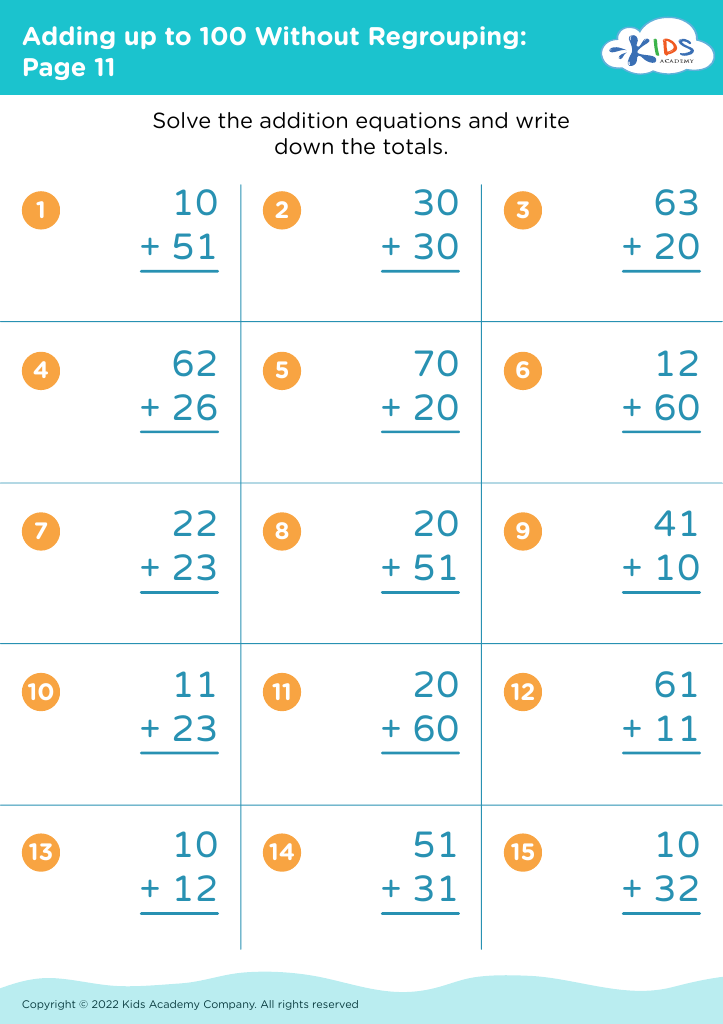
Adding up to 100 Without Regrouping: Page 11
Worksheet
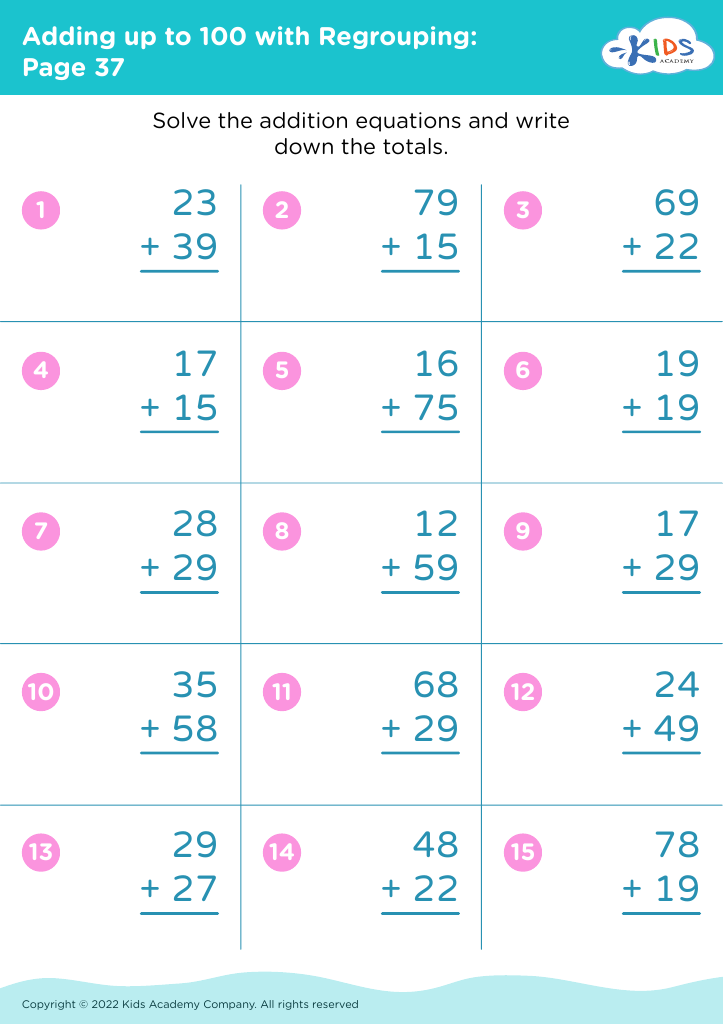
Adding up to 100 with Regrouping: Page 37
Worksheet
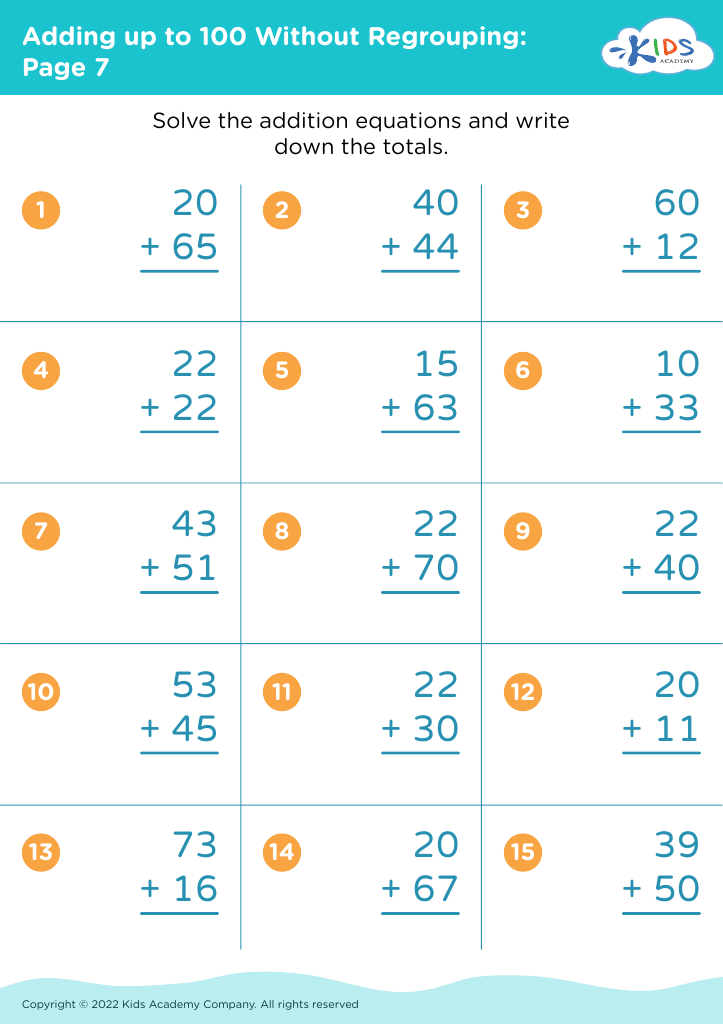
Adding up to 100 Without Regrouping: Page 7
Worksheet
Lady Liberty Worksheet

Lady Liberty Worksheet

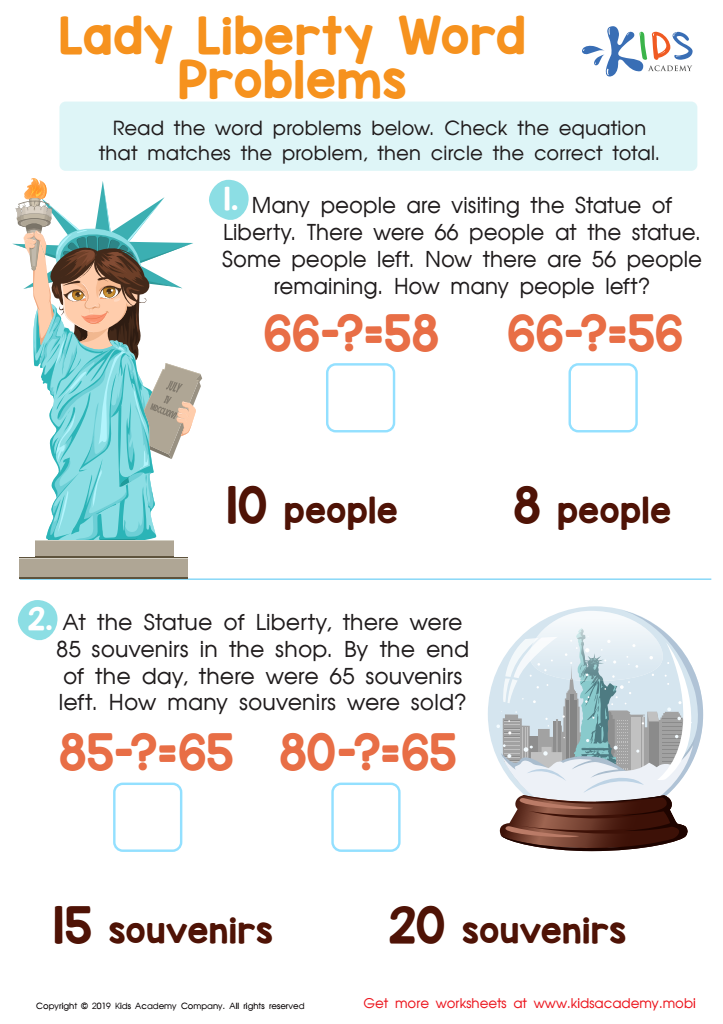
Have your students ever been to the Statue of Liberty? Ask them to tell you where it is and what it looks like. Every day, the statue draws a crowd admiring its beauty, taking pics and learning more about it. Pose a word problem and help them check the answer. Circle the correct total. (80 words)
Lady Liberty Worksheet
Worksheet
Adding and Subtracting to 1 Worksheet: Assessment 1

Adding and Subtracting to 1 Worksheet: Assessment 1

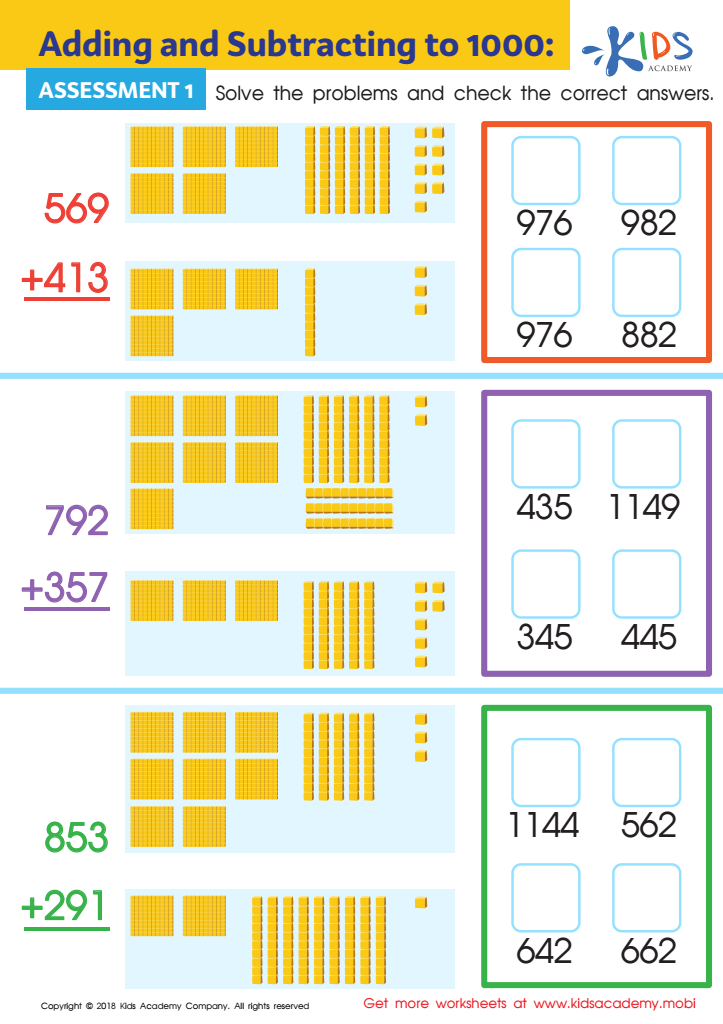
This assessment worksheet tests your child's addition skills. It has 3 3-digit problems with base ten blocks for visual aid. Encourage learners to use these visuals for better understanding. When they have solved the problems, they can check the box with the right answer. It's a quick and easy way to gauge numeracy development.
Adding and Subtracting to 1 Worksheet: Assessment 1
Worksheet
Arctic Explorers Worksheet

Arctic Explorers Worksheet

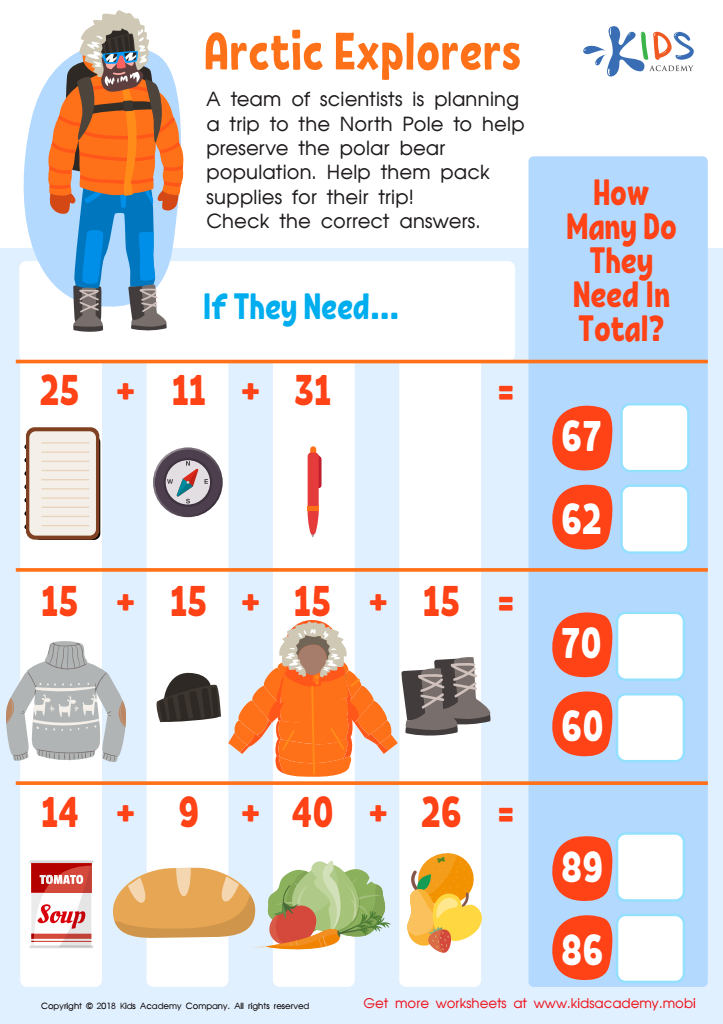
Help your child pack supplies for a team of scientists' trip to the North Pole! Before beginning, explain how efforts are needed to protect endangered animals like polar bears. Encourage them to check the correct clothing needed for the extremely cold region. For example, warm and protective clothing is essential.
Arctic Explorers Worksheet
Worksheet
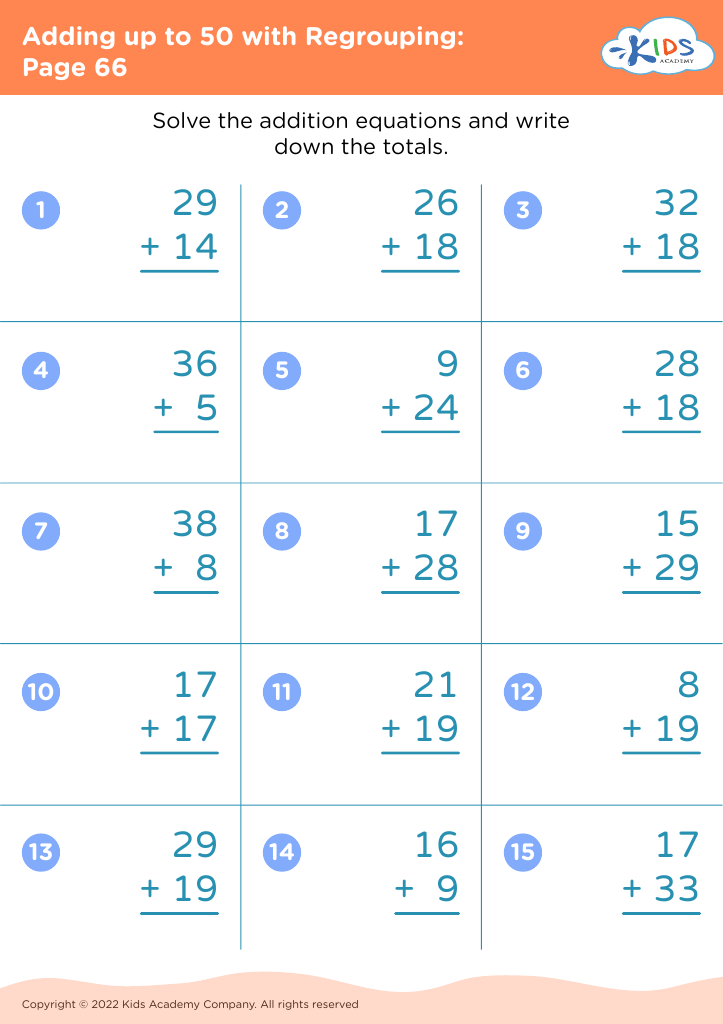
Adding up to 50 with Regrouping: Page 66
Worksheet
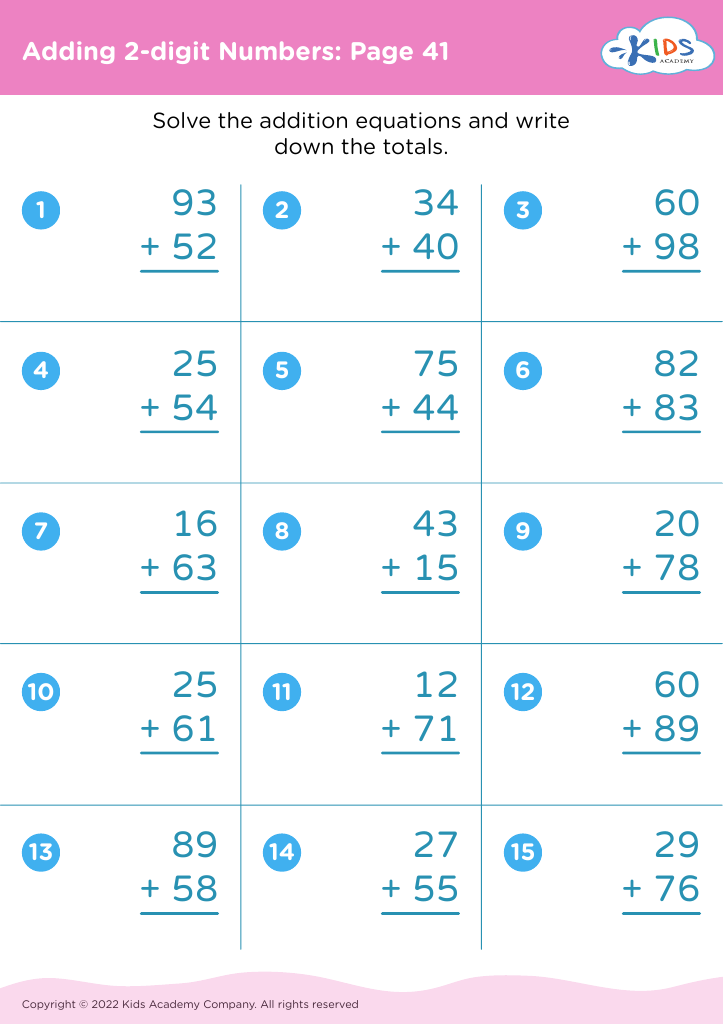
Adding 2-digit Numbers: Page 41

Adding 2-digit Numbers: Page 41

Adding 2-digit Numbers: Page 41
Worksheet
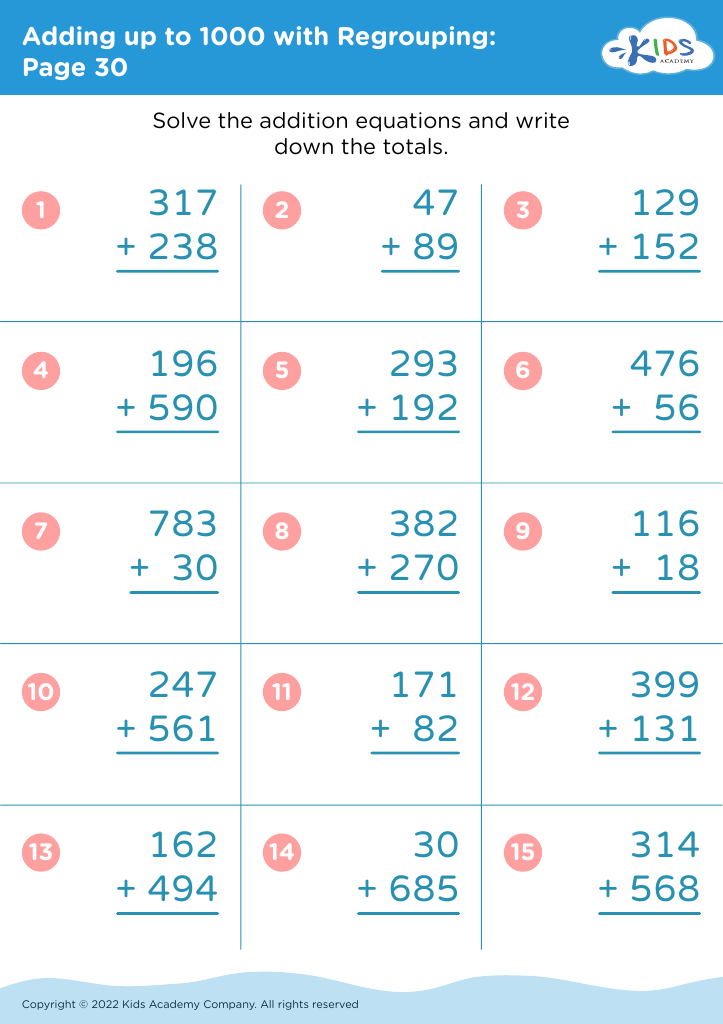
Adding up to 1000 with Regrouping: Page 30
Worksheet
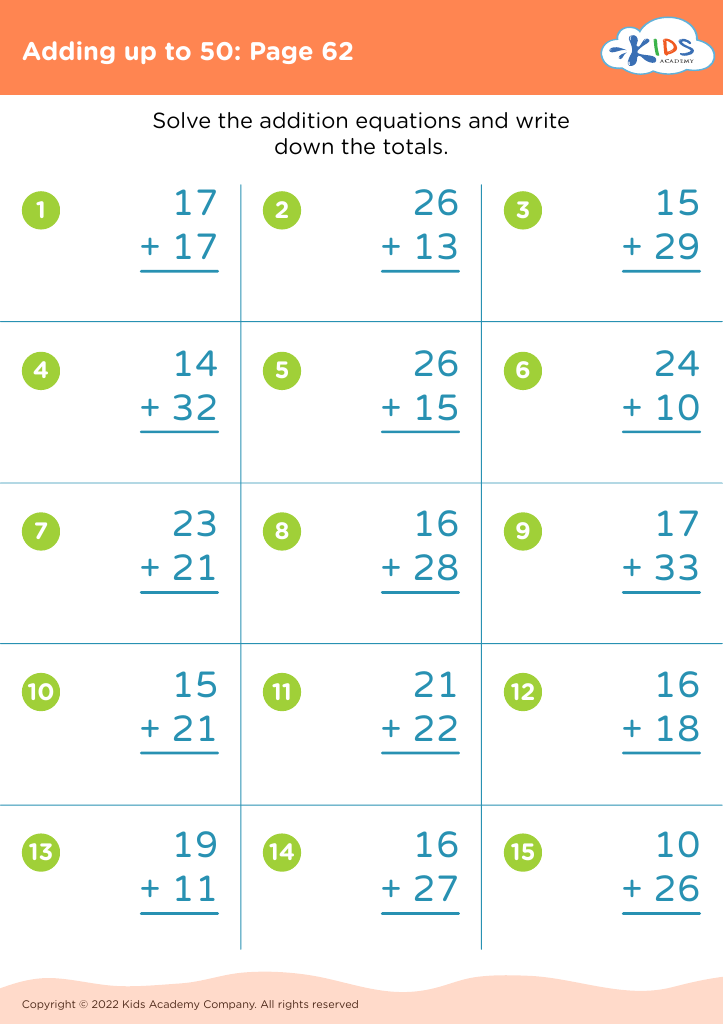
Adding up to 50: Page 62

Adding up to 50: Page 62

Adding up to 50: Page 62
Worksheet
African Animal Safari Worksheet

African Animal Safari Worksheet

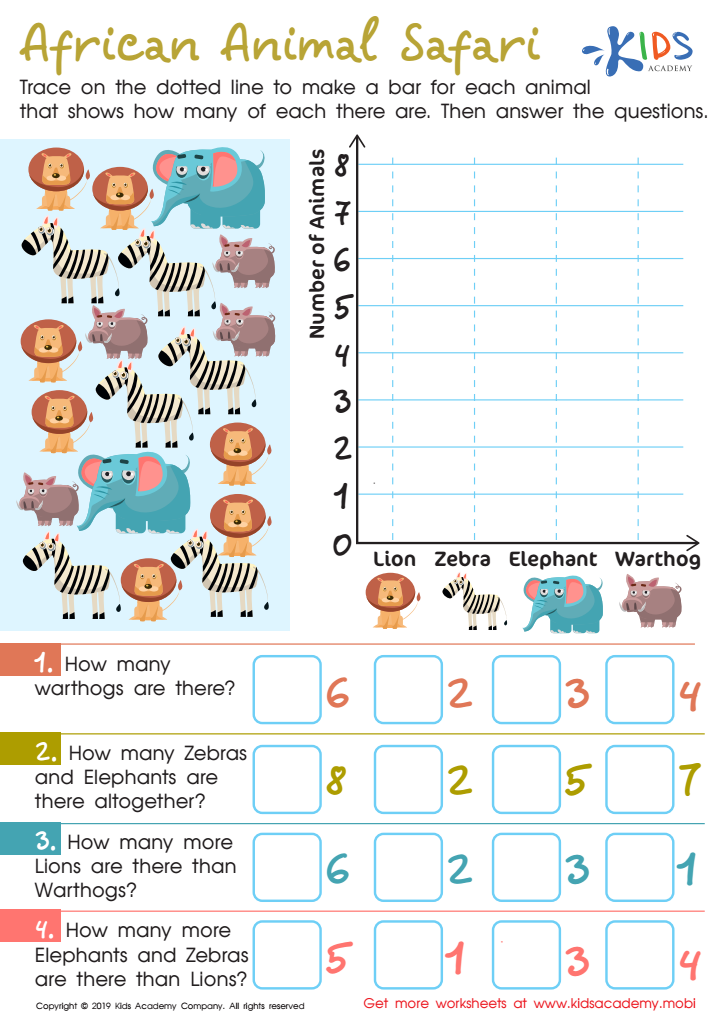
Help students learn geography and math, with this worksheet. Examine the graph and ask your students questions. Have them answer using the graph and addition/subtraction exercises. This can help them name continents, countries, and animals unique to each.
African Animal Safari Worksheet

Worksheet
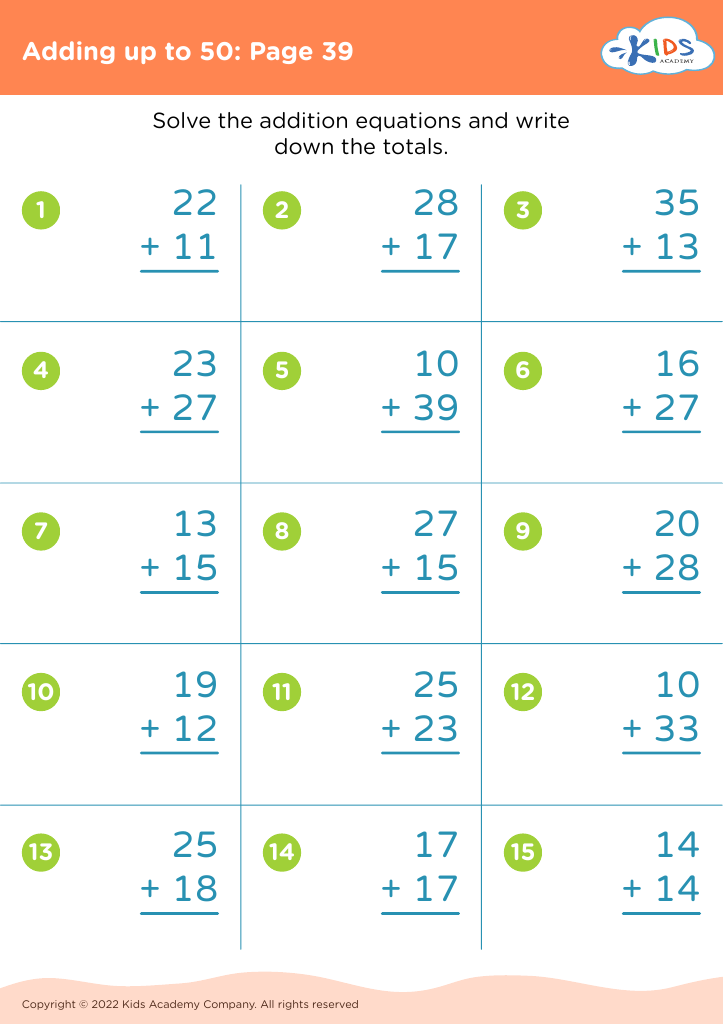
Adding up to 50: Page 39

Adding up to 50: Page 39

Adding up to 50: Page 39
Worksheet


Vocabulary enhancement in the context of addition and subtraction for ages 8-9 is crucial for several reasons. At this age, children are not only developing their mathematical skills but are also honing their language abilities. A strong vocabulary helps them articulate mathematical concepts, understand instructions, and grasp problem-solving techniques more effectively. When children can connect mathematical terms (like "sum," "difference," "combine," and "separate") to their operational functions, they gain a deeper understanding of the processes involved in addition and subtraction.

Furthermore, as children encounter word problems, robust vocabulary skills enable them to decipher complex scenarios and apply mathematical reasoning consistently. This dual focus on vocabulary and computation fosters greater mathematical fluency, empowering learners to tackle more advanced problems in the future.

For teachers and parents, nurturing vocabulary in the context of math can enhance engagement and encourage a positive attitude toward learning. It bridges the gap between language arts and mathematics, highlighting the interconnectivity of these subjects and helping children develop critical thinking skills. In an environment where both cognitive and language development are prioritized, students are better equipped to succeed academically and build confidence in their abilities, essential traits for lifelong learners.