Cognitive Development Addition Worksheets for Ages 8-9
13 filtered results
-
From - To
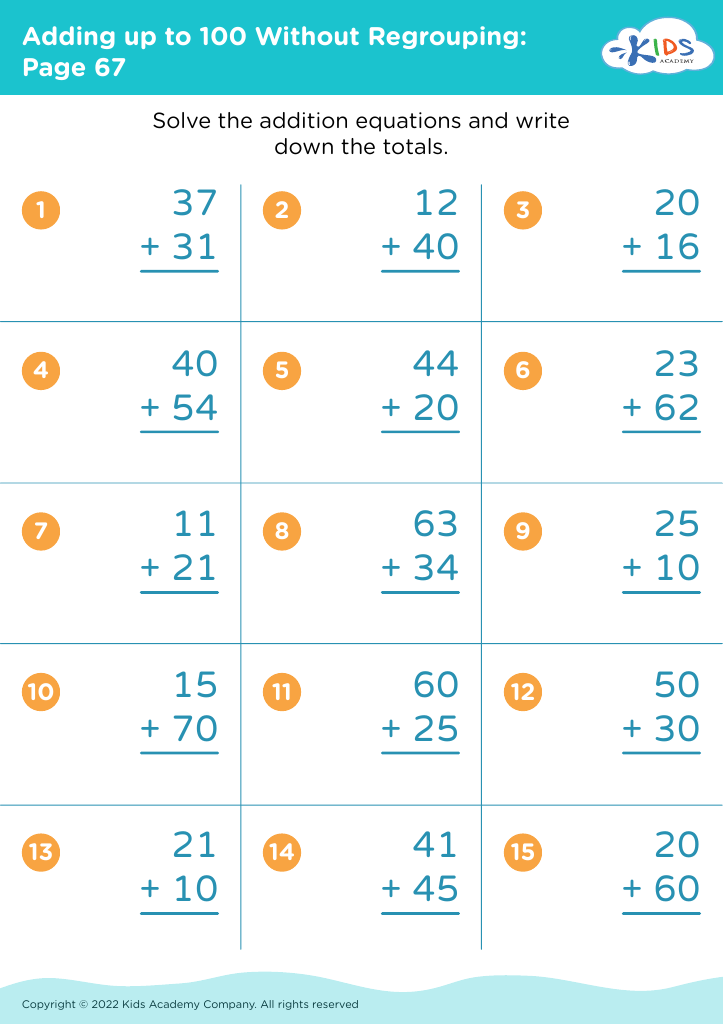
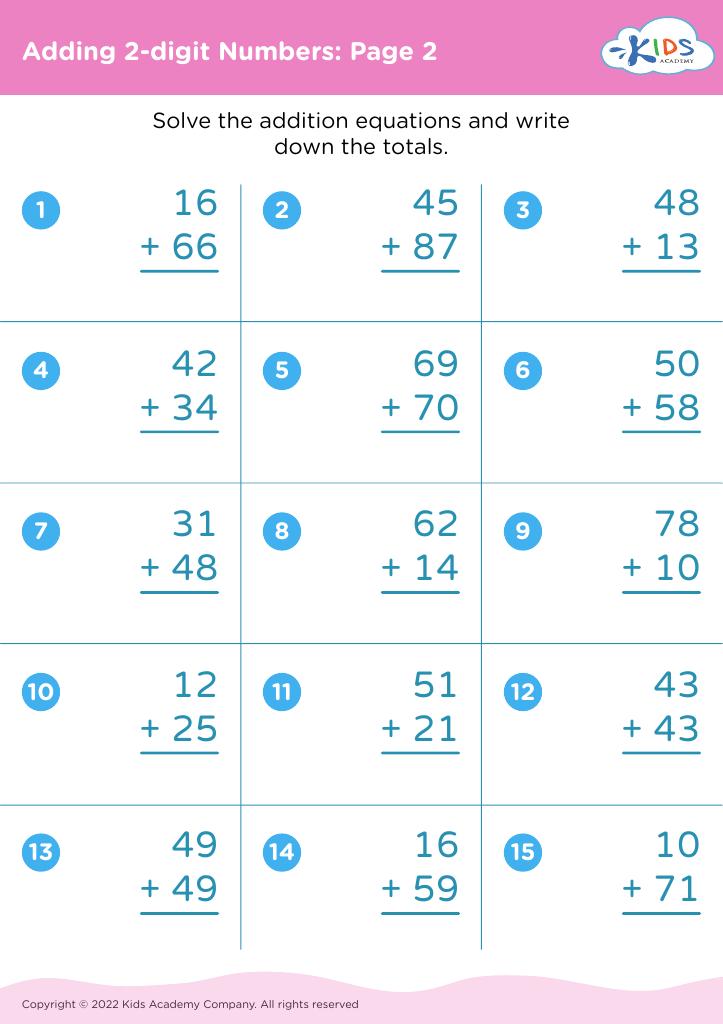
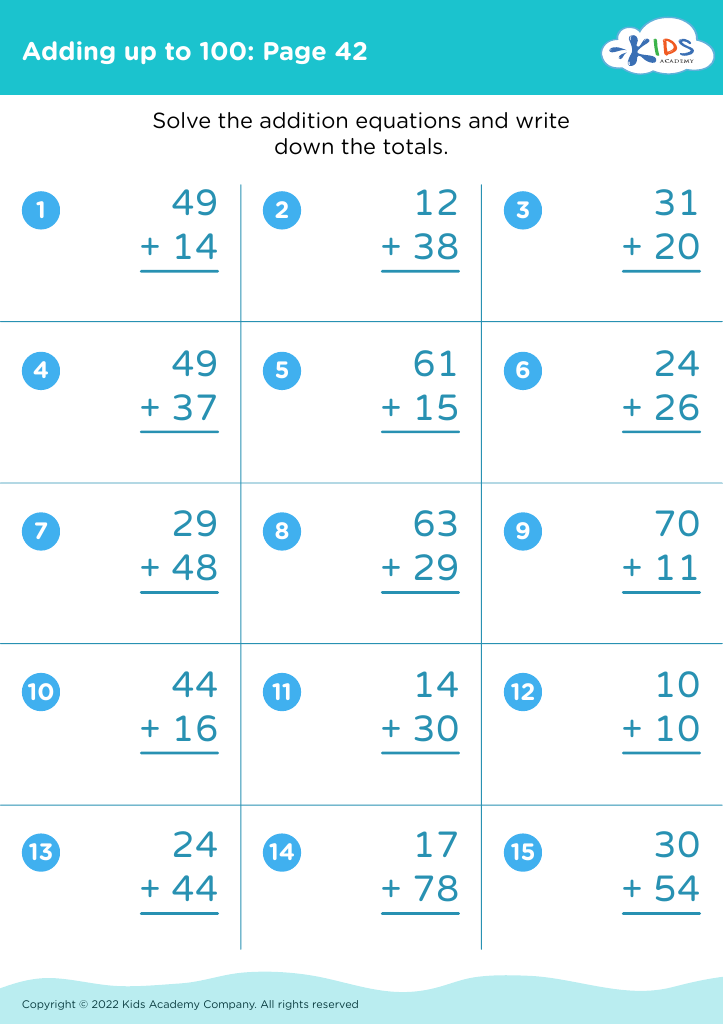
Discover our engaging Cognitive Development Addition Worksheets designed specifically for children aged 8-9! These thoughtfully crafted resources aim to enhance essential cognitive skills while making math enjoyable. Each worksheet focuses on addition problems that challenge young minds, fostering critical thinking and problem-solving abilities. Through varied activities, students will explore different strategies to solve addition tasks, reinforcing comprehension and confidence. Perfect for classroom use or homeschooling, these worksheets are aligned with educational standards to support the developmental milestones of your child. Unlock their potential today and make learning math a fun adventure with our dedicated cognitive development resources!
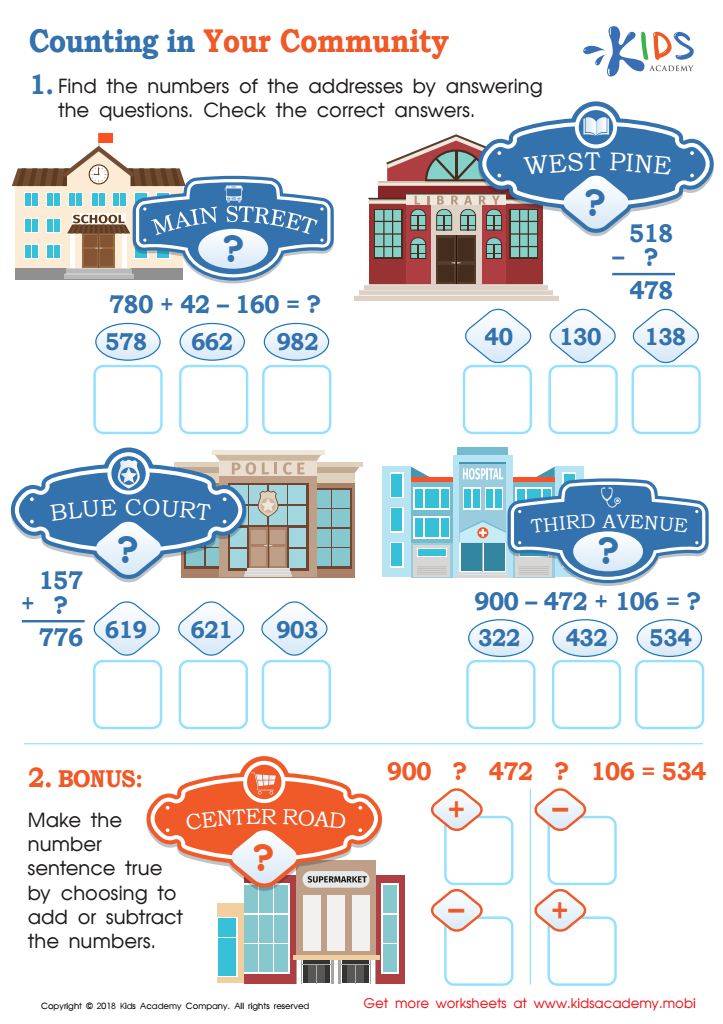
Counting in Your Community Worksheet
 Assign to My Students
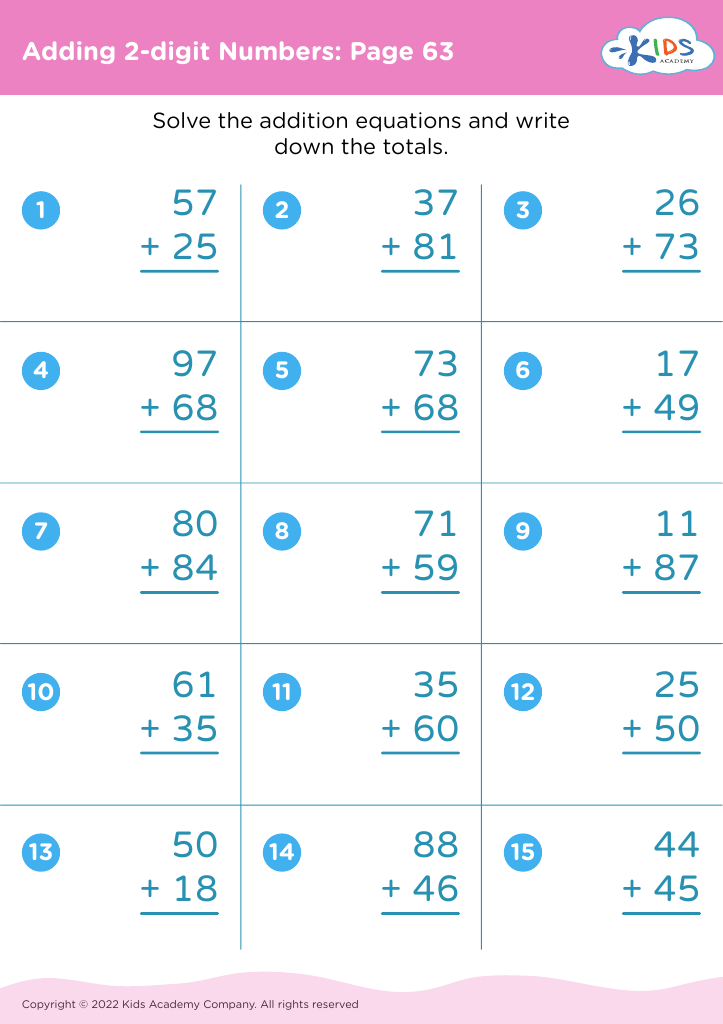
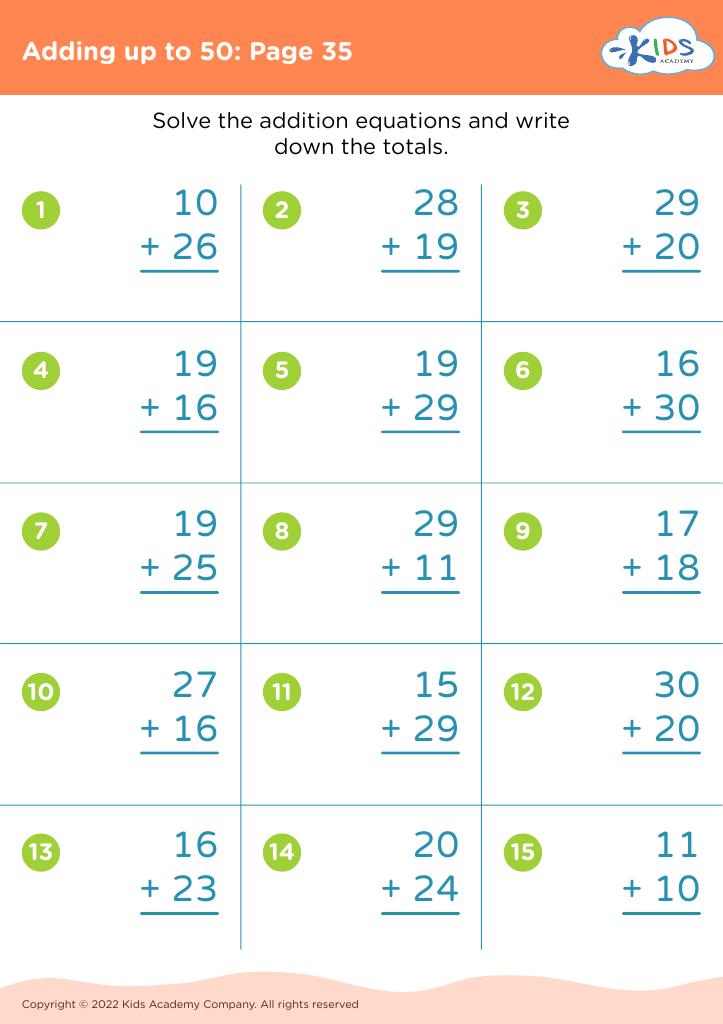
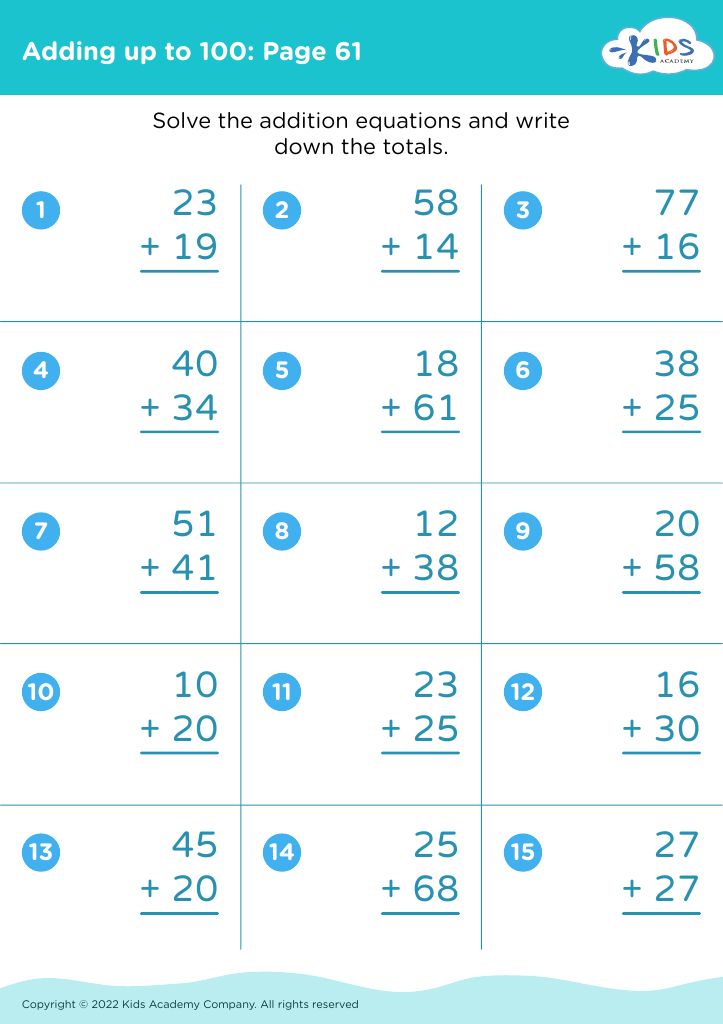
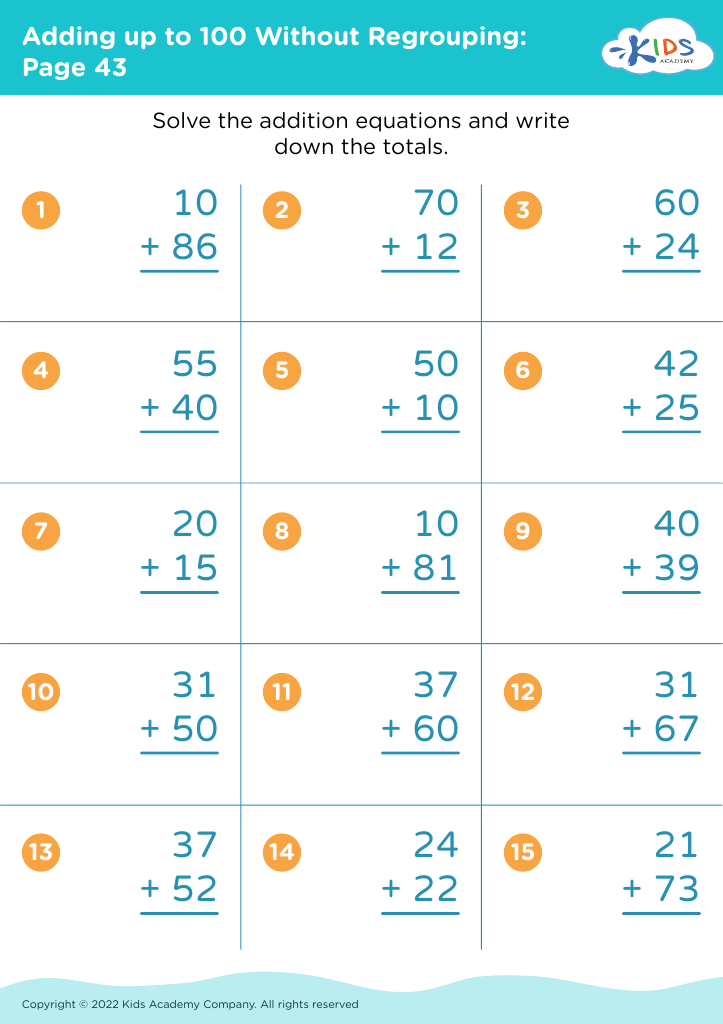
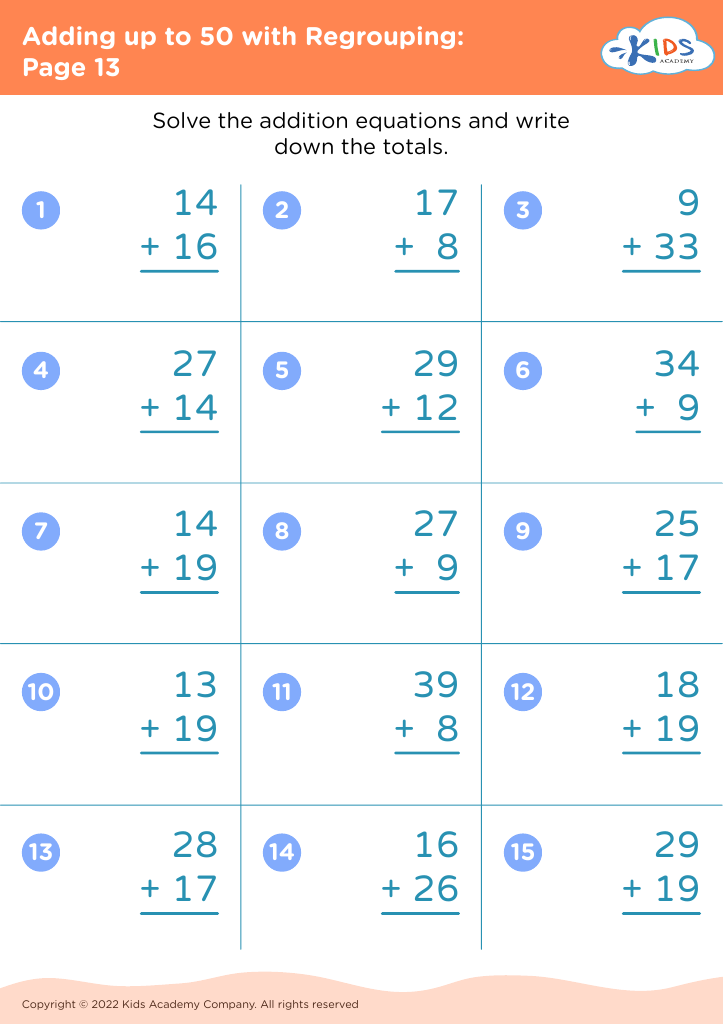








Cognitive development in children ages 8-9 is crucial as it plays a fundamental role in their overall growth and future learning. During this stage, children transition from concrete thinking to more abstract thought processes. Their ability to solve problems, think critically, and understand complex concepts is significantly enhanced, which is essential for subjects like math, science, and reading comprehension.
For parents and teachers, fostering cognitive development through activities like addition skills is vital. Children at this age begin to grasp not only basic arithmetic but also the underlying principles of math concepts such as place value, fractions, and problem-solving strategies. Mastery of addition lays the groundwork for their future academic success and confidence in their abilities.
Moreover, engaging children in cognitive activities related to addition can enhance their social skills, as math games or collaborative projects encourage teamwork and communication. Additionally, nurturing cognitive skills can help identify students who may need extra support, allowing for timely interventions.
Ultimately, parents and teachers who prioritize cognitive development, particularly in foundational skills like addition, are investing in children's long-term success, resilience, and love for learning. Creating a supportive environment tailored to these needs can significantly impact their educational journey.








