Filters

104 filtered results

Clear all filters
Favorites
With answer key
Interactive

104 filtered results

Difficulty Level

Grade


Check out this FREE Trial Lesson on Addition for age 8-9!

Standard Addition

Favorites
With answer key
Interactive
  • 8-9
  • Counting skills
  • Addition
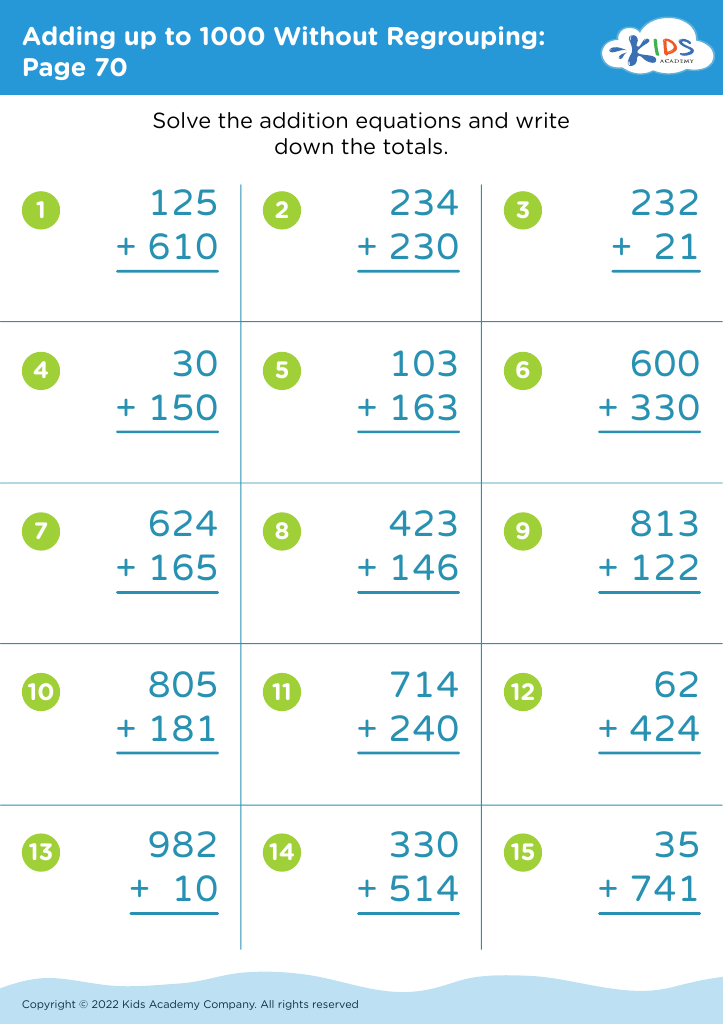
Adding up to 1000 Without Regrouping: Page 70
Worksheet
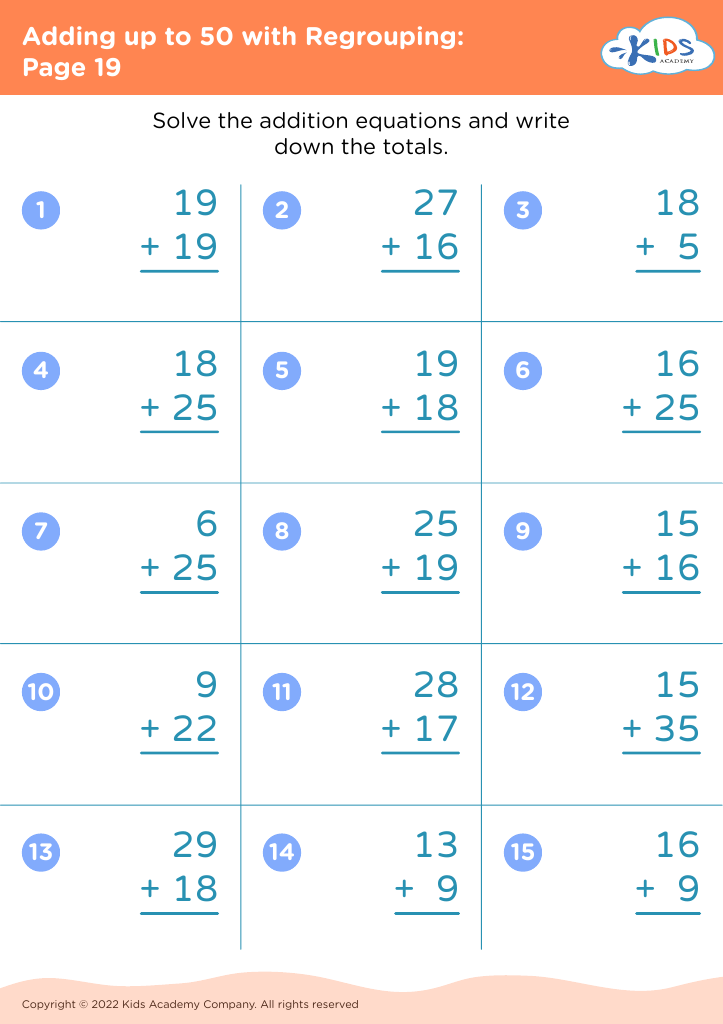
Adding up to 50 with Regrouping: Page 19
Worksheet
Free addition PDF worksheet for 3rd grade

Free Addition Worksheet

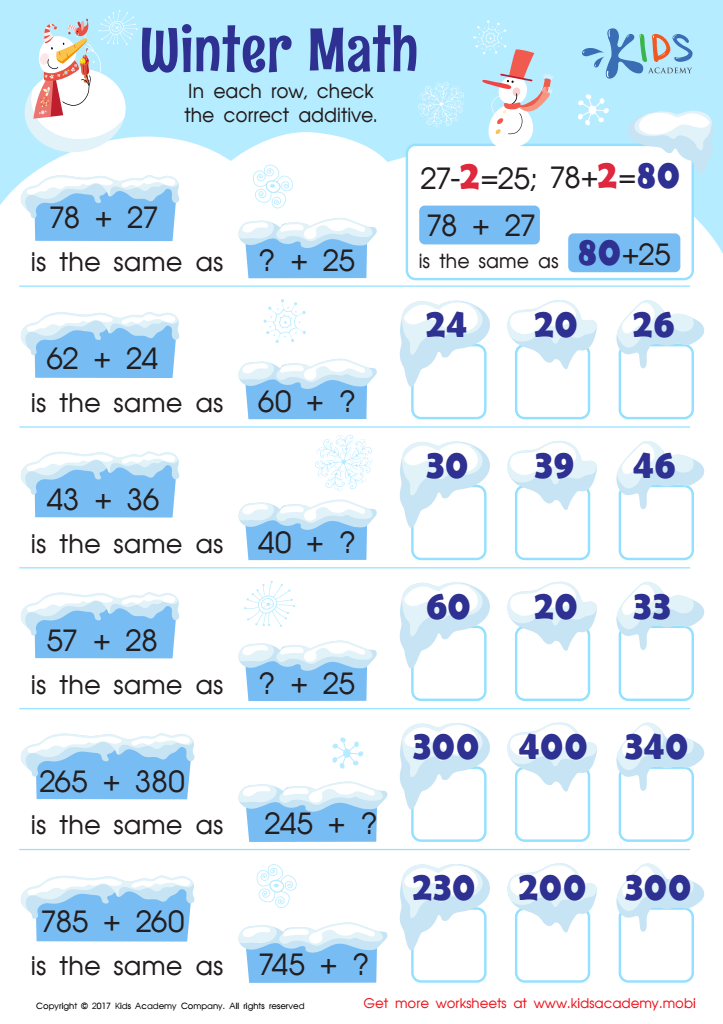
Perfect for a wintry day, challenge your 3rd grader to compare addition equations and fill in the missing numbers in the PDF. This winter-themed worksheet is sure to bring a smile while your 3rd grader practices their addition skills. Perfect for a blustery day, challenge your child to compare addition equations and complete the missing numbers in the PDF.
Free Addition Worksheet
Worksheet
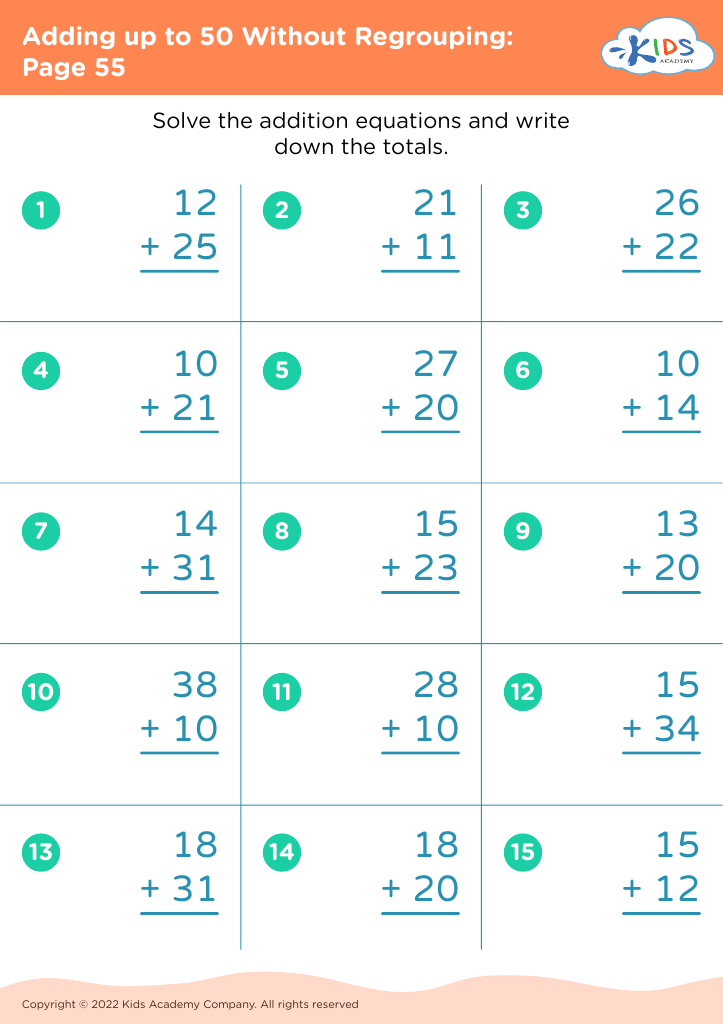
Adding up to 50 Without Regrouping: Page 55
Worksheet
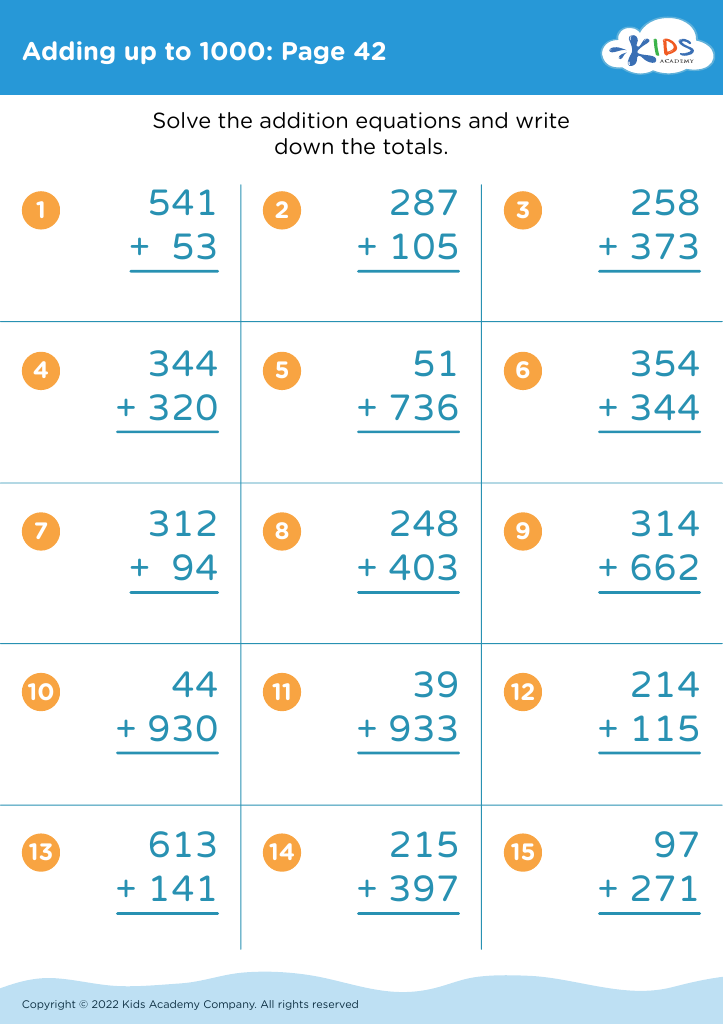
Adding up to 1000: Page 42

Adding up to 1000: Page 42

Adding up to 1000: Page 42
Worksheet
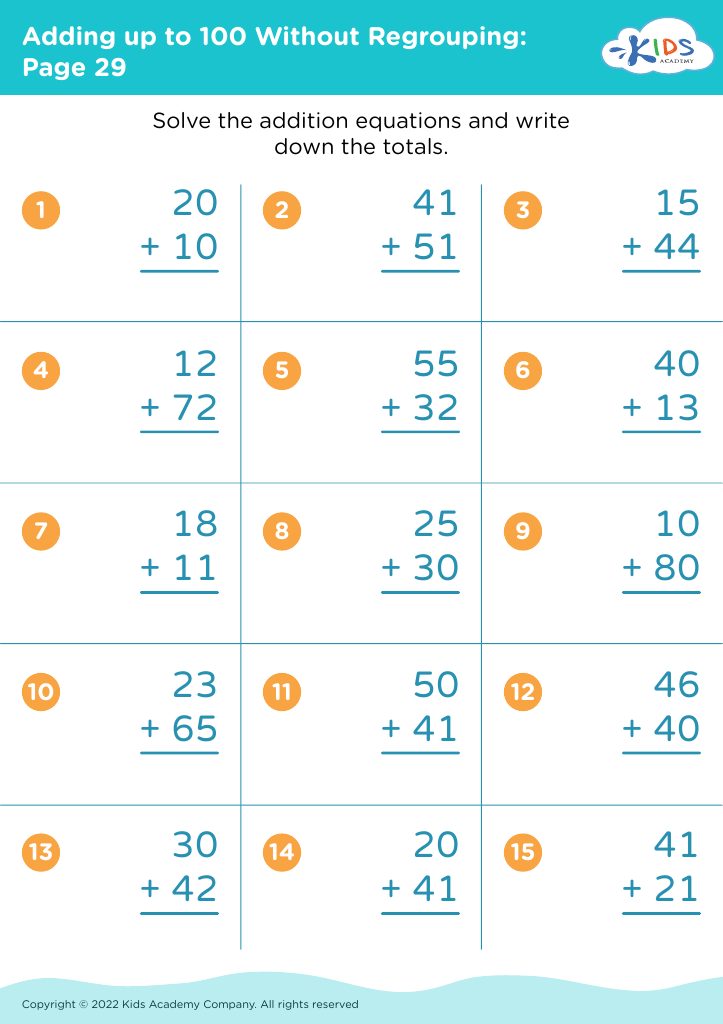
Adding up to 100 Without Regrouping: Page 29
Worksheet
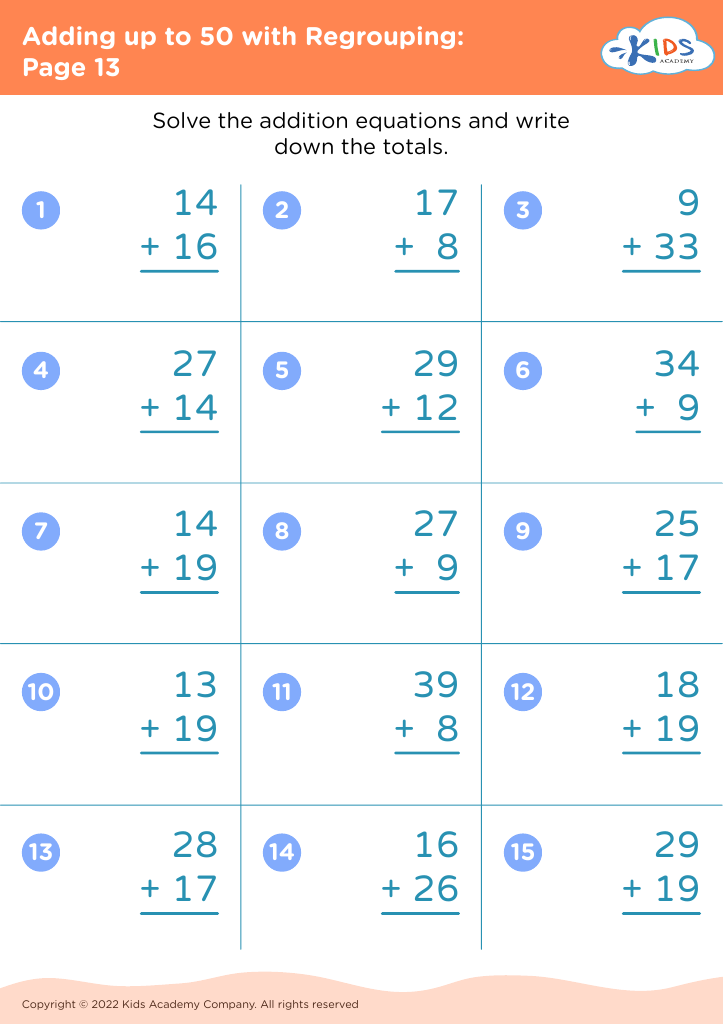
Adding up to 50 with Regrouping: Page 13
Worksheet
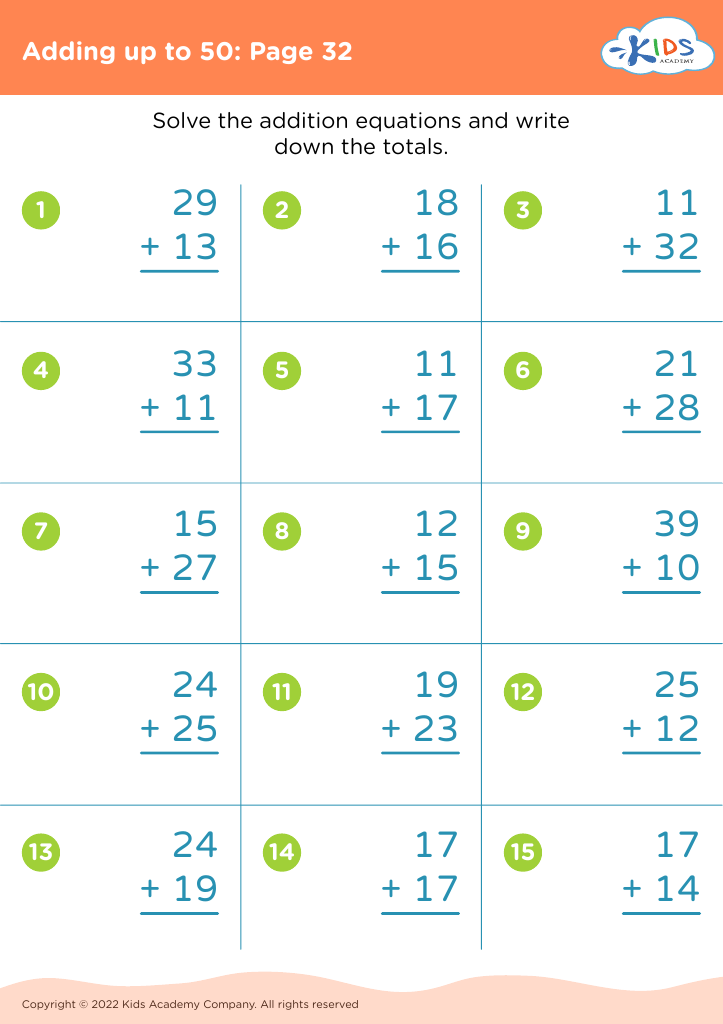
Adding up to 50: Page 32

Adding up to 50: Page 32

Adding up to 50: Page 32
Worksheet


... 4 5

Counting skills and addition are foundational elements of mathematics that greatly impact a child's overall learning and development, especially for ages 8-9. At this stage, children are transitioning from basic arithmetic to more complex problem-solving scenarios, making proficiency in counting and addition vital.

Parents and teachers should care about these skills because they are essential not only for academic success but also for fostering critical thinking. Mastery of counting and addition helps children develop strong numerical fluency, which serves as a building block for understanding more advanced concepts such as multiplication, division, and even fractions. This age group starts engaging in real-world applications of math, such as budgeting, time management, and measurements, and these skills are necessary for those scenarios.

Furthermore, confidence in math at this stage promotes a positive attitude towards the subject, reducing math anxiety. Engaging in counting and addition activities can also enhance children's cognitive abilities, mental agility, and persistence in problem-solving, valuable traits that extend beyond math. Ultimately, nurturing these skills empowers children to navigate their academic journeys with confidence and curiosity, fostering lifelong learning and resilience.