Fine Motor Skills (coloring) Addition Worksheets for Ages 8-9
3 filtered results
-
From - To
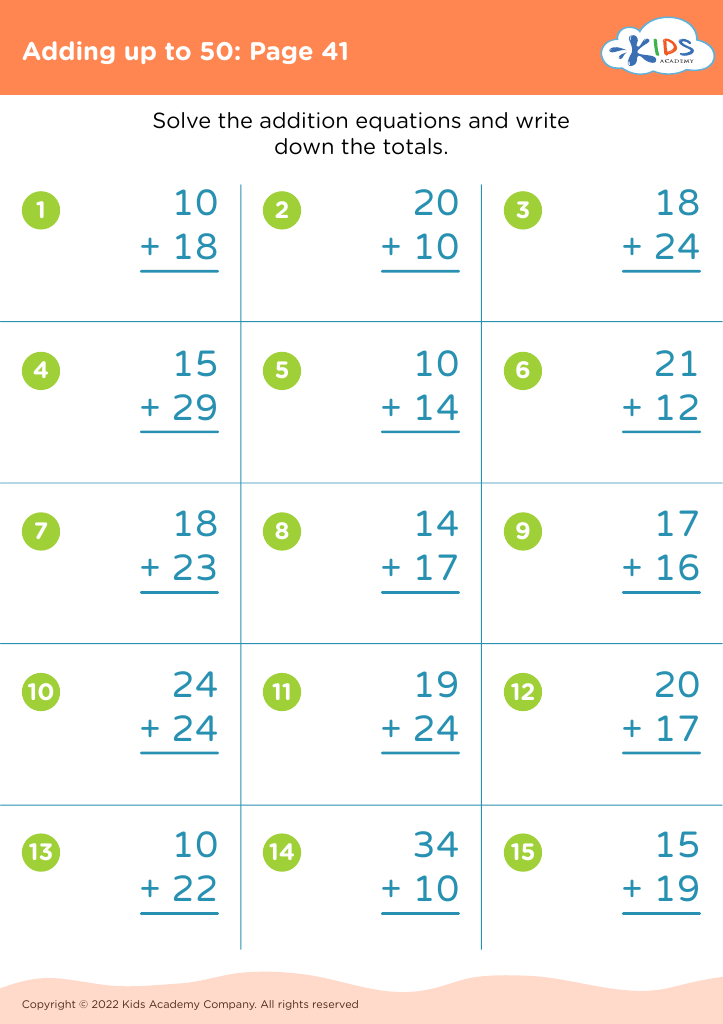
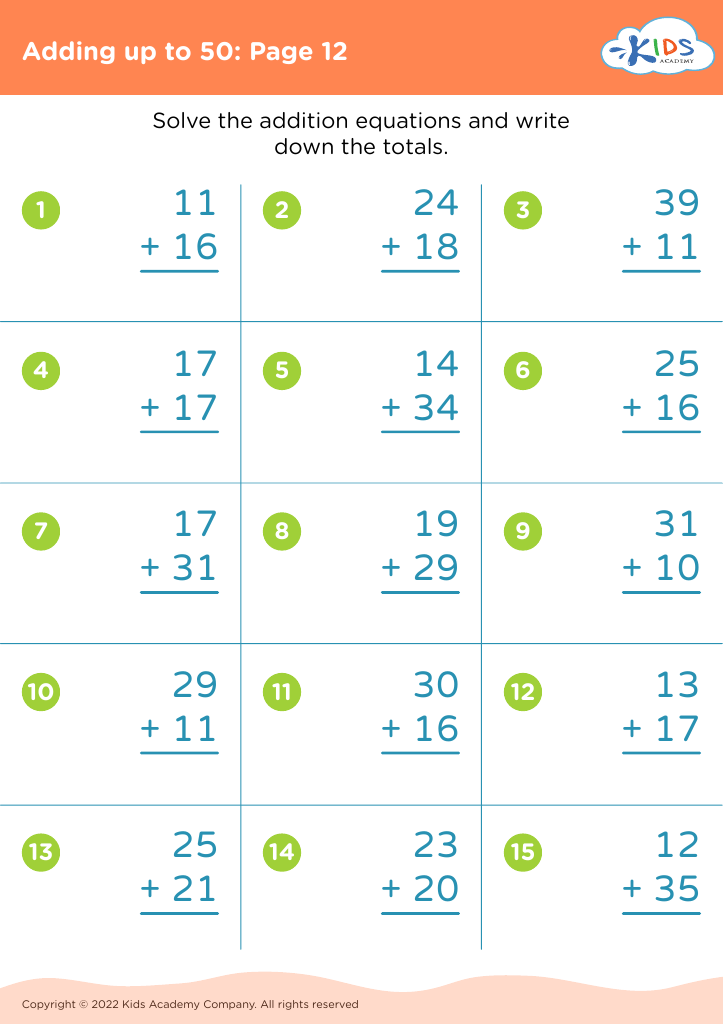
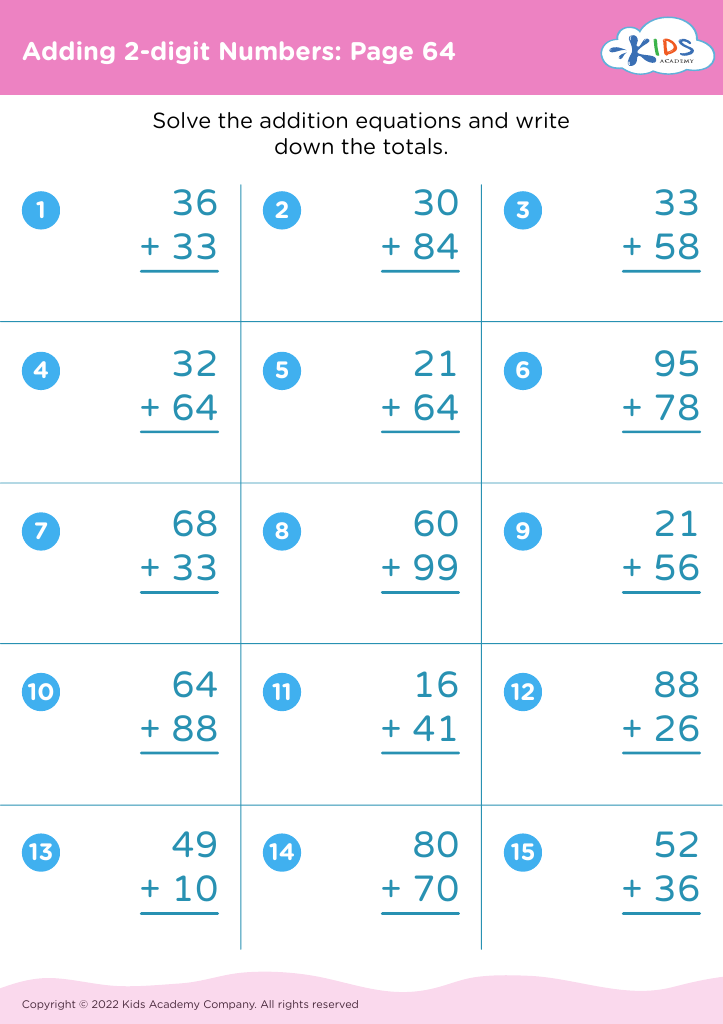
Enhance your child's fine motor skills and addition abilities with our engaging coloring worksheets designed for ages 8-9! Each worksheet blends creativity and learning, providing a fun way for kids to practice basic addition while developing precision and control over their writing instruments. These interactive worksheets not only bolster mathematical understanding but also encourage artistic expression. As your child colors and adds, they refine hand-eye coordination and motor skills essential for their overall development. Explore our collection of printable worksheets that make learning enjoyable and effective—perfect for home or classroom use. Let’s inspire young minds through colorful math adventures!








Fine motor skills are crucial for children aged 8-9 as they directly impact their overall development and daily functioning. During this stage, children are refining their dexterity, hand-eye coordination, and control over finger movements, which are essential for a variety of tasks. Activities like coloring play a significant role in strengthening these skills. When children color, they learn to grip instruments appropriately, manipulate the pressure applied, and stay within designated boundaries, which fosters focus and precision.
Furthermore, strong fine motor skills contribute to academic success. For instance, efficient writing, using scissors, and completing complex puzzles rely heavily on well-developed dexterity. In an age where technology dominates, it’s even more essential for children to maintain these foundational skills, as they support cognitive functions such as problem-solving and spatial awareness.
Beyond academics, mastering fine motor skills enhances children's confidence and independence in daily activities, from buttoning shirts to crafting. Parents and teachers should pay attention to fostering these skills to ensure children are not only prepared for school tasks but also for various life situations. Engaging in fun activities like coloring helps children develop important tactile experiences that nurture their creativity and self-expression while building essential motor control.








