Practice division Addition Worksheets for Ages 8-9
3 filtered results
-
From - To
Boost your child's math skills with our engaging Practice Division Addition Worksheets designed for ages 8-9! Perfectly tailored to reinforce fundamental math concepts, these worksheets help young learners master addition and basic division in an enjoyable and interactive way. Each worksheet provides a mix of problems that challenge and excite, ensuring your child stays motivated while building confidence in their math abilities. Curated by educational experts, our thoughtfully crafted worksheets make learning math fun and effective. Watch your child excel in math and develop a lifelong love for numbers with Kids Academy’s premium practice division addition worksheets!
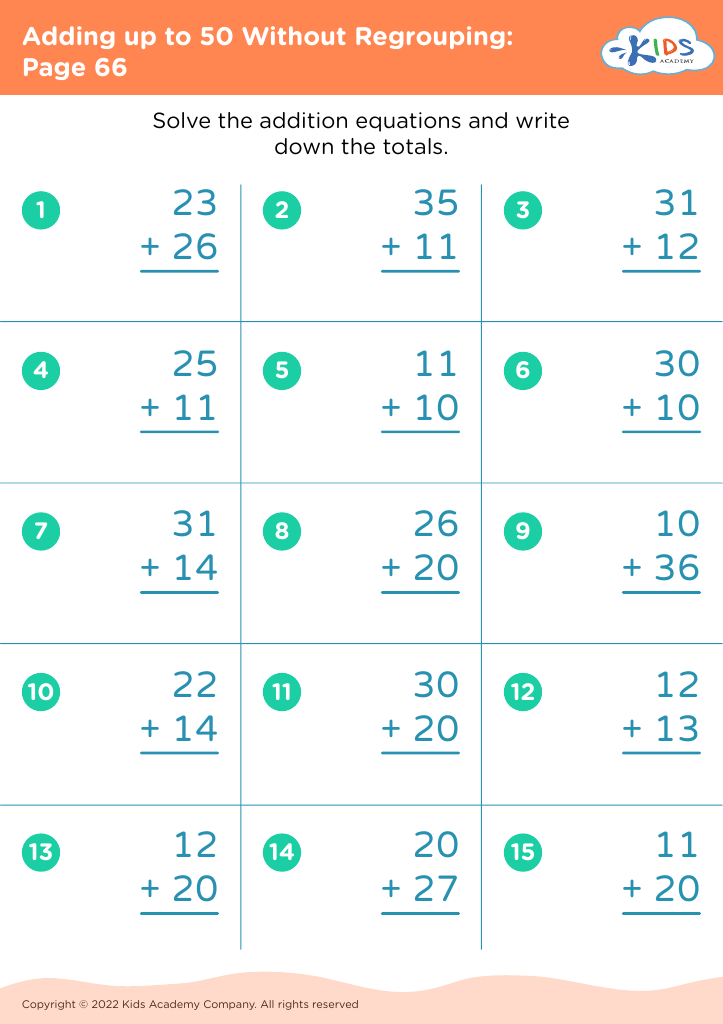
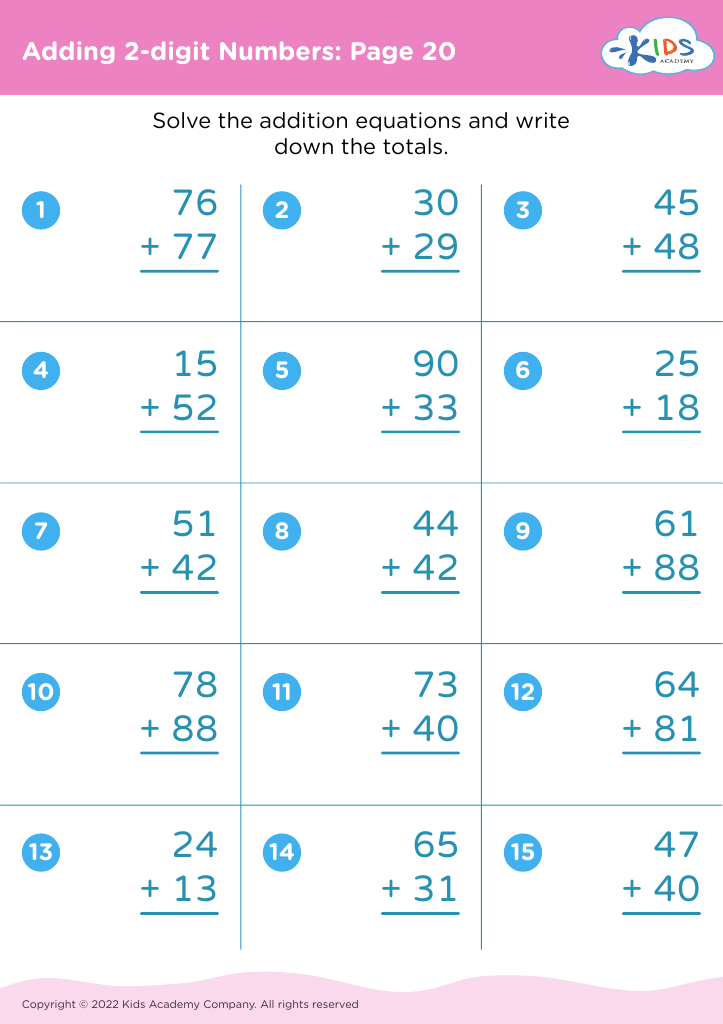
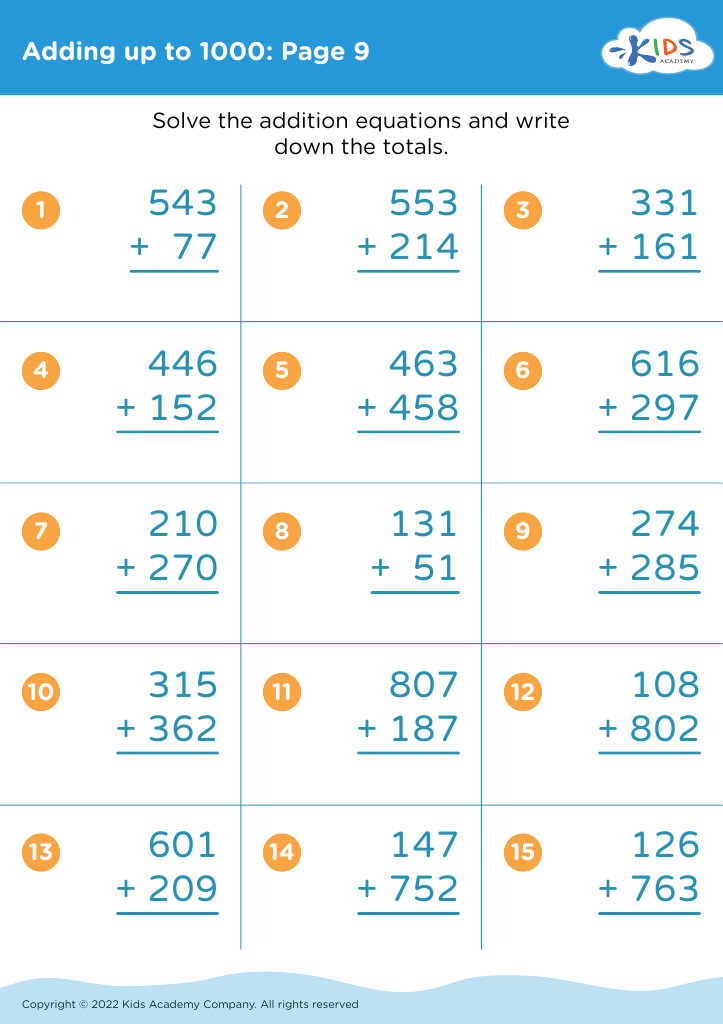








Parents and teachers should care about practice in division and addition for children aged 8-9 because these foundational arithmetic skills are crucial for their future academic success and daily life activities. Mastering addition ensures that children can handle basic operations necessary for understanding more advanced math concepts. It aids in building confidence in their numeracy skills, allowing them to tackle problems with ease and accuracy.
Moreover, introduction to division at this age helps young students grasp the concept of equal distribution and sharing, which are important mathematical principles. Division also aligns with primary curriculum goals, supporting children in their transition to more complex math topics such as fractions, ratios, and algebra later on.
Regular practice not only solidifies these mathematical foundations but also enhances cognitive abilities such as logical reasoning and problem-solving. Math is cumulative, so understanding and confidently applying these early arithmetic skills create a strong base for learning more advanced topics.
Furthermore, these skills are not limited to the classroom; they are essential in everyday situations such as telling time, handling money, and measuring ingredients in a recipe. Thus, ensuring consistent practice of division and addition sets up children for better academic performances and practical, real-world competency.








