Recognizing numbers Addition Worksheets for Ages 8-9
3 filtered results
-
From - To
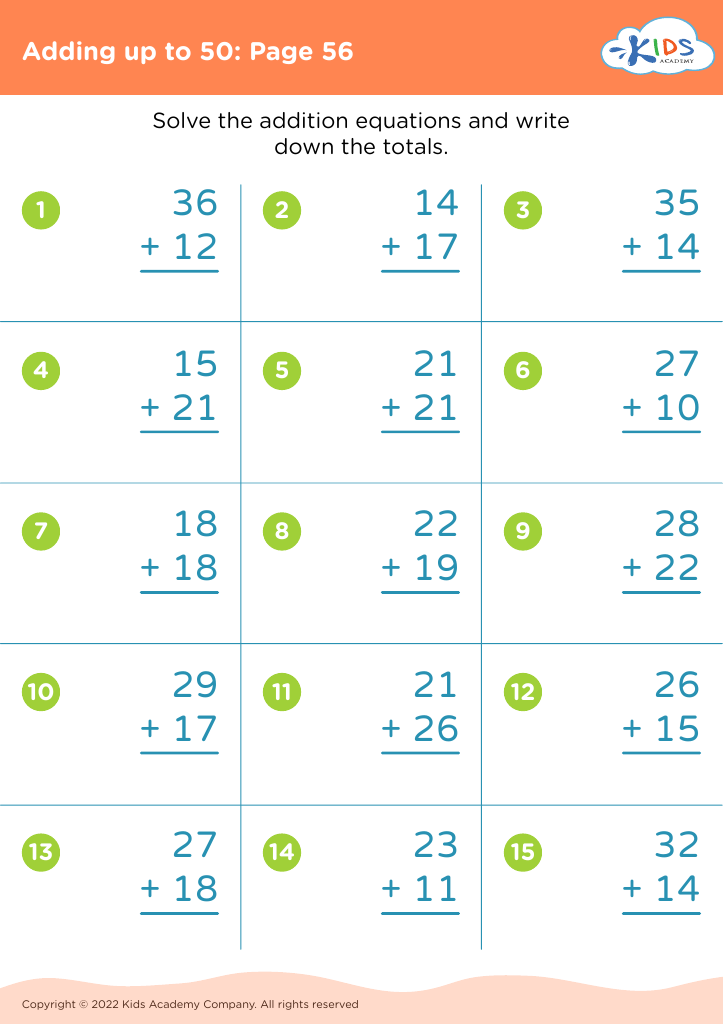
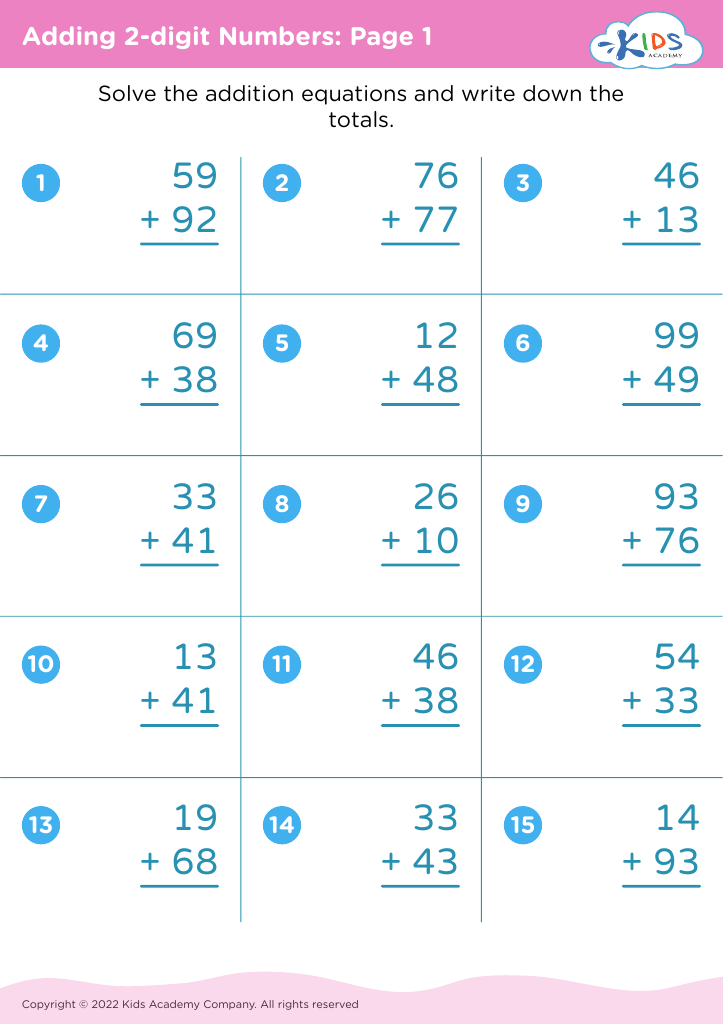
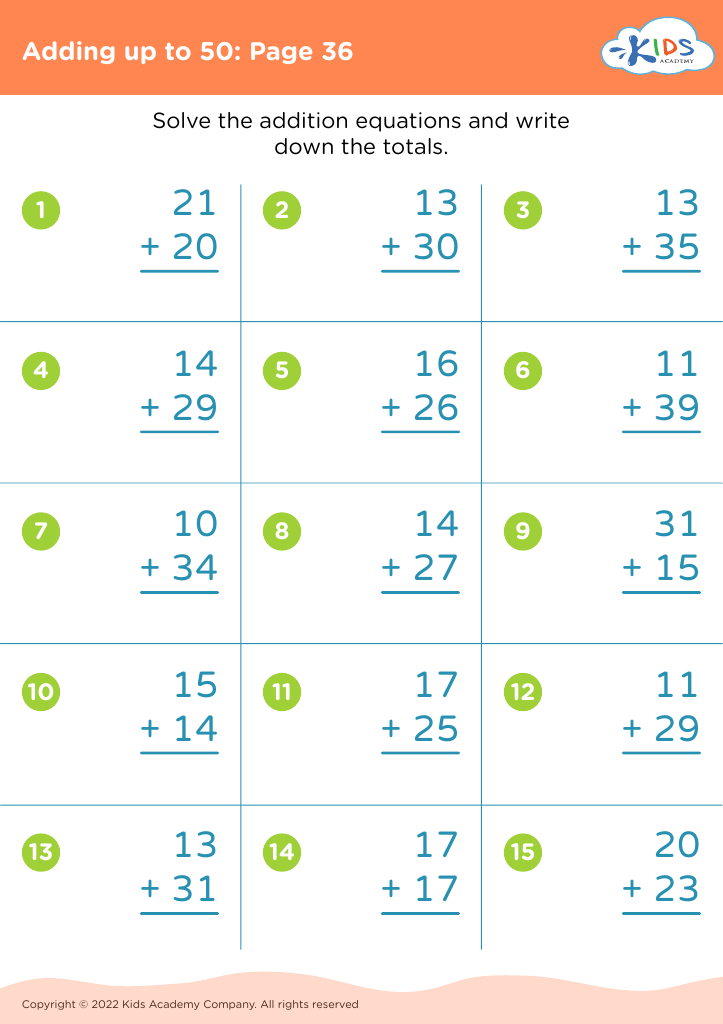
Our "Recognizing Numbers Addition Worksheets for Ages 8-9" are designed to build essential math skills while making learning fun and engaging. These expertly crafted worksheets focus on helping children identify and understand numbers, laying a strong foundation for mastering addition. Tailored for 8-9-year-olds, each worksheet combines vibrant images and practical exercises to foster numerical literacy and arithmetic competence. By regularly practicing with our worksheets, children develop confidence and proficiency in addition, preparing them for more advanced mathematical challenges. Perfect for classroom activities or at-home learning, these resources support both teachers and parents in making math exciting and educational.








Engaging children in recognizing numbers and practicing addition by the ages of 8-9 is crucial for multiple reasons. This developmental phase, typically where children are in third grade, is when foundational mathematical skills are being solidified, forming the basis for more complex mathematical reasoning in later grades.
Firstly, recognizing numbers and understanding addition fosters cognitive development as children learn to process numerical data, understand quantity, and make sense of numbers in various contexts. This builds critical thinking and problem-solving skills essential for everyday decision-making and academic success.
Secondly, proficiency in addition forms the cornerstone of more advanced arithmetic operations, such as subtraction, multiplication, and division. Mastery in these areas not only builds confidence in handling numbers but also prepares students for algebraic thinking and higher-level math topics.
Furthermore, early competence in math correlates with improved academic performance in other subjects, such as science and economics. It also enhances practical life skills, including financial literacy, measurement, and data interpretation. Recognizing numbers and mastering addition thus support holistic development, aiding emotional resilience as children achieve and celebrate small mathematical victories.
Finally, fostering a positive relationship with math early on can deter math anxiety. When children find joy and confidence in their numerical abilities, they are more likely to take risks and persist in solving challenging problems throughout their educational journey.








