Recognizing Patterns Addition Worksheets for Ages 8-9
21 filtered results
-
From - To
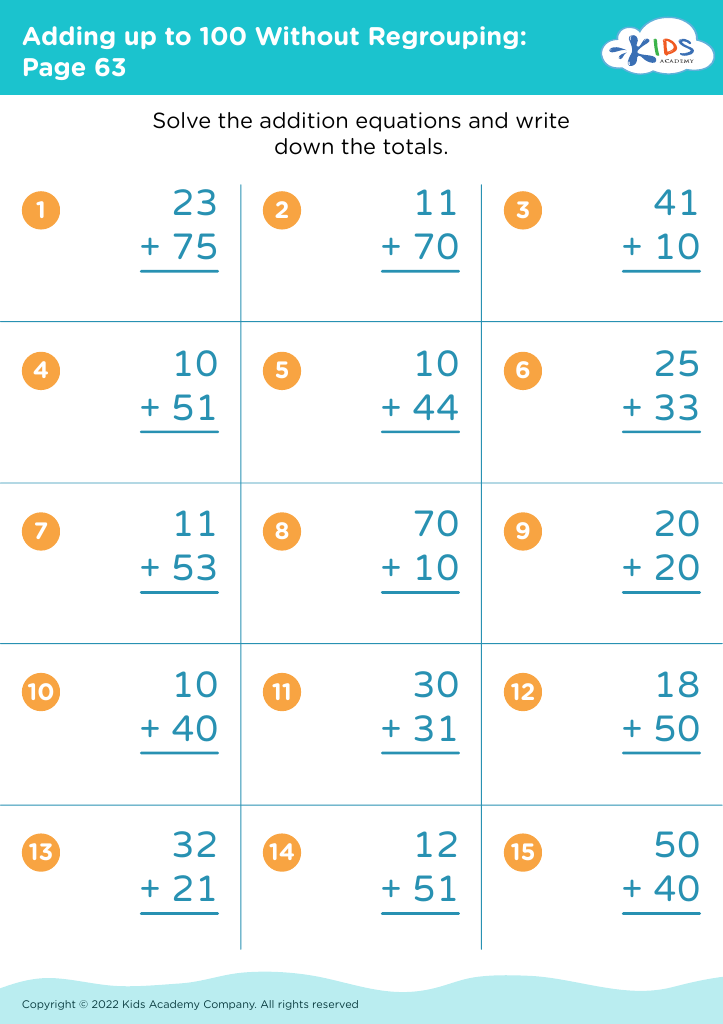
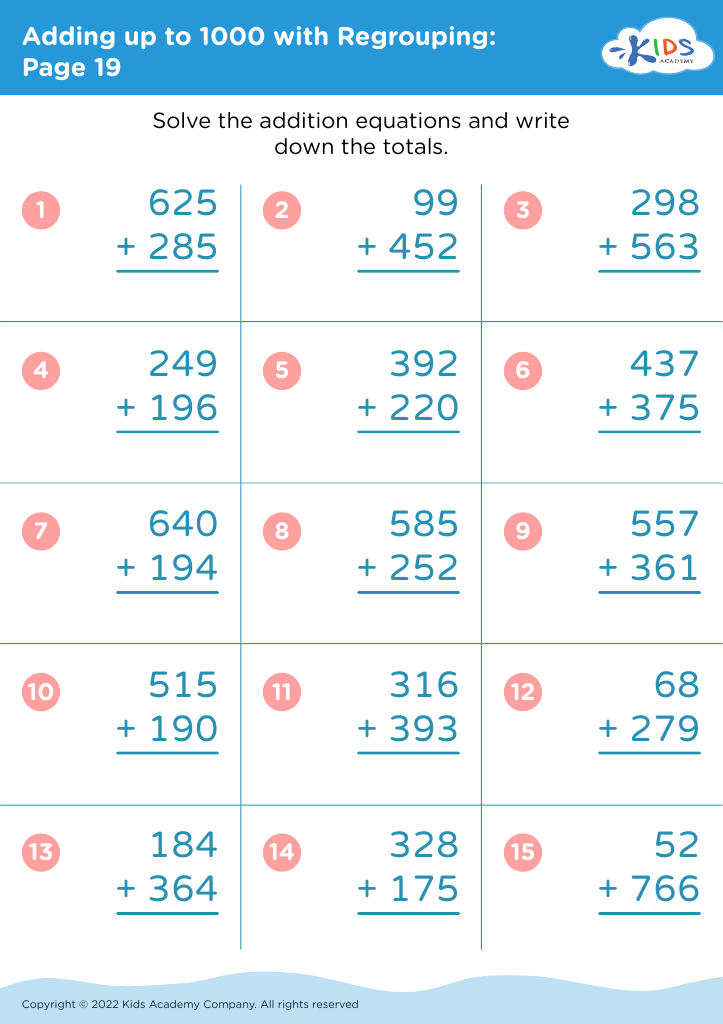
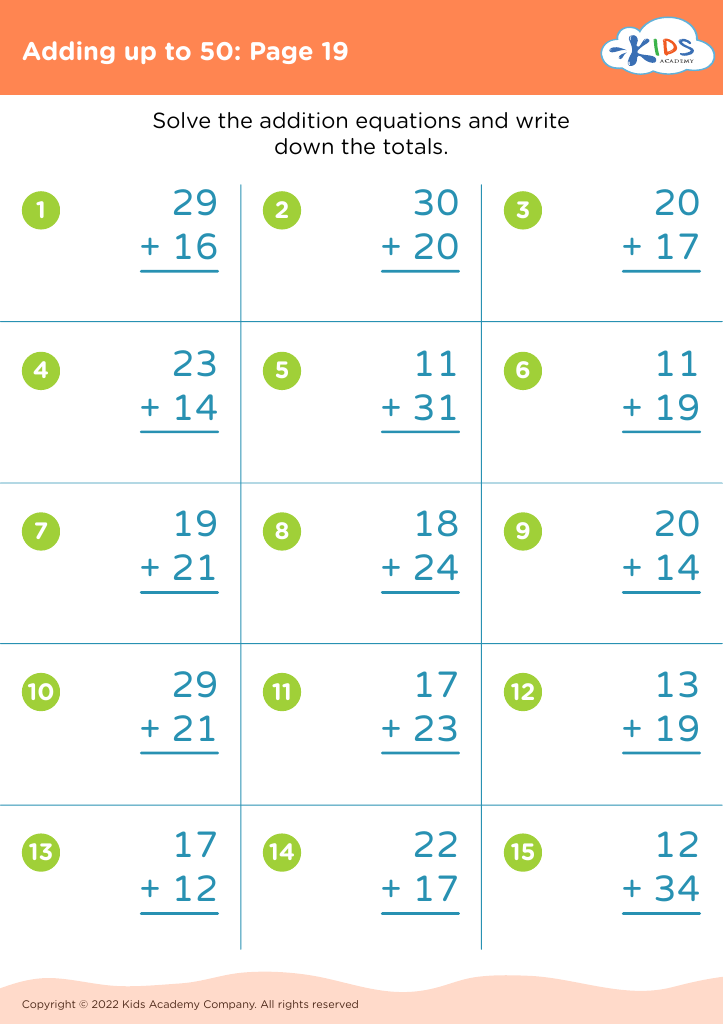
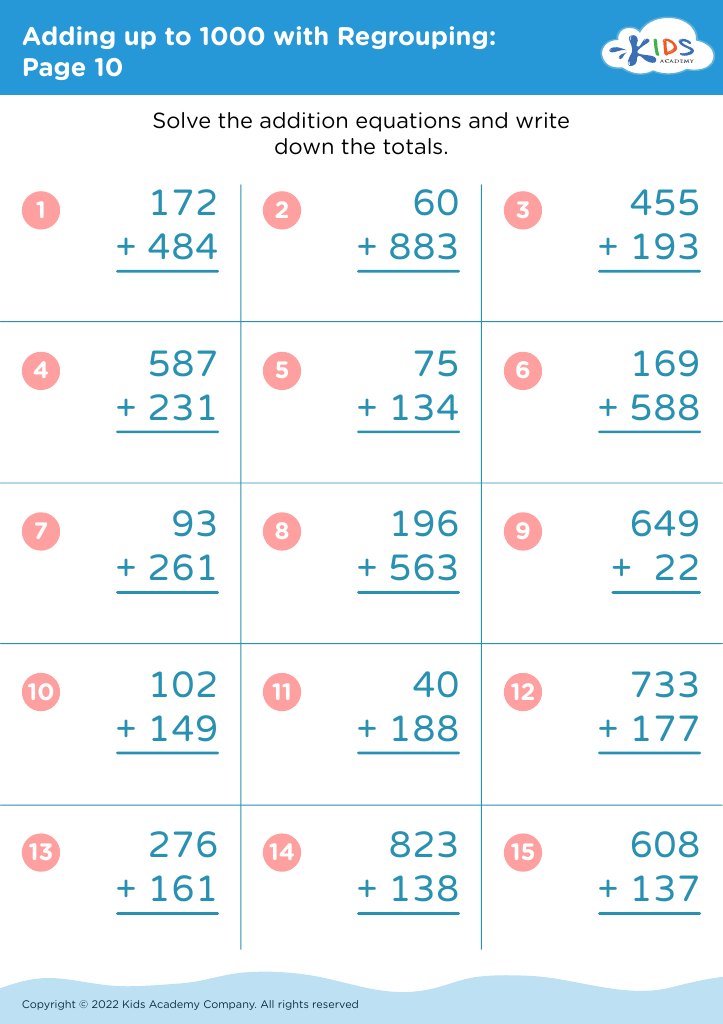
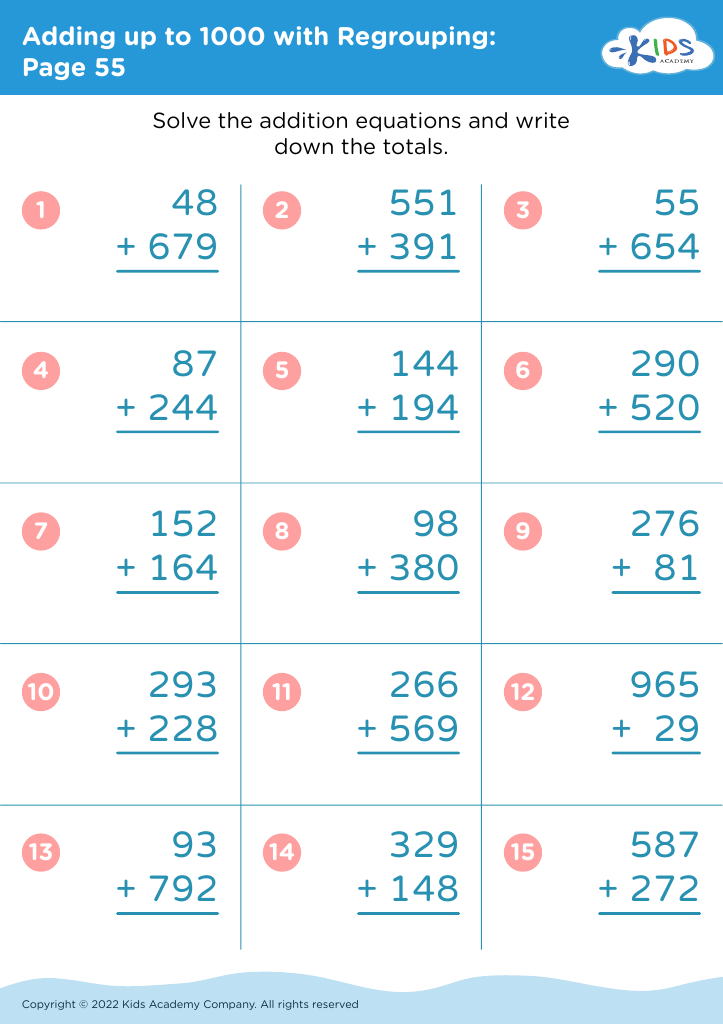
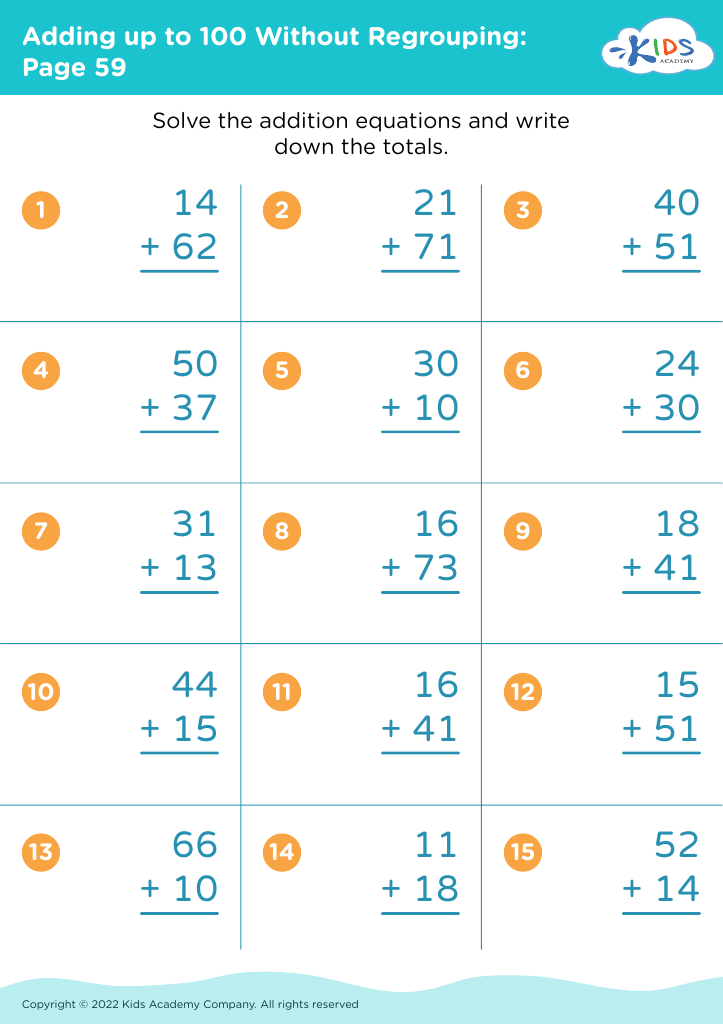
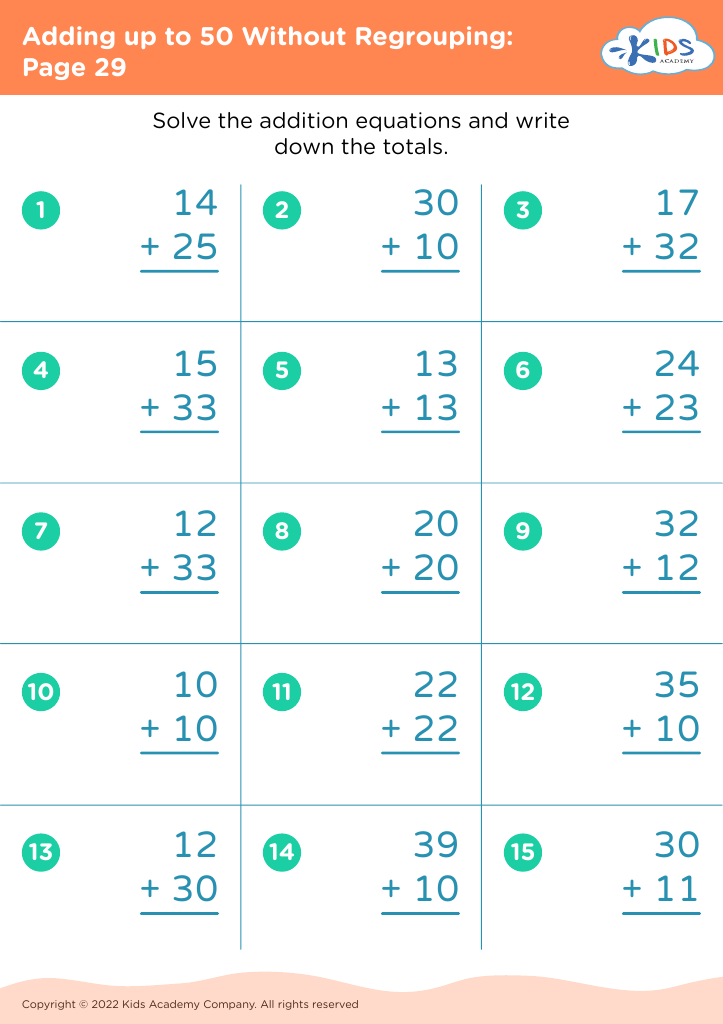
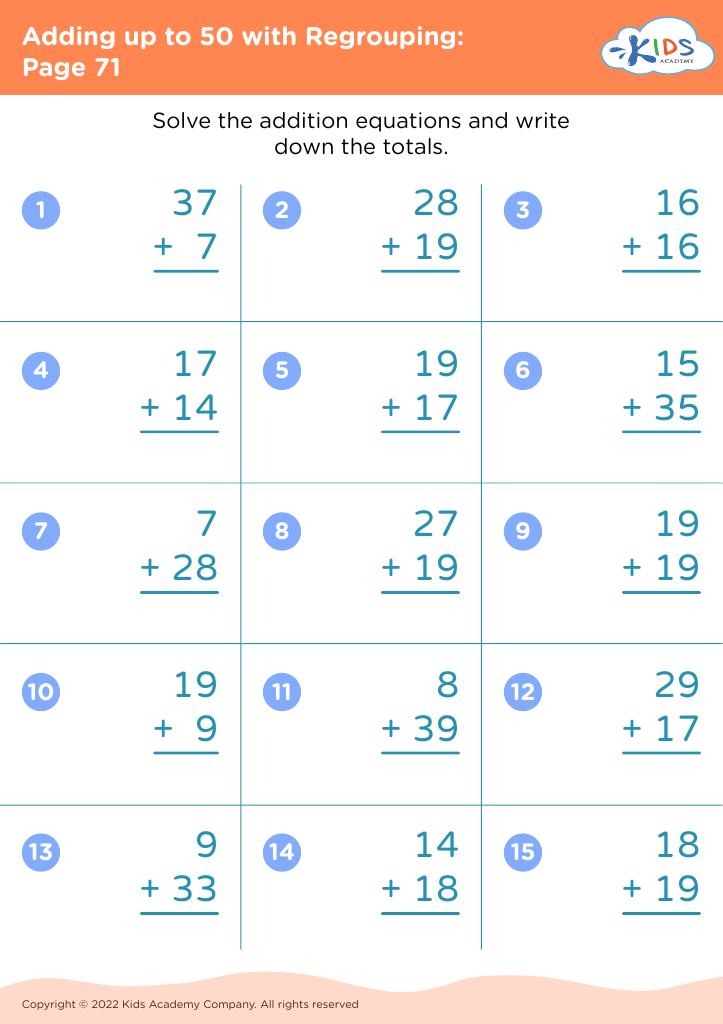
Help your child master addition and enhance critical thinking with our "Recognizing Patterns Addition Worksheets" for ages 8-9. Designed to stimulate young minds, these engaging worksheets combine math practice with pattern recognition, aiding both computational skills and logical reasoning. Through fun exercises, children will discover the joy of finding and predicting numerical patterns, making math both enjoyable and accessible. Ideal for reinforcing classroom learning or providing additional practice at home, our carefully crafted worksheets support the foundation for future math success. Download today and watch your child's confidence soar as they conquer addition with ease.
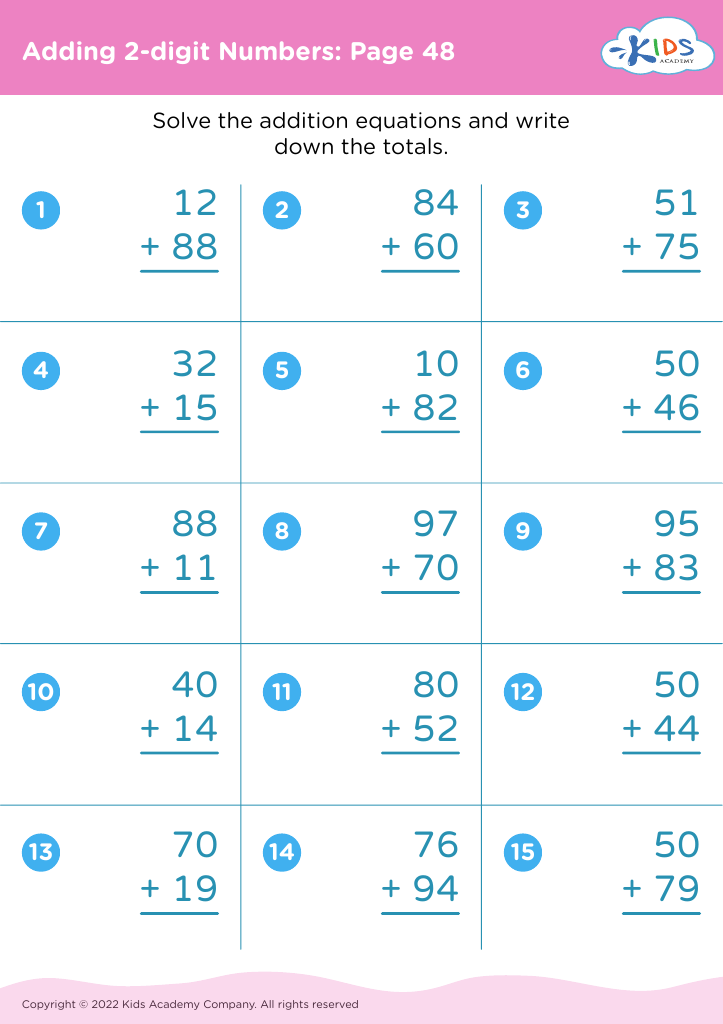
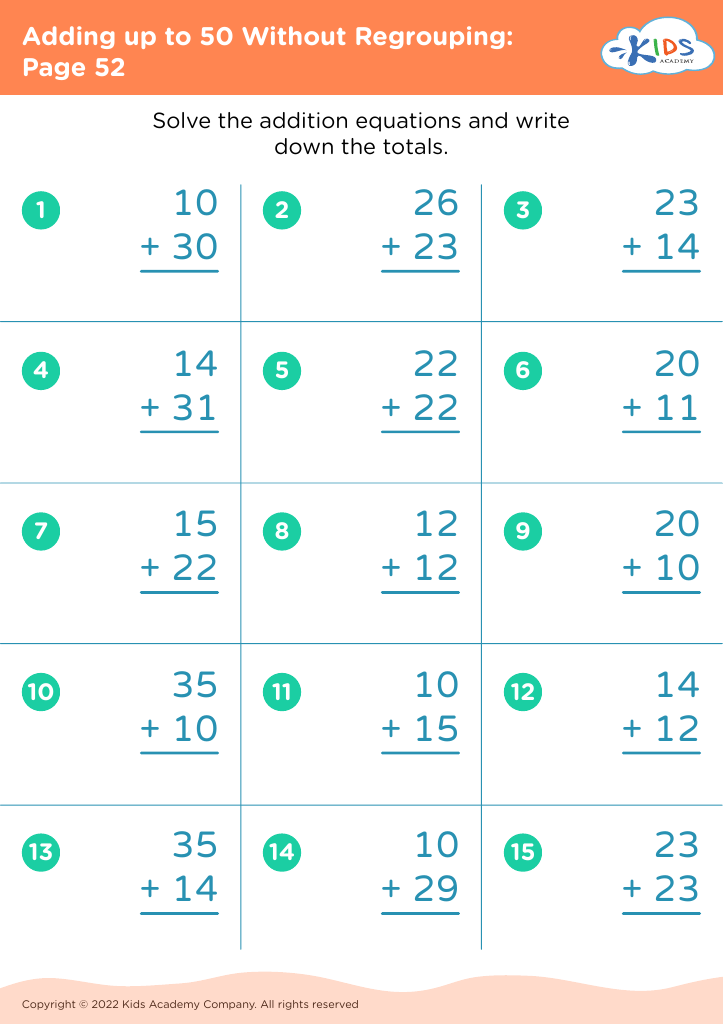
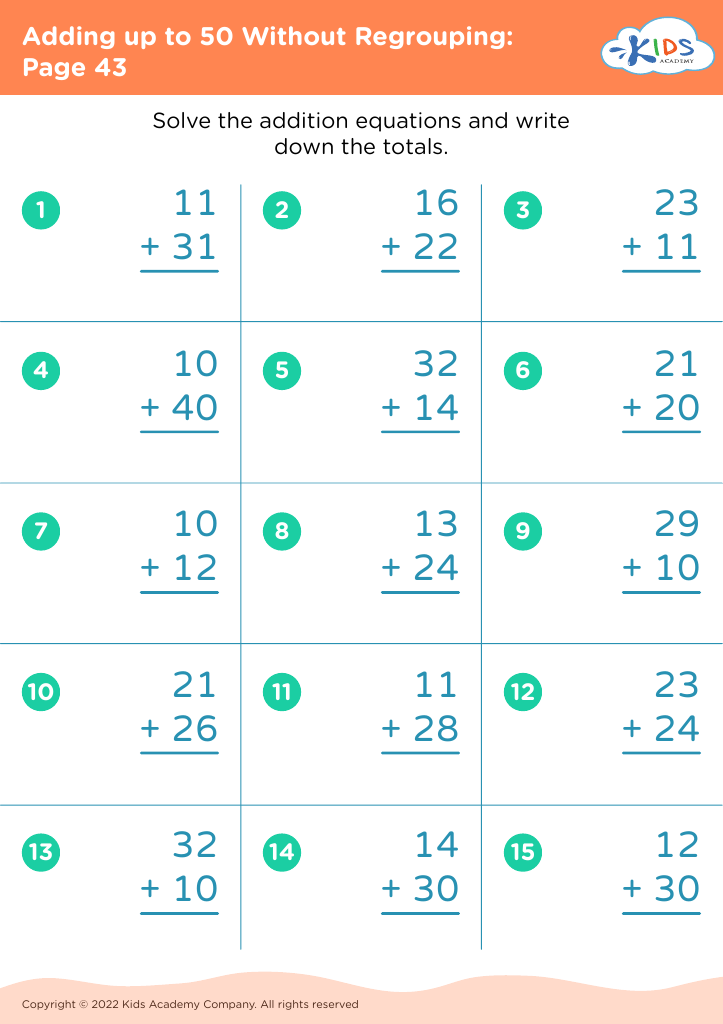
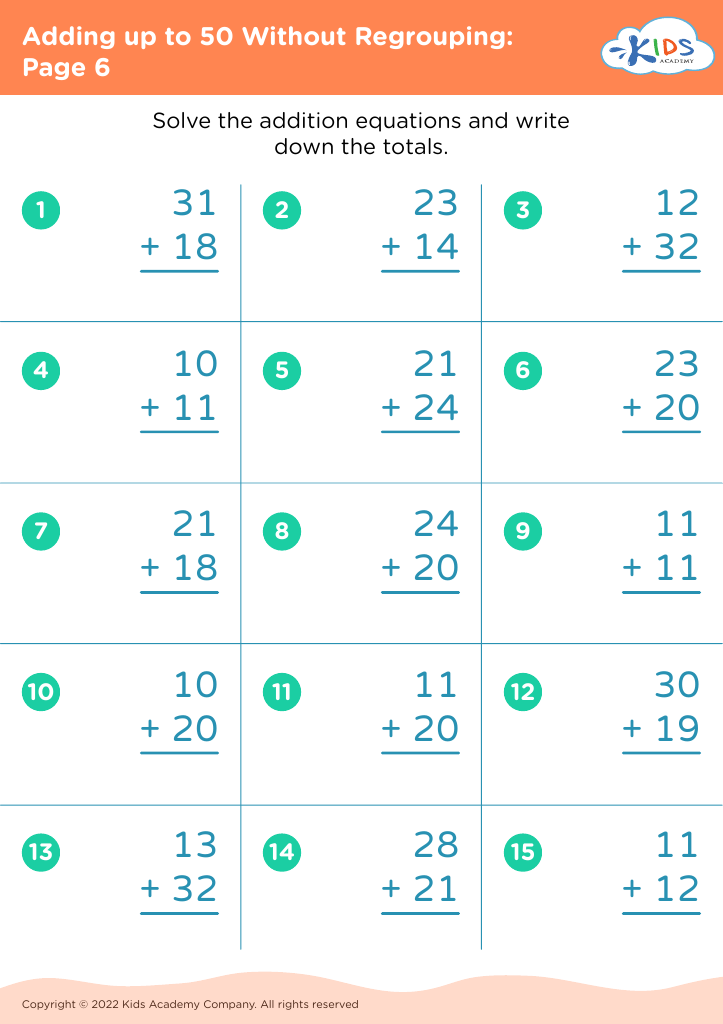
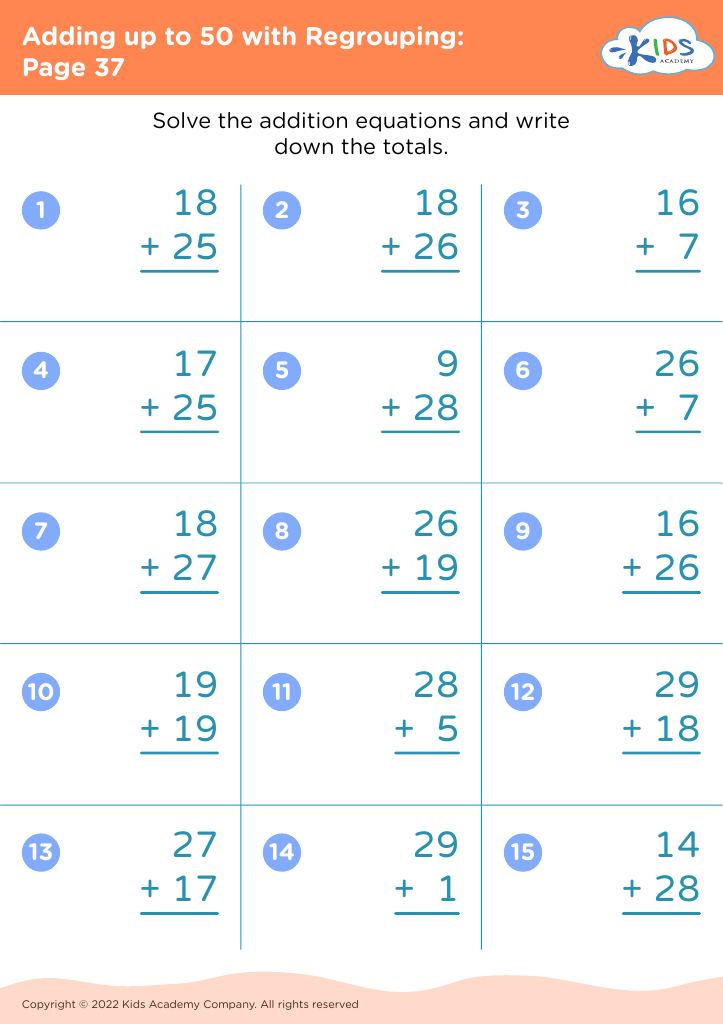
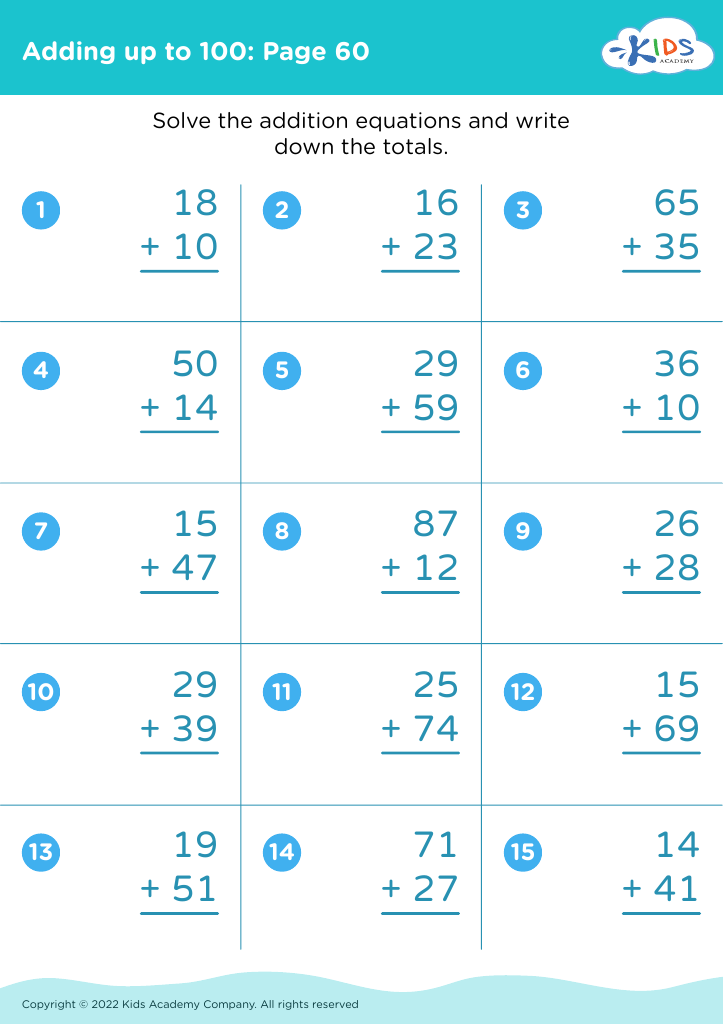
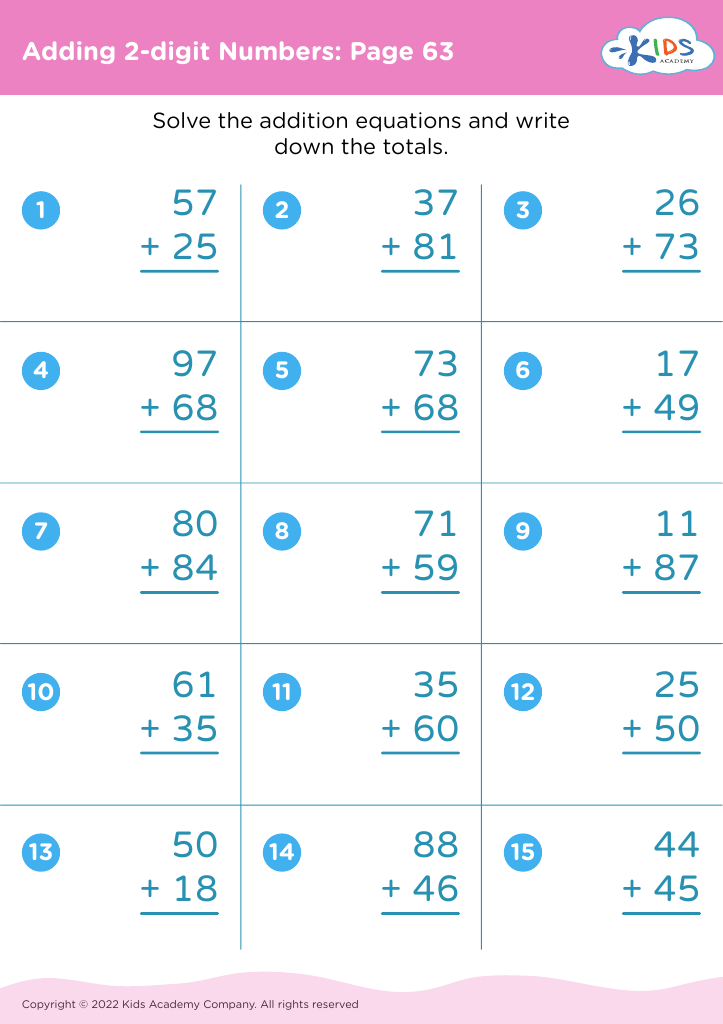
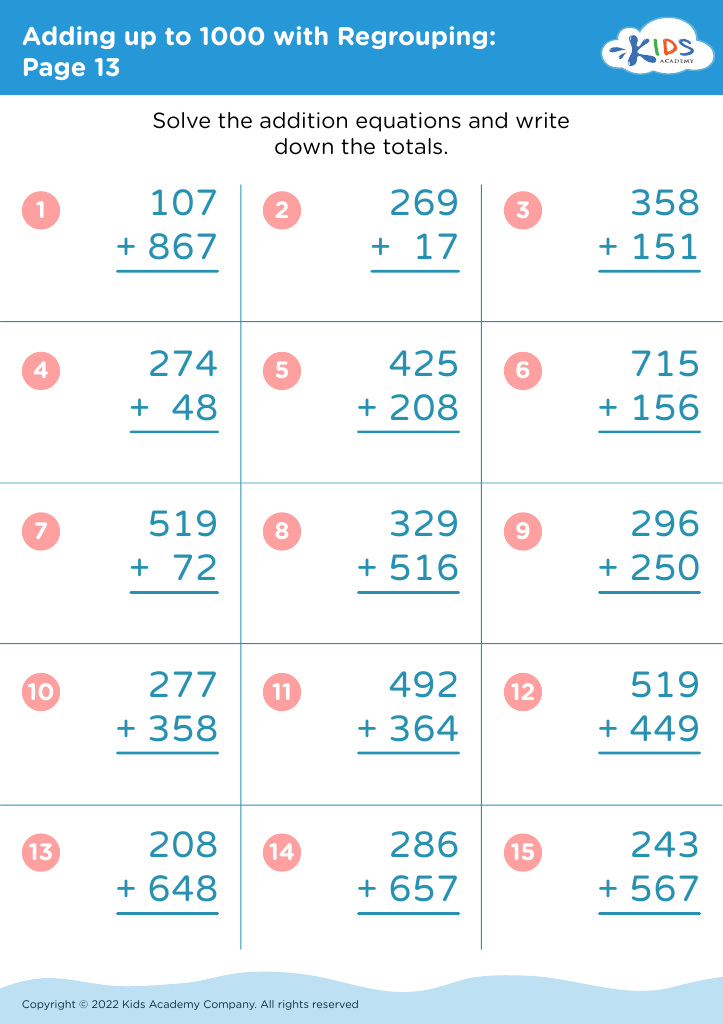
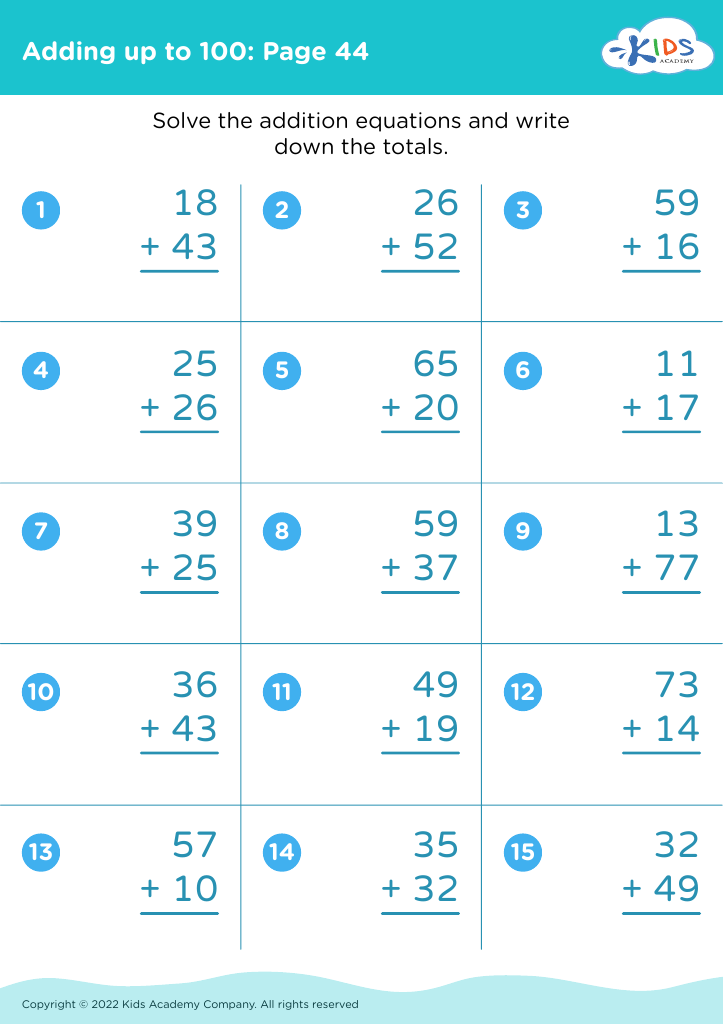








Recognizing patterns in addition is crucial for children aged 8-9, as it builds a strong foundation for their mathematical understanding and promotes cognitive development. At this stage, children's cognitive abilities are rapidly evolving, and identifying patterns enhances their ability to grasp more complex mathematical concepts in the future.
Firstly, recognizing patterns helps children see the relationship between numbers, paving the way for a deeper understanding of arithmetic operations beyond rote memorization. This skill is essential for developing problem-solving abilities and for mastering multiplication, division, and algebra later on. For example, understanding that 2 + 3 is the same as 3 + 2 helps them grasp the commutative property of addition and apply this knowledge to other areas.
Secondly, pattern recognition enhances cognitive skills such as logical thinking, reasoning, and analytical abilities. These skills are beneficial beyond mathematics, contributing to overall academic success and critical thinking.
For educators and parents, nurturing this ability is equally important. It allows children to see math as an interconnected and logical subject, reducing math anxiety and fostering a positive attitude towards learning. By engaging young minds with pattern-recognition activities, teachers and parents can make learning enjoyable and meaningful, setting children up for continued success in their educational journey.








