
Understand fractions Addition Worksheets for Ages 8-9
20 filtered results
Difficulty Level
Grade
Age
-
From - To
Subject
Activity
Standards
Welcome to our "Understand Fractions Addition Worksheets" designed specifically for children aged 8-9! These engaging worksheets provide a fun and interactive way for young learners to master the concept of adding fractions. With clear visuals and practical exercises, children will develop a solid understanding of fractions and enhance their mathematical skills. Our carefully crafted activities guide students through various scenarios to build confidence and proficiency. These worksheets not only support classroom learning but also make great supplemental resources for home practice. Perfect for teachers and parents alike, help your child excel in math with our fraction addition worksheets today!
Favorites
With answer key
Interactive
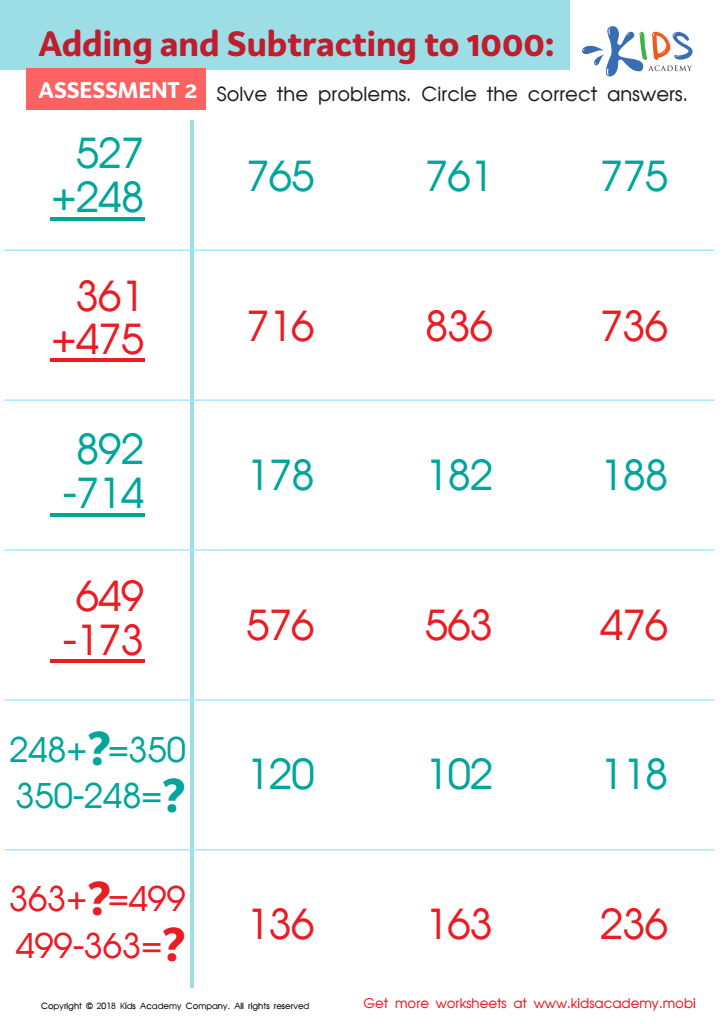
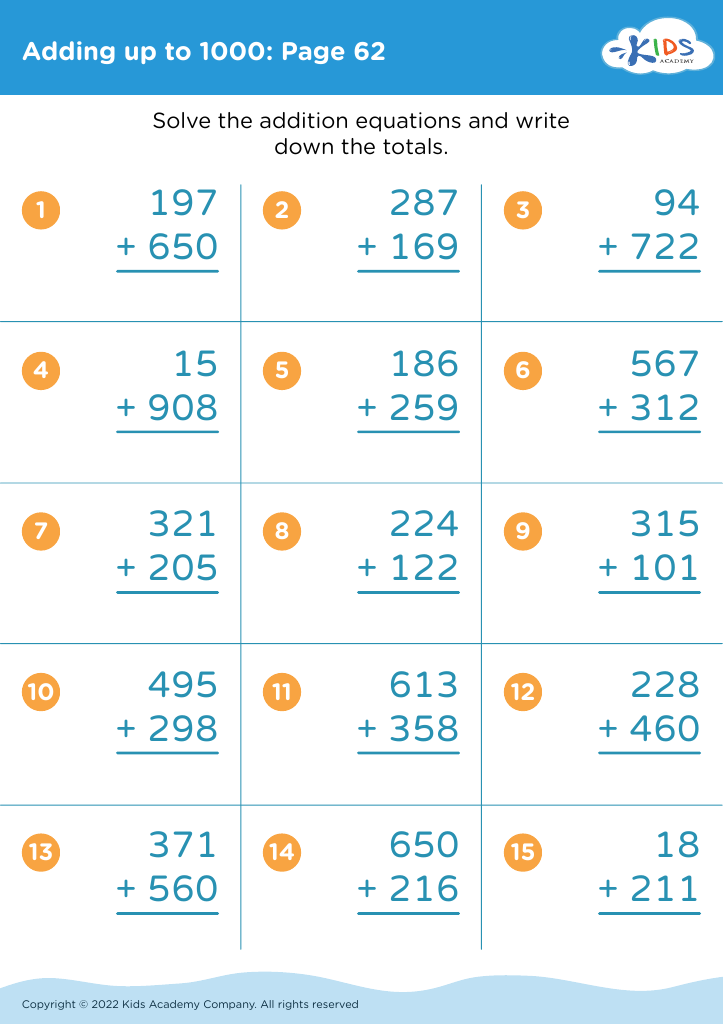
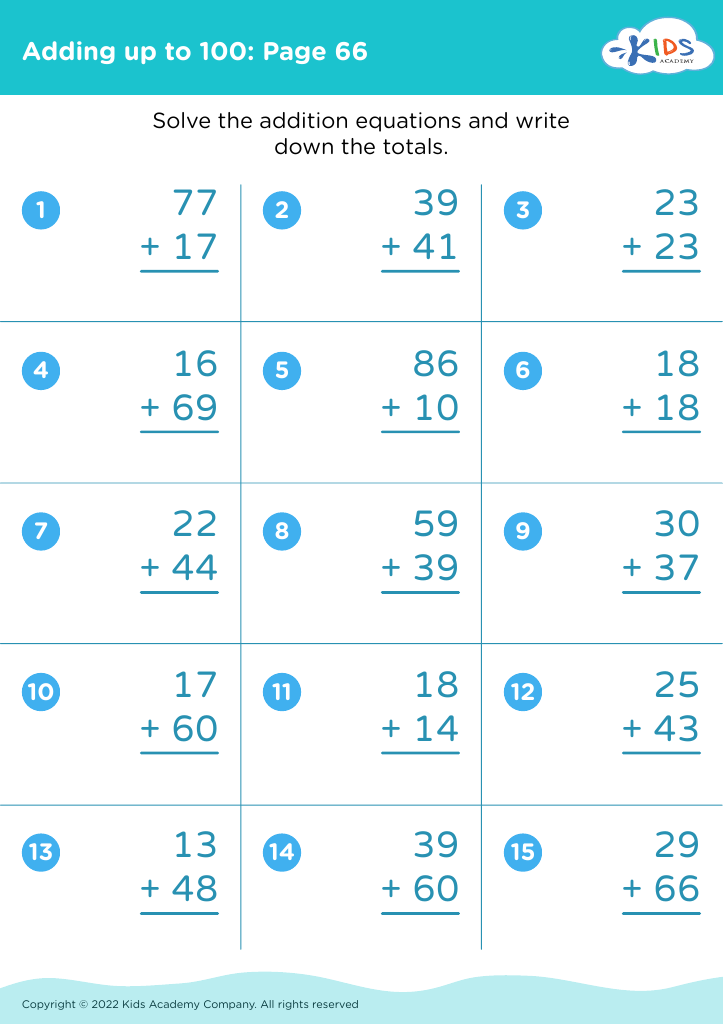
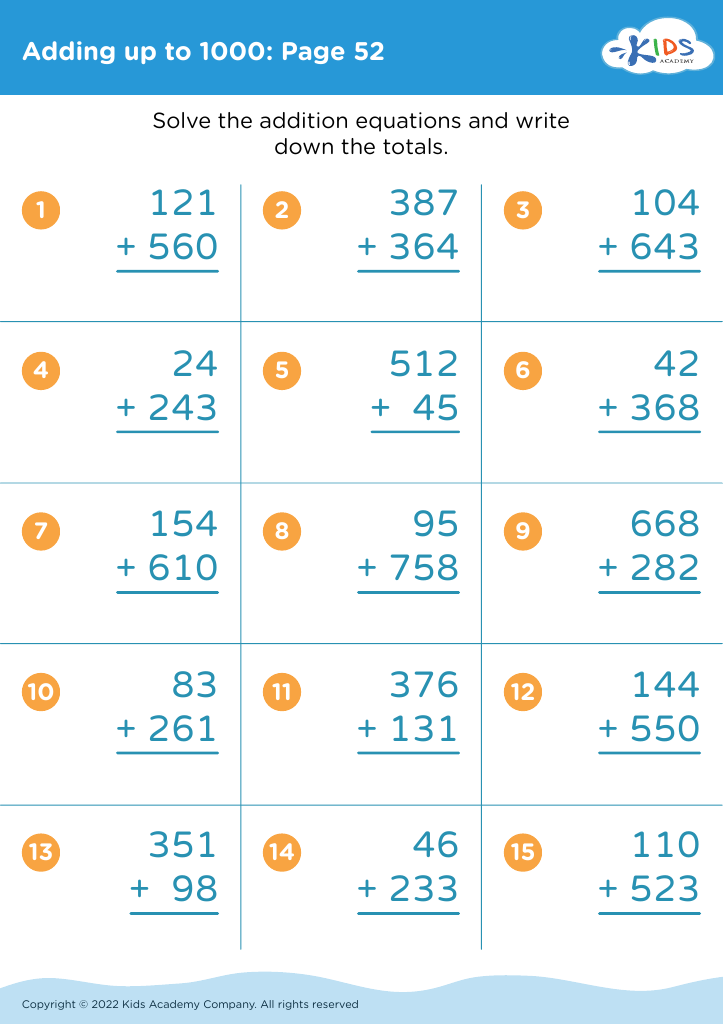
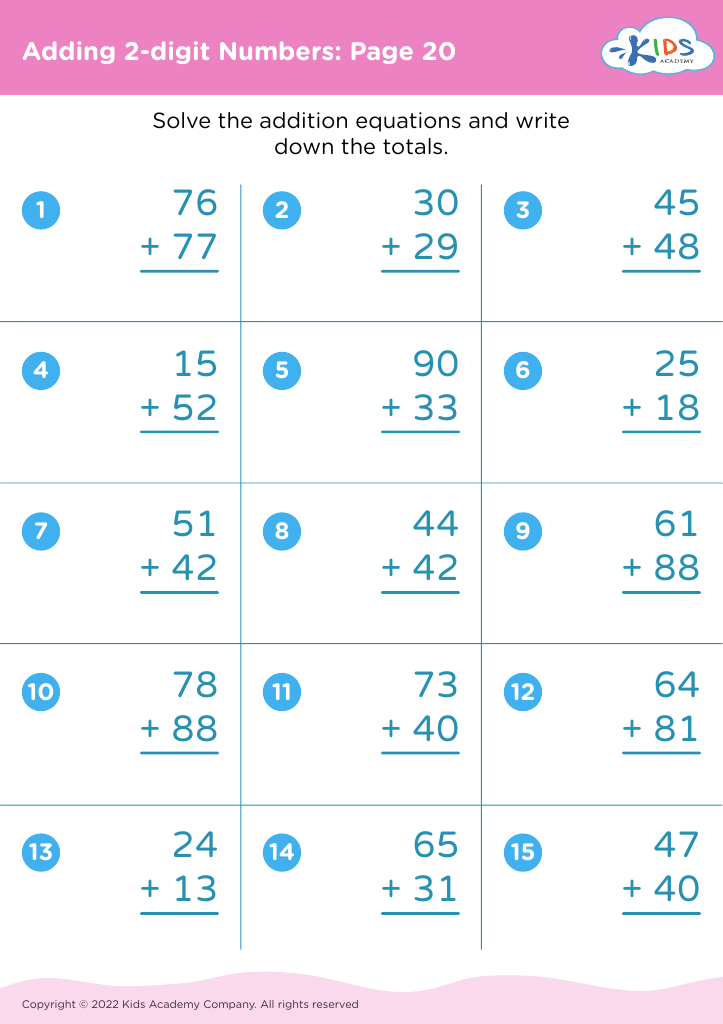
Adding and Subtracting to 1 Worksheet: Assessment 2
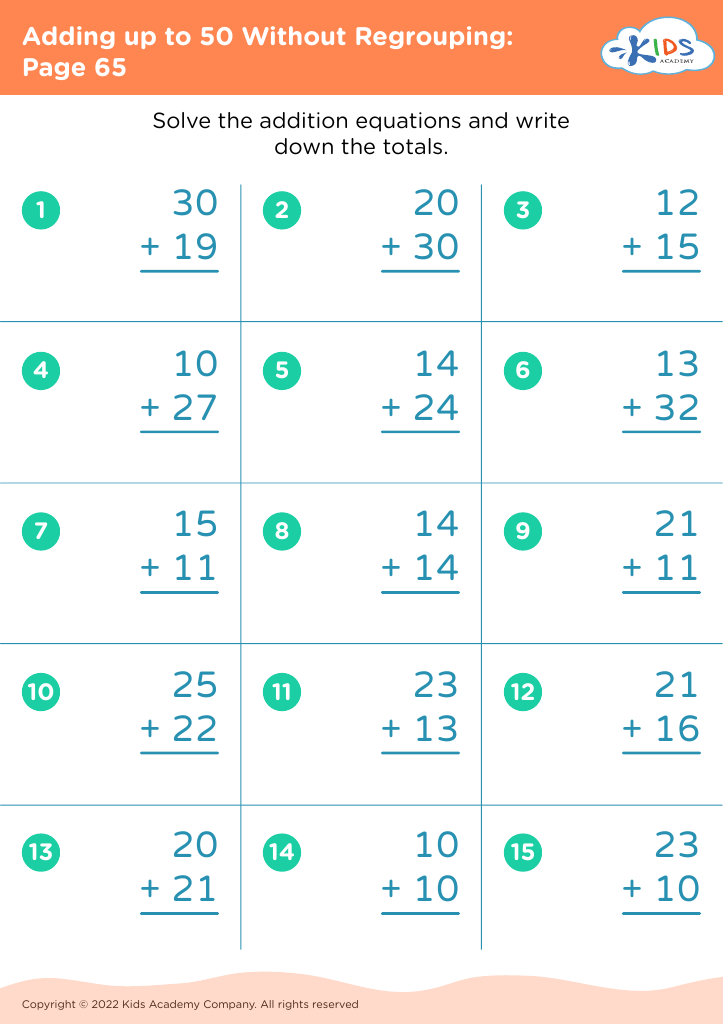
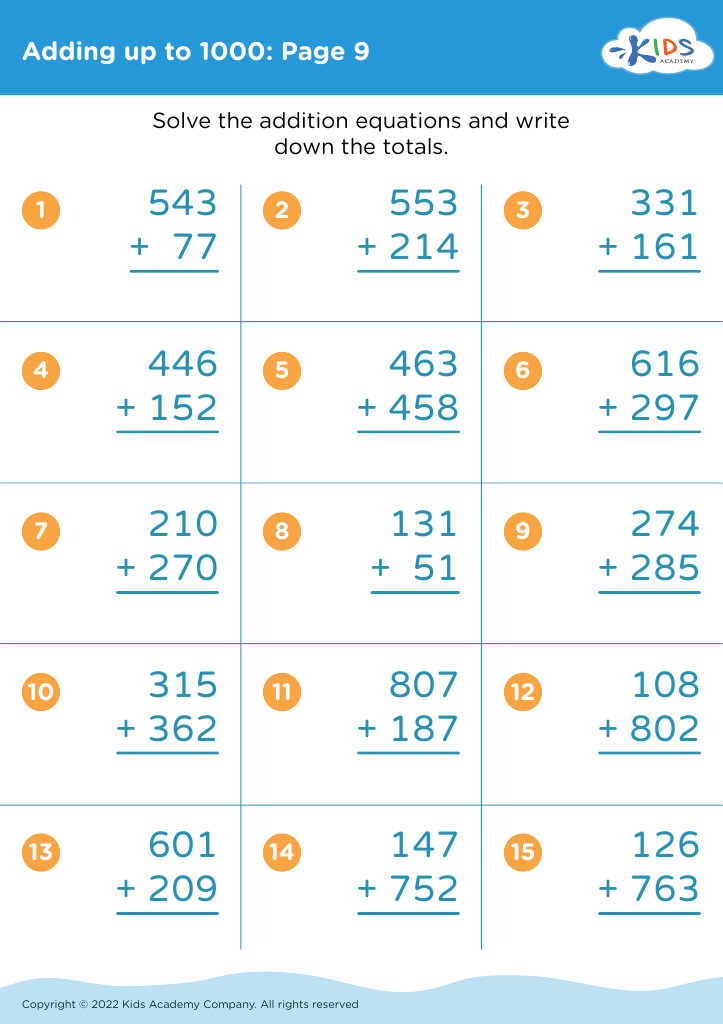
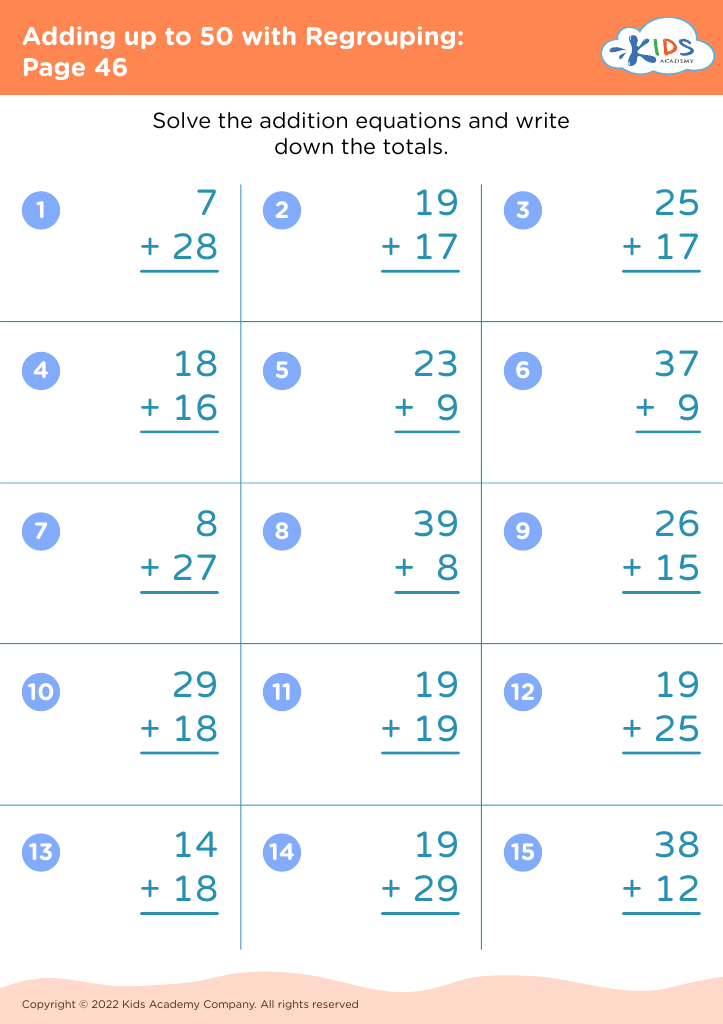
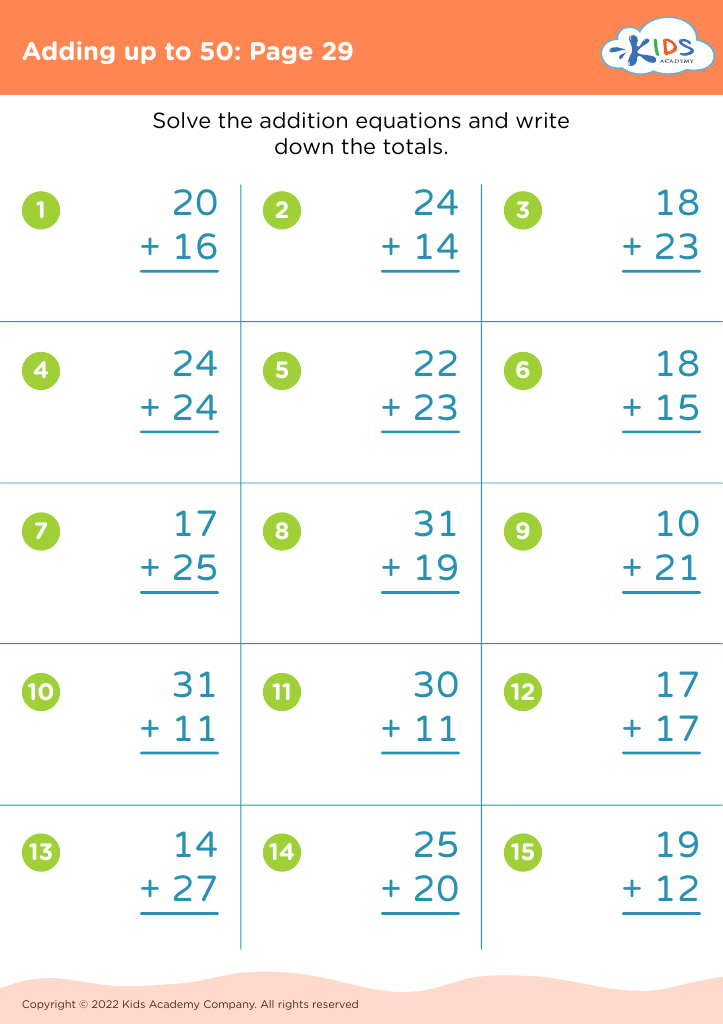
Test your child's addition and subtraction of 3-digit numbers with this assessment worksheet! They'll practice regrouping and pre-algebra skills to show their expertise. Have them work through the page and circle their answers, then see how many they got right to check their understanding and progress.
 Assign to My Students
Adding and Subtracting to 1 Worksheet: Assessment 2
Worksheet
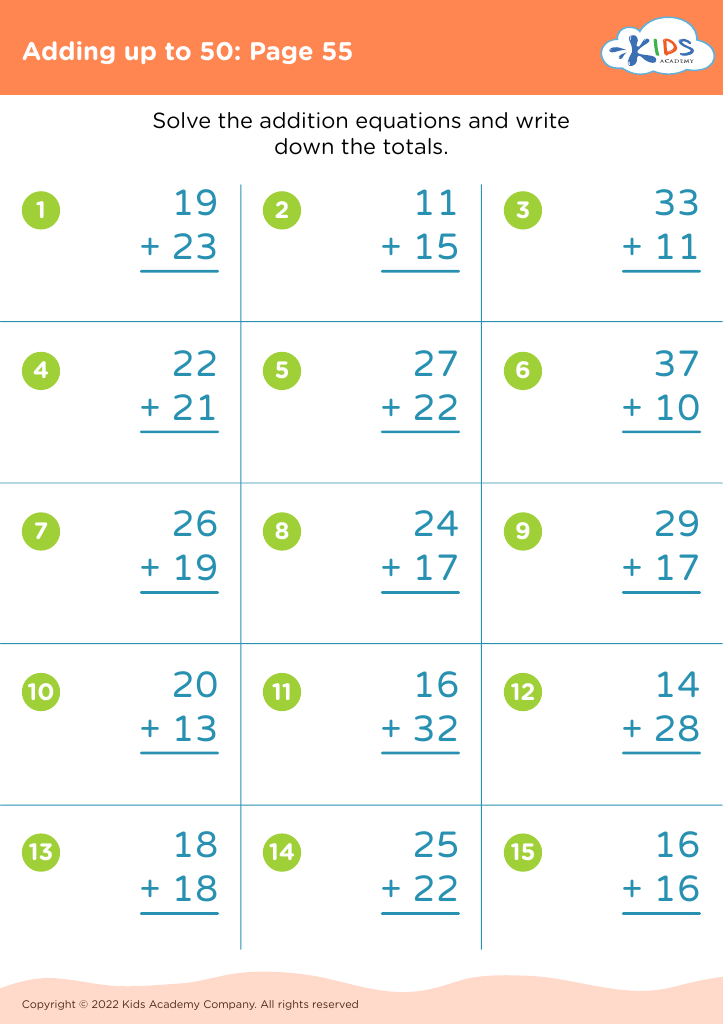
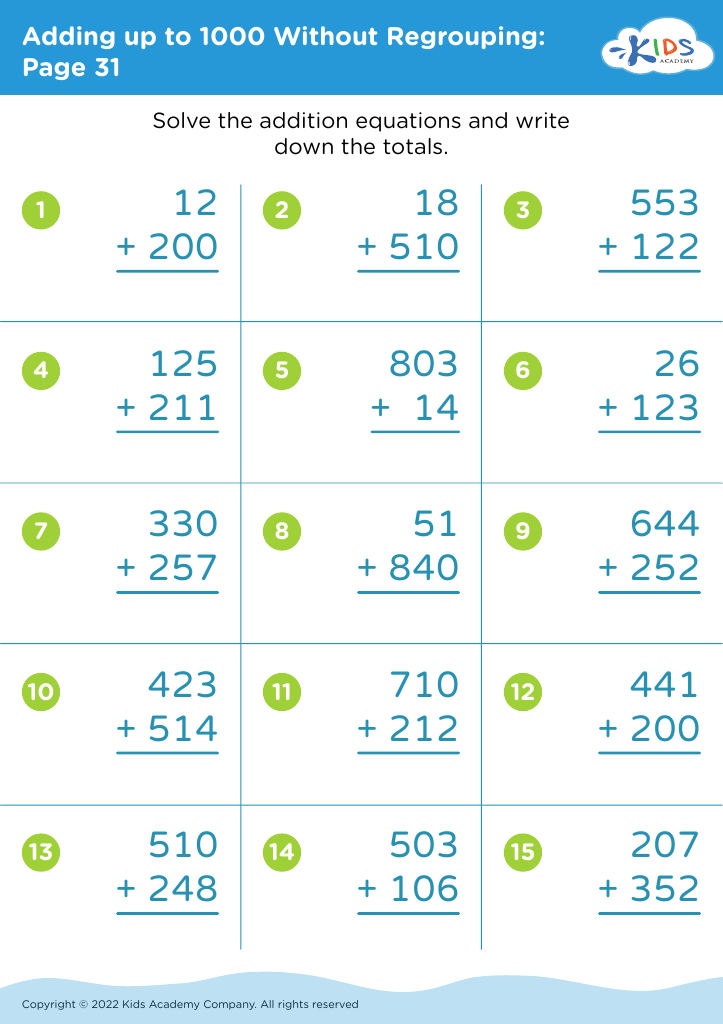
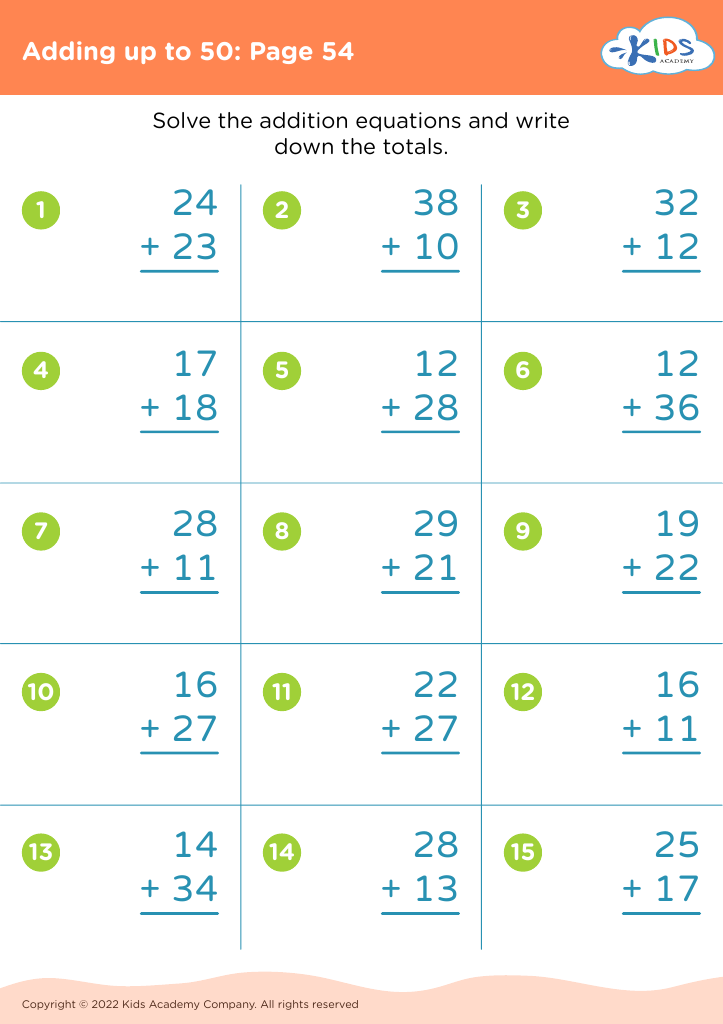
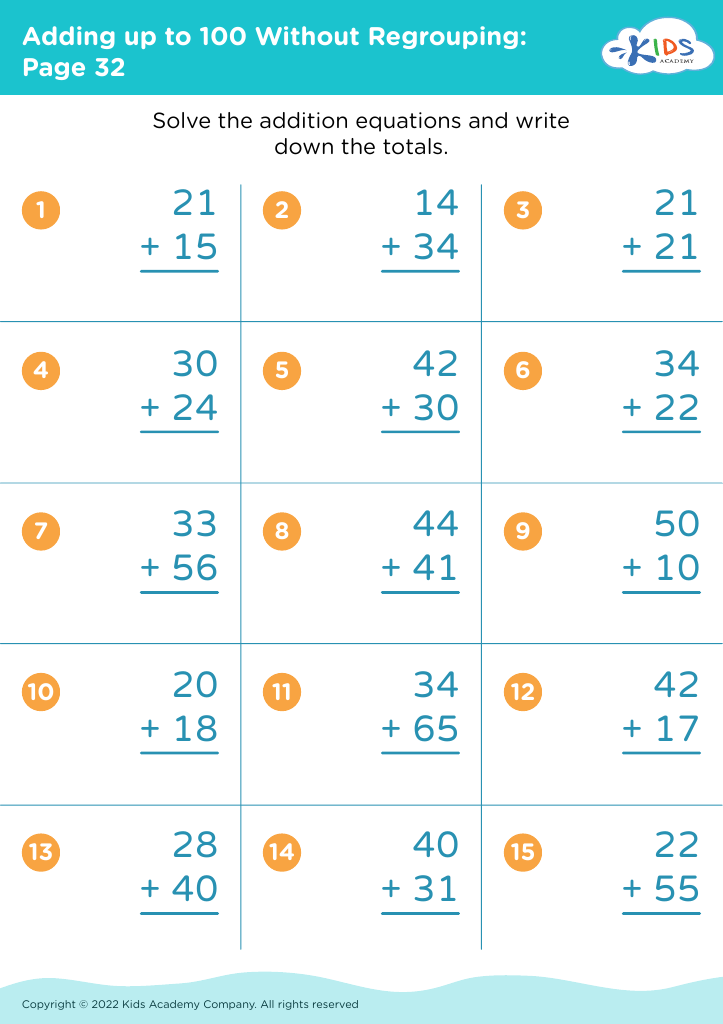
Join Kids Academy for Free
Who is primarily going to use this learning content?








Understanding fractions and their addition is crucial for children aged 8-9 as it lays a foundational skill necessary for their future mathematical success. At this age, children begin to encounter more complex concepts in math like geometry, measurement, and problem-solving that heavily use fractions. A solid grasp of fractions enhances their ability to comprehend part-whole relationships, which is integral in everyday activities, such as cooking or dividing items.
Moreover, mathematical competence influences a child's confidence and attitude toward learning. If parents and teachers advocate for a strong understanding of fractions, it can help students build resilience in tackling difficult concepts. This age is also when students develop critical thinking and reasoning skills; learning how to add fractions encourages them to explore patterns and relationships between numbers.
Additionally, fractions form the basis of algebraic thinking. By making fractions relatable and understandable, we not only engage students but also prepare them for more advanced mathematical topics in the future. Ultimately, fostering a robust understanding of fractions during these formative years equips children with the necessary tools to navigate not just academics but real-world situations across their lifetime. Hence, dedicated support from parents and teachers is indispensable in nurturing these important skills.








