Understanding sequencing Addition Worksheets for Ages 8-9
7 filtered results
-
From - To
Discover the essential "Understanding Sequencing Addition Worksheets" designed for ages 8-9 on Kids Academy. These expertly crafted worksheets help young learners master the vital skill of sequencing numbers and understanding addition concepts. Through engaging exercises and activities, children will enhance their mathematical abilities by organizing numbers in meaningful ways, recognizing addition patterns, and improving problem-solving skills. Perfect for classroom use or at-home practice, these worksheets make math learning enjoyable and effective. Equip your child with the tools they need to build a strong foundation in addition and sequencing with Kids Academy's thoughtfully designed materials.
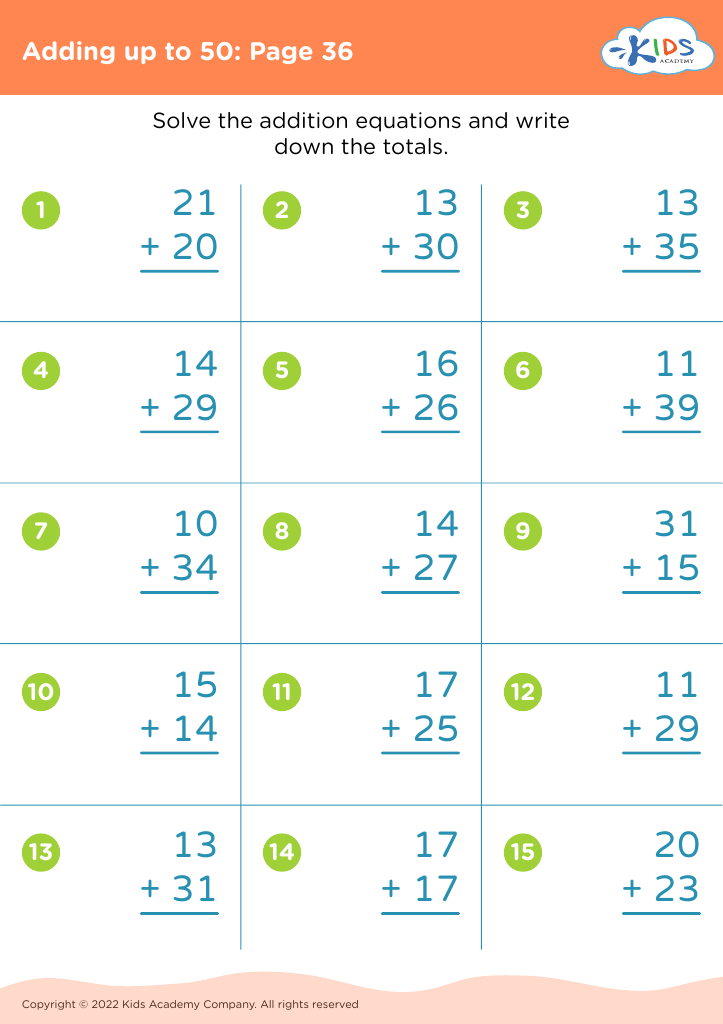
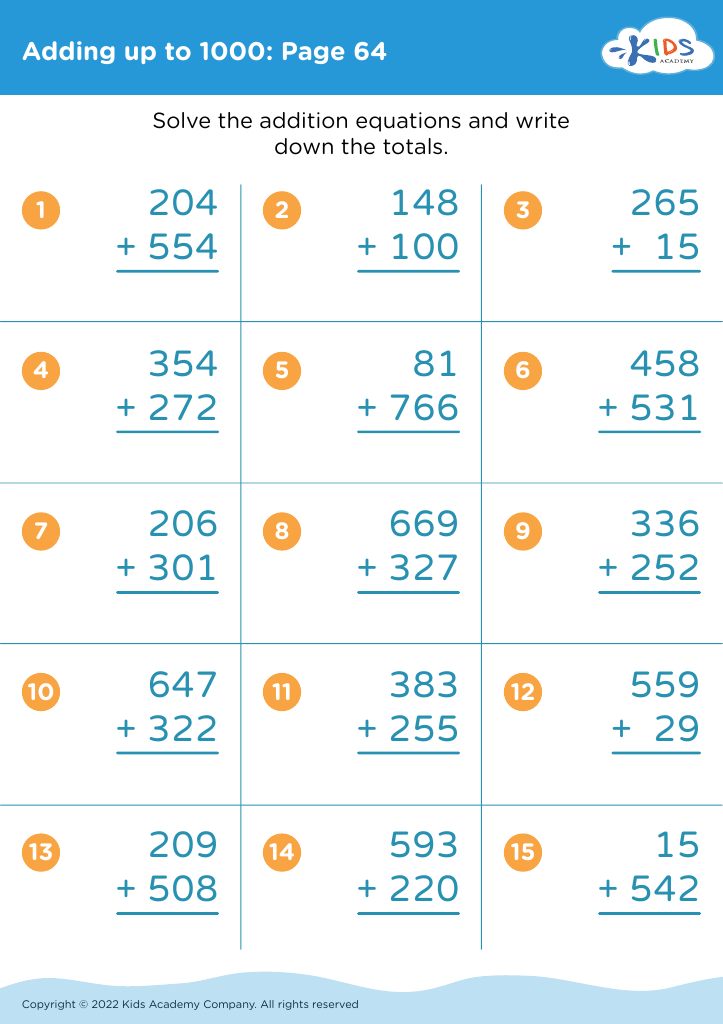
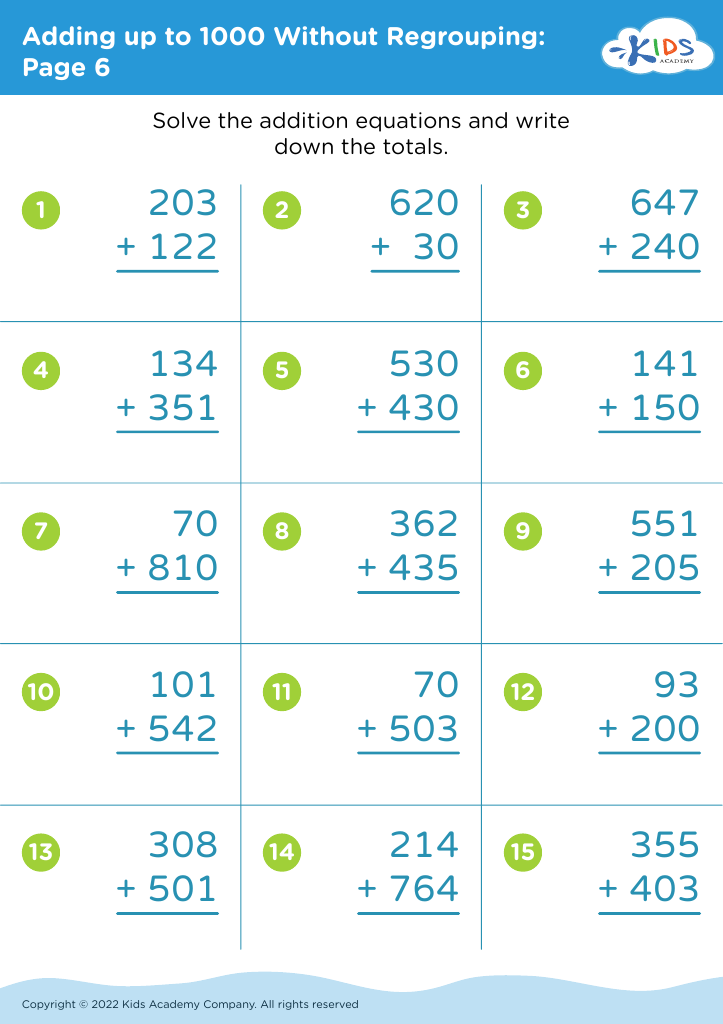
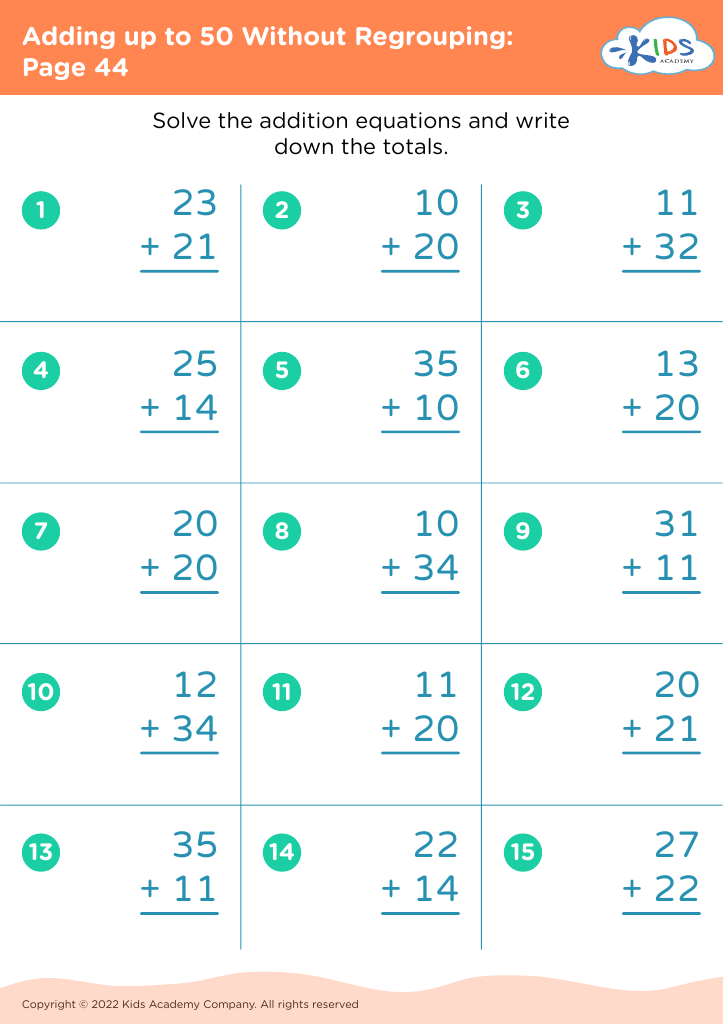
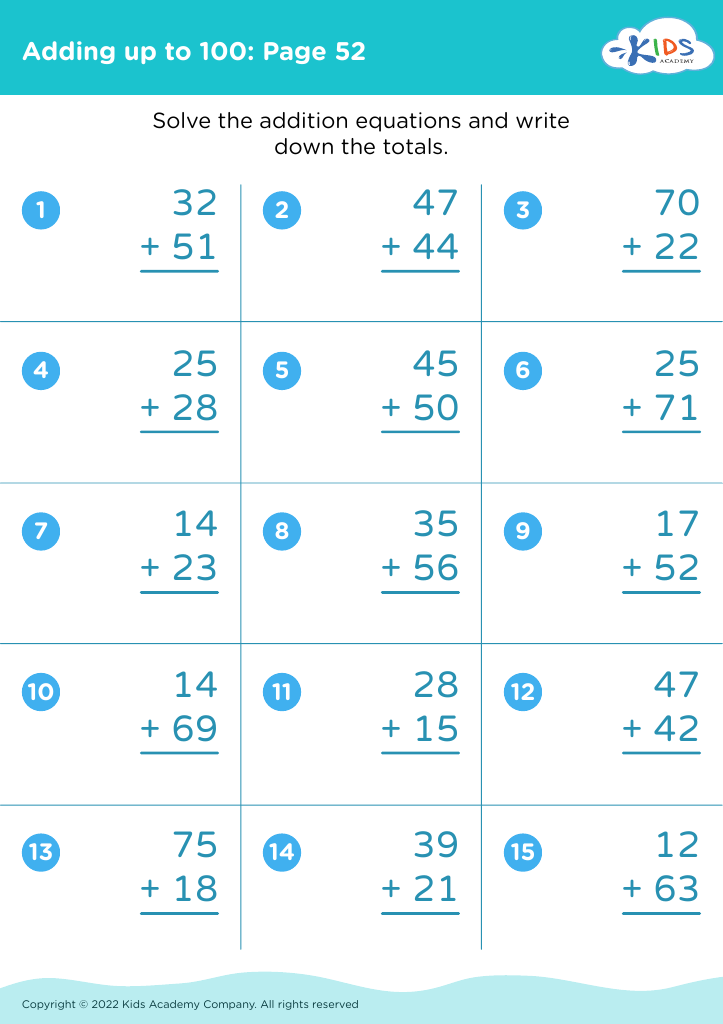
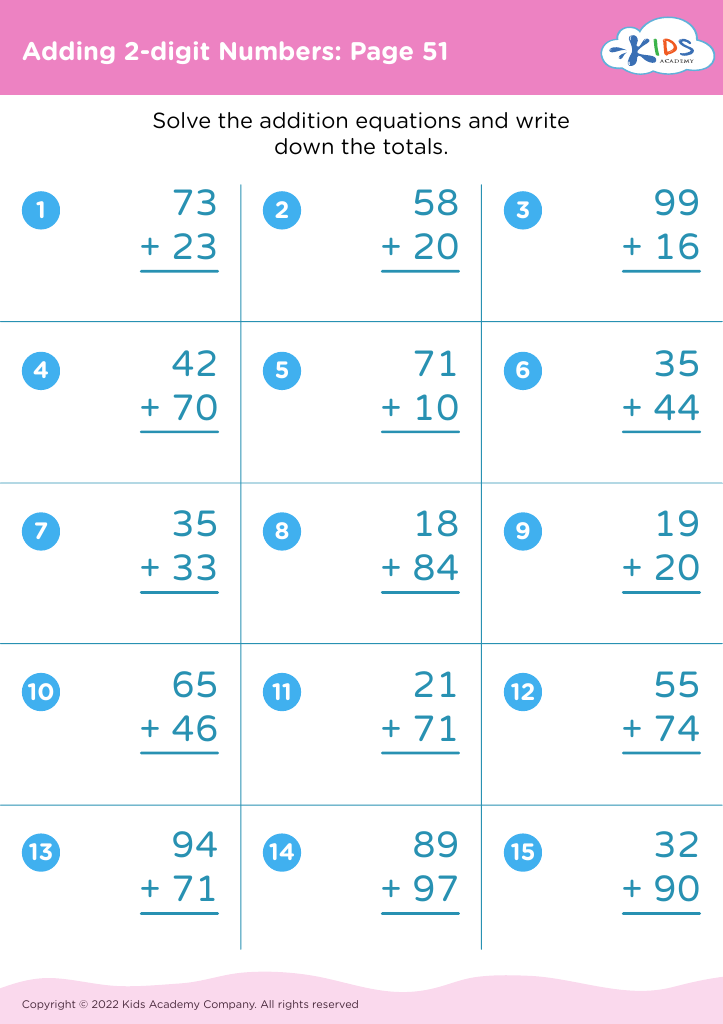
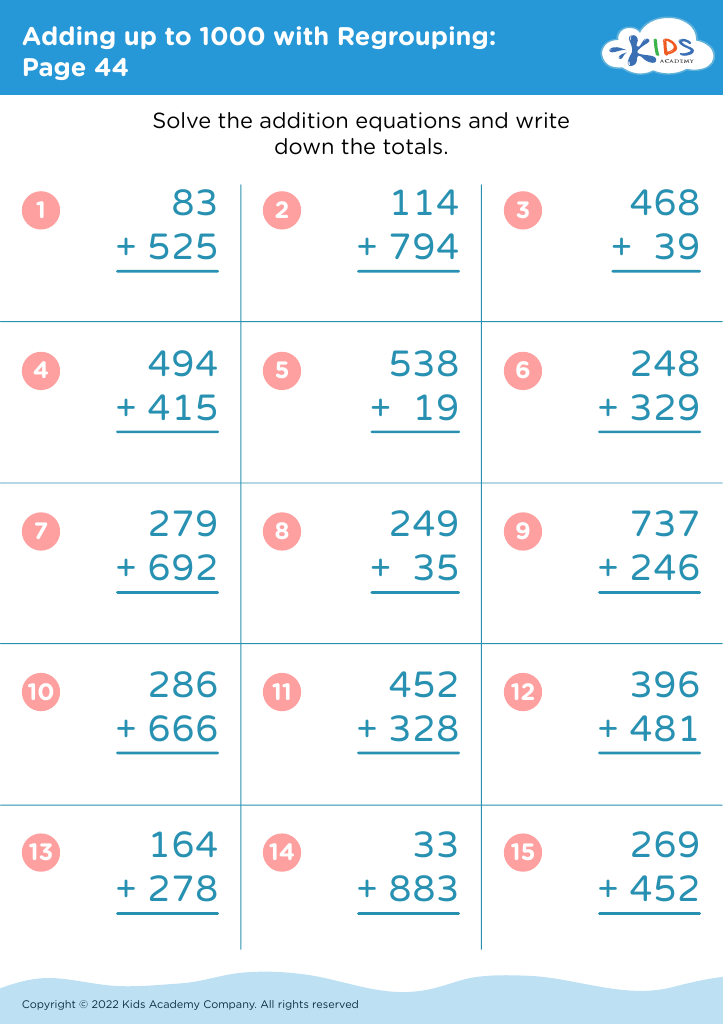







Understanding sequencing addition is a key math skill for children aged 8-9, one that lays a strong foundation for more complex mathematical concepts. Firstly, sequencing addition helps kids develop critical thinking and problem-solving abilities. By understanding the order in which numbers are added, they begin to see patterns and relationships among numbers, which is fundamental for more advanced math like multiplication, division, and ultimately algebra and geometry.
Secondly, mastering this skill enhances computational fluency. Children who grasp sequencing addition can perform calculations more quickly and accurately, boosting their confidence and fostering a positive attitude towards math. This proficiency becomes essential in everyday tasks that require quick mental addition, such as budgeting allowance money, sports scoring, or cooking measurements.
Furthermore, learning to sequence steps correctly is not confined to math; it promotes cognitive skills in other subjects too. For example, sequencing is crucial in following instructions in science experiments or in writing coherent stories in language arts.
Teachers and parents should emphasize this concept because it empowers children to tackle academic challenges confidently. A strong grasp of sequencing and addition makes learning math less intimidating and more enjoyable, paving the way for academic success and everyday competence. Engaging in activities and games that reinforce these skills can make a significant, positive impact on their educational journey.








