Visual Learning Addition Worksheets for Ages 8-9
3 filtered results
-
From - To
Welcome to our Visual Learning Addition Worksheets for Ages 8-9! Designed to enhance mathematical skills, these engaging worksheets incorporate colorful visuals and interactive exercises to make learning addition fun and effective. Children will explore addition concepts through illustrations, number lines, and comparative visuals, fostering a deeper understanding of math. Ideal for both classroom and home use, our resources encourage independent practice and boost confidence in young learners. With clear instructions and diverse activities, students will strengthen their addition skills while enjoying the learning journey. Discover the perfect blend of education and creativity that prepares your child for academic success!
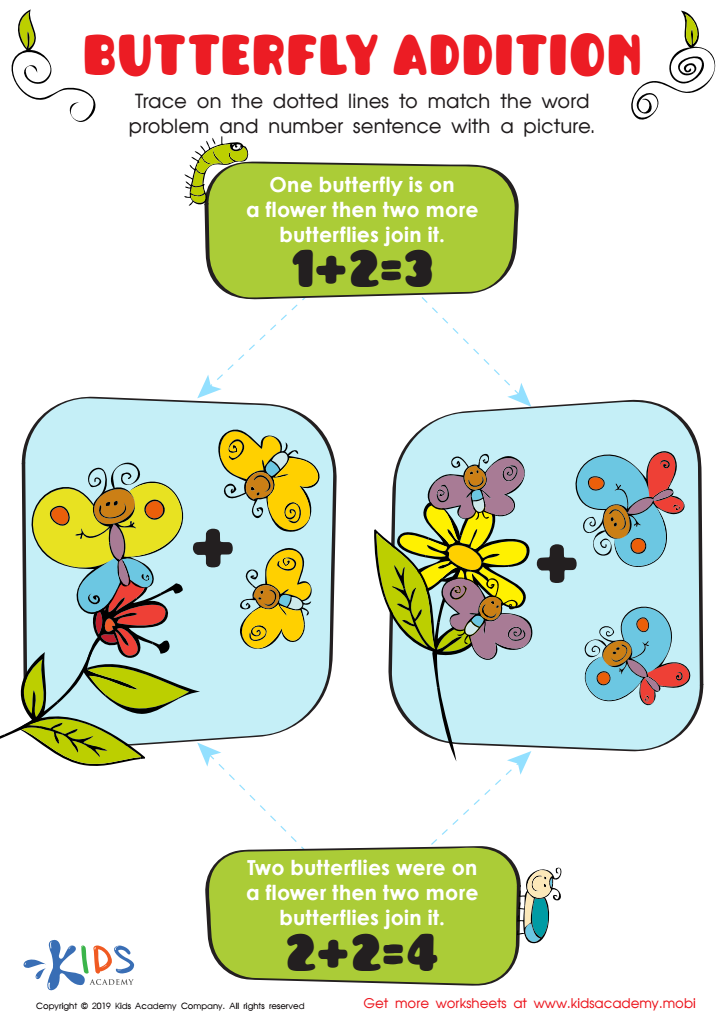
Butterfly Addition Worksheet
 Assign to My Students
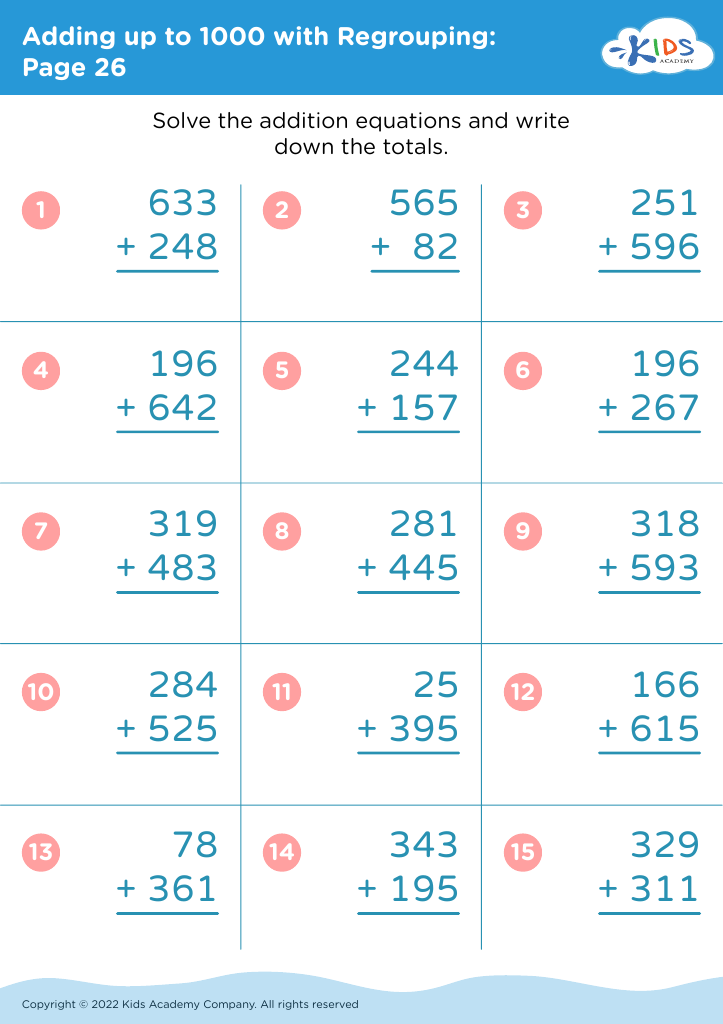
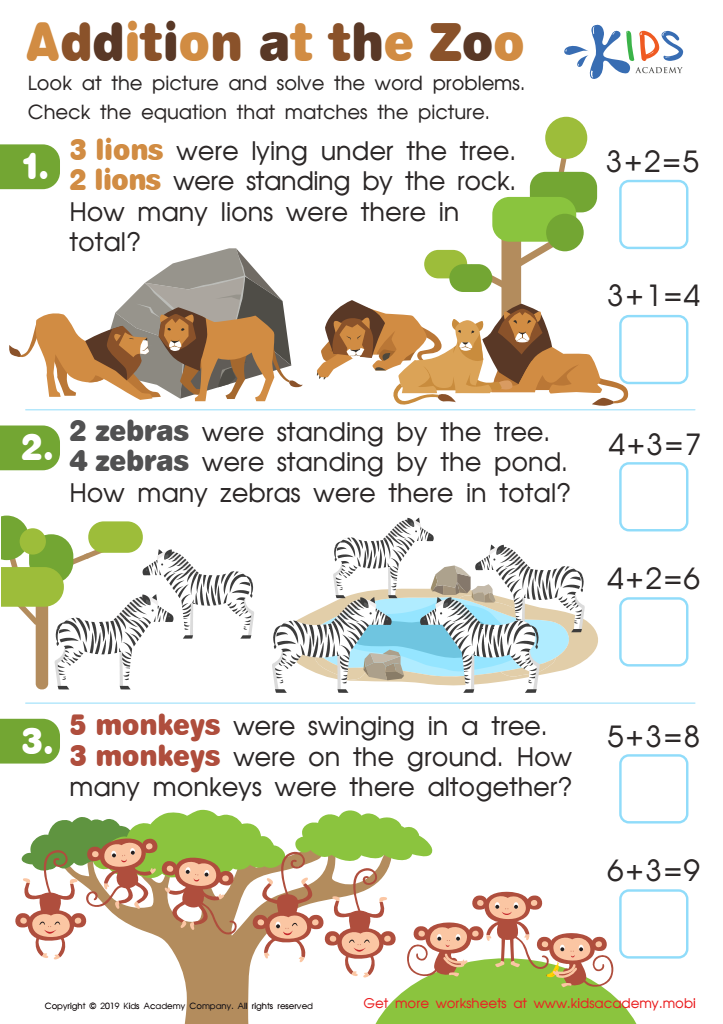
Addition at the Zoo Worksheet








Visual learning is a crucial approach for teaching addition to children aged 8-9 because it aligns with the ways they process information best. At this age, students are transitioning from basic arithmetic to more complex math concepts, making visual tools extremely beneficial. Utilizing diagrams, models, and visual aids helps to simplify the addition process, allowing children to grasp abstract concepts more concretely.
For parents and teachers, incorporating visual learning strategies fosters greater engagement and understanding. When children can visualize problems, such as using manipulatives or drawing number lines, they develop stronger problem-solving skills and deepen their comprehension of mathematical relationships. This approach encourages active participation, making learning more enjoyable and less intimidating.
Moreover, visual learning caters to diverse learning styles, ensuring that all students have access to effective methods that resonate with them. It can also reveal underlying patterns in addition, setting a solid foundation for future mathematical concepts. By prioritizing visual learning, parents and teachers not only enhance their child’s mathematical abilities but also boost their confidence and motivation. This foundational understanding paves the way for academic success, making it imperative for adults involved in a child's education to embrace this innovative teaching strategy.








