Understanding area Area and Perimeter Worksheets for Ages 8-9
3 filtered results
-
From - To
Explore our engaging "Understanding Area and Perimeter Worksheets" designed for kids ages 8-9! These interactive resources aim to simplify complex concepts of area and perimeter through fun activities and clear explanations. Ideal for building foundational math skills, our worksheets encourage hands-on learning with real-world applications. Children will solve relatable problems, develop critical thinking, and enhance their spatial awareness while working through a series of thoughtfully crafted exercises. Perfect for both classroom instruction and home practice, these worksheets make learning math an enjoyable experience. Discover the joy of mastering area and perimeter while fostering a love for math in your young learners!
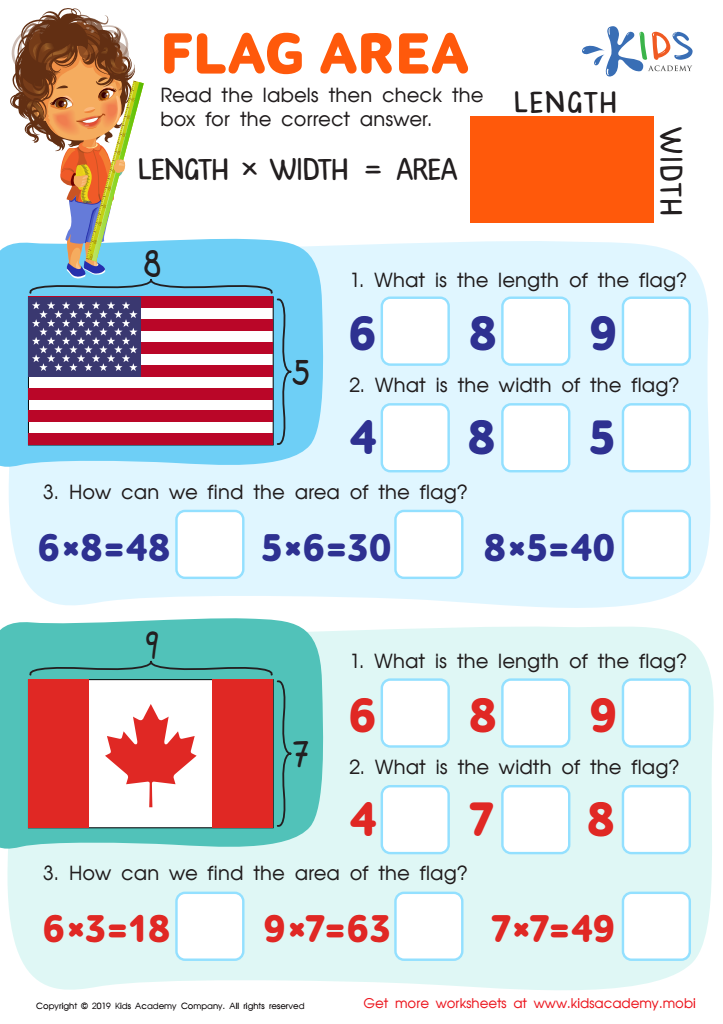
Flag Area Worksheet
 Assign to My Students
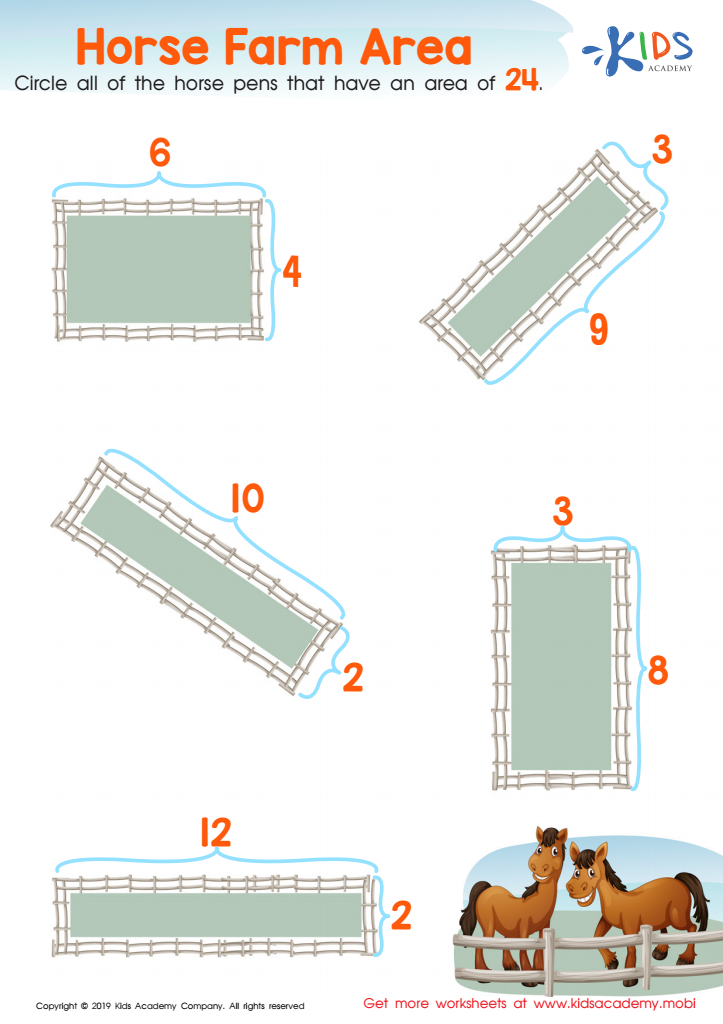
Horse Farm Area Worksheet
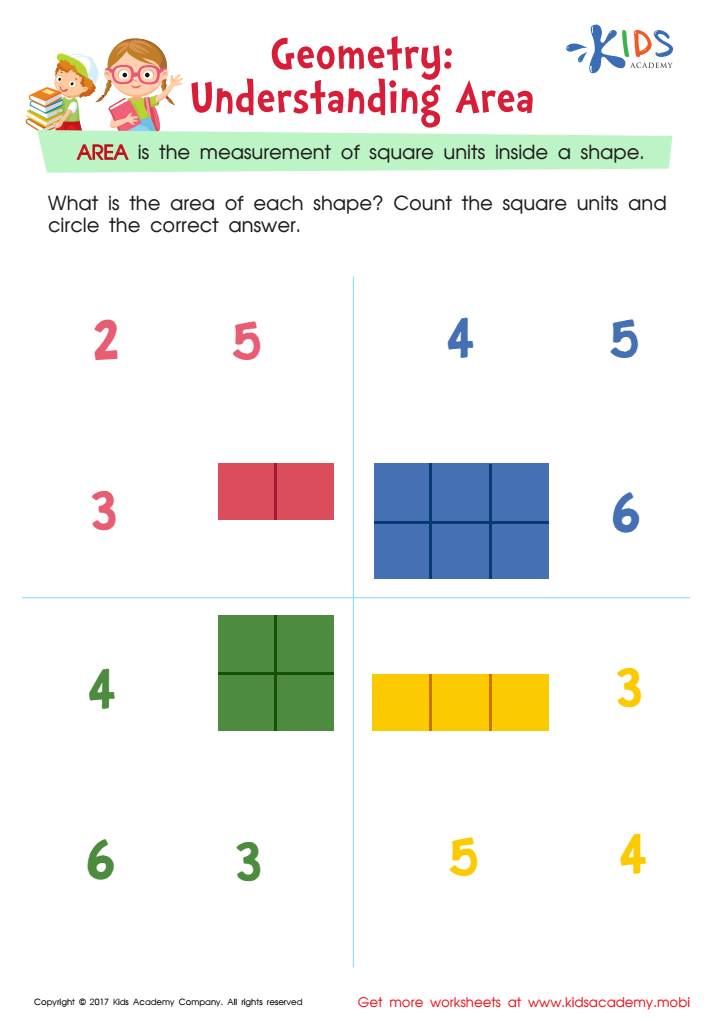
Understanding Area Worksheet








Understanding area and perimeter is crucial for children aged 8-9, as it lays the foundation for critical mathematical skills that will benefit them in everyday life and future learning. First, these concepts introduce children to geometry, enhancing their spatial awareness and ability to visualize relationships between different geometric shapes. For instance, when children learn to calculate the area, they begin to comprehend how space is organized and utilized in real-world contexts, such as determining how much carpet they need for a room or how much garden space they have for planting.
Moreover, mastering area and perimeter fosters problem-solving skills. As kids practice these concepts through activities and real-life scenarios, they develop logical thinking and analytical abilities that are transferable to other subjects and everyday situations. Engaging with hands-on activities, like measuring classroom objects or planning layouts for projects, helps solidify their understanding.
Finally, when parents and teachers prioritize these skills, they encourage a positive attitude towards math, alleviating anxiety and promoting confidence. Understanding area and perimeter is not just about numbers; it's about nurturing a mindset that appreciates the relevance of math in the world, preparing children for future academic challenges and life skills.