Hand-eye Coordination Geometry Worksheets for Ages 8-9
3 filtered results
-
From - To
Enhance your child's geometric understanding and motor skills with our Hand-eye Coordination Geometry Worksheets for Ages 8-9. Each worksheet is carefully designed to engage young learners, encouraging them to trace, draw, and recognize various geometric shapes. Through these activities, children not only grasp essential geometry concepts but also improve their fine motor and hand-eye coordination skills. Perfect for both classroom and at-home learning, our fun and educational worksheets offer a structured approach to mastering fundamental geometry in a hands-on, interactive way. Empower your child's learning journey and watch their confidence in math grow!
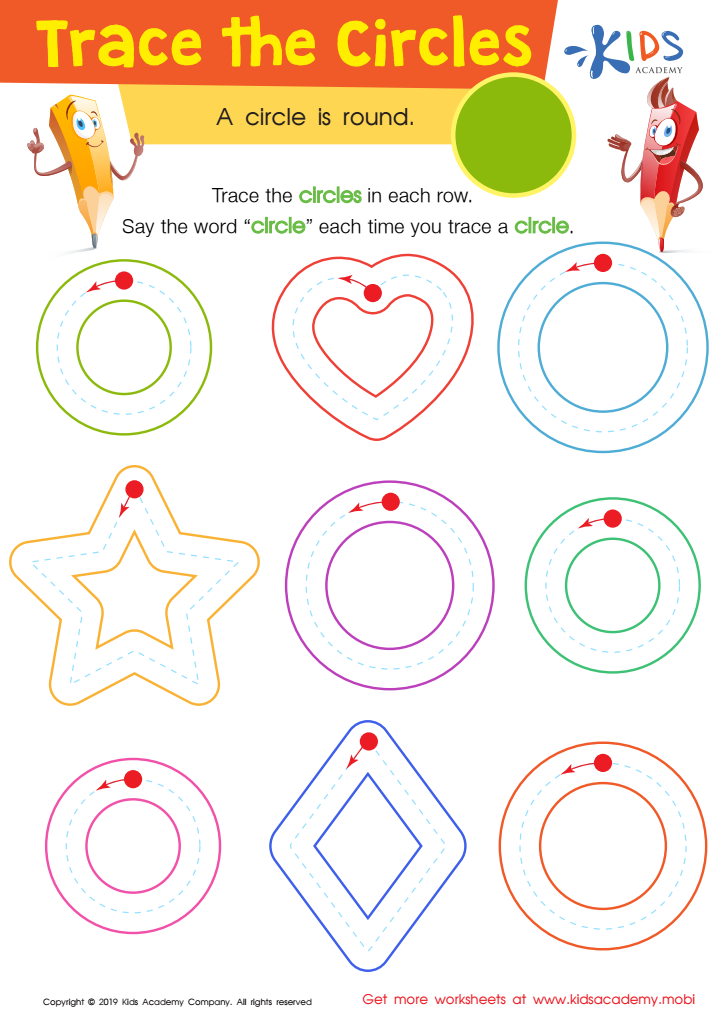
Trace The Circles Worksheet
 Assign to My Students











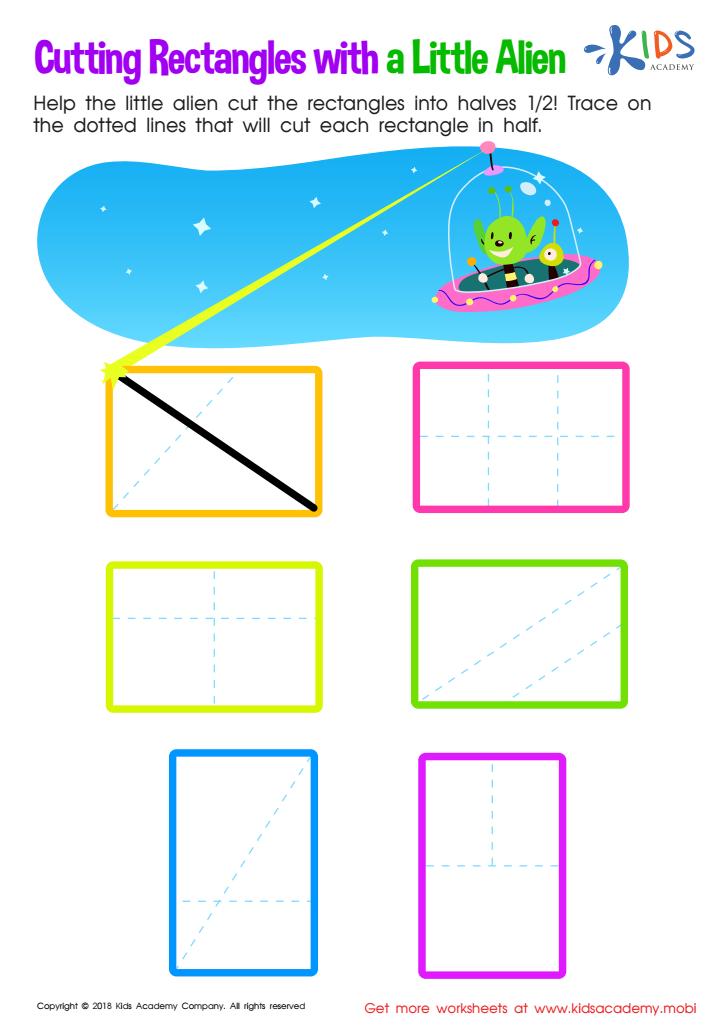
Cutting Rectangles with Alien Worksheet
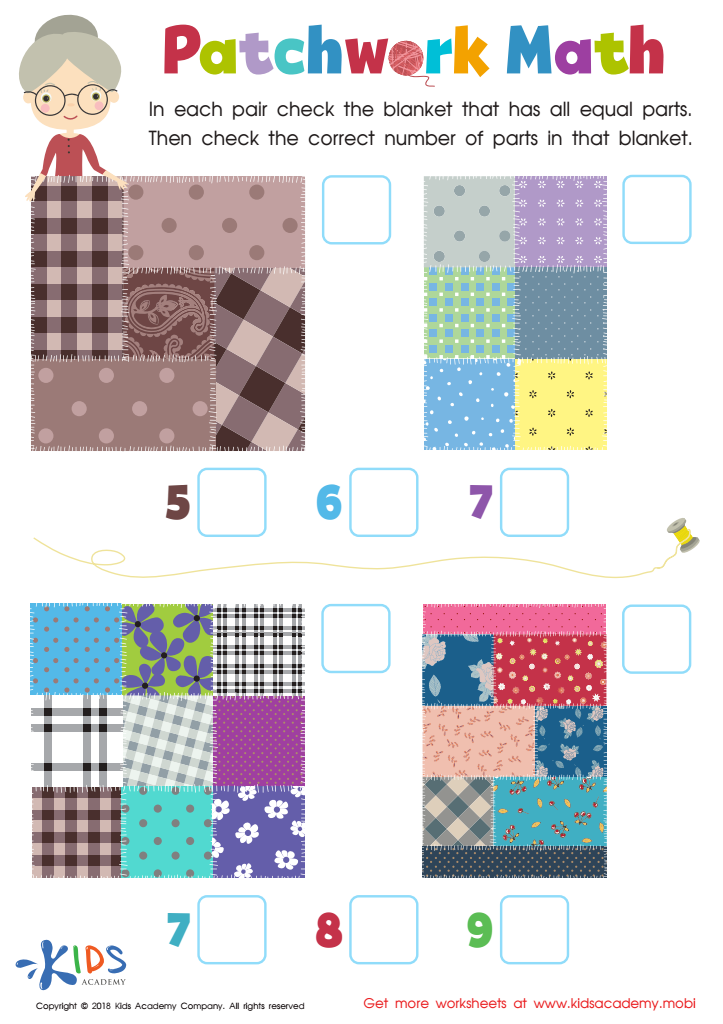
Patchwork Math Worksheet








Hand-eye coordination geometry is vital for children aged 8-9, as it merges the physical and cognitive realms of learning, enhancing overall development. At this age, children are honing fine motor skills and cognitive abilities, both essential for academic success and everyday tasks. When parents and teachers encourage activities that build hand-eye coordination through geometry, they simultaneously boost skills such as spatial awareness, geometry understanding, and motor precision.
Firstly, geometric tasks like drawing shapes, using rulers to measure, or constructing figures improve students' grasp of math concepts. They learn to understand symmetry, angles, and dimensions, fostering a strong foundation for advanced studies. Additionally, these tasks necessitate precise hand movements, thereby improving dexterity, which is crucial for writing, cutting, and other school activities.
Moreover, well-developed hand-eye coordination has broader implications. It enhances concentration, timing, and the ability to complete tasks accurately. These skills translate beyond academics, influencing sports, art, and daily functions. A child skilled in these areas often demonstrates better confidence and independence.
In conclusion, investing effort in developing hand-eye coordination through geometry shapes a child's capabilities in multifaceted ways, bolstering both academic performance and essential life skills. Parents and teachers should prioritize such activities to foster well-rounded, competent individuals.








