Understanding area Geometry Worksheets for Ages 8-9
3 filtered results
-
From - To
Explore our "Understanding Area Geometry Worksheets" designed specifically for children aged 8-9! These engaging and interactive worksheets help young learners grasp the concept of area through fun activities and visual aids. Students will measure, calculate, and compare areas of various shapes, boosting their critical thinking and problem-solving skills. Each worksheet is crafted to align with grade-specific standards, ensuring a solid foundation in geometry. With colorful illustrations and clear instructions, these resources make math enjoyable and accessible. Perfect for both classroom and at-home learning, these worksheets are an excellent tool for reinforcing important math skills while fostering a love for learning.
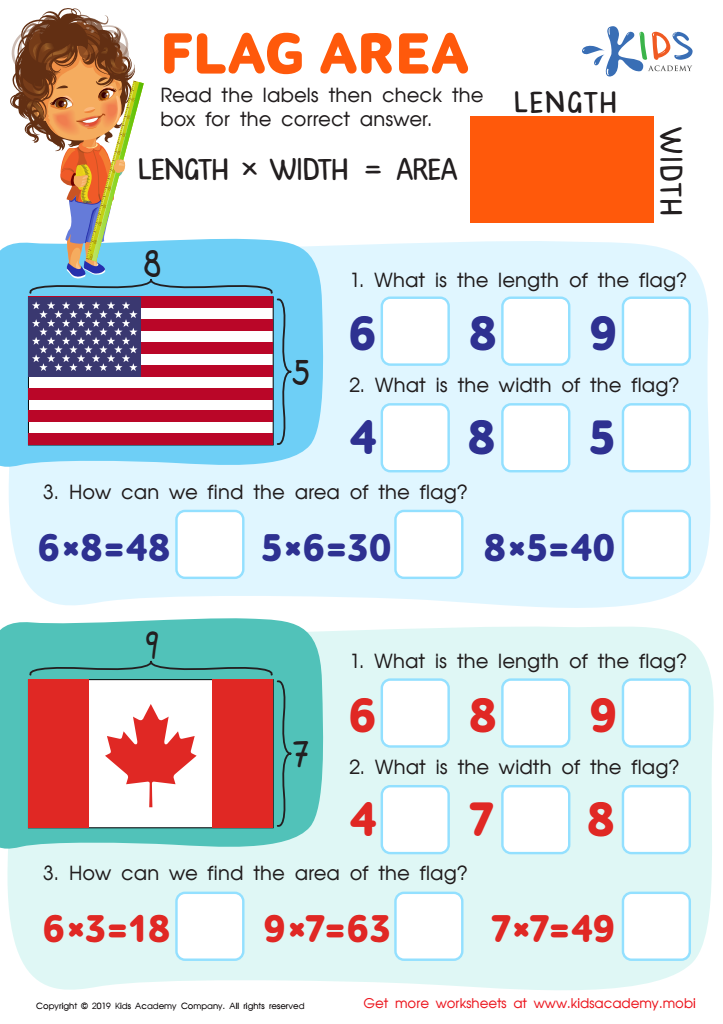
Flag Area Worksheet
 Assign to My Students











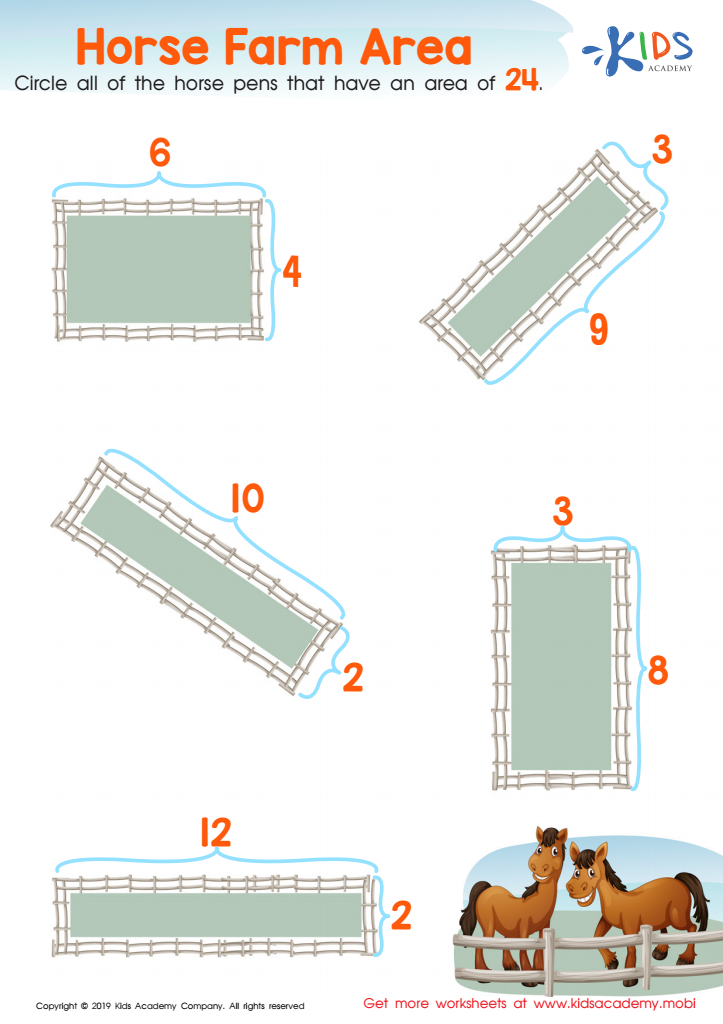
Horse Farm Area Worksheet
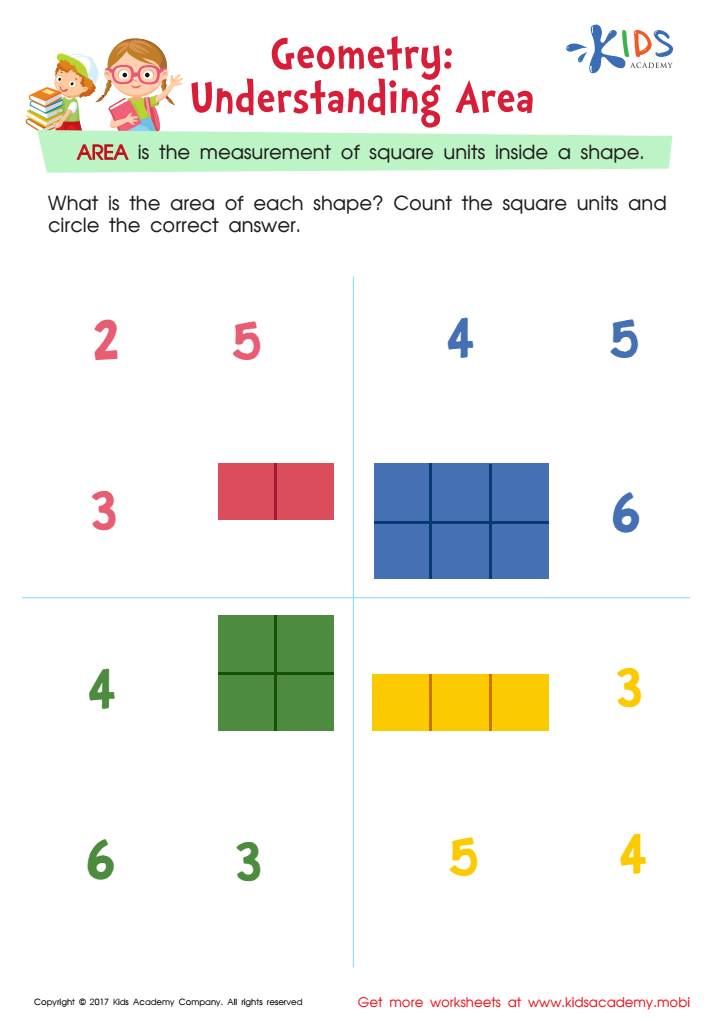
Understanding Area Worksheet








Understanding area and geometry at the ages of 8-9 is crucial as it forms a foundation for students’ mathematical reasoning and problem-solving skills. During this developmental stage, children are capable of grasping complex concepts, and geometry helps them see the world in quantitative terms. Learning about area involves measuring, calculating, and comparing spaces, which sharpen their spatial awareness. This is not only essential in math but also in daily life tasks like measuring rooms for furniture or determining the size of a playground.
Moreover, geometry stimulates critical thinking and helps students develop strategies for navigating real-world scenarios. It fosters creativity through various representations of shapes and spaces, complemented by visual learning. Parents and teachers play an instrumental role in making geometry engaging, helping children recognize patterns, and relationships in their environment.
Additionally, foundational knowledge in geometry supports future learning in advanced mathematics and STEM-related fields. In a time when technology and engineering are increasingly prominent, early exposure is key in encouraging interest and accessibility to these disciplines. Ultimately, investing time and resources into a child's understanding of area and geometry can lead to more confident, skilled, and innovative learners.








