Comparing lengths Numbers Worksheets for Ages 8-9
4 filtered results
-
From - To
Discover our engaging "Comparing Lengths Numbers Worksheets" designed specifically for children aged 8-9! These worksheets provide interactive activities that help young learners explore the concept of length by comparing various objects and measurements. Through fun exercises, students will enhance their ability to identify similarities and differences in lengths using standardized units. Our carefully crafted content combines visual aids with a hands-on approach, fostering a deeper understanding of magnitude and measurement. These worksheets aim to build foundational math skills while encouraging critical thinking and problem-solving. Perfect for both classroom and home use, these resources will ignite a love for math in your child!
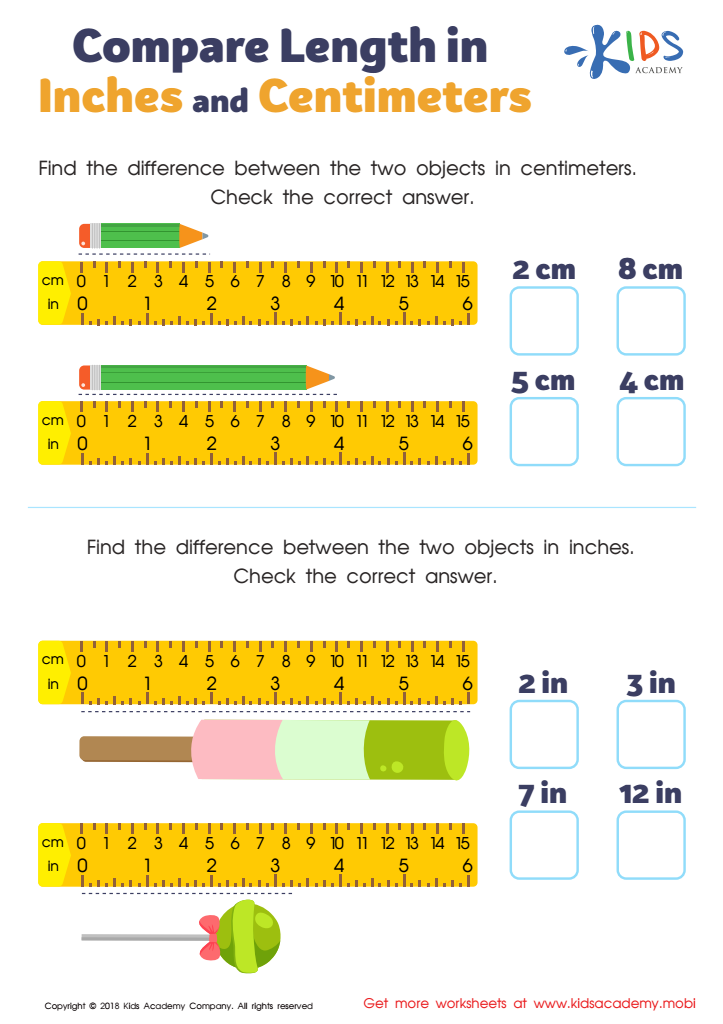
Compare Length in Inches and Centimeters Worksheet
 Assign to My Students
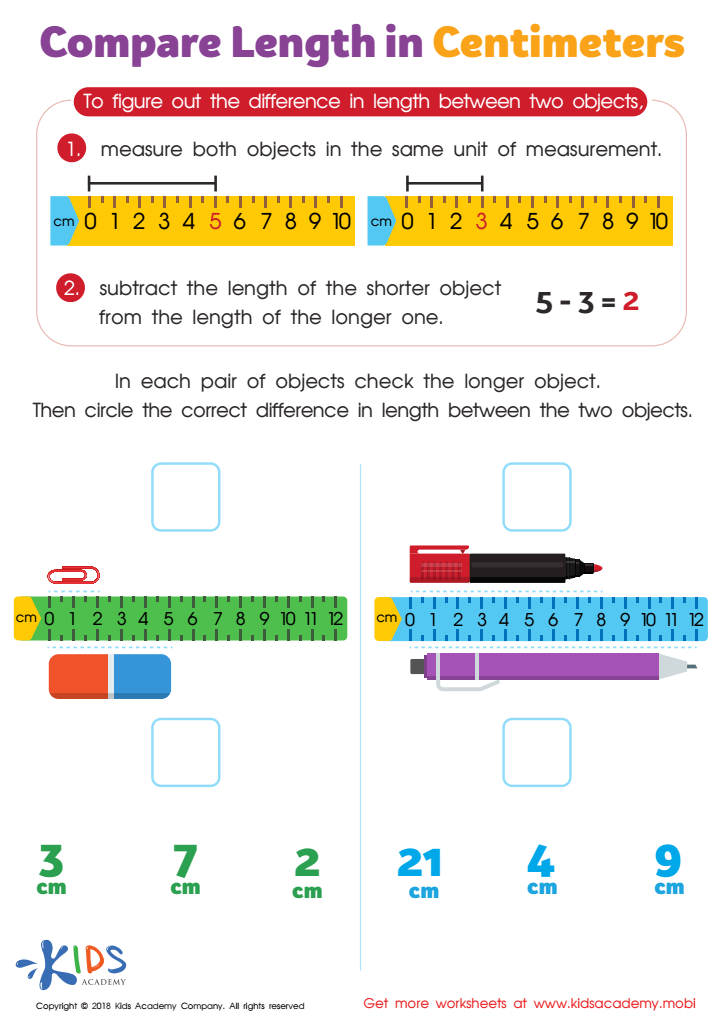
Compare Length in Centimeters Worksheet
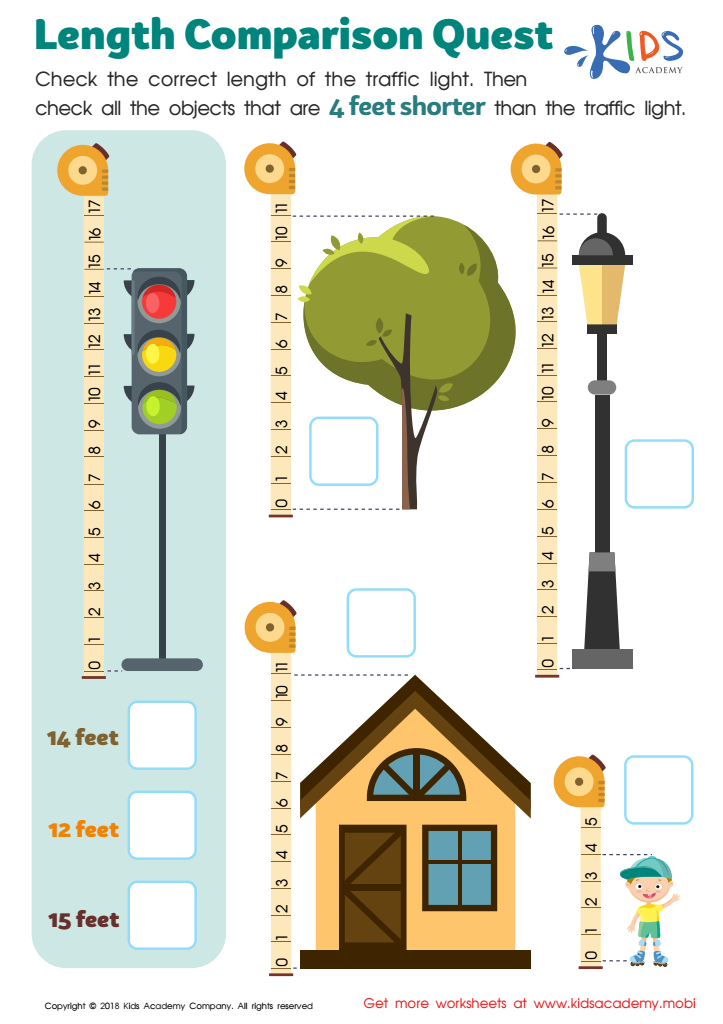
Length Comparison Quest Worksheet
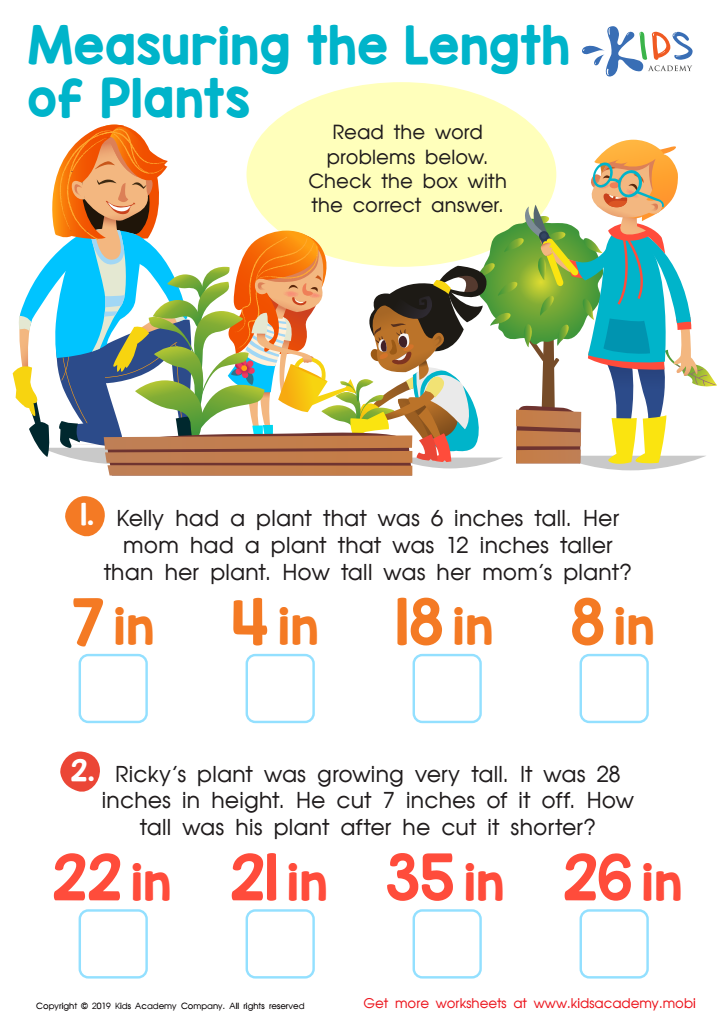
Measuring the Length of Plants Worksheet







Understanding how to compare lengths using numbers is crucial for children aged 8-9 as it forms a foundational aspect of their mathematical education and daily life. First, this skill enhances critical thinking and analytical abilities. When children compare lengths, they learn to assess measurements and apply logical reasoning to deduce which objects are longer or shorter. This process helps them develop cognitive skills that are vital across subjects.
Moreover, comparing lengths fosters an understanding of units of measure, helping children learn the importance of precision in communication and problem-solving. For instance, recognizing that 3 feet is longer than 30 inches not only reinforces measurement concepts but can also alleviate issues in practical situations, like cooking or construction projects.
Additionally, this mathematical skill liquidates fears about numbers and measurement, paving the way for greater confidence when tackling more complex mathematical concepts in the future. Parents and teachers play an essential role in helping children comprehend these concepts through engaging activities and real-life scenarios.
Ultimately, caring about and facilitating the learning of comparing lengths through numbers ensures children are equipped with essential skills for science, technology, engineering, and mathematics (STEM) education, which is increasingly important in our technology-driven world.








