
Enhance counting skills Math Worksheets for Ages 8-9
12 filtered results
Difficulty Level
Grade
Age
-
From - To
Subject
Activity
Standards
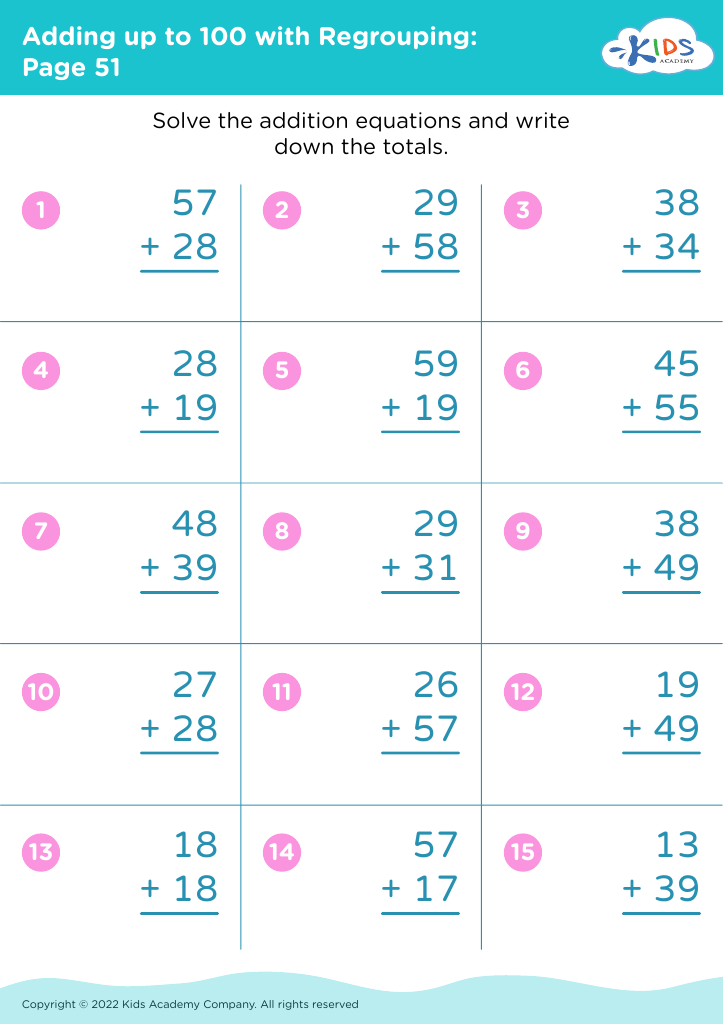
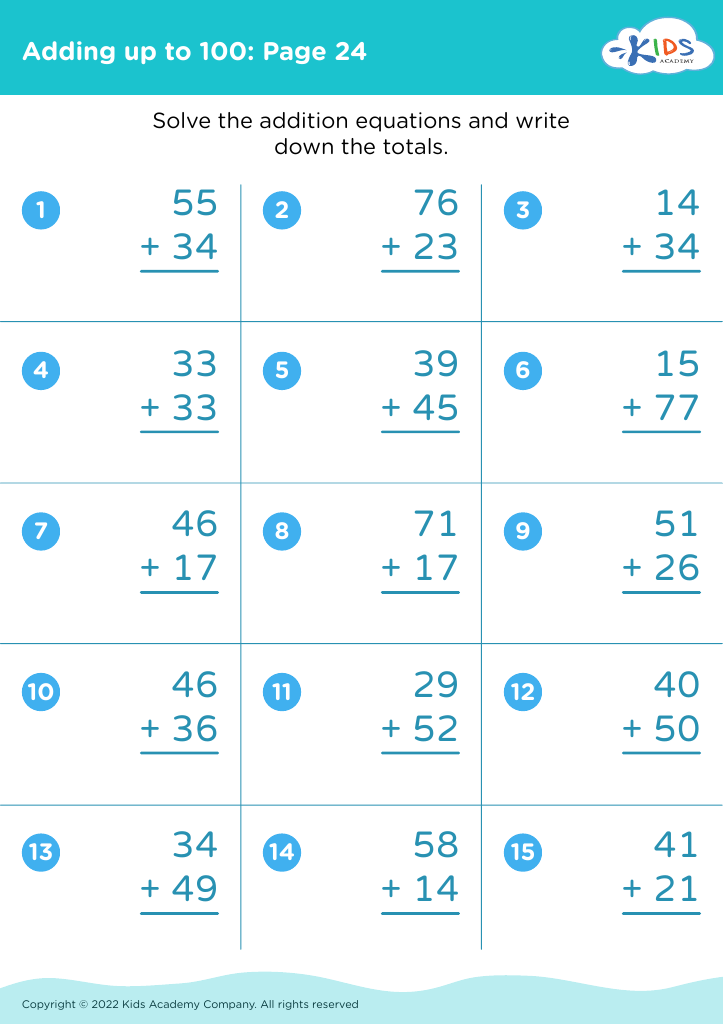
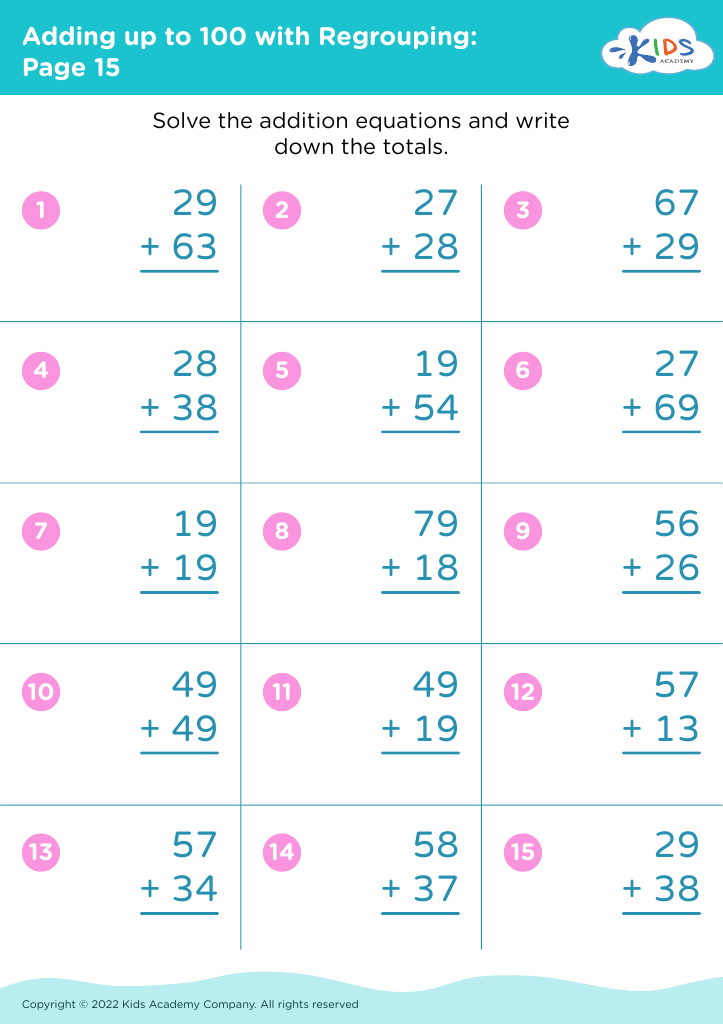
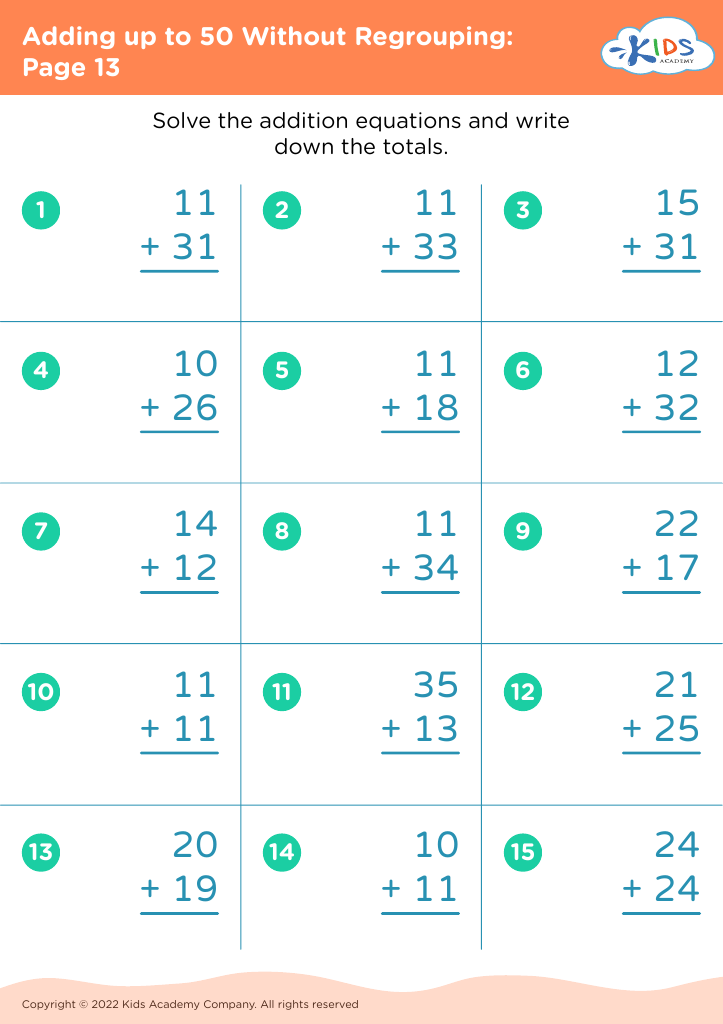
Discover our engaging math worksheets designed to enhance counting skills for children ages 8-9. These expertly crafted resources nurture mathematical proficiency by focusing on complex counting exercises through playful and educational activities. Our worksheets combine counting, addition, and subtraction challenges with vibrant visuals, ensuring kids remain motivated and confident. Tailored to complement classroom learning, each worksheet builds on prior knowledge while introducing new concepts progressively. With our fun and interactive sheets, young learners develop crucial counting skills, making math enjoyable and accessible. Perfect for both parents and teachers, these resources are an essential addition to any math curriculum.
Favorites
With answer key
Interactive
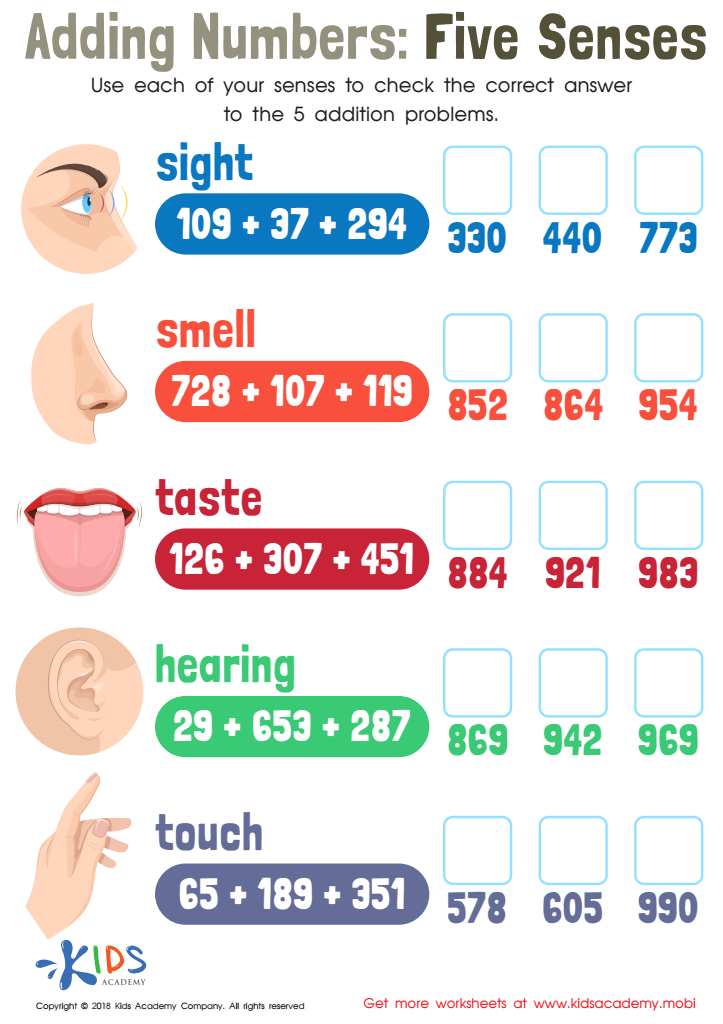
Adding Numbers: Five Senses Worksheet
Help your child identify the five senses on their body: eye, nose, tongue, ear, and skin. Explain that they're used for seeing, smelling, tasting, hearing and touching. Then, have them solve the five addition problems in the worksheet and check the correct answers.
 Assign to My Students
Adding Numbers: Five Senses Worksheet
Worksheet
Join Kids Academy for Free
Who is primarily going to use this learning content?








Enhancing counting skills for children aged 8-9 is essential as it lays the foundational groundwork for more advanced mathematical concepts and problem-solving abilities. At this age, children transition from basic counting to more complex arithmetic operations such as addition, subtraction, multiplication, and division. By solidifying their counting skills, children build the confidence and competence needed to tackle these new challenges.
Parents and teachers should care because strong counting skills are closely linked to overall academic success in mathematics and other subjects. Mastery in counting helps children develop logical thinking, pattern recognition, and the ability to make connections between numbers and real-world situations. For example, whether solving word problems or measuring ingredients in a recipe, counting serves as the bedrock of practical application and comprehension.
Additionally, fostering robust counting skills supports emotional and mental resilience. Children who feel confident in their mathematical abilities are less likely to experience anxiety or frustration when confronted with complex problems. Early intervention and sustained practice encourage a lifelong positive attitude towards mathematics and academic pursuits in general. Therefore, parents and teachers play a pivotal role in nurturing these skills through engaging, age-appropriate activities that make learning both fun and effective.








