Improve counting Math Worksheets for Ages 8-9
3 filtered results
-
From - To
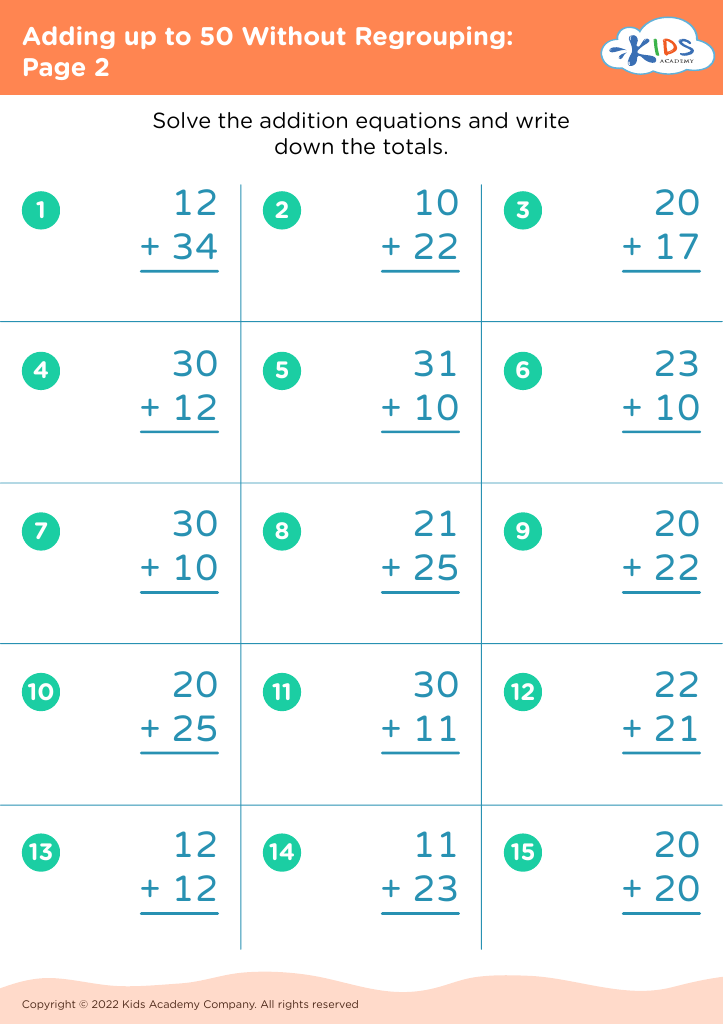
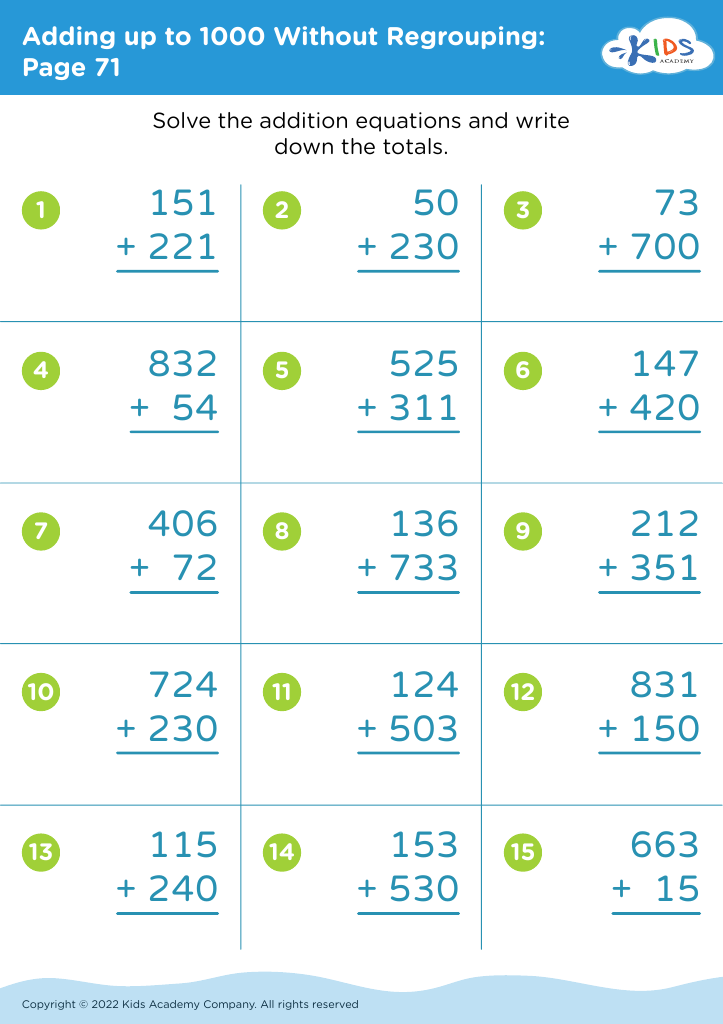
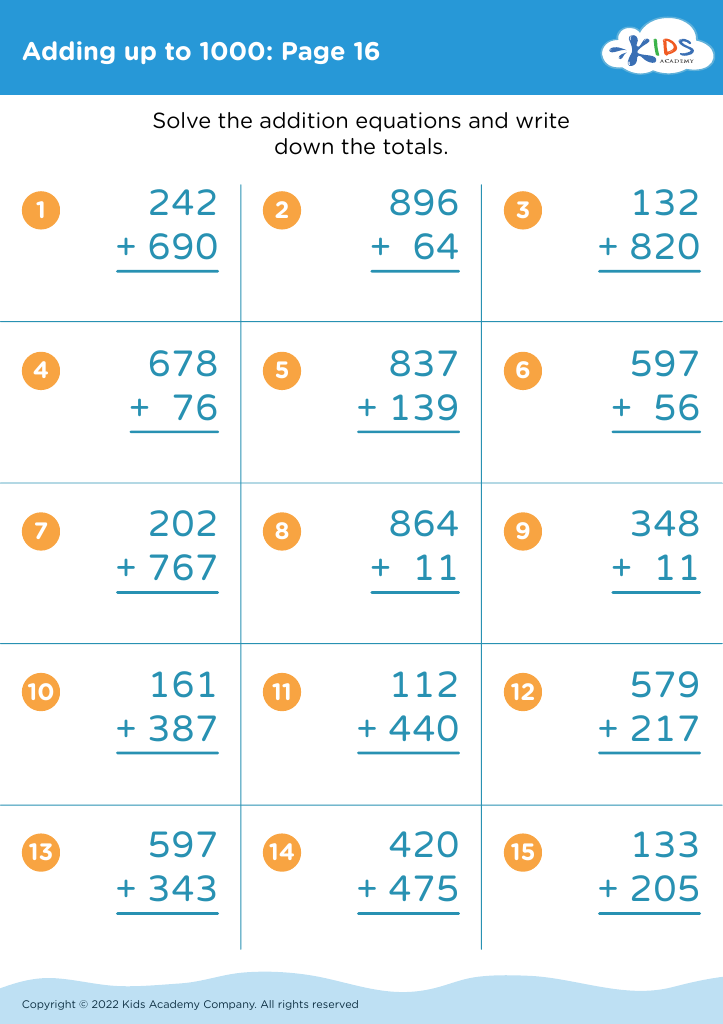
Enhance your child’s math skills with our "Improve Counting" worksheets designed for ages 8-9. These engaging printable activities offer a fun and effective way to strengthen counting abilities, from basic numbers to more complex sequences. Each worksheet is crafted to hold students' interest with colorful illustrations and thought-provoking exercises that build a solid foundation in numeracy. Complement classroom learning and support your child's math journey at home with these expertly designed resources. Help your child gain confidence and mastery in counting while enjoying the learning process. Visit Kid’s Academy for our comprehensive and dynamic worksheets today!








Improving counting skills in children aged 8 to 9 is crucial for several reasons. Firstly, counting forms the foundation of all mathematical understanding. At this age, children transition from simple counting to more complex operations such as addition, subtraction, multiplication, and division. Strengthening their counting proficiency enables them to grasp these new concepts more easily, fostering a positive experience with math.
Secondly, good counting skills are vital for everyday life. Children use counting in practical scenarios, such as handling money, telling time, and measuring ingredients for recipes. By mastering counting, they gain confidence in handling real-world tasks, promoting independence and problem-solving skills.
Moreover, early proficiency in counting can ignite a child's interest in mathematics, making them more likely to pursue math-related subjects and careers in the future. It also helps boost their overall academic performance, as math competence is often correlated with skills in other areas like reasoning, critical thinking, and logical analysis.
Finally, improving counting can mitigate potential future difficulties. Children who struggle with basic counting may develop math anxiety or negative attitudes toward the subject. By ensuring they are proficient early on, parents and teachers can establish a stable mathematical foundation, setting the stage for long-term academic and personal success.








