
Understand number relationships Math Worksheets for Ages 8-9
3 filtered results
Difficulty Level
Grade
Age
-
From - To
Subject
Activity
Standards
Discover our "Understand Number Relationships" math worksheets designed specifically for children ages 8-9. These engaging, printable resources aim to enhance young learners' comprehension of numerical connections and patterns. With a variety of exercises, including addition, subtraction, and number comparisons, students will develop critical thinking skills while mastering essential math concepts. Our worksheets are perfect for reinforcing classroom learning at home or in tutoring sessions. Fun and interactive, they help children visualize and grasp the importance of relationships between numbers, setting a strong foundation for future math success. Start exploring today to empower your child's mathematical journey!
Favorites
With answer key
Interactive
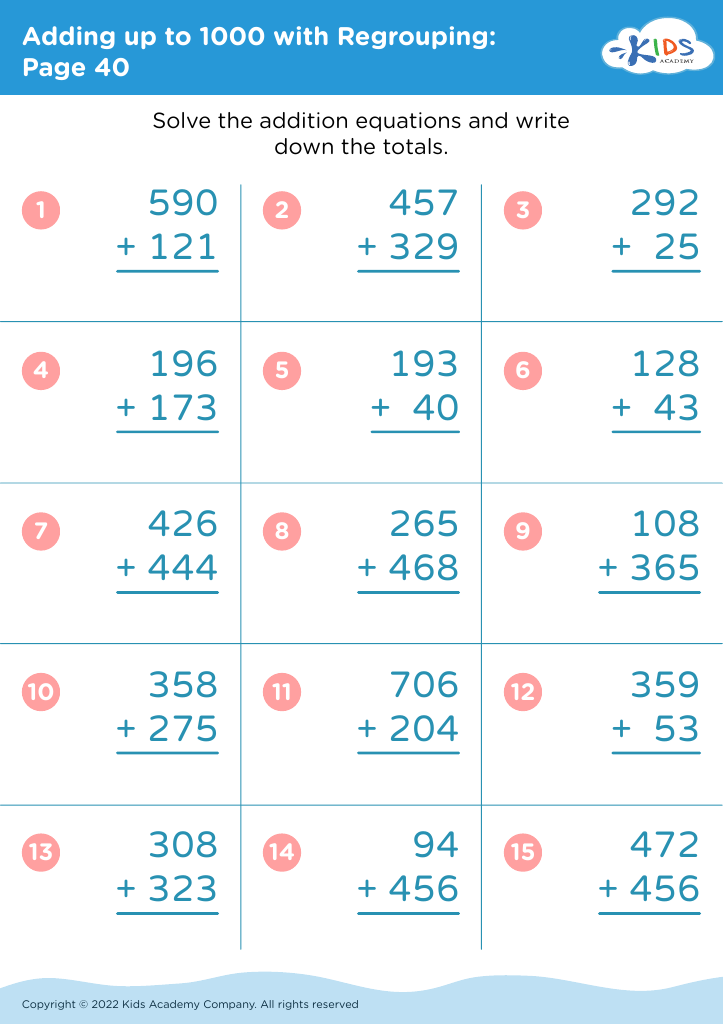
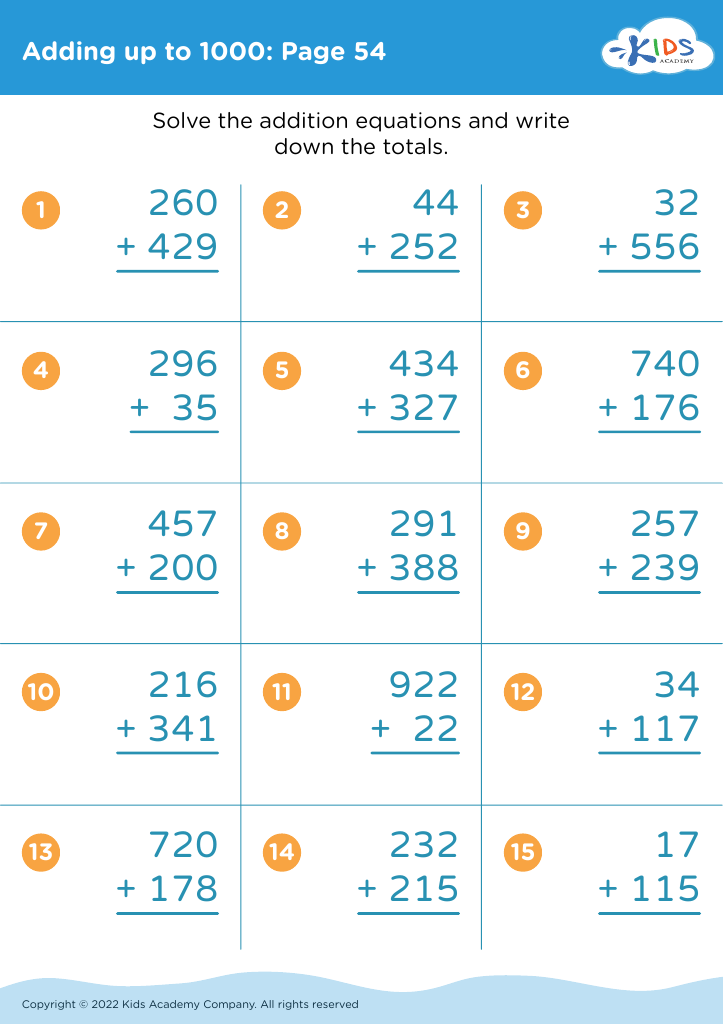
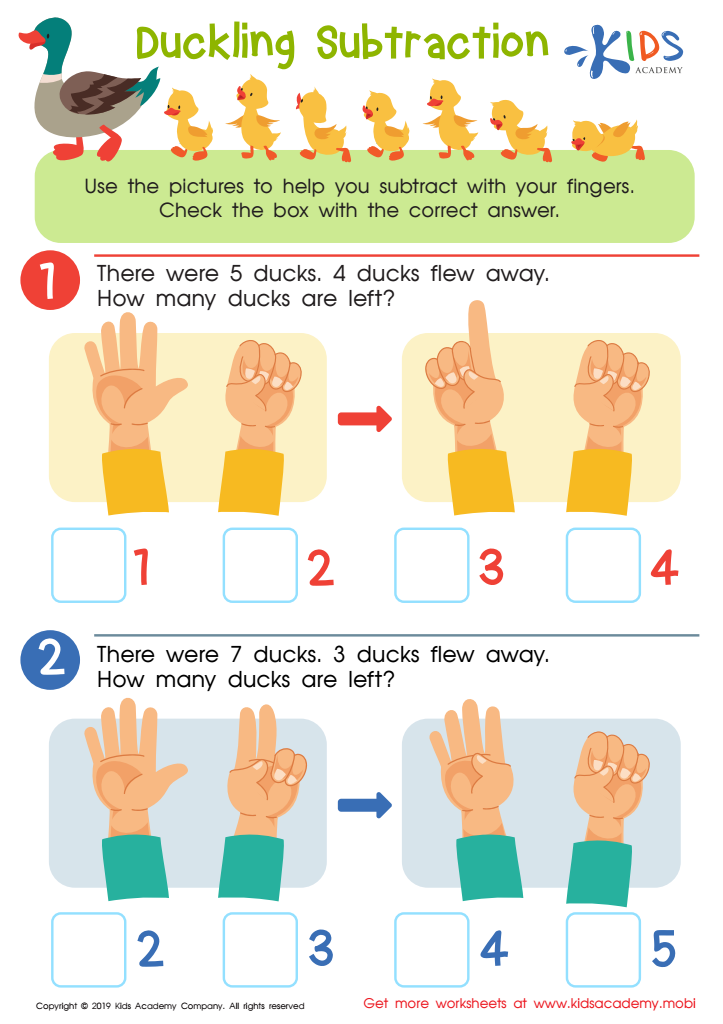
Duckling Subtraction Worksheet
Help your students learn equations and math with this fun worksheet. There are two questions to solve with the help of the pictures. Ask them to subtract with their fingers and check the box with the correct answer. This makes math easier and more enjoyable!
 Assign to My Students
Duckling Subtraction Worksheet
Worksheet
Join Kids Academy for Free
Who is primarily going to use this learning content?



%20(1).jpg)




Understanding number relationships is crucial for children aged 8-9 as it serves as a foundation for their mathematical development. At this stage, children are transitioning from basic arithmetic to more complex problem-solving and reasoning. Comprehension of number relationships enables students to grasp concepts such as addition and subtraction's inverse nature, the understanding of place value, and the ability to recognize patterns and properties of numbers. This foundational knowledge not only supports their current mathematical skills but is also essential for future topics, including multiplication, division, fractions, and beyond.
For parents and teachers, fostering a deep understanding of number relationships empowers children to become confident and independent learners. When children can connect numbers and operations, they develop critical thinking and analytical skills that extend beyond the classroom into real-life situations. Additionally, these concepts encourage collaborative learning opportunities, enhancing communication and teamwork skills among peers.
Investing time in helping children understand number relationships can bridge gaps in knowledge and prevent future struggles in mathematics. Ultimately, nurturing these skills fosters a positive attitude toward mathematics, ensuring that children grow to appreciate its relevance and application in everyday life, leading to academic success and a love for learning.








